Payroll Rounding and Strict Clock-In Policies Face Judicial Scrutiny in Recent Wage Dispute

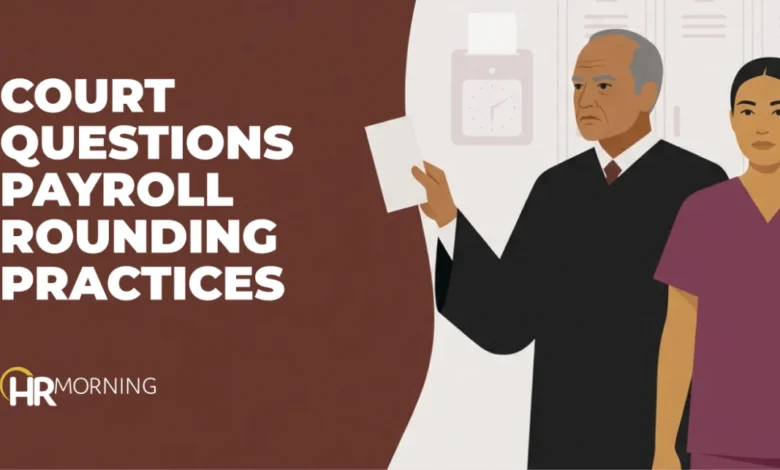
The intersection of automated payroll technology and mandatory workplace requirements has become a focal point of labor litigation, exemplified by a recent Pennsylvania federal court ruling that allows a former nurse’s wage claim against Chestnut Hill Hospital to move forward. The litigation, centered on the Fair Labor Standards Act (FLSA), highlights the growing tension between administrative efficiency and the legal requirement to compensate employees for all time spent performing job-related tasks.
The case, initiated by former hospital employee Pamela McBride, challenges the legality of employer-mandated pre-shift activities—specifically the requirement to change into surgical scrubs—when those activities occur outside of the recorded, rounded time window. By denying the hospital’s motion for summary judgment, the court has signaled that the mechanical application of "neutral" payroll rounding policies may not shield an employer from liability if those policies systematically undercount compensable work hours.
The Mechanics of the Dispute: Rounding vs. Reality
At the heart of the complaint is the hospital’s integrated approach to timekeeping. Chestnut Hill Hospital utilized a policy that effectively functioned as a barrier to accurate compensation. Employees were prohibited from clocking in more than seven minutes prior to their scheduled shift, a policy designed to prevent unnecessary overtime. Simultaneously, the hospital’s timekeeping software employed a rounding convention that adjusted time stamps to the nearest quarter-hour increment.
For instance, if an employee arrived at 6:53 a.m. for a 7:00 a.m. shift, the system would round the start time forward to 7:00 a.m. While courts have historically permitted rounding practices under the FLSA provided they are neutral—meaning they sometimes favor the employee and sometimes the employer—this specific case introduces a critical caveat. The plaintiff alleged that she was required to spend between 10 and 15 minutes prior to her shift changing into surgical scrubs, a task she argued was an integral part of her employment duties.
Because the hospital prohibited clocking in more than seven minutes early, the plaintiff could not "capture" her changing time in the payroll system. Even if she had arrived eight minutes early, the system’s rounding rules would have reset the clock to 6:45 a.m., but the strict prohibition on early clock-ins effectively rendered this impossible. The court found that this created a factual dispute regarding whether the hospital’s neutral policy functioned as a de facto exclusion of compensable time, thereby violating the FLSA.
Chronology of the Legal Proceedings
The legal battle began when Pamela McBride filed suit, alleging that the hospital failed to compensate her for "off-the-clock" work. As the case proceeded through the discovery phase, the hospital argued that any perceived loss in wages for the plaintiff was mitigated by the rounding system’s overall benefit to employees. They pointed to data suggesting that the plaintiff had accrued 418 minutes of "extra" paid time through rounding across various shifts, which they contended offset the time spent changing into scrubs.
The court rejected this argument, noting that the existence of extra minutes elsewhere does not automatically excuse the failure to pay for specific, required tasks. The court’s decision to deny the motion for summary judgment means that the burden now shifts to a trial or a further evidentiary hearing to determine the exact nature of the pre-shift requirements and whether the time spent changing into scrubs meets the threshold for "work" under federal labor standards.
FMLA Interference and Automated Accountability
Beyond the wage dispute, the case also raises significant questions regarding the intersection of automated attendance management systems and the Family and Medical Leave Act (FMLA). The plaintiff challenged the hospital’s practice of assigning "attendance points" for absences that were covered under protected FMLA leave.
The hospital’s defense largely rested on the argument that the attendance points were generated by an automated software system, rather than by a deliberate act of discrimination or interference by a human manager. However, the court found that the use of an automated system does not absolve the employer of responsibility for FMLA interference. If an employee is penalized for taking protected leave, the employer remains liable regardless of whether the penalty was administered by a human or an algorithm. This finding serves as a warning to HR departments that "automated" does not mean "immune to legal challenge."
Contextualizing the FLSA and Payroll Rounding
Under the Department of Labor’s regulations, rounding practices are generally acceptable if they are used in such a manner that they will not result, over a period of time, in failure to compensate employees properly for all the time they have actually worked. However, the "neutrality" of these policies is rarely the only factor courts consider.
The precedent established in cases like McBride v. Chestnut Hill Hospital, LLC underscores a shift toward a more granular judicial review of timekeeping. Historically, courts have focused on whether a rounding policy resulted in a net gain or loss for the employee over an extended period. Modern scrutiny, however, focuses on the "required" nature of the work. If an employer mandates a specific activity—such as donning protective equipment, attending a huddle, or undergoing a security screening—that activity must be paid. If an employer uses rounding or clock-in caps to prevent that time from being recorded, they are likely in violation of the FLSA.
Broader Implications for Healthcare and Beyond
The implications for the healthcare industry are profound. Hospitals and surgical centers often have complex pre-shift requirements, including changing into specialized gear, sanitizing, and receiving shift reports. These tasks are frequently performed by thousands of staff members across the country. If these tasks are deemed "integral and indispensable" to the primary work, failure to pay for them represents a massive potential liability.
For HR professionals and payroll managers, this case offers several critical takeaways:
- Review Pre-Shift Requirements: Employers must conduct a thorough audit of what employees are required to do before they clock in. If a task is required, it must be compensated.
- Audit Rounding Policies: Neutrality is a necessary but not sufficient condition for legal compliance. If a rounding policy interacts with other time-management rules (such as clock-in caps) in a way that consistently prevents payment for required work, the policy must be adjusted.
- Human Oversight of Automated Systems: Technology designed to streamline administration should not be used to bypass legal obligations. FMLA-protected absences must be treated with care, and automated systems must be programmed to recognize and exempt these periods from attendance-based disciplinary systems.
- Documenting "Integral" Work: Employers should clearly define what constitutes "work" in their employee handbooks. If an activity is not required, it should be clearly labeled as such to avoid confusion.
The Evolving Landscape of Wage and Hour Compliance
The ruling in this case comes at a time when wage and hour litigation is on the rise. With the increased reliance on workforce management software, the margin for error has decreased. While software provides consistency, it also creates a digital trail that can be used against employers in discovery. The ease with which plaintiffs’ attorneys can now extract data from payroll systems to show systemic underpayment is a risk that cannot be ignored.
Furthermore, the judiciary appears increasingly skeptical of "technical" defenses. When an employer argues that a policy is technically neutral or that an automated system made the error, courts are looking closer at the actual impact on the employee’s paycheck. The concept of "de minimis" time—small amounts of time that are so negligible they need not be paid—is also being applied more narrowly in many jurisdictions, particularly when that time is recurring and mandatory.
Conclusion
The case of McBride v. Chestnut Hill Hospital, LLC is not merely a dispute over a few minutes of time; it is a fundamental challenge to the way employers structure the workday in the digital age. As the litigation continues, it will likely serve as a benchmark for how courts analyze the tension between operational efficiency and the foundational protections of the Fair Labor Standards Act.
For hospital administrators and business owners alike, the message is clear: the convenience of automated rounding and strict clock-in policies does not override the legal obligation to ensure employees are paid for every minute they are required to be on the premises and engaged in their duties. Compliance requires more than just a software setting; it requires a proactive commitment to auditing the actual, on-the-ground practices that define the workday. As legal standards continue to evolve in favor of the employee, those who fail to align their automated policies with their legal responsibilities face increasing exposure to costly class-action litigation and regulatory penalties. The final resolution of this case will be closely watched by labor law experts, as it could set a standard for how modern, automated workplaces handle the persistent, and often litigious, challenge of wage and hour compliance.