
As e-commerce continues to evolve, the gap between a brand’s stated return policy and its actual operational reality has become a significant point of friction for growing merchants. Often referred to as "policy drift," this phenomenon occurs when internal workarounds, necessitated by scaling, diverge from the formal guidelines published on a company’s website. For retailers, this misalignment creates operational inefficiencies, erodes customer trust, and complicates financial forecasting. Addressing this requires a comprehensive audit of the entire return lifecycle, from the customer’s initial inquiry to the final reconciliation of funds.
The fundamental challenge for modern merchants lies in balancing customer convenience with business sustainability. While generous return policies—such as those popularized by retail giants like Patagonia or IKEA—can boost initial conversion rates, they are not universally scalable. Data from recent industry reports suggest that return rates for online purchases average between 15% and 30%, depending on the product category. When a merchant promises "no questions asked" returns for an extended duration, the associated logistics, inspection labor, and restocking costs can quickly erode profit margins.

The Anatomy of Policy Drift
Policy drift is rarely a deliberate act of deception; rather, it is a byproduct of rapid business expansion. When a company is in its infancy, policies are often simple and flexible. As the merchant grows, internal teams—burdened by high support volumes—frequently develop informal shortcuts to process returns more quickly. These workarounds eventually become the standard operating procedure, even though the public-facing policy page remains outdated.
This discrepancy creates a "trust gap." If a customer reads a 30-day return policy but encounters a support representative who applies a different, stricter, or more lenient set of rules, the brand experience becomes inconsistent. According to consumer sentiment surveys, 67% of shoppers check a return policy before making a purchase. An inaccurate policy can lead to increased customer service inquiries, as shoppers seek clarification on which set of rules actually applies to their order.
A Framework for Policy Evaluation
To reconcile the written policy with operational reality, retailers should engage in a systematic audit. This process begins by tracking a single, recent return through its entire lifecycle. By documenting every communication, the time elapsed between steps, and the final resolution, merchants can identify where the process deviates from the established rules.

Effective policy design should address twelve critical areas. These include:
- Eligibility Constraints: Defining which items are non-returnable—such as intimate apparel or perishables—and clearly communicating the rationale.
- Condition Standards: Establishing specific, inspectable criteria (e.g., "tags attached" vs. "original condition").
- Exchange Protocols: Distinguishing between simple size/color exchanges and complex resolutions for defective or incorrect items.
- Temporal Windows: Balancing the customer’s need to evaluate a product with the merchant’s need to cycle inventory.
- Refund Mechanisms: Standardizing the return of funds to original payment methods, with provisions for store credit in specific scenarios.
- Operational Transparency: Providing clear expectations regarding internal processing time versus external banking delays.
- Logistical Costs: Deciding the split of shipping costs, often utilizing a hybrid model where the merchant covers costs for damaged goods while the customer covers preference-based returns.
- Intake Channels: Utilizing centralized portals or automated dashboards to reduce support overhead.
- Exception Management: Authorizing specific team members to handle high-value or unusual cases.
- Financial Disincentives: Implementing restocking fees only when justifiable, such as for high-cost electronics or custom-manufactured goods.
- International Considerations: Outlining specific rules for duties, taxes, and transit times for cross-border transactions.
- Support Accessibility: Ensuring customers have a single, reliable point of contact to prevent unnecessary chase-up inquiries.
The Role of Technology in Streamlining Returns
Modern e-commerce platforms like WooCommerce provide the architectural foundation to automate these workflows. By integrating Return Merchandise Authorization (RMA) systems, merchants can move away from fragmented, manual processes toward a unified digital dashboard.
With tools like "Returns and Warranty Requests for WooCommerce," the return process becomes an extension of the customer’s original order history. This integration allows for:
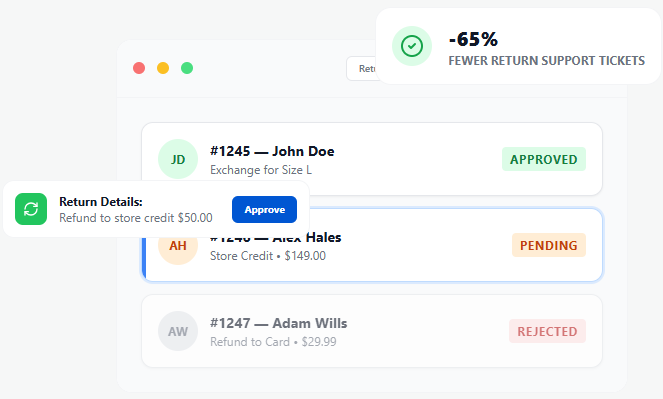
- Automated Intake: Customers initiate requests via their account portal, populating the system with necessary data, images, and reasons for the return.
- Shared Visibility: Both the support team and the customer can monitor the status of the return in real-time, reducing the volume of "where is my refund" inquiries.
- Inventory Synchronization: Once a return is approved, the system can automatically update inventory records, ensuring that stock levels are always accurate.
- Financial Reconciliation: Automatic integration with payment gateways allows for seamless full or partial refunds, while manual overrides accommodate unique payment methods like Cash on Delivery (COD).
Data-Driven Decision Making
Beyond day-to-day operations, the data captured during the return process is a vital asset for strategic planning. Using analytics platforms, merchants can track the "why" behind returns. If a specific product line shows a consistently high return rate, it may indicate a discrepancy in product descriptions, sizing charts, or quality control issues in the supply chain.
For example, if 20% of customers return a specific garment citing "fit issues," the merchant has empirical evidence to update the size guide or improve product photography, thereby reducing future return rates. This shift from reactive processing to proactive analysis transforms the returns department from a cost center into a source of actionable business intelligence.
Mitigating Fraud and Abuse
A significant concern for high-volume retailers is return fraud—including "wardrobing" (wearing an item once and returning it) or the return of counterfeit items. Robust RMA systems mitigate this risk by allowing for granular control. Merchants can set product-specific return windows, require photographic evidence for all claims, and route high-value items for mandatory manual review.

In extreme cases, tools that allow for customer or order blocklisting enable merchants to protect their business from serial abusers. However, experts warn that these tools should be used judiciously. A high frequency of returns from a single customer may sometimes point to a systemic issue with the product itself rather than malicious intent.
Conclusion: The Path Forward
The objective of a return policy is not to be the most generous, but to be the most accurate and efficient. By aligning the written policy with operational capabilities, merchants can reduce the internal friction caused by manual workarounds and provide a transparent experience for the consumer.
As businesses scale, the ability to automate the return lifecycle through integrated technology becomes essential. By moving toward a standardized, data-backed approach, retailers can ensure that their return process remains a competitive advantage rather than a logistical burden. Ultimately, the goal is to create a process that is concise enough for the customer to understand, yet robust enough to protect the financial health of the business. Through consistent auditing and the implementation of sophisticated RMA workflows, merchants can bridge the gap between their policies and their reality, fostering long-term growth and customer loyalty.