
Media Landscape Shifts: High-Profile Exits, Strategic Realignment, and New Appointments Reshape the Television News Industry

The landscape of American broadcast and cable news is undergoing a profound transformation this autumn, characterized by executive-level shifts, corporate mergers, and a realignment of talent across major networks. From the departure of high-profile contributors at CNN to strategic hiring maneuvers at Fox News and CNBC, the industry is recalibrating its operational focus in the face of evolving ownership structures and digital integration strategies.
Kara Swisher and the CNN Ownership Transition
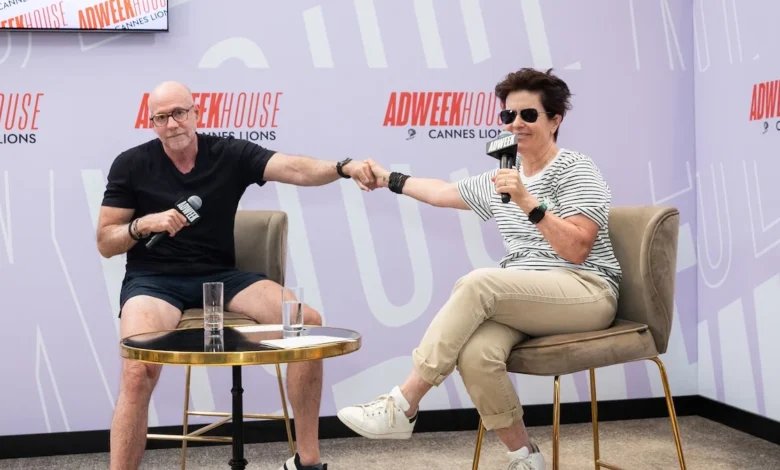
The most prominent narrative currently unfolding at CNN involves the departure of technology journalist and contributor Kara Swisher. Swisher, who joined the network in November 2023, has confirmed that she will not renew her contract, which is slated to conclude on December 31. This decision follows the impending acquisition of Warner Bros. Discovery by the Paramount Skydance entity, a merger that recently cleared significant legal hurdles after reaching a settlement with state attorneys general.
Swisher’s departure is not a sudden reaction but the culmination of a months-long evaluation of her role within the network. In a recent appearance on her Pivot podcast alongside co-host Scott Galloway, Swisher was explicit regarding her lack of desire to work under the new ownership regime. Her decision serves as a bellwether for how legacy media figures are responding to the rapid consolidation of media conglomerates. While Swisher initially entertained the possibility of navigating the transition, her final stance—summarized by her candid comments regarding the new ownership group—underscores a growing trend of talent asserting professional autonomy during corporate restructuring.
The implications for CNN are significant. By losing a high-profile voice known for her incisive technology reporting, the network must now determine how to maintain its reach within the tech-savvy demographic that Swisher frequently attracted. Her exit comes at a time when CNN is attempting to balance its traditional news output with expanded multiplatform initiatives.
CNN’s Strategic Investments: Farm Aid and Global Expansion
Despite the upheaval in its contributor roster, CNN is doubling down on event-based programming and global infrastructure. The network has confirmed its continued partnership with Farm Aid, announcing that it will broadcast the Farm Aid 2026: Musical Festival Live on September 26. The broadcast will be anchored by John Berman and Laura Coates from the Veterans United Home Loans Amphitheater in Virginia Beach, Virginia, with chief climate correspondent Bill Weir providing on-the-ground reporting. This event highlights CNN’s strategy of leveraging live, community-centric programming to drive engagement in an era where appointment viewing is increasingly rare.
Simultaneously, CNN has inaugurated a sophisticated, state-of-the-art facility in Media City Qatar, Doha. This facility is central to the network’s "CNN Creators" initiative, a multiplatform programming strategy designed to integrate the newsroom, studio, and production center into a single, transparent space. By emphasizing an open-plan layout where production processes are visible to the camera, CNN is attempting to demystify the news-gathering process, potentially increasing transparency and viewer connection—a tactical response to the public’s growing skepticism toward mainstream media institutions.
The Evolution of Fox News: Personnel and Programming
Across the competitive spectrum, Fox News is undergoing its own internal realignment. The network recently confirmed the hiring of television personality Billy Bush as a contributor, a move that signals an effort to broaden its talent pool beyond traditional political commentary. Bush’s debut on Jesse Watters Primetime serves as a clear indication of how the network intends to utilize his experience across its various platforms.
Furthermore, the network is managing a transition in its Sunday programming. Larry Kudlow has been appointed as the temporary anchor of Sunday Morning Futures through November 8. This shift follows the departure of long-time anchor Maria Bartiromo, which was officially announced on September 3. Such transitions are critical for the network, as Sunday morning political programming remains a high-stakes arena for setting the weekly national agenda. Analysts note that temporary appointments during such periods are often used to gauge audience retention and test potential permanent successors without the immediate pressure of a formal contract announcement.
NBC News and the Dateline Legacy
While other networks focus on structural changes, NBC News is leaning into its established brand identity. This week, the network celebrated the 35th season of its flagship true-crime program, Dateline. To commemorate the milestone, the Empire State Building was illuminated in blue, an event attended by the show’s ensemble, including Lester Holt, Josh Mankiewicz, Blayne Alexander, and Andrea Canning.
Lester Holt’s comments during the event—referencing the show as an "icon of television broadcasting"—highlight the enduring value of legacy franchises. In an increasingly fragmented media market, Dateline remains a reliable pillar of ratings success for NBC. The continued investment in the program, despite the industry’s shift toward streaming and digital-first content, proves that established intellectual property remains the most stable currency for major networks.
CNBC’s Talent Acquisition and Market Focus
CNBC, the business news arm of the NBCUniversal family, is taking a different approach by bolstering its editorial ranks with a series of key hires. The network’s expansion is clearly focused on the intersection of technology, investing, and market analysis—three pillars essential to its core audience.
The recent appointments include:
- Megan Morrone, joining as a technology editor based in the San Francisco bureau. Her move from Axios suggests a focus on the Silicon Valley narrative, which is critical to CNBC’s tech coverage.
- Daren Fonda, appointed as a senior editor for investing. Formerly of Barron’s, Fonda brings significant expertise in financial journalism to the network’s editorial team.
- Sebastien Chasse and Paulina Likos, who have been brought on as a senior equity analyst and a markets reporter, respectively.
These additions suggest that CNBC is not merely replacing departing staff but is actively expanding its capabilities to provide deeper, more technical reporting on financial markets. In an environment where retail investing has surged in popularity, the ability to provide expert-level market analysis is a key competitive differentiator for the network.
Broader Implications of the Media "Revolving Door"
The current wave of turnover and restructuring across the major news networks is driven by three primary factors: the consolidation of media ownership, the urgent need for digital transformation, and the volatility of the advertising-supported business model.
The merger of major entities like Paramount and Warner Bros. Discovery inherently leads to cost-cutting measures and a shift in strategic vision. For journalists like Kara Swisher, these corporate shifts can create a cultural misalignment that necessitates a departure. For the networks, the goal is to streamline operations while maintaining the trust of their respective demographics.
Moreover, the emphasis on multiplatform initiatives—as seen in CNN’s Doha facility—indicates that the traditional "anchor at a desk" model is rapidly becoming insufficient. Networks are now required to produce content that is simultaneously broadcast-ready and optimized for mobile devices and social platforms. This "all-in-one" production philosophy requires significant capital investment, which is only possible for organizations with the scale of a major conglomerate.
As the industry moves into the final quarter of the year, the stability of these new lineups will be tested. Ratings data from the coming months will reveal whether these strategic investments in talent and infrastructure yield the desired audience growth. For viewers, the result is a television news landscape that is more focused on digital integration and event-based programming than at any point in the previous decade. The "revolving door" of the newsroom, while often disruptive, remains the mechanism by which these organizations attempt to adapt to the realities of a 24-hour, multi-platform information cycle.
Related posts: