Navigating the New Frontier of Cybersecurity: Forrester Security & Risk Forum Addresses AI-Driven Challenges and the Imperative of Trust

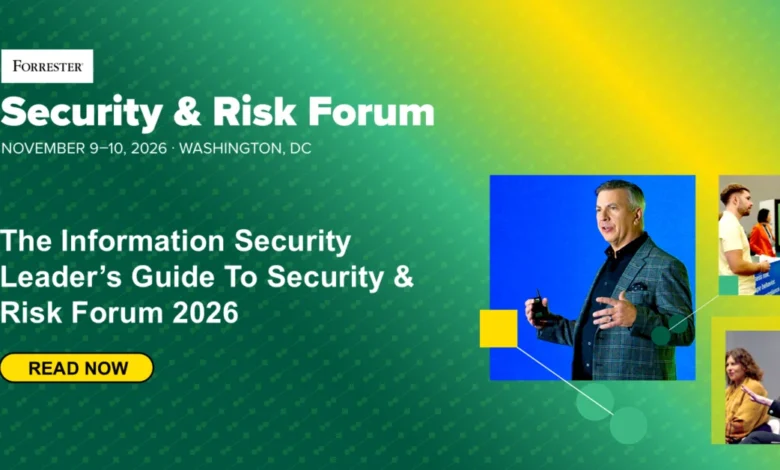
The landscape of information security is undergoing a seismic shift, driven by the rapid proliferation of artificial intelligence, an increasingly sophisticated adversary ecosystem, and the growing demand for security leaders to act as business enablers rather than mere gatekeepers. As organizations scramble to integrate AI into their operational workflows, the traditional perimeter-based security model is proving insufficient. To address these systemic pressures, the upcoming Forrester Security & Risk Forum, scheduled for November 9–10 in Washington, DC, aims to provide security executives with the strategic frameworks necessary to reconcile aggressive innovation with rigorous resilience.
The Evolution of the Security Mandate
Historically, the role of the Chief Information Security Officer (CISO) was confined to the mitigation of risk and the prevention of unauthorized access. However, recent data suggests this scope has expanded exponentially. According to recent industry surveys, nearly 75% of security leaders report that their primary mandate now includes supporting digital transformation initiatives, a task complicated by the "agentic era" of AI.
The shift is not merely technological but cultural. Security teams are increasingly tasked with building "Trust and Assurance" organizations. This transition requires a departure from legacy models toward adaptive architectures like Zero Trust, which assumes that every request—whether internal or external—is a potential security incident. The forum’s programming reflects this urgency, focusing on how organizations can deploy AI without sacrificing governance, essentially turning security from a bottleneck into a competitive advantage.
Chronology of a Changing Landscape
The urgency behind the Washington, DC event is rooted in a timeline of rapid technological disruption that began in earnest in late 2022.
- Q4 2022: The public release of generative AI tools triggers a "shadow AI" phenomenon within enterprises, where employees adopt AI platforms without IT or security oversight.
- Q1 2023: Regulatory bodies globally begin drafting frameworks for AI accountability, placing the burden of compliance squarely on the shoulders of CISOs.
- Q2–Q3 2023: Adversaries begin utilizing AI to automate phishing campaigns, accelerate vulnerability discovery, and conduct hyper-realistic social engineering attacks.
- 2024: The shift toward "agentic AI"—systems that can execute multi-step processes autonomously—introduces new risks regarding identity and authorization, prompting a fundamental re-evaluation of identity access management (IAM).
- November 2024: The Forrester Security & Risk Forum convenes to formalize the industry’s response to these accumulated pressures, focusing on long-term structural adaptation rather than reactive patching.
The AI Governance Paradox: Innovation vs. Control
One of the most critical sessions at the forum will address the "Secure AI Without Slowing Innovation" initiative. The core challenge for many organizations is that traditional governance models are too slow for the current development cycle. Security leaders are being forced to find a middle ground: enabling developers to leverage LLMs and autonomous agents while maintaining strict control over data privacy and model integrity.
Industry analysts emphasize that organizations often make the mistake of over-restricting AI, which leads to "shadow AI" usage. Instead, the current consensus points toward "guardrail-based security," where security teams embed automated controls into the CI/CD pipeline. By automating policy enforcement, security teams can verify the safety of AI-generated code or data outputs in real-time, effectively scaling their influence without increasing headcount proportionally.
Redefining Identity in the Agentic Era
As organizations shift toward AI-powered automation, the definition of a "user" is fundamentally changing. In the near future, security architectures must account for non-human identities—AI agents capable of accessing sensitive databases, executing transactions, and interacting with other agents.
This transition poses a massive hurdle for legacy identity systems. The forum’s deep dives into identity strategy will focus on the necessity of fine-grained authorization. In an agentic environment, a "one-size-fits-all" access policy is a catastrophic vulnerability. Experts argue that identity must now be treated as the primary control plane, where authorization is continuously verified based on the context of the agent’s task, the sensitivity of the data, and the potential impact of the action.
Threat Landscape: Beyond Traditional Defenses
The forum also emphasizes the "rise of the trust and assurance organization." A key topic of discussion will be the counter-intuitive notion that "You Don’t Need AI To Defend Against AI." While the concept of "AI vs. AI" cyber defense has gained traction, many security experts argue that the fundamentals—visibility, hygiene, and process integrity—remain the most effective defense.
Data suggests that 80% of successful breaches still rely on basic vulnerabilities that remain unpatched. By refocusing on these foundational elements, security teams can build resilience against AI-powered threats without needing to match the attacker’s technological complexity. The event aims to move the conversation away from the "arms race" mentality and toward a focus on organizational hygiene and defensive depth.
Strengthening Data Governance as a Foundation
As organizations funnel proprietary data into AI models for training or RAG (Retrieval-Augmented Generation) architectures, the risk of data leakage and intellectual property theft increases. The forum will highlight how modern data governance must evolve from static classification to dynamic tracking.
Key workshops will focus on:
- Data Lineage: Understanding exactly where data travels within an AI pipeline.
- Privacy-Preserving Techniques: Utilizing differential privacy and federated learning to minimize risk during model training.
- Automated Governance: Implementing systems that automatically redact or sanitize sensitive PII (Personally Identifiable Information) before it reaches an AI model.
Bridging the Skills Gap
A recurring theme throughout the sessions is the "human element." The cybersecurity industry faces a well-documented talent shortage, with millions of open positions globally. The forum aims to address this by providing hands-on training that focuses on upskilling existing staff.
Forrester’s approach focuses on the "T-shaped" security professional—someone who possesses deep technical knowledge in one area (such as application security or threat hunting) while maintaining a broad understanding of business strategy, risk management, and the organizational impact of their decisions. The networking component of the event is designed to foster this type of cross-pollination, as leaders share case studies on how they have successfully restructured their teams to meet the demands of the modern threat landscape.
Broader Implications and Strategic Outlook
The implications of the November gathering extend beyond immediate tactical improvements. The overarching goal is to elevate the CISO’s role to a strategic partner in the boardroom. In an era where trust is a currency, the ability of a security leader to articulate risk in the language of business value is essential.
By providing a venue where researchers, analysts, and practitioners can converge, the Forrester Security & Risk Forum serves as a bellwether for the industry. The consensus emerging from this discourse is clear: the future of security is not found in a specific piece of software or a singular technology, but in the creation of a resilient ecosystem that allows the business to move at the speed of innovation without sacrificing the integrity of its digital foundation.
As attendees prepare for the two-day summit in Washington, DC, they carry the weight of a complex mandate. They are expected to protect against increasingly aggressive threats, govern a chaotic influx of new technology, and maintain the public’s trust in an era of digital uncertainty. The event is positioned to offer more than just theoretical insights; it promises a roadmap for building an organization that is not merely secure, but inherently trustworthy.