Office Depot parent company The ODP Group rebrands as Office Depot Group to unify retail and B2B operations under a single legacy identity

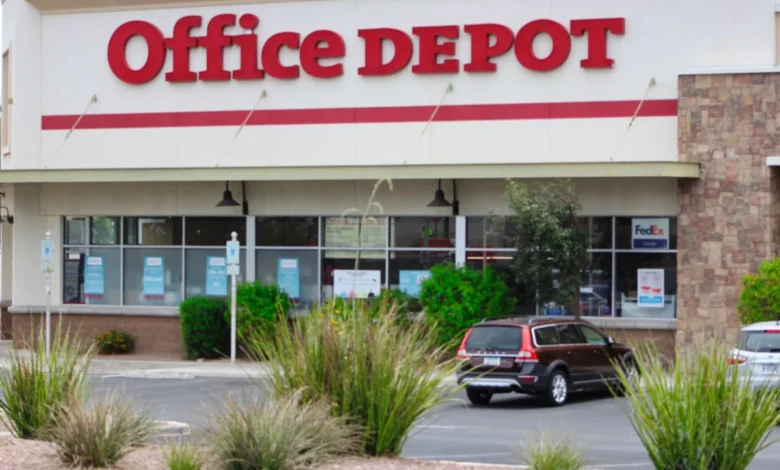
The ODP Group, the parent organization behind the ubiquitous office supply retailer Office Depot, has officially announced a corporate rebranding, transitioning its name to Office Depot Group. This strategic pivot involves the retirement of its B2B distribution brand, ODP Business Solutions, which will henceforth operate under the name Office Depot Business. The consolidation marks a significant milestone in the company’s 40-year history, aimed at streamlining its market presence and fostering greater cohesion between its brick-and-mortar retail footprint and its expansive business-to-business distribution network.
A Strategic Pivot Toward Legacy Branding
For decades, Office Depot has maintained a dual-pronged identity, bifurcating its retail consumer business from its sophisticated enterprise distribution operations. By rebranding the parent entity and its B2B arm, leadership seeks to leverage the high brand equity associated with the "Office Depot" name. Craig Gunckel, CEO at Office Depot, emphasized that the decision was rooted in the company’s extensive history and the deep-seated trust it has cultivated with its customer base over four decades.
In a public statement shared via LinkedIn, Gunckel noted that the move is not merely aesthetic but foundational to the company’s long-term strategy. "Office Depot is a brand with more than 40 years of history behind it—the kind of recognition that can’t be built overnight, only earned over decades by showing up for our customers, our partners and the communities we serve," Gunckel stated. The company plans to roll out the new branding across its digital properties, corporate communications, and social media channels over the coming weeks.
Chronology and Corporate Evolution
The evolution of the ODP corporate structure has been characterized by several high-profile shifts over the last decade. Following the 2013 merger attempt with rival OfficeMax and subsequent regulatory hurdles, the company underwent various restructuring phases to survive in an increasingly digital retail landscape.
The creation of "The ODP Group" was originally intended to signify a diversified holding company, housing multiple business units including retail, contract distribution, and technology services. By retreating from that abstracted corporate title in favor of the legacy "Office Depot" name, the company is signaling a desire to simplify its narrative. This decision follows a period of intense competition in the office supplies sector, where the rise of Amazon Business and the consolidation of regional suppliers have forced traditional retailers to rethink their value propositions.
Currently, Office Depot holds the No. 24 position in the Top 2000 Database, a comprehensive index of North American online retailers. Within the specific office supplies retail category, it remains the second-largest player, trailing behind its long-time industry rival, Staples. The rebrand arrives at a time when both companies are aggressively pivoting toward service-based models, offering IT support, co-working solutions, and managed print services to offset declining demand for traditional paper-based office supplies.
Market Analysis and Industry Implications
The decision to unify under a single brand has elicited mixed reactions from marketing experts and industry analysts. While the move is widely viewed as a prudent step toward operational efficiency, it carries inherent risks regarding market perception.
Alys Reynders, Chief Marketing Officer at the operations platform Quickbase, highlighted the potential for "brand dilution." According to Reynders, procurement officers and long-term enterprise clients have spent decades associating the Office Depot name primarily with retail storefronts. "One big concern is that procurement officers have already built four decades of connotations to the Office Depot brand as a brick-and-mortar entity," she explained. There is a palpable risk that a singular, retail-facing brand name may mask the technical complexity and scale of the company’s B2B distribution capabilities, potentially causing clients to underestimate the firm’s B2B service scope.
However, Reynders also noted the advantages of the consolidation. "Overall, this stronger alignment means that Office Depot has the opportunity to unify its identities beyond the barriers created by operating under different names," she said. By eliminating the confusion caused by multiple brand identities, the company can streamline its marketing budget and provide a more consistent customer experience. If managed with precision, the move could effectively remove the cognitive friction that often prevents retail customers from viewing a company as a viable enterprise-level partner.
The Challenge of Modernizing a Legacy Brand
Beyond the surface-level name change, the deeper question remains whether Office Depot can successfully evolve its market identity. Shailendra Pratap Jain, a professor of marketing at the Foster School of Business at the University of Washington, argues that the name change provides "immediate familiarity and legitimacy," but warns that the company must avoid being trapped by its own history.
"The B2B side is particularly interesting," Jain observed. "Renaming ODP Business Solutions as Office Depot Business gives the company immediate familiarity and legitimacy. It also creates a strategic challenge: can a brand strongly associated with retail office supplies stretch credibly into a broader B2B solutions and distribution identity?"
Jain posits that the true test for the company lies in its ability to pivot from a vendor-centric model to a solutions-oriented one. The brand must convince the market that it is no longer just "the place where businesses buy office supplies," but rather "the company that helps businesses operate." This shift requires a comprehensive audit of the company’s product mix, pricing structures, and promotional strategies. Without a fundamental transformation in its operational output, a mere name change may not be sufficient to drive long-term growth.
Navigating the B2B Ecommerce Landscape
As the company integrates its branding, it must also navigate the broader digital transformation of the B2B sector. With B2B ecommerce projected to grow significantly, competition has shifted from price-per-unit to the quality of the digital procurement experience. Office Depot’s B2B arm, now Office Depot Business, will need to leverage its physical footprint as a logistical advantage to compete against pure-play digital distributors.
The company’s strategy of maintaining a physical retail presence while expanding its B2B logistics infrastructure is a high-stakes balancing act. Critics have long argued that the costs associated with physical retail are a drag on the leaner, high-margin B2B distribution business. By rebranding, the company may be attempting to create a "halo effect," where the consumer-facing retail brand validates the quality and reach of the business services, and vice versa.
Future Outlook and Strategic Objectives
The transition to Office Depot Group is not an isolated event but a part of a broader, multi-year recovery and growth plan. The success of this rebranding will likely be measured by several key performance indicators:
- Customer Retention Rates: Can the firm retain its B2B client base during the transition to the new, retail-linked naming convention?
- Brand Awareness Metrics: Does the unified name lead to increased market penetration in the enterprise sector?
- Operational Synergy: Will the marketing and administrative savings resulting from a single, unified brand identity improve the company’s bottom line?
As the company enters this new chapter, leadership must ensure that the internal culture aligns with the external messaging. A unified brand name is only effective if the underlying service levels and product quality are perceived as consistent across all touchpoints.
The path ahead for Office Depot is clear but arduous. In an era where digital-first competitors are aggressively pursuing market share, Office Depot’s reliance on its 40-year legacy is both a shield and a potential anchor. If the company can successfully leverage its brand heritage to foster trust while simultaneously modernizing its B2B service offerings, it may solidify its position as a central pillar of the North American office supply ecosystem. However, if the brand is perceived as merely "doubling down on the past" without innovating its core service delivery, the rebranding may be viewed as a superficial effort to hide deeper structural challenges.
Ultimately, the market will determine the efficacy of this move through the lens of performance metrics and customer loyalty. For now, the Office Depot Group has set the stage for a new, unified identity, hoping that its long-standing name will prove to be a timeless asset in an increasingly complex and competitive commercial landscape. The weeks ahead, as the branding transition rolls out across its digital and physical assets, will be critical in shaping the public and professional reception of this new corporate chapter.