OSHA Issues New Workplace Safety Guidance for Opioid Overdose Prevention Under the Great American Recovery Initiative

The Occupational Safety and Health Administration (OSHA) has released comprehensive new safety guidelines aimed at equipping American employers and workers with the tools necessary to recognize and reverse opioid overdoses in the workplace. Published on September 25, 2026, the guidance forms a cornerstone of the Trump Administration’s broader Great American Recovery Initiative, a concerted federal push addressing the nation’s ongoing addiction and recovery crisis.
The federal intervention arrives as employers across multiple sectors grapple with the pervasive impacts of the opioid epidemic. By bringing life-saving intervention strategies directly to the commercial and industrial sectors, federal regulators hope to drastically reduce preventable fatalities associated with illicitly manufactured synthetic opioids, particularly fentanyl.
Background and Context of the Federal Initiative
The newly released OSHA directive does not emerge in a vacuum; it is part of a coordinated multi-agency federal strategy under the Great American Recovery Initiative, formally initiated by presidential action early in 2026. The White House, recognizing that the illicit drug market has shifted dramatically due to the prevalence of potent synthetic opioids, has increasingly positioned public health and emergency preparedness as a workplace safety imperative.
Fentanyl, a synthetic opioid up to 50 times stronger than heroin and 100 times stronger than morphine, has fundamentally altered the American illicit drug landscape. Federal authorities emphasize that because accidental exposure or ingestion can lead to rapid respiratory depression and death, workplaces can no longer view substance abuse strictly as a human resources or disciplinary issue. Instead, regulatory bodies are urging a paradigm shift that treats overdose readiness akin to traditional physical safety protocols, such as fire safety or automated external defibrillator (AED) deployment.
White House Drug Czar Sara Carter underscored the gravity of the threat during the rollout of the initiative. "Because fentanyl has infiltrated the illicit drug landscape and acts as a chemical weapon against our people, it is critically important that the American workforce is familiar with drug overdose recognition and reversal," Carter stated. She further praised the Department of Labor for taking proactive steps to educate employers and employees on the deployment of emergency reversal agents.

Core Strategies and Preparedness Recommendations
The OSHA fact sheet outlines a series of practical, actionable strategies that organizations can implement immediately to safeguard their workforce. These recommendations bridge the gap between traditional emergency medical services and on-the-ground employee response capabilities.
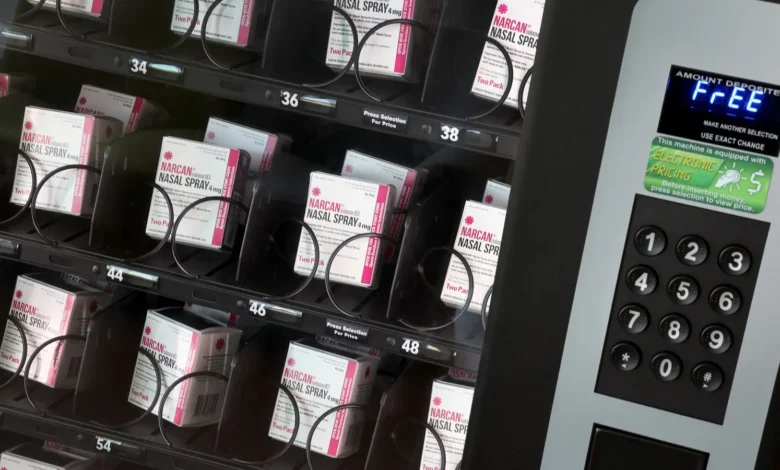
First, the guidance strongly recommends that businesses keep opioid reversal medications—specifically naloxone (commonly known by brand names such as Narcan) or nalmefene—readily accessible on site. Regulators advise companies to treat these medications similarly to standard first-aid supplies, storing them in clearly marked, visible, and easily accessible locations rather than locked medical offices that may cause critical delays during an emergency.
Second, the framework emphasizes comprehensive workforce education. Employers are encouraged to train designated staff and general employees alike to recognize the physical symptoms of an opioid overdose. These symptoms typically include pinpoint pupils, slow or shallow breathing, limp posture, pale or clamuel skin, and unresponsiveness to verbal or physical stimuli.
Finally, the directive calls for hands-on training regarding the safe administration of reversal medications. Whether administered via nasal spray or auto-injector, these drugs are designed to temporarily block the effects of opioids and restore normal breathing, buying crucial minutes until professional emergency medical personnel arrive. Crucially, public health officials note that administering naloxone to someone experiencing a non-opioid medical emergency causes no harm, eliminating liability fears for well-meaning responders under Good Samaritan protections.
Workforce Data and Drug Testing Trends
The urgency of OSHA’s guidance is underscored by recent comprehensive data illustrating the scope of substance use within the modern American labor pool. According to a landmark July report published by clinical laboratory giant Quest Diagnostics, nearly 1 in 5 American workers tested positive for drug use based on hair analysis data collected throughout 2025.
The Quest Diagnostics report, which integrated a massive dataset of U.S. workforce drug tests covering both hair and urine specimens, screened for a wide array of substances including marijuana, cocaine, opiates, amphetamines, and methamphetamine. Notably, the data revealed that opiate positivity rates varied significantly across industries, with healthcare workers showing some of the highest concentrations of opiate usage among tested cohorts.

This statistical reality indicates that substance use is not confined to specific marginalized sectors; it permeates professional environments, corporate offices, healthcare facilities, manufacturing plants, and construction sites alike. Consequently, employers can no longer operate under the assumption that their specific industry is immune to the risks associated with the national drug crisis.
Legal Implications, Compliance, and ADA Considerations
Beyond immediate safety measures, the intersection of workplace substance use, federal safety mandates, and employment law presents a complex landscape for corporate leadership and human resources departments. Past legal actions demonstrate that mishandling employee addiction issues can expose companies to substantial financial and legal liabilities.
In a prominent precedent highlighting these legal boundaries, a software development firm was previously forced to pay $80,000 to settle a disability discrimination lawsuit brought by the U.S. Equal Employment Opportunity Commission (EEOC). The federal agency had charged the company with violating the Americans with Disabilities Act (ADA) after it allegedly terminated an employee who requested and took medical leave to undergo inpatient treatment for substance abuse.
The employee in question had a documented history of opiate addiction and was actively participating in a physician-supervised medication-assisted treatment (MAT) program. According to the EEOC, firing the worker simply because they were regarded as disabled or undergoing legitimate medical intervention constituted unlawful discrimination under federal law.
Legal experts and compliance officers note that as OSHA and the administration push for greater workplace awareness surrounding addiction and overdose recovery, companies must maintain a delicate balance. Employers are simultaneously expected to enforce drug-free workplace policies, maintain rigorous safety standards, and adhere strictly to anti-discrimination statutes that protect individuals undergoing rehabilitation or managing chronic substance use disorders as a medical condition.
Broader Economic and Societal Implications
The release of OSHA’s opioid preparedness guidance reflects a maturing national consensus that addressing the drug crisis requires an all-hands-on-deck approach, extending from federal health agencies into the private sector.

Economists and public health researchers point out that the human and financial toll of the opioid epidemic on the American workforce is staggering. Beyond the tragic loss of human life, employers face billions of dollars annually in lost productivity, increased absenteeism, elevated healthcare expenditures, and turnover costs. By integrating harm-reduction strategies—such as widespread naloxone availability—into standard safety protocols, workplaces can potentially mitigate the worst-case outcomes of the crisis, saving lives that might otherwise be lost on the factory floor, in the warehouse, or at the office desk.
Furthermore, labor advocates and public health advocates suggest that normalizing conversations around addiction and treatment within corporate America helps dismantle lingering stigmas. When employees view substance use disorders through the lens of a treatable medical condition rather than a moral failing, individuals are statistically more likely to seek help voluntarily through Employee Assistance Programs (EAPs) before a crisis occurs.
As the implementation of the Great American Recovery Initiative continues to unfold, business leaders and safety professionals are urged to review the updated OSHA materials, audit their current first-aid capabilities, and ensure their management teams are fully prepared to navigate both the safety imperatives and the legal nuances of modern workplace health.