The Paradox of Productivity: Why Modern Workers Feel Time-Poor Despite Declining Labor Hours

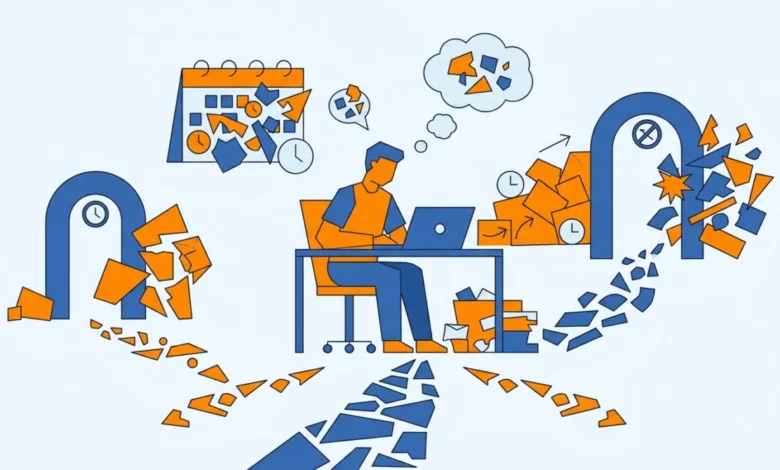
The modern professional is caught in a profound contradiction. According to data cited by BBC Science Focus, approximately 80% of the population reports a persistent sense of "time poverty"—the subjective feeling that one has insufficient time to meet professional and personal obligations. Paradoxically, this psychological strain is occurring during an era defined by a significant, long-term reduction in annual labor hours. Over the past 70 years, the average worker in industrialized nations has seen their total annual workload drop by roughly 514 hours. This decline in raw volume, however, has been superseded by an exponential increase in the intensity and cognitive fragmentation of the modern workday.
The Evolution of the Working Year
To understand the current crisis of attention, one must examine the chronological shift in labor standards. In the mid-20th century, the post-war industrial boom was characterized by rigid, long-shift schedules. As automation and information technology integrated into the workforce throughout the 1980s and 1990s, the expectation was that labor productivity would rise while total work hours would decline, allowing for increased leisure time.
By the 2010s, the emergence of mobile computing and high-speed connectivity effectively dismantled the traditional "clock-in, clock-out" paradigm. The transition from physical presence to "always-on" digital availability has created a phenomenon experts describe as "digital bleed." In this environment, the boundary between professional responsibility and personal time has become increasingly porous. Workers are no longer tethered to a physical desk; they are tethered to a digital notification stream that remains active regardless of the hour.
Quantitative Analysis of Digital Distraction
The primary driver of the current time-poverty crisis is not the volume of work—which has statistically decreased—but the frequency of context switching. Research into workplace psychology suggests that the human brain requires significant time to regain "deep work" focus after an interruption. In a typical modern office environment, notifications from platforms such as Slack, Microsoft Teams, WhatsApp, and electronic mail arrive with high frequency.
Data indicates that the average knowledge worker is interrupted every few minutes, creating a state of "continuous partial attention." When a professional checks their email while in bed or responds to a DM during dinner, the psychological result is an extension of the workday that is not captured by standard payroll logs. The body may have ceased working, but the cognitive load remains active, preventing the brain from transitioning into restorative states. This creates a feedback loop: the worker feels overwhelmed by the intensity of the day’s interruptions, even if the total hours logged remain well below the historical averages of the 1950s.
The Selection Bias of Productivity Metrics
A critical factor in the perception of time scarcity is the demographic focus of the "productivity industry." Much of the literature regarding time management is derived from data sets comprised of high-achieving professionals, entrepreneurs, and executive-level managers. Productivity coaches often observe a population that is already predisposed to burnout.
When analyzed against the broader workforce, this segment may represent a skewed sample. The general population, while still affected by digital saturation, may experience time poverty at different intensities. However, the prevalence of this sentiment in corporate culture has led to a widespread adoption of "busyness" as a proxy for professional value. This cultural shift necessitates a more objective approach to auditing how time is actually spent versus how it is perceived to be spent.
Methodologies for Diagnostic Time Auditing
To address the misalignment between perception and reality, organizational psychologists and management experts recommend a rigorous, evidence-based diagnostic process known as a "time audit." Unlike a to-do list, which functions as a forward-looking prescription, a time audit serves as a backward-looking diagnostic tool.
The recommended protocol involves selecting a representative workday—avoiding Monday or Friday, which are often subject to atypical scheduling—and recording activities in 30-minute intervals. The goal of this audit is not necessarily to track every second, but to identify patterns of cognitive fragmentation.
The data often reveals that workers are spending significant portions of their day in a state of reactive communication rather than proactive output. By visualizing these "switches," individuals can identify where the digital bleed is occurring. For many, this audit serves as the first empirical evidence that their stress is a product of task-switching frequency rather than a genuine lack of capacity.
Implementing Structural Friction
As the digital landscape evolves, the necessity for "structural friction" has become a central theme in professional development. Digital devices are designed to be frictionless, providing instant access to information. To counter this, many professionals are adopting physical constraints—commonly referred to as "commitment devices"—to enforce focus.
One such method involves the use of external hardware, such as physical buttons that disable non-essential applications across mobile devices. By requiring a physical action to regain access, the user creates a barrier to impulsive checking. Other strategies include the use of NFC tags or simply removing the device from the immediate physical environment.
The rationale behind these tools is rooted in cognitive behavioral science: by creating a physical barrier to distraction, the worker is forced to rely on intentionality rather than habit. Experts argue that while these tools are helpful in the short term, the ultimate goal is to transition from using external "training wheels" to developing the internal discipline required for single-tasking.
Bridging the Perception Gap: The "I Did" List
A significant contributor to the psychological burden of time poverty is the human tendency to remember interruptions while disregarding accomplishments. This creates an emotional deficit, where the day feels wasted despite productive output.
To mitigate this, experts propose the "I Did" list—a daily log of completed tasks, recorded at the end of the workday. This practice serves as a tangible record of contribution, effectively counteracting the cortisol-inducing feeling of being "behind." By documenting three primary accomplishments before concluding the day, individuals can align their subjective perception of their productivity with the actual output achieved. This mechanism is intended to reduce the psychological fatigue that often follows a day characterized by high-intensity interruptions.
Leveraging Artificial Intelligence for Goal Execution
Beyond managing the daily flow, professionals frequently face "blank page syndrome" when initiating complex projects. The paralysis caused by not knowing where to start often manifests as procrastination, which further contributes to the feeling of time poverty.
Contemporary approaches suggest utilizing Large Language Models (LLMs) and generative AI platforms to bypass this initial resistance. By treating AI as a subject-matter expert that has synthesized vast amounts of institutional and procedural data, users can rapidly break down complex goals into actionable roadmaps.
Customized AI agents can generate vision statements, multi-year plans, and granular, day-one milestones. This transitions the user from the high-friction stage of "zero to one" into a state of operational momentum. By outsourcing the initial structural planning to AI, professionals can reserve their cognitive energy for the execution phase, thereby increasing efficiency and reducing the stress associated with project management.
Broader Implications for the Future of Work
The divergence between declining work hours and the rising perception of time scarcity represents one of the defining challenges of the modern economy. If the current trajectory of digital intensification continues, the burden on the workforce will likely shift from physical fatigue to cognitive exhaustion.
The implications for organizations are significant. Employers may need to implement policies that respect "cognitive boundaries," such as mandatory communication windows or the discouragement of after-hours connectivity. Without such institutional shifts, the onus of maintaining work-life balance remains entirely on the individual, who must navigate an environment specifically designed to capture their attention.
Ultimately, the data suggests that time poverty is less about the scarcity of minutes and more about the management of cognitive load. By employing rigorous audits, physical constraints on digital access, and evidence-based planning, the modern worker can reclaim agency over their time. As the digital tools we use become more powerful, the ability to selectively disengage from them may become the most critical professional skill of the 21st century.
Related posts: