How Oatly Reinvented Global Corporate Marketing by Burning the Brand Playbook

When new creative professionals walk through the doors at Oatly, they are immediately met with an unconventional mandate: unlearn everything you know about traditional marketing. According to Michael Lee, the company’s creative director, this jarring directive is not merely a stylistic quirk, but the foundational operating system required to build a truly distinctive, enduring brand voice in an increasingly saturated marketplace.
In an industry governed by rigid corporate guidelines, approval loops, and standardized style manuals, Oatly has carved out a unique space by systematically dismantling the very infrastructure that most multinational corporations rely on. The absence of a formal "brand book"—the ubiquitous corporate bible that dictates font sizes, exact color swatches, and tone of voice—exemplifies this philosophy. While traditional brand management prioritizes frictionless consistency across every global touchpoint, Oatly’s leadership deliberately chooses agility, chaos, and creative freedom.
This corporate counterculture has turned a humble Swedish oat milk company into a global provocateur beloved for its irreverent packaging, self-aware copywriting, and relentlessly human tone. Yet, as Lee notes, maintaining this razor-thin edge becomes exponentially harder as the company scales. Examining Oatly’s structural DNA reveals a broader blueprint—and a cautionary tale—for what it truly takes to build, scale, and protect a corporate brand with a genuine perspective.
The Evolution of an Anti-Corporate Brand: From Swedish Startup to Global Disruptor
The Oatly story began far from the spotlights of global advertising festivals. Founded in Sweden in 1994 by researchers from Lund University who discovered a patented enzyme technology to turn oats into liquid food, the company spent its first decade and a half operating as a quiet, functional alternative to dairy. Its early branding was understated, clinical, and largely forgettable—occupying the quiet shelves of health food stores with scientific descriptions of nutritional content.
The inflection point arrived in 2012 when Toni Petersson stepped in as chief executive officer, bringing with him a mandate to radically overhaul the company’s commercial strategy. Petersson enlisted John Schoolcraft as chief creative officer, initiating a structural coup that would alter the trajectory of the alternative dairy industry. Schoolcraft took the unprecedented step of eliminating the traditional marketing department entirely. In its place, he erected an in-house creative agency that sat at the absolute center of the enterprise, free from the standard corporate hierarchy.
This internal agency, famously self-dubbed the "Department of Mind Control," was granted total autonomy. Rather than operating as a service bureau that fulfilled requests from sales or executive leadership, the creative team was empowered to write its own briefs, formulate its own strategies, and execute its own campaigns. Although Schoolcraft departed the company in 2025, this radical organizational framework remains deeply embedded in Oatly’s corporate culture.
Michael Lee, who joined the company as creative director in 2017—the same year Oatly officially entered the highly competitive United States market—emphasizes the rarity of this setup. "No one really can veto what we’re doing," Lee explains. "It’s not like we’re presenting to any marketing director or sales guys."
In mainstream corporate structures, brilliant creative concepts are frequently sanded down by layers of risk-averse stakeholders until they are completely stripped of their original punch. By removing these internal hurdles, Oatly ensured that its marketing could retain its sharp, unfiltered perspective. However, this autonomy demands an equally rare level of accountability. Lee notes that while creative freedom yields massive cultural wins when campaigns resonate, the team must also absorb the public blowback when an idea misses the mark—and retain the institutional courage to keep pushing boundaries.
The Economics of Scale and the Death of Corporate Speak
Oatly’s rise has coincided with a massive global boom in the plant-based milk sector. According to market data from Bloomberg Intelligence, the global plant-based dairy market surpassed $26 billion, driven largely by shifting consumer preferences toward health, sustainability, and ethical consumption. Amid this gold rush, legacy dairy conglomerates and nimble venture-backed startups alike have flooded grocery store aisles with competing oat milk alternatives, all vying for the attention of eco-conscious consumers.
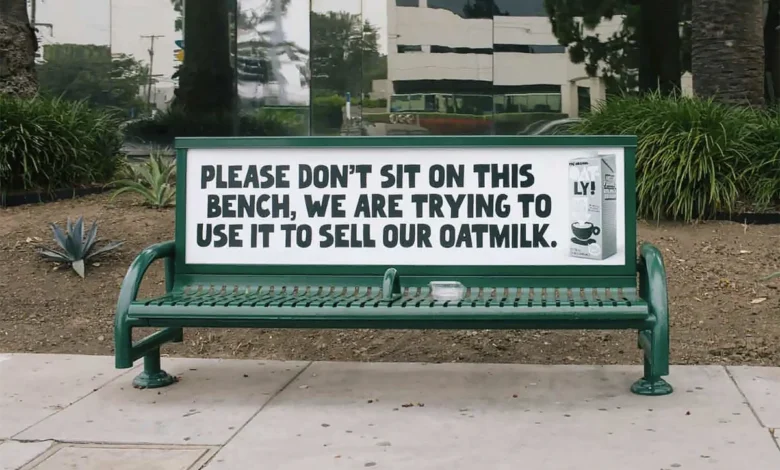
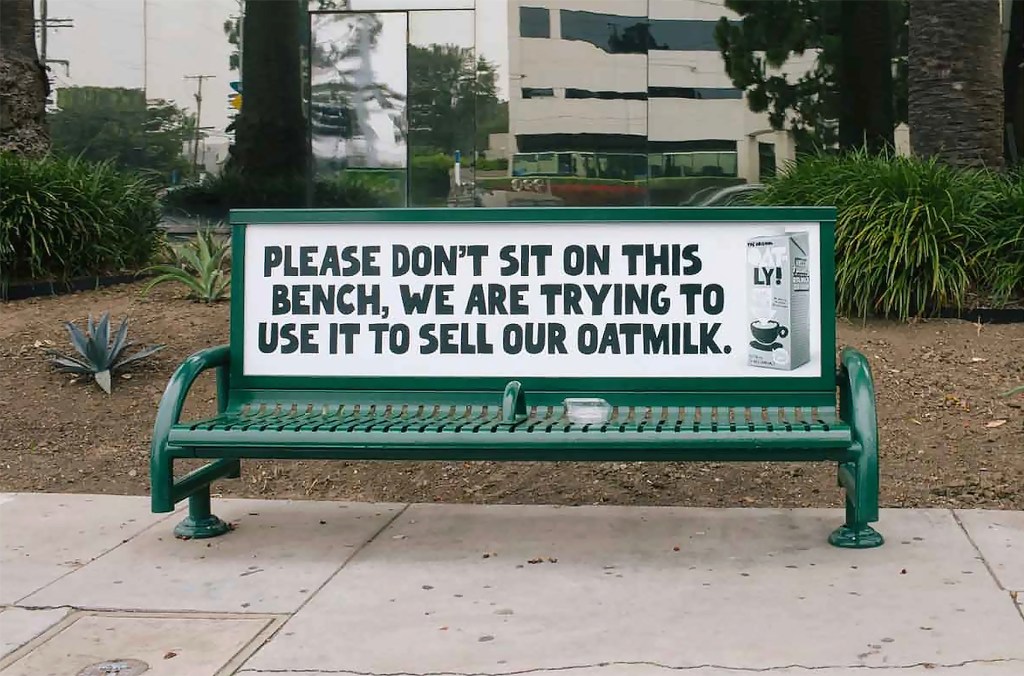
Yet, while competitors lean heavily on focus groups, demographic data analytics, and risk-mitigated messaging, Oatly relies on a nebulous internal compass. Despite the instantly recognizable nature of the brand’s voice—characterized by deadpan humor, self-deprecating packaging copy, and direct-to-consumer billboards that openly mock their own marketing—Lee admits he cannot scientifically quantify what is "on-brand."
"There is an Oatly idea, and there is… that is not an Oatly idea," Lee says. "How do you know? I don’t know. It’s just you develop a feeling. You develop this sense for what feels Oatly and what doesn’t feel Oatly, and it’s hard to wrap words around it."
This resistance to codification flies in the face of modern corporate branding, which seeks to turn creativity into a repeatable, scalable science. Lee argues that this corporate instinct is precisely what destroys authentic brand voices. Within large enterprises, employees rapidly adopt "company speak"—an artificial corporate lexicon that people would never use in normal human conversation. Brand leaders frequently default to the role of corporate police officers, establishing safety protocols and guardrails designed to prevent mistakes rather than foster true connection.
According to Lee, the true responsibility of a creative leader is not to write rules, but to cultivate a shared cultural instinct among team members so they can intuitively recognize ideas that are safe, sterile, and ultimately untrue to the brand’s core ethos.
The Scaling Paradox: Why Courage Gets Harder at Scale
One of the most persistent refrains in the startup ecosystem is the lament of founders wishing they possessed the gargantuan marketing budgets of industry giants. But Lee offers a counterintuitive perspective to early-stage entrepreneurs: leverage your small size while you still have it.
The primary challenge facing modern disruptive brands is not acquiring capital, but maintaining cultural relevance and risk appetite as revenues multiply. "It is much harder to be disruptive and courageous with your brand at the $100 million level than it is at the $10 million level," Lee observes. "That, I think, is the most difficult challenge—to maintain that edge and continue to be disruptive."
As companies cross revenue thresholds and attract institutional investors, public scrutiny intensifies. Publicly traded companies face quarterly earnings pressures, board oversight, and risk management committees that naturally favor predictable, consensus-driven growth over bold, polarizing creative bets. In this environment, brands routinely sand off their rough edges, trading their distinctive early-stage voices for polished, universally palatable messaging that ultimately fades into the corporate background.
To combat this gravitational pull toward mediocrity, Oatly’s leadership maintains that institutional courage cannot rest solely on the shoulders of the creative department. It requires a top-to-bottom cultural commitment from the executive suite down to supply chain operations.
Broader Implications and Industry Analysis
Oatly’s ongoing experiment offers critical lessons for the broader marketing and corporate strategy landscape. As artificial intelligence threatens to flood digital channels with hyper-optimized, algorithmically generated content, human distinctiveness and brand perspective have become scarce commodities. Companies that rely exclusively on data-driven frameworks risk producing homogenized messaging that appeals to everyone while captivating no one.
By consciously rejecting the safety of the brand book and dismantling traditional approval hierarchies, Oatly demonstrates that true creative differentiation requires structural sacrifice. It requires companies to accept operational friction, tolerate public missteps, and empower creatives to act as business operators rather than service providers.
For legacy corporations and emerging startups alike, the takeaway is clear: building a brand with a lasting voice requires more than hiring expensive creative talent or launching edgy ad campaigns. It requires the institutional bravery to throw out the playbook, trust human instinct over data dashboards, and allow the brand to speak like a real human being—even if it makes the boardroom nervous.
Related posts: