The Future of Artificial Intelligence: Navigating the Evolution of Agents, Organizational Structures, and Customer Engagement


The rapid trajectory of artificial intelligence has shifted from experimental large language models toward the deployment of autonomous AI agents capable of executing complex workflows. This transition marks a fundamental change in the digital landscape, moving beyond passive chatbots toward systems that can reason, plan, and act across multifaceted digital environments. As these technologies mature, industry leaders, policymakers, and labor economists are grappling with the structural consequences for the global workforce and the evolution of consumer-brand dynamics.
The Evolution of AI Capabilities: From Chatbots to Autonomous Agents
The history of artificial intelligence over the past decade can be segmented into distinct eras of capability. In the early 2010s, AI was largely limited to narrow, pattern-recognition tasks such as image classification or basic sentiment analysis. The emergence of Transformer architectures in 2017 catalyzed a shift toward generative AI, which allowed for the creation of human-like text and media. Today, we are witnessing the third phase: the emergence of "agentic" workflows.
Unlike previous iterations that required continuous human prompting, AI agents are designed to function as autonomous entities. These systems are being engineered with the capacity to utilize external tools, navigate software interfaces, and manage multi-step reasoning chains to achieve specific outcomes. For example, rather than merely suggesting a travel itinerary, an autonomous agent can now access booking APIs, compare pricing against internal budget constraints, verify calendar availability, and finalize transactions without human intervention.
Industry analysts at firms like Gartner and McKinsey suggest that the defining metric for AI capability in the coming years will be "task completion rate" rather than mere conversational fluency. By 2026, it is projected that over 30% of new software development projects will be initiated by autonomous agents. This necessitates a shift in computing infrastructure toward low-latency, high-reliability frameworks that can sustain long-running operations without drifting from the user’s initial objective.
Transforming the Modern Workplace: Structural and Operational Shifts
The integration of AI agents into corporate environments is not merely a technological upgrade but a fundamental redesign of organizational architecture. Historically, business operations relied on hierarchical management to ensure that individual tasks aligned with broader strategic goals. In an AI-augmented organization, these layers are being compressed.

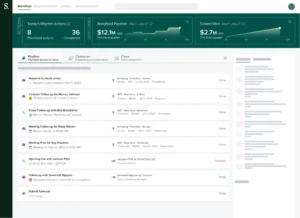
A 2024 study conducted by the World Economic Forum highlighted that approximately 40% of global employment is exposed to AI-driven automation. However, the report noted that this exposure manifests differently depending on the role. Knowledge workers are currently experiencing a transition where AI acts as a "force multiplier." In project management, for instance, AI agents are being deployed to monitor milestone progress, identify bottlenecks in real-time, and automatically reallocate resources—tasks that previously required significant middle-management oversight.
The shift toward "AI-native" organizations suggests a move away from rigid, siloed departments. Instead, organizations are gravitating toward cross-functional teams that utilize agentic frameworks to handle high-volume administrative tasks. This allows human personnel to focus on high-level strategy, ethics, and interpersonal leadership. However, this transformation also introduces risks, particularly regarding data privacy and the potential for "algorithmic bias" to propagate across automated workflows if not carefully monitored by human-in-the-loop systems.
Chronology of the Agentic Revolution
To understand the current state of AI, one must examine the rapid pace of development over the last 24 months:
- Late 2022: The public release of generative AI tools triggers a global exploration of LLMs, primarily for content generation and summarization.
- Mid 2023: Developers begin experimenting with "chain-of-thought" prompting and autonomous frameworks like AutoGPT, demonstrating the ability for AI to execute multi-step scripts.
- Early 2024: Major cloud providers and tech conglomerates begin integrating agent-oriented architectures into enterprise software suites, focusing on secure API interactions.
- Late 2024: The emergence of "multi-modal" agents, capable of processing video, audio, and code simultaneously, sets the stage for real-time industrial and creative applications.
Redefining Customer Relationships in an Automated Era
Perhaps the most visible impact of this transition will be felt in the realm of customer relationship management (CRM). The traditional customer service model—often defined by long wait times and scripted interactions—is undergoing a total overhaul. AI agents are evolving into personalized, proactive brand ambassadors.
Unlike legacy customer service chatbots that relied on decision trees, modern agents utilize vast knowledge bases and historical user data to provide highly personalized assistance. For example, if a consumer encounters a technical failure with a purchased product, an autonomous agent can now diagnose the issue via a diagnostic feed, verify the warranty status, and initiate a return or repair process, all within a single, natural language conversation.
This shift presents both an opportunity and a significant challenge for brands. On the positive side, companies can scale support capabilities without proportional increases in overhead, leading to higher customer satisfaction scores. On the negative side, the "human touch" is increasingly rare. Businesses are now tasked with determining which touchpoints require human empathy and which can be successfully offloaded to automated systems. Industry data indicates that while efficiency improves with automation, brand loyalty is often maintained through the strategic intervention of human representatives during complex or emotionally charged interactions.

Economic Implications and Global Policy Responses
The widespread adoption of AI agents has triggered intense debate among economists regarding labor displacement versus job augmentation. While early industrial revolutions saw the replacement of physical labor, the AI revolution targets the cognitive domain. Official responses from various regulatory bodies, including the European Union’s AI Act and the U.S. Executive Order on Safe, Secure, and Trustworthy AI, emphasize the need for transparency.
Regulators are increasingly focusing on the concept of "algorithmic accountability." If an autonomous agent makes a decision that results in financial loss or legal liability for a corporation, the question of responsibility—whether it lies with the developer, the operator, or the software itself—remains a complex legal frontier.
Furthermore, the economic impact extends to the global supply chain. AI agents are being utilized to optimize logistics, predict market fluctuations, and manage inventory at a level of precision previously unattainable. This has led to a "de-globalization of intelligence," where companies are prioritizing the development of localized AI agents that can navigate regional regulatory environments and cultural nuances, effectively creating a more fragmented yet highly efficient digital marketplace.
Looking Ahead: The Challenges of Scaling Autonomy
As we look toward the next decade, the challenge for organizations is not merely adopting AI, but effectively governing it. The move toward autonomous agents requires robust security protocols. As these agents gain the ability to act on behalf of users—such as authorizing payments or accessing proprietary corporate data—the surface area for cyberattacks increases significantly.
Furthermore, there is the issue of "agent interoperability." For AI agents to reach their full potential, they must be able to communicate and collaborate with agents from other organizations. Standardizing the protocols for this machine-to-machine communication is currently a primary focus for researchers in the field.
In summary, the transition toward autonomous AI agents represents a fundamental shift in how work is performed, how organizations are structured, and how consumers interact with the digital world. While the efficiency gains are undeniable, the successful integration of these technologies will require a balanced approach that prioritizes human oversight, data ethics, and organizational adaptability. The future of work will not be defined by the elimination of the human element, but by the augmentation of human capability through intelligent, goal-oriented systems. Organizations that prioritize the ethical implementation of these tools, while maintaining a focus on their core mission, are best positioned to navigate the complexities of this new era.
Related posts: