The Email Playbook Every Digital Product and Course Creator Actually Needs


Selling intangible value, such as digital products and online courses, presents a distinct marketing challenge that fundamentally differentiates it from the sale of physical goods. While a tangible item allows for sensory evaluation—a customer can hold it, feel its texture, or admire its packaging—a digital offering lacks this immediate physical presence. Its perceived value rests almost entirely on a promise: a promise that the knowledge, skill, or transformation offered on the other side of a payment gateway is worth a subscriber’s time and financial investment. This inherent difference necessitates a specialized approach to marketing, one where email campaigns become not merely a supplementary tool, but often the primary engine driving engagement, trust, and ultimately, conversions.
The Rise of the Digital Economy and Intangible Value
The global digital product market has witnessed explosive growth over the past decade, driven by the democratization of content creation and consumption, accelerated further by shifts in remote work and online learning. Projections indicate the e-learning market alone could exceed $1 trillion by 2030, underscoring the vast potential for creators. However, this burgeoning market also brings intense competition. In an environment saturated with online courses, e-books, software templates, and membership platforms, distinguishing one’s offering and conveying its unique value proposition is paramount. Unlike e-commerce, where product visuals and reviews often do the heavy lifting, digital products demand a narrative-driven sales process. This is where a sophisticated email marketing strategy becomes indispensable, shifting the focus from transactional pitches to relationship-building.
For digital product and course creators, email is not merely a retention tool, as it often is for e-commerce brands pushing repeat purchases or recovering abandoned carts. Instead, email frequently constitutes the entire sales funnel. The journey typically begins when a prospective customer encounters a creator through a podcast, a social media post, or a referral. Intrigued but not yet committed, they opt-in for a "lead magnet"—a free resource like a checklist, a mini-course, or an exclusive training. This initial exchange marks the inception of a relationship, a critical juncture where the emails that follow determine whether curiosity blossoms into a committed purchase. Without the visual cues of a product page or the persuasive power of retargeting pixels, the quality and strategic sequencing of these emails are the sole arbiters of trust and, subsequently, conversion.
Building the Foundation: From Lead Magnet to Nurture
While the concept of a lead magnet is widely understood among course creators, its strategic role is frequently underestimated. Many treat the lead magnet as the culmination of the value exchange, rather than its true beginning. Industry data consistently shows that while lead magnets are effective for capturing email addresses, their success is largely contingent on the subsequent engagement. A robust welcome sequence and consistent, high-value nurture content are what truly cultivate the relationship necessary for a sale.
Consider the approach championed by platforms like Foundr, an entrepreneurial education hub. Their free trainings, strategically positioned at the top of their funnel, serve as far more than mere lead generation tools. They are meticulously designed as the opening chapters of an ongoing dialogue with entrepreneurs at various stages of their business journey. This foundational content allows subscribers to experience the quality and depth of Foundr’s offerings without immediate financial commitment. By the time an individual is introduced to Foundr+, their comprehensive membership platform featuring numerous courses and a thriving community, they have typically consumed a sufficient volume of free, valuable content to establish a significant level of trust in the source. This pre-built trust significantly lowers the barrier to entry, making low-risk offers, such as a $1 trial, far more compelling and effective. This systematic progression from freely given value to a low-commitment entry point exemplifies how trust, carefully nurtured, becomes the precursor to conversion.
Crafting Compelling Nurture Sequences
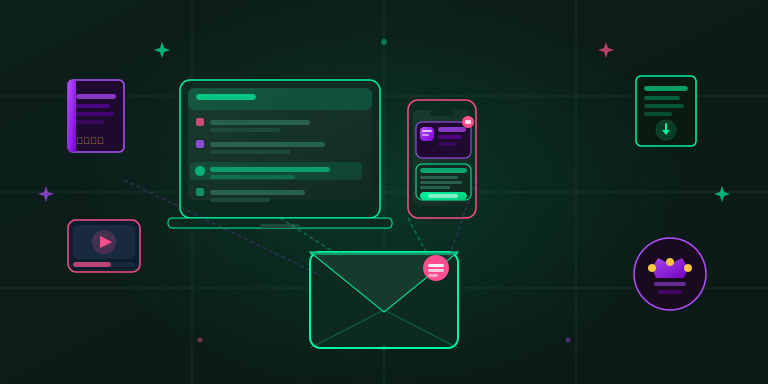
The objective of a nurture sequence transcends simply filling a subscriber’s inbox; its true purpose is to progressively build belief. This belief encompasses three critical facets: that the problem the creator addresses is genuinely significant, that their proposed solution and methodology are credible, and that their course or digital product represents the most logical and impactful next step for an individual committed to achieving progress. Research from the Direct Marketing Association (DMA) indicates that segmented and targeted emails generate 58% of all revenue, highlighting the importance of tailored content in nurture sequences.
A highly effective nurture sequence typically follows a structured narrative arc. It commences by empathizing with the subscriber’s current challenges and pain points, articulating the problem they are actively experiencing. Subsequently, it transitions to vividly illustrate the possibilities and transformative outcomes achievable by overcoming these challenges. The narrative then integrates compelling proof points, which can include testimonials, success stories from previous students, detailed case studies, or even the creator’s personal journey and expertise. By the time the actual course or product is introduced, a subscriber who has diligently followed this arc is not perceiving a hard sell or an unsolicited pitch. Instead, they are encountering a confirmation of a decision they have already begun to internalize, viewing the offering as the natural and logical solution to their articulated needs.
The optimal length of a nurture sequence is directly proportional to the price point and complexity of the digital product. A low-cost item, such as a $49 e-book, might convert effectively with a concise sequence of three or four emails over a few days. Conversely, a flagship course, a high-value coaching program, or a recurring membership requires a more extended runway. These higher-ticket offerings often necessitate six to ten emails distributed over several weeks, allowing ample time for comprehensive trust-building and objection handling before the sales cart officially opens. This extended engagement period is crucial for educating potential buyers and solidifying their conviction in the product’s value.
The Art of the Launch: Activating Urgency and Addressing Objections
When the sales cart opens for a digital product launch, the dynamics of email communication undergo a significant shift. The measured, value-first approach characteristic of a nurture sequence, while foundational, is insufficient to drive conversions during a defined launch window. A launch period inherently operates under a sense of contained urgency, and the emails deployed during this phase must resonate with and amplify this energy. Marketing analytics consistently show that emails sent during a launch period, especially those close to a deadline, see significantly higher open and click-through rates from interested segments.
Launch emails should commence not with a dry list of features, but with an engaging story—a narrative that resonates deeply with the audience’s aspirations or struggles. Subsequent emails in the sequence are strategically designed to directly address anticipated objections. For instance, if a common concern is a lack of time, emails should illustrate how previous students successfully integrated the course into demanding schedules, perhaps through micro-learning strategies or flexible access. If potential buyers doubt the efficacy for their specific circumstances, sharing a detailed success story from a student with a similar background just six months prior can powerfully assuage those fears.
The culmination of a launch sequence demands absolute honesty, particularly regarding deadlines. A genuine deadline, clearly articulated, commands respect and elicits action. Manufactured urgency, based on false scarcity or arbitrary cut-offs, quickly erodes trust the moment it is tested and found to be disingenuous. Authentic urgency, conversely, needs no embellishment; its inherent nature drives engagement. In the final 48 hours leading up to the cart closing, sending one email per day is not excessive. By this critical juncture, subscribers who are genuinely interested are actively anticipating these communications, often seeking the final push or last piece of information before committing.
Beyond the Sale: Cultivating Lifelong Customers and Advocates
A common pitfall for many course creators is to go silent once the sales cart closes and the transaction is complete. This oversight represents a significant missed opportunity. The post-purchase phase is as crucial for long-term success as the pre-launch efforts. Data suggests that retaining an existing customer can be five times cheaper than acquiring a new one, and email is a powerful tool for retention.
A simple check-in email, sent approximately a week after purchase, genuinely inquiring about a student’s initial experience and progress, generates a disproportionate amount of goodwill. Most buyers are unaccustomed to such proactive engagement from creators after the sale, making this gesture highly impactful. Furthermore, implementing progress-based emails that acknowledge milestones achieved within the course or gently encourage students who may be falling behind can have a direct and measurable impact on completion rates. This personalized support significantly enhances the student experience.
Completion rates are not merely vanity metrics; they are vital business indicators. A student who successfully finishes a course and achieves tangible results becomes the most invaluable marketing asset a creator can possess. These satisfied customers are the ones who spontaneously write compelling testimonials, eagerly refer their friends and colleagues, and are predisposed to purchase future offerings. Foundr exemplifies this commitment to post-purchase success with its 90-day results guarantee on Foundr+. Such a bold commitment is only viable if the post-purchase experience is meticulously designed to deliver on its promise, with well-timed and supportive emails playing a pivotal role in ensuring student success and satisfaction.
Strategic Imperatives for Digital Entrepreneurs
Building a digital product business founded on a robust email strategy represents one of the most resilient and sustainable models in contemporary online entrepreneurship. Its strength lies in its independence; it is not beholden to capricious social media algorithms, nor does its efficacy evaporate when platform rules arbitrarily change. Instead, its growth is directly proportional to the care and value consistently delivered to the subscribers on one’s list. This approach fosters a direct line of communication, bypassing third-party gatekeepers and cultivating a proprietary audience.
The most successful creators in this space are not simply sending more emails; they are sending better emails. These communications are strategically timed, rich in value, and delivered to individuals who have already established a degree of trust, making them receptive to opening and engaging with the content. This emphasis on quality, relevance, and relationship over sheer volume is a critical differentiator in a crowded digital landscape.
Leveraging Technology: The Role of Automation and Segmentation
Achieving this level of sophisticated email marketing demands robust technological support. Automation tools and advanced segmentation capabilities are no longer luxuries but necessities for scaling an effective email program. Platforms like Omnisend are specifically engineered to facilitate these complex strategies. They enable creators to automate entire nurture sequences, manage dynamic launch flows, and implement personalized post-purchase follow-ups without requiring constant manual intervention. Furthermore, their segmentation features ensure that the right message reaches the right subscriber at the precise stage of their journey, maximizing relevance and engagement.
For creators currently operating on disparate or less efficient platforms, the perceived costs of switching often deter improvement. However, dedicated services from providers like Omnisend aim to minimize this barrier. Their migration teams can transition all existing flows, subscriber lists, and templates within a matter of days, often free of charge, allowing founders to seamlessly upgrade their email infrastructure. Beyond the enhanced functionality, such switches frequently result in significant cost savings, with many founders reporting paying up to 35% less than their previous providers, and competitive SMS rates further enhancing value.
The enduring power of email marketing for digital product and course creators lies in its ability to forge genuine connections and build lasting trust. In a world increasingly dominated by fleeting digital interactions, the inbox remains a personal and powerful channel. By adhering to principles of value-first engagement, strategic sequencing, and authentic communication, creators can build an email program that not only drives sales but also cultivates a loyal community eager to engage with their offerings. This foundational approach ensures a sustainable business model, fostering an audience that eagerly anticipates every message.
Related posts: