The Silent Exit: Why Customer Loyalty Is Eroding Faster Than Ever and How Businesses Can Stem the Tide

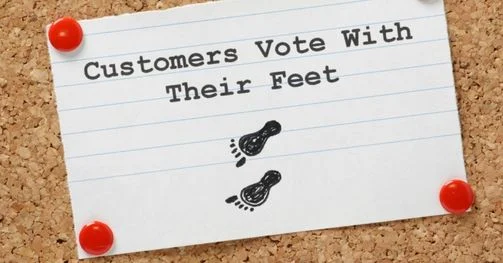
For decades, business leaders operated under the assumption that customer churn was a gradual, predictable process—a slow cooling of relations that provided ample time for intervention. However, modern consumer behavior has shifted dramatically, moving away from long, drawn-out breakups toward instantaneous departures. According to the 2025 PwC Customer Experience Survey, the window of opportunity to rectify a mistake or demonstrate value has narrowed to a singular moment. One poor interaction, characterized by a sluggish response or a sense of indifference, is now sufficient to permanently sever ties with even the most loyal of clients. This rapid shift in loyalty, often occurring without a formal complaint, represents a significant threat to long-term revenue stability and demands an immediate reevaluation of customer retention strategies.
The Anatomy of a Modern Breakup
In the traditional corporate model, account managers often viewed customer attrition as an erosion of value over several quarters. This outdated perspective suggests that a series of minor grievances eventually leads a client to seek a competitor. Current market data refutes this. Today, the decision to leave is typically binary and immediate. It is triggered by an acute pain point—a "moment of truth"—that occurs during a service failure, a billing dispute, or a technical hurdle.
When a client submits a support ticket, the clock begins ticking immediately. If that ticket remains unanswered for 72 hours, the customer has already begun the process of vetting new vendors, regardless of whether they communicate this intent to their current provider. This behavior is fueled by the ubiquity of high-speed digital services; customers have grown accustomed to near-instantaneous feedback loops in their personal lives and now demand the same from their professional partnerships. The "relationship" may linger for months while the client executes a migration strategy, but the psychological severance occurs at the exact moment the company failed to provide an adequate or timely response.
Statistical Realities of Consumer Churn
The disparity between executive perception and consumer reality is widening to dangerous levels. While nine out of ten executives surveyed by PwC believe that customer loyalty is currently on an upward trajectory, more than half of all consumers report that they have completely abandoned a brand due to a single negative experience. This gap represents a "silent churn" phenomenon, where businesses are losing market share and failing to identify the root cause because the departing customers never bother to voice their dissatisfaction.
Historically, companies relied on the "complaint loop" to identify failing accounts. Today, the path of least resistance for a dissatisfied customer is not to complain, but to simply stop buying. In the era of low-friction onboarding for SaaS and professional services, a customer can switch vendors with minimal overhead, making the cost of loyalty higher than the cost of replacement in the eyes of the consumer. This makes every touchpoint, from initial onboarding to routine maintenance, a critical juncture for retaining the account.
Why Price Is No Longer the Primary Driver
While procurement departments focus heavily on pricing, the actual reasons for customer attrition are rarely fiscal. Clients are generally willing to pay a premium for consistent, reliable service and a sense of partnership. The primary drivers of departure are instead rooted in psychological and operational failures:
- Perceived Indifference: This is perhaps the most insidious cause of churn. When an account manager assumes that a long-term, stable relationship requires little maintenance, the client begins to feel ignored. They no longer feel like a priority, leading to a state of emotional detachment.
- Unresolved Technical or Service Friction: Customers are inherently pragmatic; they understand that errors occur. The failure is not in the error itself, but in the lack of ownership. When an issue is passed between departments or ignored, it signals that the vendor does not value the customer’s time.
- The "Ticket Number" Syndrome: Automated systems, while efficient, often dehumanize the support process. When a client is forced to repeat their history to multiple agents or navigate a complex, ineffective chatbot, the cumulative frustration often reaches a breaking point that transcends the actual technical problem at hand.
The Economic Cost of Abandonment
The financial impact of a single lost account extends far beyond the immediate reduction in recurring revenue. When a client leaves, the company suffers from a compounding loss that includes the lifetime value (LTV) of the account, the substantial cost of acquiring a replacement, and the loss of potential referrals.
In many B2B environments, the cost to acquire a new customer can be five to seven times higher than the cost of retaining an existing one. Furthermore, the loss of an account often leads to a decline in staff morale and a negative impact on the company’s market reputation. When a customer leaves, they frequently share their negative experience with industry peers, effectively damaging the brand’s ability to attract future business. Consequently, retention is not merely a support function; it is a fundamental pillar of sustainable revenue growth and must be treated as a high-level strategic priority.
Tactical Framework for Retention
To reverse the trend of silent attrition, organizations must move from a reactive support model to a proactive engagement strategy.
Establishing a Velocity Standard: Every organization should define a clear "speed standard" for client communication. Whether this is a same-hour acknowledgment or a same-day resolution, the standard must be defended with the same rigor applied to sales quotas. When a problem arises, the speed of the recovery serves as the ultimate litmus test for the client’s trust in the brand.
Humanizing the Response: Automated notifications should be replaced with human outreach, particularly for high-value accounts. Even if a comprehensive solution is not yet available, a direct, personal message acknowledging the issue and providing a timeline for a resolution can prevent the customer from feeling neglected.
Proactive Value Checks: The most successful account managers utilize "zero-agenda" check-ins. These are brief, recurring touchpoints designed specifically to assess whether the client is extracting the expected value from the product or service. By engaging when nothing is wrong, companies build a "loyalty buffer" that can help weather future, inevitable challenges.
Monitoring for Silence: Silence from an account should be treated as a red flag, not a sign of satisfaction. If an account has stopped reaching out, reduced its usage, or failed to return calls, it is highly likely that they are quietly preparing to leave. Proactive intervention at this stage is often the last opportunity to save the relationship.
Implications for Future Growth
The future of business growth will be defined by the ability to manage the "customer experience lifecycle." As market saturation increases and competition intensifies, the companies that succeed will be those that view retention as an active, continuous investment rather than a passive byproduct of a good product.
Account managers and customer success teams must be equipped with specialized training that moves beyond basic problem solving and into the realm of "expansion selling." This involves identifying new ways to align solutions with a client’s evolving needs, thereby cementing the vendor’s role as an indispensable partner. By prioritizing speed, maintaining genuine human connections, and vigilantly monitoring account health, businesses can transform their customer base into a stable, long-term engine for revenue growth, effectively immunizing themselves against the volatility of the modern market.