The Strategic Integration of Artificial Intelligence Within the Modern Creator Economy

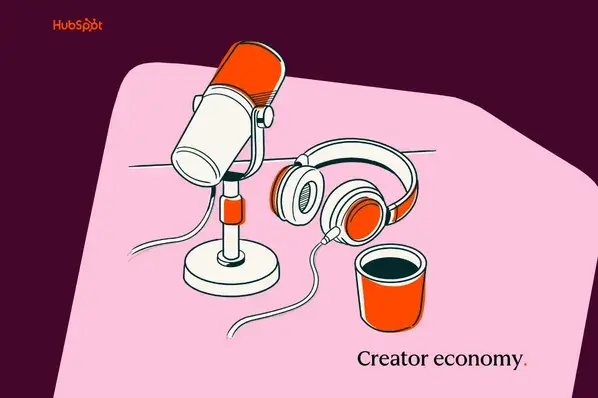
The rapid evolution of the creator economy over the past 24 months has been defined by a fundamental shift in sentiment regarding artificial intelligence. What began in 2023 as a landscape defined by existential dread—marked by fears of copyright displacement and the automation of creative output—has matured into an era of pragmatic leverage. Industry experts, including legal consultants, brand strategists, and top-tier content creators, now characterize AI not as a replacement for human intellect, but as an essential operational component for scaling, monetization, and strategic efficiency.
This transition was prominently on display at the 2024 Cannes Lions International Festival of Creativity. While the festival has historically served as a barometer for advertising and marketing trends, this year’s discourse moved past the novelty of generative tools to focus on the technical and ethical integration of AI into professional workflows. Across the industry, the consensus is that AI proficiency has become a prerequisite for maintaining competitive advantage, yet the value of human creative intuition remains the ultimate differentiator.
The Chronology of Adoption
The trajectory of AI in the creator space can be categorized into three distinct phases. In early 2023, the prevailing sentiment was defensive; creators expressed significant concern regarding intellectual property (IP) theft and the potential for large language models to mirror their unique voices. By late 2023, the focus shifted toward "early experimentation," as creators began using LLMs for administrative tasks and basic drafting.
As of mid-2024, the industry has entered the "integration phase." This period is characterized by the adoption of sophisticated workflows: feeding raw video footage into AI-driven editing suites, utilizing machine learning for data-driven content mapping, and employing AI as a negotiation tool for rate transparency. This timeline reflects a broader pattern in technology adoption where the fear of displacement is gradually superseded by the pursuit of operational efficiency.
Operational Efficiency and the Productivity Gap
For many independent creators, AI tools are filling the role of a junior production team. Gigi Robinson, a prominent content creator and founder of the consulting firm Hosts of Influence, provides a clear empirical example of this shift. By integrating AI video processing into her workflow, she reports an average time savings of 10 hours per week, contributing to a measurable 20% increase in her annual income. The workflow involves passing 15-plus minutes of raw footage through an AI-enabled editor to isolate "high-value" clips, which are then curated and polished by human editors.
This efficiency is not limited to video production. Lindsey Gamble, Vice President of Creator Strategy & Innovation at IZEA, notes that many creators are now constructing "searchable content hubs." By training custom AI models on years of their own newsletters, blog posts, and captions, creators can extract historical themes and insights that would otherwise be buried in chronological archives. This process allows for more effective content recycling and long-term brand consistency, demonstrating how AI can act as a bridge between a creator’s past work and their future strategy.
The Human-Centric Paradox
Despite these advancements, a persistent tension exists between AI-driven output and audience expectations. Marketing research consistently indicates that audiences gravitate toward content that exhibits human vulnerability, subjective experience, and unique personality—traits that current AI models struggle to simulate authentically.
DonYé Taylor, a marketing strategist and founder of the lifestyle brand Nuclei, equates AI to a sophisticated calculator. "Just because I have a TI-89 doesn’t mean I’m going to get the right answer," she notes. "I still need to put the right inputs into the calculator." This analogy underscores the concept of "prompt engineering" as the new literacy of the creative class. The quality of the output remains tethered to the depth of the user’s expertise.
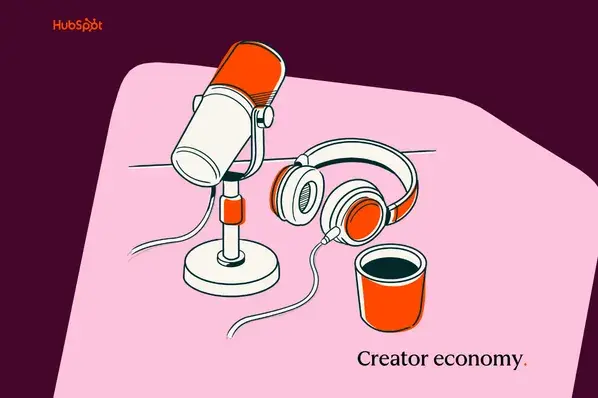
Furthermore, the "homogenization of content" has emerged as a significant secondary effect of AI adoption. Because many creators rely on the same foundational tools and prompts, there is a risk of a "middle-ground" aesthetic where creative voice is flattened. Industry experts suggest that the most successful creators will be those who use AI to handle the "heavy lifting" of production, while reserving the creative core for human-led, high-stakes ideation.
The Legal and Ethical Frontier
Legal infrastructure, however, continues to lag behind the velocity of AI development. Kameron Buckner, founder of Social Docket, points out that the legal frameworks currently governing digital property are largely based on statutes from the mid-20th century, rendering them ill-equipped to address modern issues like data scraping or AI-generated likeness rights.
This regulatory vacuum has created a "wild west" environment in brand partnerships. New, problematic clauses are appearing in contracts, with some brands demanding access to a creator’s "prompts and processes." Legal experts advise against this, noting that such demands constitute an overreach that effectively mines a creator’s intellectual capital beyond the scope of the deliverable. Conversely, other brands are implementing blanket bans on AI usage, creating a complex compliance landscape for creators who must navigate differing requirements from multiple sponsors.
A significant risk identified by industry veterans is the inadvertent breach of confidentiality. Creators who feed sensitive, non-disclosure-agreement (NDA) protected contracts into public-facing AI tools to assist in negotiation may be violating privacy terms. This reality highlights the ongoing necessity for human legal counsel to contextualize AI-generated definitions within the specific, real-world constraints of an individual’s business dealings.
Disparities in AI Utilization
Data from Lean In, as cited by Annie-Mai Hodge of Girl Power Marketing, suggests that the adoption of AI is not uniform across demographics. Women in the workplace are 22% less likely to be regular AI users and 32% more likely to express concerns about being perceived as "cheating." This disparity suggests a cultural, rather than technical, barrier to entry.
Conversely, AI has shown promise in addressing systemic inequities, particularly in wage transparency. Historically, the opacity of the creator economy regarding pay rates has left creators at a disadvantage during negotiations. AI-powered chatbots and analytical tools are now providing creators with industry benchmarks, effectively closing the information gap and empowering creators to demand equitable compensation.
Future Outlook: The Irreplaceable Human
As the industry moves toward 2025, the overarching consensus is that the value of the "human element" is actually increasing in proportion to the saturation of AI-generated content. Evidence from major industry events like Cannes Lions shows a renewed emphasis on human-driven storytelling as a premium product.
For creators, the path forward involves a delicate balancing act: adopting AI to remain efficient enough to survive, while doubling down on the idiosyncratic, lived experiences that machines cannot replicate. The "muscle" of creativity, as described by strategist Lindsey Gamble, must be exercised independently. If creators rely entirely on automation, they risk atrophy of their unique creative voice.
Ultimately, the most successful practitioners will be those who view AI as a sophisticated assistant—a tool that can help organize a database or outline a project, but one that lacks the emotional depth and strategic intent required to build a sustainable, human-led brand. The goal for the modern creator is not to out-produce the machine, but to out-think it, ensuring that every AI-assisted output is filtered through a lens of human experience, ethical rigor, and intentional design. As the tools become more powerful, the responsibility of the creator to curate, verify, and add personal value will remain the fundamental requirement for long-term success.