The Ultimate Guide to Facebook Ad Sizes and Design Specifications for Digital Marketers


Navigating the dynamic landscape of digital advertising requires meticulous attention to technical details, particularly as social media platforms frequently update their interface guidelines and display parameters. For social media managers and marketing agencies, uploading an incorrectly sized image or a low-resolution video is an occupational hazard. While these formatting errors typically stem from honest mistakes, their commercial consequences can severely compromise campaign performance and advertising return on investment (ROI).
Meta platforms, particularly Facebook, implement continuous modifications to their ad dimensions and structural specifications. Staying abreast of these shifting parameters is essential for maintaining brand integrity and maximizing audience engagement. Understanding the precise technical requirements for each placement ensures that creative assets render correctly across diverse devices, preventing awkward cropping, pixelation, or outright ad rejection by automated review systems.
Strategic Importance of Ad Specifications in Modern Campaigns

Adhering to platform-specific creative guidelines directly influences algorithmic delivery and user experience. When advertisements utilize optimized dimensions, they seamlessly integrate into the user interface rather than appearing intrusive or broken. This visual harmony reduces ad fatigue, encourages higher click-through rates (CTR), and ultimately drives down customer acquisition costs. Furthermore, high-resolution assets convey professionalism, reinforcing brand credibility in crowded digital marketplaces.
The evolution of digital consumption patterns has accelerated the shift toward mobile-first and video-centric formats. Consequently, marketers must design assets that capture attention within the first three seconds of viewing. Mastery of Meta’s technical specifications allows creative teams to build modular campaigns that deploy efficiently across multiple placements without requiring a complete redesign for every ecosystem.
Facebook In-Feed Ad Specifications
In-feed advertisements represent the foundational format for building brand awareness and product interest, offering a cost-effective entry point for advertisers operating with varied budgets. These ads appear directly within users’ primary news feeds, interspersed organically between posts from friends, family, and followed pages.
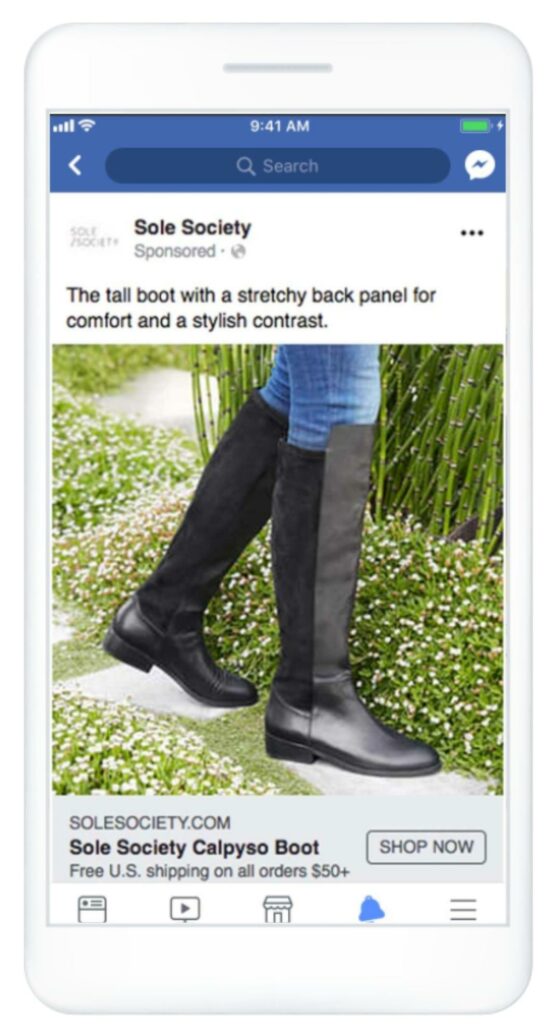
For static imagery, advertisers must utilize JPG or PNG formats with a maximum file size of 30 MB. While the minimum dimension threshold sits at 600 x 600 pixels, best practices dictate uploading assets at a resolution of at least 1080 x 1080 pixels to accommodate high-density retina displays. Aspect ratios may range from 1.91:1 to 1:1. Text recommendations advise keeping primary text concise at approximately 125 characters, with headlines and descriptions capped optimally at 27 characters.
Video-based in-feed advertisements support MP4, MOV, and GIF file types up to 4 GB in size. Videos should maintain a resolution of at least 1080 x 1080 pixels, utilizing a 1:1 ratio for desktop and mobile placements, or a 4:5 vertical ratio specifically optimized for mobile environments. Durations can span from a single second up to 241 minutes, though engagement metrics typically favor shorter, punchier edits.
Optimizing Conversions Through In-Stream Video Placements
When primary campaign objectives center on driving high-intent traffic and direct conversions, in-stream video ads serve as powerful instruments for capturing captive audiences. These advertisements are delivered exclusively to mobile users and function via two primary formats: single videos and carousel configurations tied to live broadcasts.
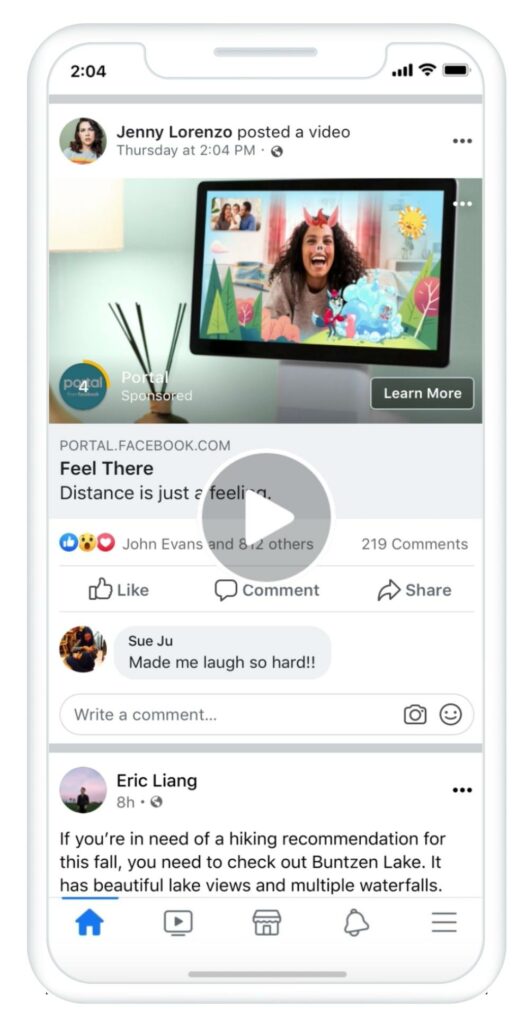
Carousel in-stream video ads activate specifically when a user has engaged with a Facebook Live broadcast for a minimum duration of 60 seconds. Technical parameters for accompanying static elements require JPG or PNG files at a minimum of 600 x 600 pixels, with a recommended resolution of 1080 x 1080 pixels and an aspect ratio tolerance of 3%. Primary text should adhere to the 125-character limit, while headlines can expand slightly to 40 characters. Crucially, platform guidelines advise against embedding text directly onto image files prior to upload.
Video specifications for in-stream placements mandate MP4, MOV, or GIF formats capped at 4 GB. Aspect ratios are restricted to 16:9 or 1:1, with playback lengths ranging from 5 seconds to 10 minutes, backed by a minimum resolution of 1080 x 1080 pixels.
Leveraging Carousel Ads for Comprehensive Product Showcases
Carousel advertisements provide an immersive medium for presenting complex product suites or detailing multiple facets of a single offering. Advertisers can incorporate between two and 10 distinct scrollable cards, combining static images and video files to segment information into digestible components.

A distinct strategic advantage of the carousel format is the ability to assign a unique destination URL to each individual card. E-commerce enterprises frequently utilize this functionality to display multiple items within a single ad placement, routing prospective buyers directly to the relevant product landing page.
Design specifications for carousel cards require a strict 1:1 aspect ratio across all components. Image file sizes cannot exceed 30 MB, whereas video files accommodate up to 4 GB with a minimum dimension of 120 x 120 pixels. Resolution standards demand a minimum of 1080 x 1080 pixels. Text recommendations adjust slightly for this format, suggesting 125 characters for primary text, 32 characters for headlines, and a concise 18 characters for descriptions, alongside a mandatory landing page URL.
Streamlining E-Commerce Sales with Collection Ads
Collection ads are engineered specifically for retail and e-commerce brands aiming to market diverse inventories without overwhelming prospective consumers. These placements feature a primary hero asset—frequently a short-form video highlighting core product attributes—supplemented by three high-resolution product thumbnails displayed underneath.

Interaction with a collection ad triggers a Facebook Instant Experience, an instantaneous, full-screen mobile landing page that loads natively within the application. This frictionless environment enables consumers to browse product catalogs and complete transactions without navigating away from the social platform.
Collection ad assets must adhere to a 1:1 aspect ratio with a minimum resolution of 1080 x 1080 pixels. File size limits remain consistent at 30 MB for images and 4 GB for videos, with JPG, PNG, MP4, and MOV formats supported. Text guidelines advise limiting primary text to 125 characters and headlines to 40 characters, with an accompanying landing page URL required.
Maximizing Mobile Readership via Instant Articles
Facebook Instant Articles deliver text-based publishing formats optimized for mobile device consumption, offering rapid load times and enhanced reading experiences. Advertised content within this framework mirrors the interactive capabilities of Instant Experiences, allowing businesses to foster deeper consumer connections.

Technical requirements for Instant Article imagery necessitate JPG or PNG files under 30 MB, maintaining a 1:1 aspect ratio and a minimum resolution of 1080 x 1080 pixels. Video specifications mirror standard feed criteria, supporting MP4, MOV, and GIF files up to 4 GB with a 16:9 video aspect ratio and a minimum resolution of 1080 x 1080 pixels. Primary text and headline constraints remain fixed at 125 and 40 characters, respectively.
Targeting Local Intent Through Marketplace Ads
Facebook Marketplace functions as a peer-to-peer and business-to-consumer digital bazaar where regional users buy and sell commodities. Paid promotional placements within Marketplace allow brands to target consumers who exhibit active transactional intent within specific geographic coordinates.
Marketplace ads support both static and dynamic visual assets. Image specs require a 1:1 aspect ratio, JPG or PNG file types, and a minimum resolution of 1080 x 1080 pixels under a 30 MB ceiling. Video requirements accept MP4, MOV, or GIF files up to 4 GB, adhering to a 1:1 ratio and a 1080 x 1080 pixel resolution minimum. Text parameters accommodate 125 characters for primary text, 40 characters for headlines, and 30 characters for descriptions.

Desktop-Centric Visibility: Right Column Advertisements
Right column ads remain a fixture for desktop-exclusive campaigns, appearing along the periphery of the main interface. Although mobile device usage dominates contemporary traffic shares, right column placements continue to serve as supplementary touchpoints for comprehensive multi-device strategies.
Because these ads render exclusively on desktop screens, their physical display size is compact and horizontal. Supported image and video assets must maintain a 1:1 aspect ratio with a minimum width of 254 pixels and height of 133 pixels, scaling up to a resolution of 1080 x 1080 pixels. Headlines are restricted to 40 characters, and maximum file parameters mirror standard upload thresholds.
Engaging Vertical Formats: Stories and Messenger Placements

Vertical, full-screen layouts dominate modern social media consumption via Stories formats distributed across Facebook, Instagram, and Messenger. These ephemeral placements occupy the entirety of the user’s screen and require strict adherence to dimensional margins to prevent native user interface elements from obstructing critical content.
For both Facebook Stories, Instagram Stories, and Messenger Stories, visual assets must utilize a 9:16 aspect ratio with a recommended resolution of 1080 x 1080 pixels or higher. A critical design mandate for Stories assets requires marketers to leave approximately 14% (or 250 pixels) of both the top and bottom margins completely free of vital text, logos, or calls to action to prevent them from being masked by profile headers or engagement bars.
Video assets in Story placements support MP4, MOV, and GIF formats up to 4 GB, spanning durations from 1 second to 241 minutes depending on the specific ecosystem. Text recommendations advise maintaining primary text within 125 characters and headlines within 40 characters.
Expanding Reach via the Audience Network

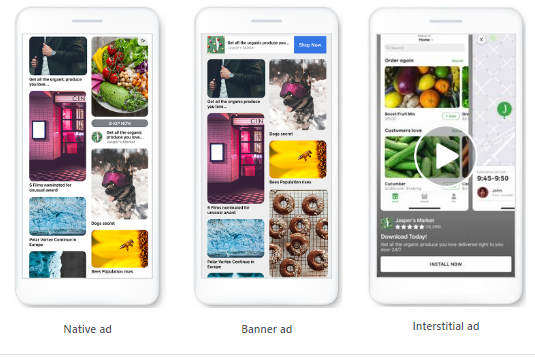
The Facebook Audience Network extends advertising campaigns beyond the proprietary ecosystem of Meta applications, deploying native, banner, and interstitial ads across vetted third-party mobile websites and external applications.
Audience Network placements leverage Meta’s robust targeting infrastructure while granting administrators granular control over brand safety. Advertisers can utilize Business Manager to exclude specific content categories, ensuring brand alignment prior to campaign launch. Static image specs require a 9:16 ratio with a minimum resolution of 398 x 208 pixels, while video formats support 1:1 and 4:5 ratios up to 4 GB.
Strategic Ad Placement Optimization for Maximum Return on Investment
Selecting the appropriate ad format and placement combination is a decisive factor in achieving campaign profitability. Marketers must evaluate campaign objectives—whether driving awareness, consideration, or conversion—and map them against the structural capabilities of each inventory source.
Single images and videos demonstrate high versatility, integrating seamlessly across the Facebook news feed, Instant Articles, Audience Network, and Messenger. Conversely, specialized formats like collection ads and carousels excel in e-commerce environments where visual product discovery drives conversion metrics.
By aligning creative assets with exact platform specifications, digital marketers mitigate the risk of automated ad rejection, preserve visual fidelity across disparate hardware devices, and ensure an unhindered user experience. Maintaining rigorous compliance with these technical benchmarks ultimately elevates campaign efficiency, protects advertising budgets, and drives sustained commercial growth in competitive digital marketplaces.