The Transformative Power of Sales Intelligence Software in 2026: Unlocking Revenue Growth and Operational Efficiency


In the competitive landscape of 2026, the traditional sales cycle, characterized by extensive human interaction and often incomplete manual record-keeping, faces an unprecedented revolution driven by advanced sales intelligence software. Every closed deal, every new prospect engaged, represents hundreds of hours of intricate conversations, messages, and video meetings. Yet, for years, the vast majority of this rich interaction data—estimated at over 99%—remained unreviewed, an untapped reservoir of insights and a significant blind spot for organizations striving for growth. Sales intelligence platforms are fundamentally changing this reality, transforming raw, unstructured communication data into actionable business insights and leveraging the power of Artificial Intelligence (AI) to turn these once-hidden interactions into a core engine for revenue generation and operational excellence. This article delves into the mechanics, strategic implications, and leading platforms defining the sales intelligence market in 2026.
The Evolution of Sales Data: From Manual Logs to AI-Driven Insights
The journey of sales technology has been one of continuous innovation, moving from basic contact management to sophisticated Customer Relationship Management (CRM) systems, and then to a broader suite of sales enablement tools. CRMs provided a foundational database for customer records, deal stages, and contact history. However, their reliance on manual input from sales representatives often led to incomplete, inconsistent, or delayed data, creating a "documentation tax" that burdened high-value sales personnel and skewed pipeline visibility. This systemic drain on productivity meant that reps spent valuable hours typing summaries and notes instead of engaging with prospects, costing companies significant revenue potential.

The advent of AI for sales marked a pivotal shift. Early applications focused on predictive analytics for lead scoring or automating rudimentary tasks. However, the true breakthrough came with the maturation of natural language processing (NLP) and machine learning (ML), enabling software to not just store data, but to understand and interpret the nuances of human conversation. This capability gave rise to sales intelligence software, a distinct technological layer that complements and enriches the CRM by automatically capturing, analyzing, and distributing data from customer and prospect interactions—including calls, messages, and video meetings. It empowers sales teams to make superior decisions, automates administrative burdens, and proactively identifies revenue risks, offering a structured, objective view of what is truly happening in revenue-generating conversations.
Demystifying Sales Intelligence: A Core Engine for Growth
At its essence, sales intelligence software operates as a sophisticated data refinery. It is not a replacement for your CRM or broader sales software suite; rather, it acts as a critical feeder, populating the CRM with accurate, automatically captured data that reflects actual interactions rather than a rep’s post-call recollections. This distinction is paramount in 2026, as buyers navigate a market increasingly bifurcated between traditional point solutions and modern, platform-native software.
Traditional standalone tools often operate external to a company’s core communication infrastructure. Many rely on external recording bots that "join" meetings, introducing IT overhead, potential data security vulnerabilities, and workflow friction. These solutions might also levy annual platform fees on top of per-seat pricing, adding layers of expense to an already existing communication stack.

Conversely, a modern, platform-native approach integrates sales intelligence directly into the communication platform itself. When sales intelligence is built into the system used for calls, video meetings, and messaging, data capture occurs automatically and seamlessly across sales, customer service, and business intelligence operations. This eliminates the need for third-party bots or custom integrations, ensuring data flows directly into existing workflows without additional setup. This native integration is not merely a convenience; it protects data hygiene, significantly reduces IT complexity, and guarantees that no critical conversation falls through the cracks due to connection failures or missed recordings. Industry analysts consistently highlight native integration as a key differentiator, citing improved data integrity and lower total cost of ownership as primary benefits.
The Three-Step Processing Loop: How Intelligence Unfolds
Regardless of the vendor, sales intelligence platforms follow a consistent, high-volume processing loop designed to capture the full scope of operations, not just surface-level interactions. This continuous, scalable process is what makes these platforms infinitely more powerful than any manual review.
Step 1: Data Collection and Ingestion
The initial phase involves the comprehensive capture of raw interaction data across every communication channel utilized by the team: phone calls, video meetings, and messages. In native platforms, this capture is intrinsic to the communication system, occurring automatically and in real-time. For standalone tools, this is the point where an external bot typically connects to meetings or integrates with call recording systems. The goal is to ensure that every single interaction, regardless of its duration or medium, is brought into the intelligence engine for subsequent analysis.
Step 2: Automated Analysis and Scoring
Once ingested, the raw data undergoes sophisticated automated analysis. Here, AI and machine learning models spring into action, transcribing every word, tagging key topics, identifying risk signals, detecting shifts in sentiment, and categorizing interactions by outcome, urgency, or deal stage. This phase transforms raw audio and text into structured, searchable data. For example, AI can pinpoint specific keywords indicating competitor mentions, identify emotional cues suggesting frustration, or flag compliance-sensitive statements. This deep analytical capability allows for granular understanding of conversational dynamics that would be impossible to achieve through human review alone.
Step 3: Workflow Integration and Synchronization
The final step ensures that the processed insights are delivered where they are most impactful—directly into the tools and workflows teams already use. CRM records are automatically updated with call summaries, action items, and relevant conversation snippets, alleviating the "documentation tax." Managers receive prioritized alerts for flagged interactions, enabling proactive intervention. AI sales coaching recommendations are delivered to representatives based on detected patterns in their calls, providing personalized, real-time guidance. Executives gain the ability to query vast amounts of conversation data using natural language, identifying overarching trends, product feedback, or market shifts across the entire business. This integration ensures that intelligence is not just generated but is actionable and integrated into daily operations.
Core Features: Extending Value Across the Customer Lifecycle
While often initially perceived as merely another sales enablement tool for sales development teams, modern sales intelligence platforms offer value that extends far beyond initial prospecting. Their capabilities span the full customer lifecycle, encompassing customer service, account management, and critical post-sale retention efforts. The data trends missed by limiting visibility to just the sales team are frequently the earliest predictors of churn or opportunities for expansion.

Automated Database Sync and Workflow Optimization
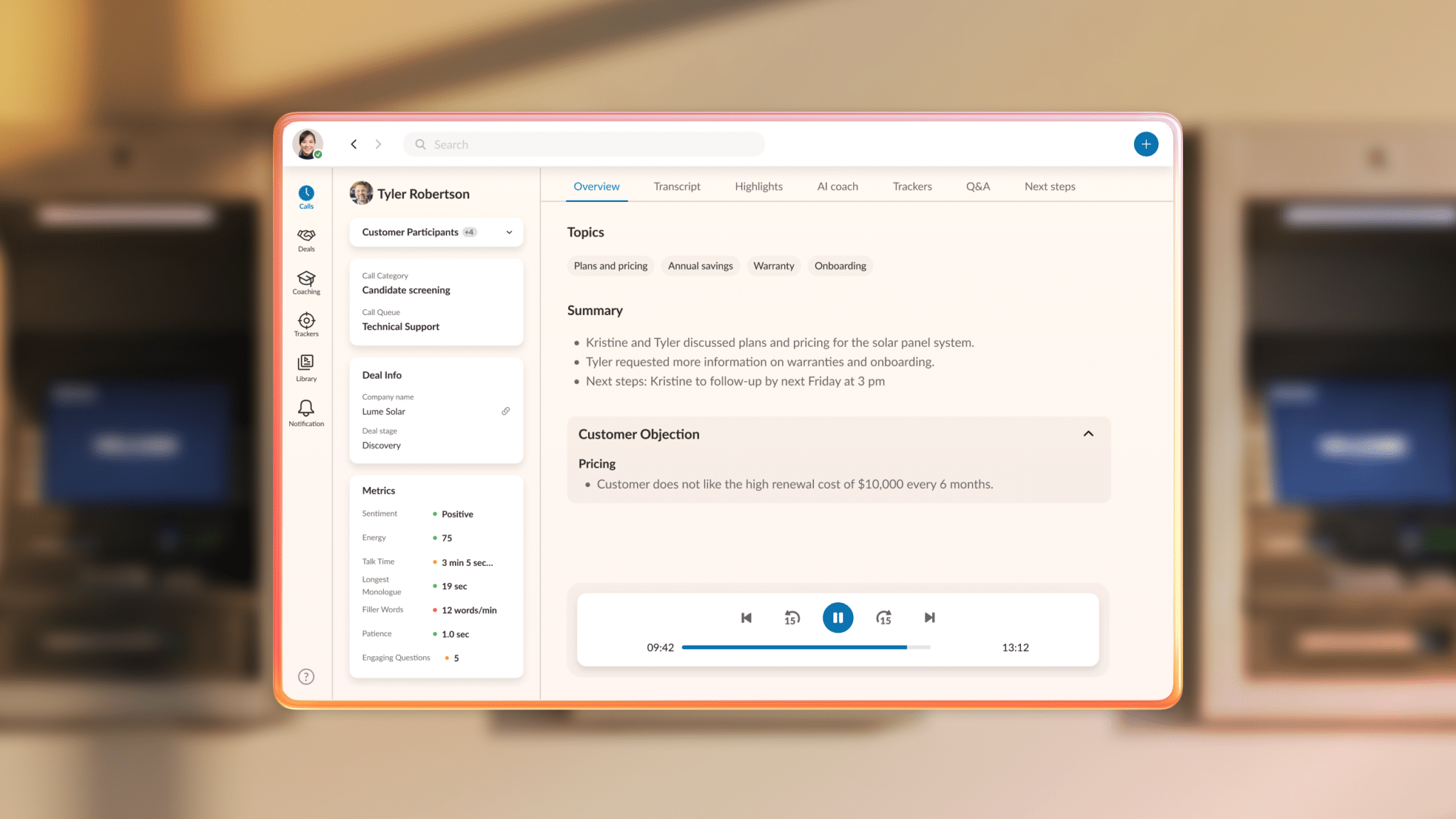
The most immediate and tangible benefit of sales intelligence software is the elimination of the aforementioned Documentation Tax. Industry studies indicate that sales reps can spend up to 20% of their time on administrative tasks, translating into billions of dollars in lost productivity annually. A complete sales intelligence platform eradicates this burden. After every call or meeting, an AI sales assistant automatically generates a comprehensive summary, extracts critical action items, and syncs the full record directly into the CRM. This means a representative can conclude a conversation and immediately move to the next, while the CRM is updated in the background with accurate, structured data. This isn’t just a quality-of-life improvement for individual contributors; at scale, it provides leadership with an accurate, real-time picture of pipeline activity, replacing a patchwork of manually entered notes with varying levels of completeness and accuracy.
Interaction Risk and Signal Isolation
A stark reality in sales management is the severe limitation on review capacity. Most sales managers and quality assurance teams can review less than 1% of recorded calls. This leaves the remaining 99% of customer interactions—a vast repository of critical information—sitting unreviewed, potentially harboring significant risk signals. Implementing conversation intelligence is the only viable method to tap into this unaddressed 99%.
Consider the implications of this blind spot: a customer mentioning a potential switch to a competitor, a rep making an unapproved discount promise, or a prospect raising a compliance concern that is inadvertently dismissed. Any of these unreviewed moments can escalate into a revenue leak, a damaged relationship, or even legal exposure. Sales intelligence software functions as a tireless virtual supervisor, automatically processing every single interaction. It does not sample; it scrutinizes everything and surfaces only those moments requiring human attention. Managers receive a prioritized feed of flagged incidents, rather than an overwhelming list of recordings to manually sift through. This enables teams to address risk signals within hours, not weeks, significantly mitigating potential damages and ensuring no revenue risk goes unaddressed.
Strategic Observability via Natural Language
Beyond daily operational improvements, advanced sales intelligence software grants executive leadership an unprecedented capability: strategic observability at scale. Traditional feedback loops within most organizations are inherently reactive. Leadership typically discovers product issues, market shifts, or customer dissatisfaction only after a negative review surfaces, a customer escalates to the C-suite, or sales figures reflect a decline. By the time such signals reach decision-makers, weeks or even months of damage may have already accumulated.
Sales intelligence software dramatically shortens this feedback loop by allowing executives and operations leaders to query the entire body of customer conversations using natural language. Instead of waiting for quarterly reviews, a VP of Sales can instantaneously ask the platform about the most frequent objections raised last month, which accounts are exhibiting signs of frustration, or how reps are articulating a newly launched feature. This level of revenue intelligence empowers leaders to make data-driven decisions, acting on verifiable conversation data rather than anecdotal manager reports or limited survey responses. This shift from reactive lag to proactive, real-time mastery is a defining characteristic of organizations that strategically leverage sales intelligence.
The Sales Intelligence Landscape of 2026: A Dual-Layered Approach
In 2026, the sales intelligence market is distinctly bifurcated into two operational layers, each serving a unique purpose in the sales cycle. These layers are not in competition but are complementary, with the most robust enterprise sales stacks often utilizing both.
Prospecting and Data Enrichment Engines
These platforms are essentially static databases designed to help organizations map their market before any conversation initiates. They focus on identifying verified contact details, tracking job changes, monitoring buying signals from public data sources, and assisting in the construction of targeted account lists. Their data typically originates from vast company databases, web scraping, and third-party data providers.
- LinkedIn Sales Navigator: The undisputed standard for social selling and account-based prospecting. It provides sales teams unparalleled access to LinkedIn’s professional network, with sophisticated filters for targeting by role, company size, industry, and buying committee membership. Its strength lies in relationship mapping and identifying "warm" paths into target accounts, though it does not analyze actual sales conversations.
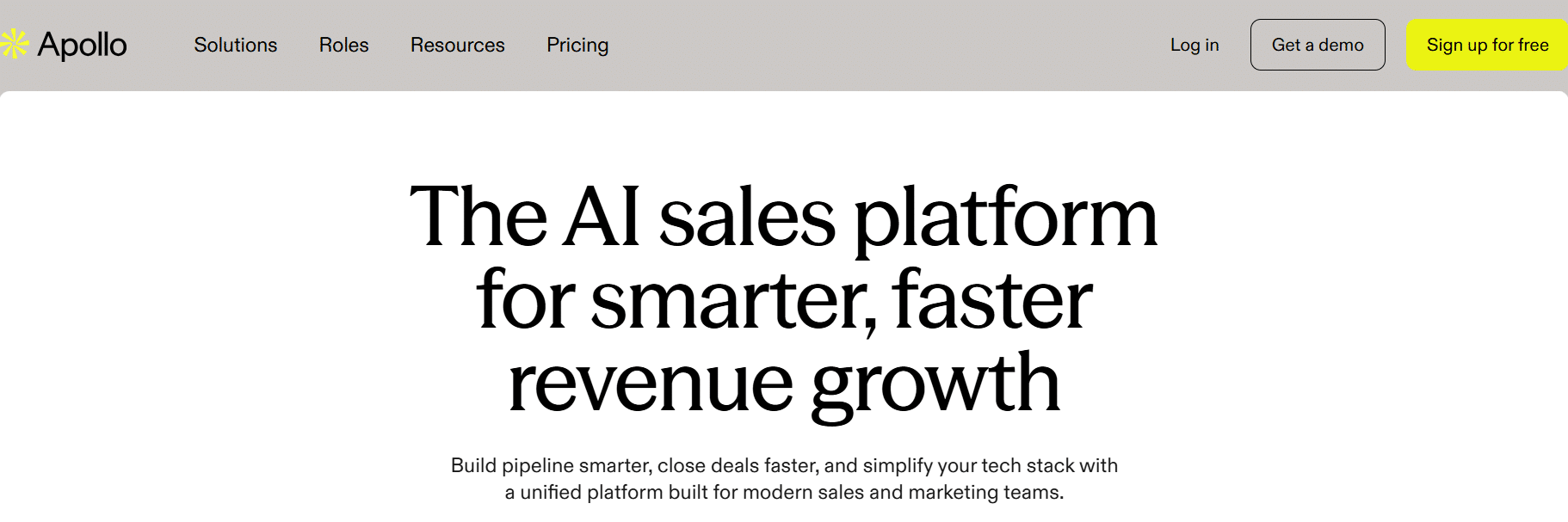
- Apollo.io: A popular choice for teams seeking to integrate prospecting and outbound outreach. Apollo.io combines a comprehensive B2B contact database with robust outbound sequencing tools. It provides intent data signals and CRM enrichment features to maintain up-to-date contact records. Like all prospecting tools, its visibility concludes once the first conversation begins.
- ZoomInfo: One of the most exhaustive B2B intelligence databases available. ZoomInfo offers detailed firmographic and technographic data, alongside buyer intent signals derived from extensive web activity. Enterprise teams leverage it to prioritize accounts and identify contacts actively researching solutions in their specific category. Its focus remains exclusively on the pre-interaction phase of the sales cycle.
Interaction and Conversation Intelligence Engines
These platforms are active data capture and analysis systems that operate during and after live interactions. They record, transcribe, and analyze the actual calls, messages, and video meetings between sales representatives and prospects or customers. Their data is generated directly from the company’s own communication stack.
- RingCentral AI Conversation Expert (ACE): Built natively into the RingCentral communication platform, ACE captures interaction data without the need for third-party bots or external integrations. It automatically transcribes and analyzes conversations across sales and customer service operations simultaneously, flags risk signals, automates CRM updates, and allows leadership to query conversation data using natural language. Its native architecture eliminates additional software management, separate logins, and integration complexities.
- Gong: A highly established name in dedicated revenue intelligence, Gong offers deep deal analytics, forecasting, and AI coaching scorecards tailored for enterprise sales organizations. Operating as a standalone platform layered atop existing meeting and dialing stacks, its pricing reflects its enterprise focus, typically involving premium per-seat costs plus annual platform fees on multi-year contracts. Its coverage primarily centers on sales teams, necessitating additional tools for broader customer service or post-sale interaction visibility.
- Zoom Revenue Accelerator: Zoom’s integrated conversation intelligence layer, designed for teams primarily conducting sales calls via Zoom Meetings. It provides deal tracking, coaching insights, and call summaries for representatives and managers within the Zoom ecosystem.
- Dialpad AI: Offers transcription, live coaching prompts, and post-call summaries for teams utilizing the Dialpad communication platform. It is particularly strong for contact center and customer service applications. Like other platform-specific tools, its intelligence is tied to interactions conducted through Dialpad’s own infrastructure.
Strategic Adoption: Choosing the Right Intelligence Partner
Selecting the appropriate sales intelligence software transcends a simple feature checklist; it demands a thorough vendor evaluation that considers how a platform integrates with existing communication infrastructure and its actual operational coverage. Industry experts advise challenging every prospective vendor with critical questions before committing to an enterprise contract. These include inquiries about data security protocols, integration complexities, scalability for future growth, and the total cost of ownership encompassing both initial investment and ongoing maintenance. The implications of choosing a native solution versus a standalone tool for IT overhead, data governance, and overall operational efficiency are significant.
The future of sales in 2026 is inextricably linked to the intelligent capture and analysis of customer interactions. As sales cycles become more complex and customer expectations continue to rise, organizations that embrace comprehensive sales intelligence will gain a decisive competitive edge. They will not only streamline operations and enhance individual rep performance but also unlock strategic insights that drive proactive decision-making, fuel sustainable growth, and foster deeper customer relationships in an increasingly data-driven world. The era of the unreviewed blind spot in sales is rapidly drawing to a close, replaced by an age of unprecedented visibility and actionable intelligence.