Buffer Public API Launch Facilitates Integration with TRMNL E-Ink Displays for Ambient Social Media Management


The intersection of minimalist hardware and digital content management has reached a new milestone with the official launch of the Buffer Public API and its flagship integration with TRMNL, a leading producer of ambient e-ink displays. This development represents a strategic shift for Buffer, a social media management platform that has historically operated within a more closed ecosystem, as it moves toward an open-access model designed to empower third-party developers and hardware manufacturers. The partnership with TRMNL was catalyzed by a serendipitous technical collaboration between a Buffer engineer and the TRMNL development team, resulting in a specialized plugin that allows users to monitor their social media queues through a physical, low-power e-ink interface.
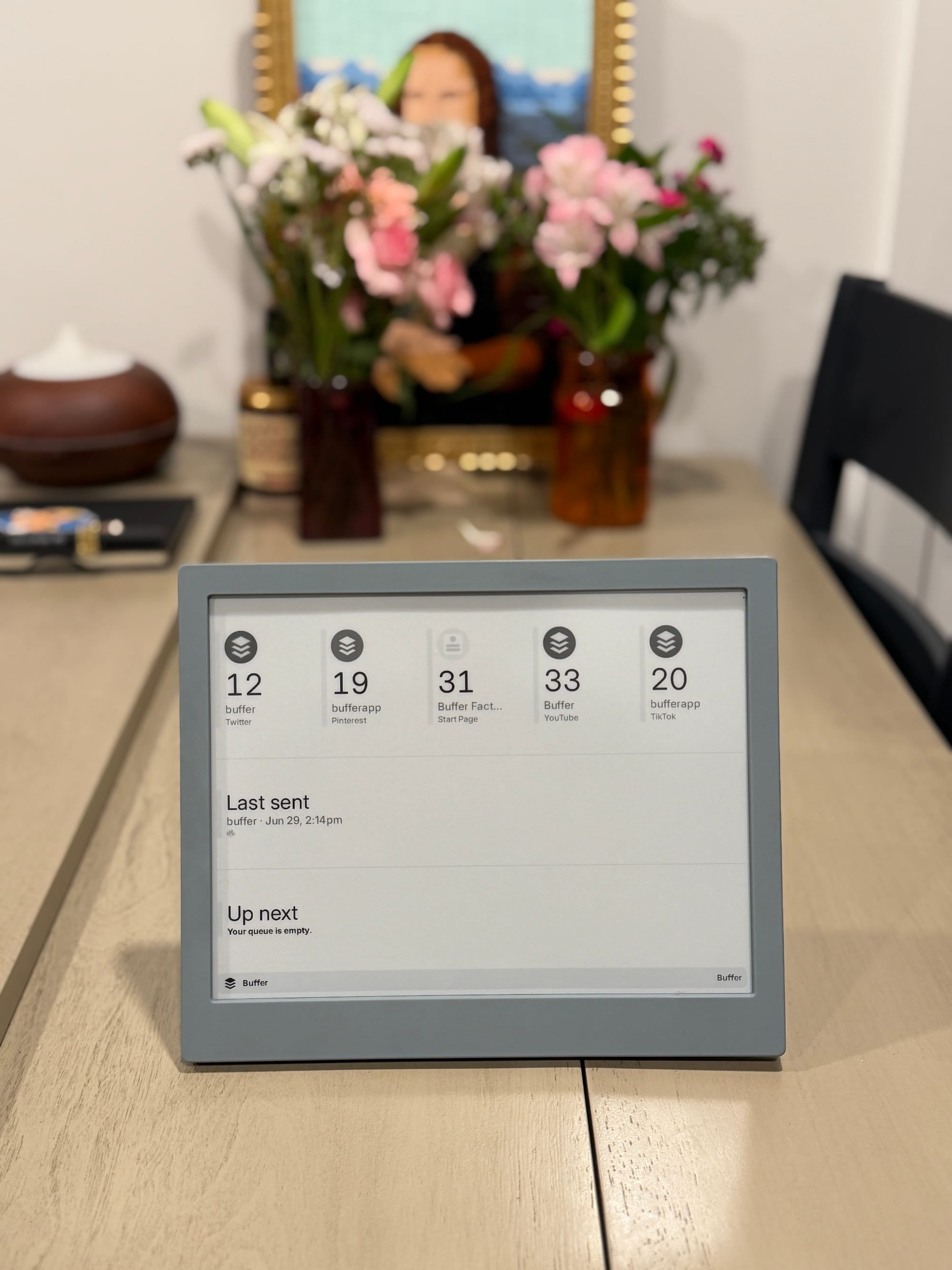
The integration enables Buffer users to view their post counts, recently sent updates, and upcoming scheduled content directly on a TRMNL device. These devices are designed to sit on a user’s desk, providing a non-intrusive, "calm" stream of information that does not require the user to open a browser tab or engage with a smartphone notification. This move aligns with the broader industry trend toward "ambient computing," where digital information is integrated seamlessly into the physical environment to reduce cognitive load and digital fatigue.
The Chronology of a Serendipitous Integration
The path to this partnership began not in a corporate boardroom, but through an individual engineering project. Andy Yates, a software engineer at Buffer, had recently acquired a TRMNL device and began developing a private plugin to monitor his personal Buffer account. At the time, Buffer’s public API was in the final stages of internal testing but had not yet been released to the general public.
In a coincidence that would define the launch strategy, the team at TRMNL—unaware of Yates’ professional affiliation—identified his private "Buffer" plugin while scouting for high-potential community builds on their platform. TRMNL reached out to Yates via his personal email to inquire about the possibility of making the plugin available to the wider TRMNL user base. This inquiry arrived just one week before Buffer was scheduled to take its API live, providing a perfect "day one" use case for the new developer tools.
Following this initial contact, a collaborative development phase ensued. Ikraam, a developer from the TRMNL team, worked directly with Yates to refine the plugin’s architecture. This collaboration focused on enhancing the user setup flow and ensuring the plugin could handle the rigors of a public release. The resulting software was eventually contributed to TRMNL’s public providers repository, ensuring that future developers looking to build Buffer-related tools on the TRMNL platform would have a functional foundation to build upon.
Technical Specifications and the Role of PKCE
From a technical perspective, the integration utilizes Buffer’s new OAuth flow, specifically employing the Proof Key for Code Exchange (PKCE) standard. PKCE is a security extension for OAuth 2.0 that was originally designed for mobile apps but has become a best practice for all types of OAuth clients. It mitigates the risk of authorization code injection attacks, making it a robust choice for hardware integrations where users must securely grant third-party devices access to their data without manually handling sensitive API keys.
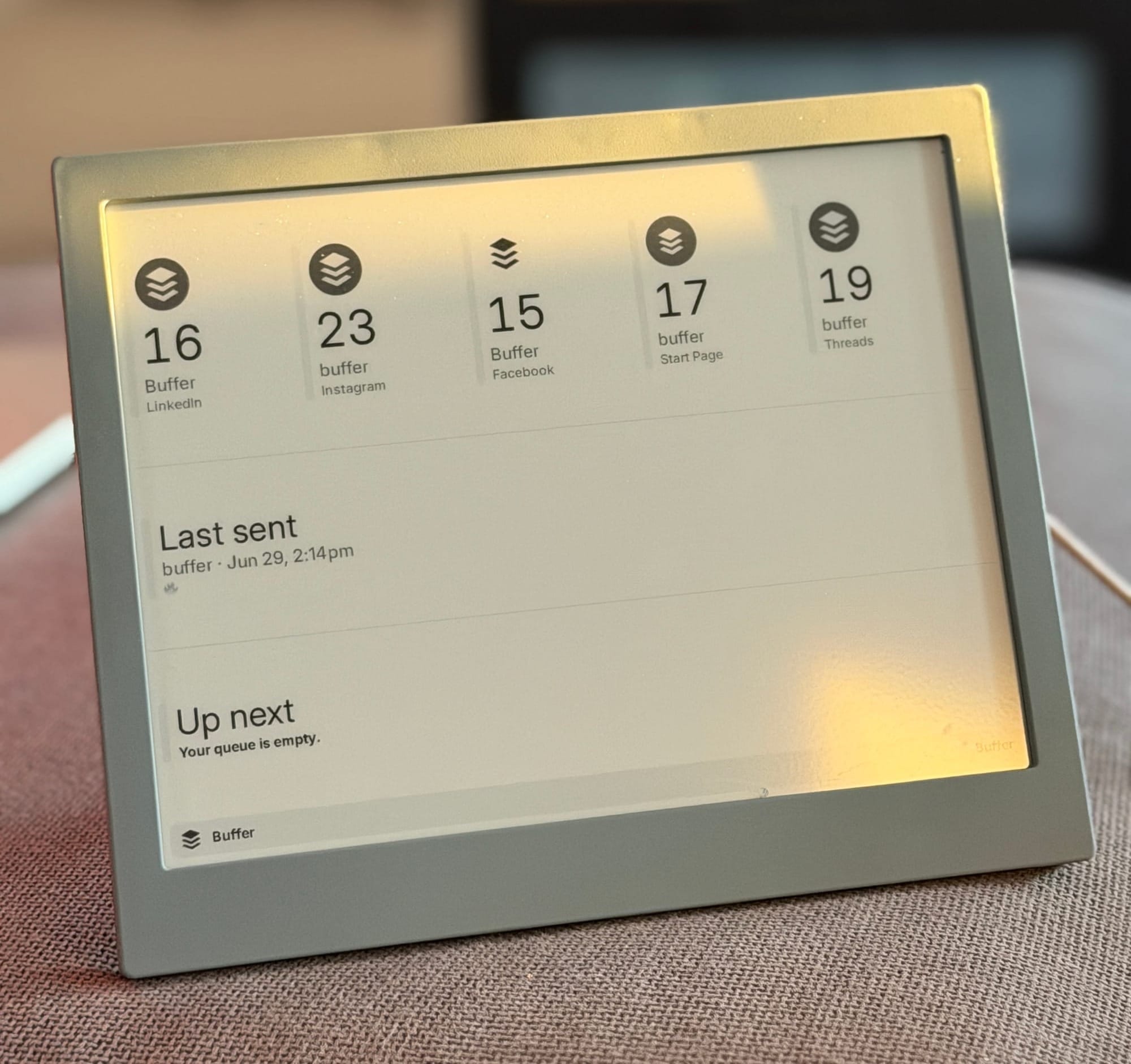
The TRMNL platform hosts the plugin on its own infrastructure, meaning that individual users or developers do not need to maintain a separate server to keep the display updated. The device connects to the Buffer API, pulls the relevant queue data, and formats it for the specific constraints of an e-ink screen. This architectural choice lowers the barrier to entry for non-technical users, who can now install the Buffer plugin with a few clicks through the TRMNL dashboard.
The launch of the public API itself marks a significant expansion of Buffer’s ecosystem. By providing documented endpoints for scheduling, analytics, and account management, Buffer is positioning itself as a foundational layer for social media automation. This allows other SaaS products, internal corporate tools, and specialized hardware like TRMNL to build custom workflows that were previously impossible without manual data entry or scraping.
The Philosophy of Ambient Computing and Digital Wellness
The Buffer-TRMNL partnership highlights an evolving philosophy in the tech industry: the move away from "attention-grabbing" interfaces toward "glanceable" information. For social media managers and content creators, the constant need to check dashboards can lead to a phenomenon known as "dashboard fatigue." This state of digital exhaustion occurs when the tools meant to increase productivity instead become a source of distraction due to their complex interfaces and frequent notifications.
Ambient displays like TRMNL offer a different approach. Because e-ink screens do not emit light and only refresh when information changes, they are less likely to trigger the dopamine-driven "check-and-refresh" cycle associated with traditional monitors and smartphones. By seeing a physical representation of their work—such as a "3" on the screen indicating three posts are ready for the week—users can maintain awareness of their content schedule without the cognitive cost of navigating a full software suite.
Market data suggests a growing appetite for this type of technology. The global e-ink display market is projected to grow significantly over the next decade, driven not just by e-readers, but by smart home devices, industrial signage, and "calm tech" office accessories. By being an early adopter of this hardware category, Buffer is tapping into a niche but rapidly expanding segment of professional users who value digital wellness and minimalist workspaces.
Market Context and the API Economy
The release of the Buffer Public API is a strategic response to the maturing "API economy." In the current SaaS landscape, the value of a platform is often measured by its interoperability. Competitors in the social media management space, such as Hootsuite and Sprout Social, have long maintained developer platforms. Buffer’s move to democratize access to its API is seen as a way to foster a community-led ecosystem that can innovate faster than a single internal team.
Supporting data indicates that companies with robust API ecosystems often see higher retention rates among enterprise and professional users. When a company integrates its social media workflow into its internal Slack channels, custom BI dashboards, or physical hardware like TRMNL, the "stickiness" of the underlying service increases. For Buffer, the TRMNL plugin serves as a high-visibility proof of concept, demonstrating to other developers what is possible with the new API.
Furthermore, by contributing the Buffer connector to TRMNL’s public repository, the teams have adopted an "open-core" mentality. This ensures that the technical heavy lifting of authentication and data fetching is already solved for the next developer, potentially leading to a suite of Buffer-related plugins, such as specific displays for LinkedIn analytics or Instagram grid previews.
Giveaway Details and Promotional Campaign
To commemorate the launch and encourage adoption, Buffer and TRMNL have announced a joint promotional campaign. Running from July 13 to July 20, the companies are conducting a giveaway on the LinkedIn platform. The prize package includes four TRMNL devices and "swag bundles" from Buffer, intended to reward early adopters and generate buzz within the professional creator community.
The entry process is designed to drive engagement on social media, requiring participants to interact with the official announcement post. Winners are scheduled to be announced on July 27. Recognizing that the demand may exceed the giveaway supply, TRMNL has also issued a promotional discount code—"bufferxtrmnl"—which provides a $10 discount on hardware purchases from July 27 through September 7. This phased approach is intended to maintain momentum for the integration through the end of the third quarter.
Broader Implications for the Future of Work
The success of the Yates-TRMNL collaboration may serve as a blueprint for future hardware-software integrations. As remote and hybrid work models become permanent fixtures for many professionals, the "home office" is becoming a site of significant technological investment. Tools that bridge the gap between digital tasks and physical environments are increasingly seen as essential for maintaining productivity and work-life balance.
For Buffer, this launch is likely only the beginning. With the public API now generally available, the company has opened the door to a wide array of potential integrations, from smart watches to enterprise resource planning (ERP) systems. The TRMNL story demonstrates that when companies provide open tools, the most innovative use cases often come from the community—or even from their own employees acting as enthusiasts.
As the industry moves forward, the focus will likely remain on how to make information more accessible and less intrusive. The "glanceable" queue on Andy Yates’ desk is a small but potent symbol of a future where technology serves the user quietly in the background, rather than demanding center stage in their daily lives. The Buffer and TRMNL partnership proves that even in the fast-paced world of social media, there is a place for the slow, steady, and calm reflection of e-ink.
Related posts: