Google Announces Major Overhaul to Local Services Ads Integrating Campaigns into Performance Max Platform


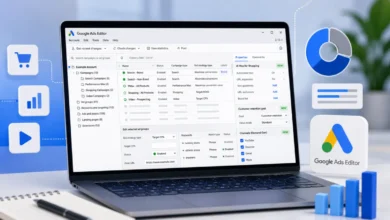
Google has officially unveiled a significant structural shift for its advertising ecosystem, announcing that Local Services Ads (LSAs) will be fully integrated into the Google Ads interface and transitioned into Performance Max (PMax) campaigns. This move, which marks one of the most substantial updates to local service advertising since the inception of LSAs in 2016, will see the eventual sunsetting of the dedicated Local Services Ads dashboard. Under the new framework, service-based businesses will manage their local leads through a specialized "pay-per-lead" goal within the Performance Max environment, consolidating Google’s diverse advertising products into a single, unified platform.
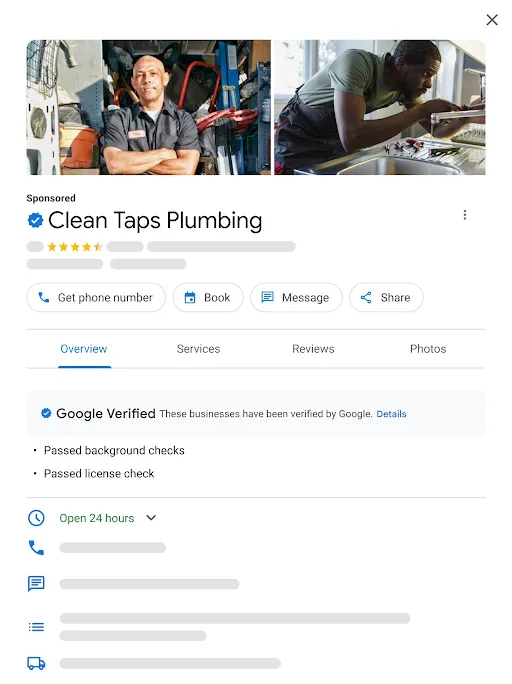
For nearly a decade, Local Services Ads have served as a critical tool for over 80 categories of service-based businesses, ranging from HVAC technicians and plumbers to legal professionals and real estate agents. The primary appeal of LSAs has historically been their risk-mitigation model: unlike traditional Search ads where businesses pay for every click, LSAs operate on a pay-per-lead basis. This allows advertisers to pay only when a potential customer calls, messages, or books a service directly through the ad. While Google has confirmed that the pay-per-lead pricing model and the "Google Guaranteed" or "Google Screened" verification badges will remain intact, the backend management of these ads is undergoing a fundamental transformation.

The Technical Evolution: From Standalone Dashboard to Performance Max
The integration represents a pivot toward Google’s broader "AI-first" advertising strategy. Performance Max, introduced in 2020, is an automated campaign type that uses machine learning to optimize bids and placements across Google’s entire inventory. However, the LSA version of Performance Max will be distinct. While standard PMax campaigns typically span YouTube, Display, Gmail, and Discover, the new pay-per-lead PMax campaigns for local services will remain restricted to Google Search and Google Maps.
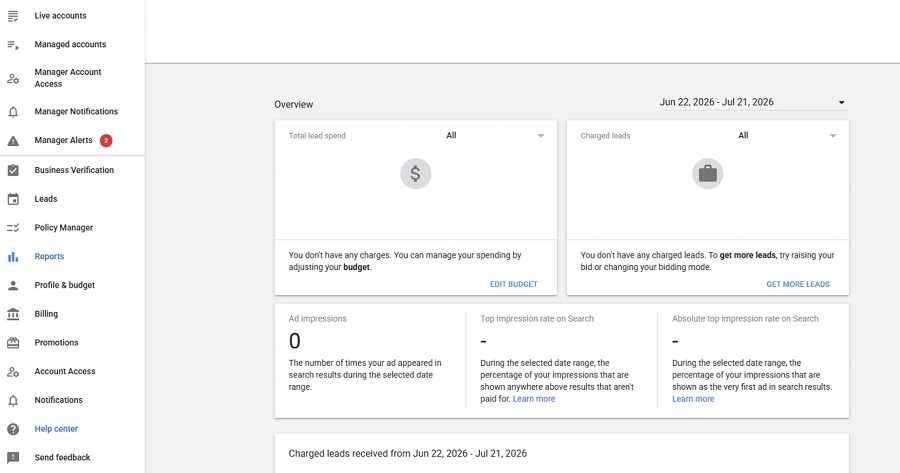
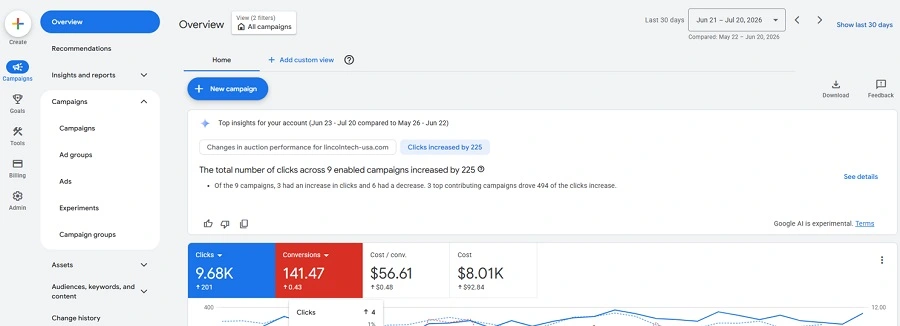
This technical shift means that the legacy LSA dashboard, which functioned as a simplified interface for small business owners, will be replaced by the more robust and complex Google Ads interface. Advertisers will no longer create standalone LSA campaigns; instead, they will initiate a Performance Max campaign and select the specific pay-per-lead objective. This allows Google to apply its advanced bidding algorithms to local lead generation while maintaining the high-intent placements that local service providers rely on.
Chronology of the Transition and Migration Phases
Google has outlined a multi-year timeline to ensure that the millions of businesses currently utilizing LSAs have sufficient time to adapt to the new interface. The migration is not instantaneous but will follow a structured rollout:
- Initial Announcement and Early Adoption (Mid-2024): Google began briefing marketing partners and large-scale advertisers on the technical requirements of the PMax integration.
- Industry-Specific Rollout (Starting August 2026): The automated migration process will begin for specific service sectors. During this phase, Google’s systems will automatically transfer campaign settings, including targeted locations, service types, business categories, and budgets, into the Google Ads interface.
- Account Notifications: Individual business owners will receive email alerts 14 days prior to their specific migration date. Banner notifications will also appear within the existing LSA dashboard to provide real-time updates on the transfer status.
- Stabilization Period: Following the automated transfer, Google anticipates a two-week "learning period" where campaign performance may fluctuate as the machine learning models calibrate to the new PMax environment.
- Full System Sunset (End of 2027): By the conclusion of 2027, the legacy Local Services Ads dashboard will be fully decommissioned. At this point, all historical reporting data not manually exported by the user will be inaccessible, and all local service advertising will be managed exclusively through Google Ads.
Supporting Data and the Logic of Consolidation
The decision to merge LSAs into Performance Max is supported by internal data suggesting that unified platforms lead to higher cross-channel efficiency. According to recent industry benchmarks, advertisers who use Performance Max see an average increase of 18% in total conversions at a similar cost per action. By bringing LSAs into this fold, Google aims to provide local businesses with better attribution modeling, allowing them to see how their local ads interact with other marketing efforts, such as traditional Search or Display campaigns.
Furthermore, local search intent continues to dominate consumer behavior. Data indicates that nearly 46% of all Google searches have a local intent, and "open now near me" searches have grown by over 400% year-over-year in certain service sectors. By moving LSAs to the Google Ads platform, Google provides these high-intent businesses with more sophisticated tools—such as advanced scheduling, negative keyword themes (in a limited capacity), and more detailed audience insights—that were previously unavailable in the simplified LSA dashboard.
Official Responses and Industry Reactions
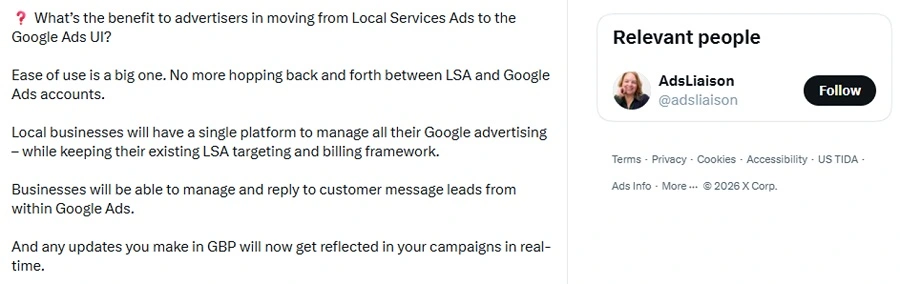
The announcement has elicited a mix of optimism and caution from the digital marketing community. Ginny Marvin, Google’s Ads Product Liaison, addressed the change on social media, emphasizing that the move is designed to reduce friction for advertisers. "No more hopping back and forth between LSA and Google Ads accounts," Marvin stated, highlighting the administrative benefits of a single sign-on experience.
Marketing analysts suggest that while the consolidation is a win for large agencies and sophisticated advertisers who already spend significant time in the Google Ads interface, it may present a learning curve for "mom-and-pop" service providers. The legacy LSA dashboard was praised for its simplicity; the Google Ads interface, by contrast, is known for its complexity and a vast array of settings that can be overwhelming for non-experts.
Industry experts also point out that the move to PMax signals a further reduction in manual control. In the old LSA system, advertisers had very specific levers for service types and areas. While Google promises these will carry over, the PMax algorithm generally prioritizes automated optimization over manual overrides, a shift that requires a higher level of trust in Google’s AI.
Broader Implications for the Service Industry
The implications of this update extend beyond mere interface changes. For service-based businesses, the integration into Google Ads means that their local lead generation is now part of a larger, more competitive auction environment.
1. Data Continuity and Reporting:
One of the most critical implications is the potential loss of historical data. Because the LSA dashboard is being sunset, businesses must manually download their past performance reports. While lead details and call recordings are expected to transfer to the Google Ads "Lead Manager" tool, the granular performance metrics of the old system will not be archived indefinitely.
2. Enhanced Targeting and Optimization:
Under the PMax umbrella, LSAs will benefit from "Smart Bidding." This technology analyzes millions of signals in real-time—including user location, time of day, and previous search behavior—to place ads when they are most likely to result in a high-quality lead. This could potentially lower the cost-per-lead for businesses that have well-optimized Google Business Profiles.
3. The Role of the Google Business Profile (GBP):
The importance of a robust Google Business Profile has been amplified. Since PMax relies heavily on existing assets to generate ad creative, the quality of a business’s photos, the frequency of its reviews, and the accuracy of its service descriptions on its GBP will directly impact ad performance. The migration reinforces the reality that organic presence and paid advertising are now inextricably linked.
4. Competitive Landscape:
As management becomes centralized, it is likely that more businesses will experiment with LSAs. The ease of adding a pay-per-lead goal to an existing Google Ads account lowers the barrier to entry for traditional Search advertisers who previously ignored the separate LSA platform. This could lead to increased competition and higher bid prices for "top-of-page" placements in lucrative markets like plumbing, roofing, and legal services.
Strategic Recommendations for Advertisers
As the 2026-2027 migration window approaches, market analysts recommend several proactive steps for local service providers. First, businesses should conduct a comprehensive audit of their current LSA performance and export all historical data to establish a baseline for success. Second, ensuring that the Google Business Profile is fully optimized is no longer optional; it is the foundational asset for the upcoming PMax transition.
Finally, advertisers should prepare for a period of volatility during the migration. Monitoring lead quality during the initial two-week learning phase in the Google Ads interface will be essential to ensure that the automated bidding is targeting the correct audience segments. While the interface is changing, the core objective remains the same: connecting local professionals with the customers who need their expertise at the exact moment of demand. Through this integration, Google is betting that AI-driven automation will be the key to scaling that connection in an increasingly digital local marketplace.