Beyond the Annual Appraisal: Why Modern Organizations are Ditching Traditional Performance Reviews for Continuous Feedback Models

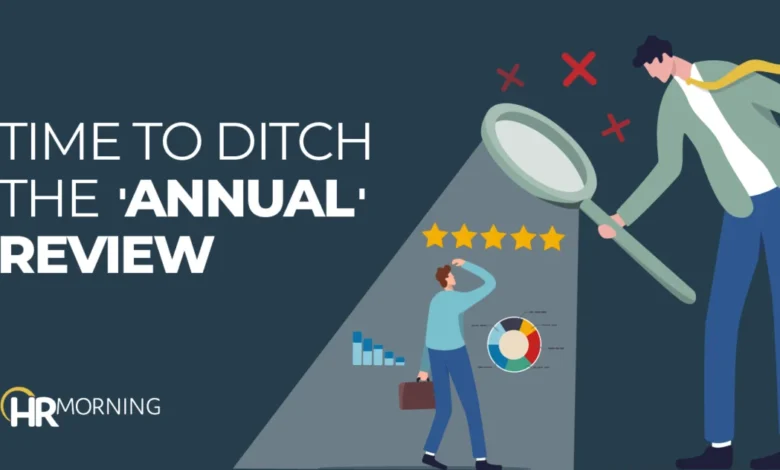
The traditional annual performance review, a cornerstone of corporate human resources for decades, is facing an existential crisis as modern organizations prioritize agility and employee engagement over rigid, once-a-year evaluations. Despite a growing consensus that the annual model is outdated, nearly one-third of companies still rely on it, while another 18% check in with employees biannually, according to recent research from Workhuman. However, the tide is turning as HR leaders recognize that these infrequent, high-stakes meetings often do more to demoralize staff than to improve performance.
The Shift Away from the "Judgment Day" Mentality
The primary criticism of the annual review lies in its inability to keep pace with the modern work environment. In a business landscape characterized by rapid technological change and shifting market demands, waiting 12 months to provide feedback is increasingly viewed as a liability. Employees have expressed significant concerns regarding the traditional model, citing "recency bias"—where managers only remember the last few weeks of work—and a general lack of actionable insight as major drawbacks.
Rosette Cataldo, Vice President of Performance and Talent Strategy at Workhuman, notes that annual reviews are not inherently flawed in theory but fail when they stand alone. "Many employees have grown weary with the traditional once-a-year appraisals and its clunky processes," Cataldo states. She emphasizes that managers often find themselves overwhelmed by the administrative burden of recalling a full year’s worth of contributions or shortcomings, leading to a process that feels more like a box-ticking exercise than a genuine development opportunity.
A Chronology of Performance Management Evolution
To understand the current shift, it is essential to look at the timeline of how performance management has evolved over the last century:
- The Industrial Era (1900s–1950s): Early performance management focused on oversight and efficiency. Reviews were top-down and focused almost exclusively on output and compliance.
- The Rise of "Rank and Yank" (1980s–1990s): Popularized by GE’s Jack Welch, the forced-ranking system became the gold standard. Employees were graded against one another, and the bottom 10% were often terminated. This created a culture of hyper-competition rather than collaboration.
- The Adobe Catalyst (2012): Adobe became one of the first major tech firms to officially scrap annual reviews in favor of "Check-ins." This move sparked a global conversation about the ROI of traditional appraisals.
- The Deloitte and Microsoft Pivot (2015): Following Adobe’s lead, Deloitte and Microsoft overhauled their systems, citing that the thousands of hours spent on annual reviews did not actually improve performance.
- The Post-Pandemic Reality (2020–Present): The shift to remote and hybrid work has made continuous feedback even more critical, as the lack of physical presence requires more intentional and frequent communication between managers and their teams.
Analyzing the Data: Why the Traditional System is Failing
The statistical evidence against traditional reviews is compelling. A landmark study by Gallup found that only 2% of HR executives at Fortune 500 companies strongly agree that their performance management system inspires employees to improve. This suggests a massive disconnect between the intent of the review and its actual impact on the workforce.
When feedback is delayed, its effectiveness diminishes. Psychological studies on behavior modification suggest that the closer the feedback is to the action, the more likely it is to result in a positive change. By waiting until the end of the year, organizations lose the opportunity to correct course in real-time, leading to lost productivity and potentially high turnover. Furthermore, the anxiety associated with "Review Season" can lead to a measurable dip in employee morale and engagement in the weeks leading up to and following the appraisal.
Strategies for Modernizing Performance Evaluations
As organizations transition away from the annual model, several key strategies have emerged to create a more dynamic and effective feedback ecosystem.
1. Transitioning to High-Frequency Cadences
Experts suggest replacing the annual sit-down with monthly or quarterly check-ins. These sessions should be informal and forward-looking. Instead of a post-mortem on past failures, the focus shifts to "feed-forward"—identifying what can be done differently in the coming weeks to achieve better results. This frequency reduces the pressure on any single meeting and ensures that there are no surprises when it comes time for compensation discussions.
2. Leveraging Digital Self-Assessments
Technology has enabled the use of brief, online self-assessments that can be completed in minutes. Treva Fairman, Chief Operating Officer at Ascend Behavior Partners, advocates for these tools as a way to give front-line employees a voice. By asking three simple questions—what is going well, what is a challenge, and what support is needed—managers can facilitate more targeted and meaningful conversations without the administrative bloat of traditional forms.
3. Integrating Cultural Contributions into the Scorecard
Performance is no longer just about hitting KPIs; it is about how those goals are achieved. Modern reviews are increasingly incorporating "cultural contributions." This involves assessing how an employee’s behavior aligns with company values and how they impact the team’s overall health. While harder to quantify than sales figures, these "soft" metrics are often the best indicators of long-term success and leadership potential.
4. Adopting 360-Degree and Multi-Rater Feedback
The perspective of a single manager is inherently limited. Joan Goodwin of Deloitte Consulting suggests that for a fuller picture, organizations should implement 360-degree feedback upon the completion of specific projects. By gathering input from peers and cross-functional partners who worked closely with the individual, the organization gains a more holistic view of the employee’s strengths and development areas.
5. Prioritizing Transparency in Compensation and Growth
Effective feedback cannot exist in a vacuum. Employees need to understand the "why" behind decisions regarding promotions and pay. With pay transparency laws becoming more common globally, organizations must be proactive in explaining how performance metrics directly correlate with financial rewards. When the criteria for success are transparent, employees feel a greater sense of agency over their career trajectories.
6. Providing Robust Post-Review Support
The review itself is merely the beginning of the process. For feedback to be effective, it must be followed by support. According to Workhuman’s research, employees value financial incentives, flexibility, and recognition above all else. Managers must be trained to follow up on review discussions with the necessary resources, whether that be a training budget, a change in work hours, or public recognition of a job well done.
The Role of Recognition in Performance Development
A critical component of the continuous feedback model is the integration of peer-to-peer recognition. When employees are recognized by their colleagues for their contributions in real-time, it builds a "culture of gratitude" that reinforces positive behaviors. Rosette Cataldo explains that a culture fostering positivity through recognition recreates an environment where employees have a greater sense of belonging and purpose.
This shift from a "policing" model of performance management to a "coaching" model is central to the modern HR strategy. In a coaching model, the manager’s role is to remove obstacles and facilitate growth, rather than to merely sit in judgment. This transition requires a significant investment in manager training, as many leaders are more comfortable with data-driven appraisals than they are with nuanced, ongoing coaching conversations.
Broader Implications for the Future of Work
The movement to ditch the annual review is part of a larger trend toward the "humanization" of the workplace. As AI and automation take over routine tasks, the uniquely human aspects of work—creativity, collaboration, and emotional intelligence—become the primary drivers of value. These qualities cannot be measured by a traditional 1-to-5 rating scale once a year.
Furthermore, the "War for Talent" remains a reality for many industries. Companies that offer a supportive, feedback-rich environment are more likely to retain top performers. Conversely, organizations that cling to rigid, outdated appraisal systems risk alienating a generation of workers—particularly Millennials and Gen Z—who have grown up with real-time feedback loops in every other aspect of their lives.
Conclusion: A Win-Win for Organizations and Employees
The evidence is clear: the annual performance review is an artifact of a bygone era. By adopting a continuous performance development model, companies can ensure that their workforce remains aligned, engaged, and productive throughout the year.
As Rosette Cataldo concludes, "Ultimately, by shifting performance review tactics, end-of-year conversations can be more meaningful to the employee and impactful to the organization." The goal is not to eliminate evaluation, but to transform it from a dreaded annual event into a consistent, transparent, and supportive dialogue that drives both individual and organizational success. For HR leaders, the challenge now is to dismantle the old structures and build a more agile, human-centric approach to talent management.