The Shifting Landscape of Digital Authority: How Backlinks Evolve in the Era of AI Answer Engines

The digital marketing ecosystem is undergoing a profound transformation, driven by the rapid proliferation and adoption of artificial intelligence in search. A recent study indicates that approximately 58% of consumers now leverage AI answer engines for product research weekly, a figure that continues its swift ascent. This surge in AI-powered discovery platforms, including ChatGPT, Perplexity, and Google AI Overviews, compels content and SEO strategists to critically re-evaluate foundational principles of online visibility. The central question reverberating across the industry is whether the long-held significance of backlinks maintains its traditional influence within Answer Engine Optimization (AEO), or if the entire playbook for establishing digital authority requires a comprehensive rewrite.
The Genesis of AEO: A Paradigm Shift in Information Retrieval
The evolution from conventional Search Engine Optimization (SEO) to Answer Engine Optimization (AEO) represents more than just a nomenclature change; it signifies a fundamental reorientation in how digital content is discovered, evaluated, and presented. For decades, SEO operated on the premise of ranking web pages in response to user queries. Success was largely defined by securing top positions in search results, thereby driving organic traffic through clicks. Backlinks, or hyperlinks from one website to another, emerged as a cornerstone of this system. They functioned as "votes of confidence," signaling to search engines like Google the credibility, relevance, and authority of a linked page. The quantity and quality of these links heavily influenced a domain’s PageRank and overall search standing.
However, the advent of sophisticated large language models (LLMs) and generative AI has introduced a new paradigm. AI answer engines are not merely indexing and ranking pages; they are synthesizing information from vast datasets to provide direct, concise answers to user questions. This shift began gaining significant momentum with the public release of models like ChatGPT in late 2022, quickly followed by Google’s experimentation with AI Overviews (formerly Search Generative Experience, or SGE) and other competitors. Instead of presenting a list of links, these systems aim to ground their answers in reliable source material. This critical distinction necessitates a recalibration of what constitutes "authority" in the digital realm.
Backlinks in the AI Era: Quality Over Quantity, Context Over Volume
While the foundational logic of off-page SEO, wherein a link from a trusted domain confers authority, has not been entirely abandoned by AI answer engines, its interpretation has become significantly more nuanced. The short answer to the industry’s burning question is that contextually relevant backlinks retain substantial value for AEO, often surpassing the impact of high-volume, low-relevance links. However, they no longer represent the sole determinant of authority.
When an AI answer engine constructs a response, it performs a complex evaluation that extends beyond a simple backlink count. It seeks sources that can reliably substantiate its output. This involves assessing not only the linking domain’s authority but also the precise relevance of the context surrounding the link and the anchor text employed. Nathaniel Miller, Head of Marketing at Ashbrook Technologies, emphasized this point in a recorded interview for the Found in AI podcast, stating, "The companies ranking highest across AI platforms tend to be the ones with both strong authority and strong backlink profiles." He further clarified, "If you’re not getting qualified traffic from that link, it’s basically a logo slap. The real value is in relevance and authority – not just size."
This indicates a clear departure from a purely quantitative approach to link building. In traditional SEO, a link from a high-Domain Authority (DA) site, even if semantically distant, could provide a significant boost. In AEO, the semantic alignment between the linking source and the target brand’s topical expertise holds far greater sway. A link from an obscure niche blog with strong topical depth, for instance, might be weighted more heavily by an AI for a specific query than a general link from a major news outlet, if the niche blog’s content directly reinforces the brand’s entity authority within that specific topic cluster.
Beyond the Link: Unlinked Mentions, Co-citations, and Entity Clarity
The AEO landscape introduces a richer tapestry of authority signals that complement and, in some cases, overshadow traditional backlinks. These include:
- Unlinked Brand Mentions: A brand name appearing in credible sources without a hyperlink registers as a significant signal for AI systems. These mentions help AI map brands to specific topic clusters, building "entity authority." The more frequently a brand is mentioned in relevant, authoritative contexts, the stronger its association with that topic becomes, making it an obvious choice for citation.
- Co-citations: This occurs when a brand is mentioned alongside other recognized authorities or sources within the same piece of content, even without direct linking. For AI answer engines, co-citations serve as powerful semantic signals, suggesting that the brand belongs in the same authoritative company as its co-cited peers. This tactic, often underutilized, positions a brand as a credible expert by association.
- Entity Clarity: An "entity" in AI search refers to a clearly defined, consistently described concept – be it a brand, a person, or a specific subject. As Lars Lofgren, an SEO consultant, highlighted on the Found in AI podcast, AI engines are essentially mapping relationships between all crawlable information. Brands with strong entity clarity – consistent naming, comprehensive structured data (e.g., Organization, Person,
sameAsschema), and a clear area of expertise articulated across all digital channels – are far more likely to be cited. Conversely, entity confusion, where a brand’s identity or focus is ambiguous, acts as a "silent AEO killer," preventing AI from confidently identifying and referencing it.
Charlie Graham, founder of RivalSee, shared a critical insight on the Found in AI podcast: approximately 85% of brands mentioned in ChatGPT responses lack a direct citation link. This underscores that while a strong backlink profile can contribute to visibility, the ultimate goal in AEO is to be recognized as a reliable source, even if the user has to search for the brand directly after seeing it mentioned in an AI-generated answer. This downstream effect is a powerful, albeit non-traditional, authority signal.
Structuring Content for AI Extraction and Citation
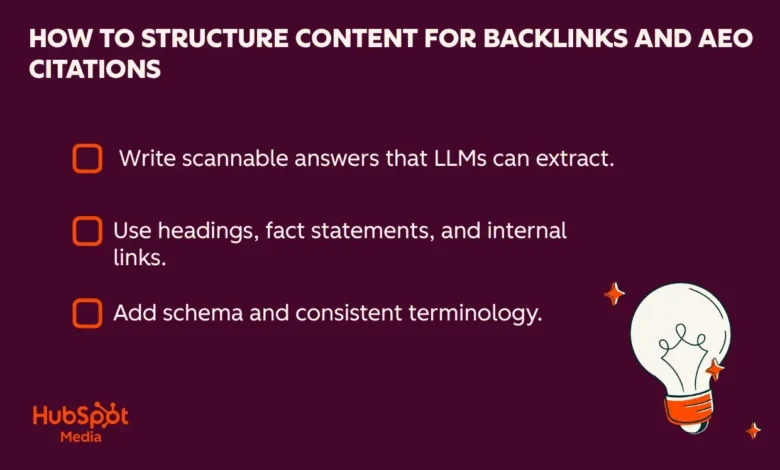
The manner in which content is structured plays a pivotal role in its likelihood of being cited by AI answer engines. AI systems prioritize content that is easy to parse, clearly organized, and directly answers implied questions. To optimize content for both backlinks and AEO citations, marketers should adopt specific structural best practices:
- Scannable, Answer-First Content: Every major section should begin with a direct, self-contained answer to the question posed by its heading. Leading with the answer, then supporting it with context, data, or examples, significantly increases the chances of LLM extraction and citation. This "Answer first, evidence second" structure also benefits featured snippets in traditional search.
- Strategic Use of Headings, Fact Statements, and Internal Links: Employing clear H2/H3 headings breaks down complex information. Integrating fact statements, often highlighted in bold or as bullet points, provides easily digestible information for AI. A dense internal linking structure around a topic cluster signals comprehensive topical depth to answer engines, reinforcing the content’s authority.
- Schema Markup and Consistent Terminology: Schema markup (machine-readable metadata) clarifies the purpose and structure of a page for both search and AI systems. Key schema types for AEO include
Article,FAQPage,HowTo, andOrganization. Equally important is consistent terminology. Brands must select canonical terms for key concepts and use them uniformly across all their digital properties to prevent entity confusion.
Building Integrated Authority: Link and Mention Strategies
Effective AEO strategies integrate link building and mention building into a cohesive effort. Every outreach action should aim to generate both a structural link signal and a brand mention that AI systems can index.
-
Prioritize AI-Friendly Content Formats: Certain content types are disproportionately favored by AI for citation. These include:
- Original Research & Data Reports: These are goldmines for backlinks and co-citations. A well-executed study provides other publishers with a reason to link to a brand as a primary source. The subsequent coverage often mentions the brand alongside other respected voices, generating valuable co-citation signals.
- Comprehensive Guides & Tutorials: In-depth, step-by-step content that thoroughly addresses a topic is highly valued.
- Expert Interviews & Thought Leadership: Content featuring recognized experts contributes to both brand authority and co-citation opportunities.
- FAQs & Q&A Sections: Directly answering common questions in a structured format is highly extractable. When publishing original research, including a "Key Findings" section at the top with clearly labeled statistics dramatically increases citation likelihood.
-
Digital PR and Expert Commentary: Beyond original research, digital PR — earned media placements, expert commentary in industry publications, and podcast appearances — is an excellent strategy for generating both link authority and authentic mentions. As Nathaniel Miller observes, "Digital PR is the fastest way to start building momentum." A single, well-placed expert quote can yield a backlink, a brand mention, and a co-citation simultaneously.
-
Participate Where Answers Form: AI systems draw information not just from brand-owned content but also from authoritative conversations across various platforms. Active participation in these channels expands a brand’s footprint across sources AI systems are trained to trust. This includes:
- Industry forums and communities (e.g., Reddit, LinkedIn groups)
- Q&A platforms (e.g., Quora, Stack Exchange)
- Expert roundup features (e.g., HARO, Qwoted)
- Guest appearances on podcasts or webinars
- Contributing expert commentary to news articles.
This engagement fosters relationships and builds credibility, increasing the likelihood that others will seek a brand’s input, generating further third-party mentions.

Measuring AEO Impact: The Repeatable Loop
Optimization in AEO, as in any robust marketing discipline, hinges on a clear feedback loop between content publication, shifts in authority signals, and actual AI citations. A "Loop Marketing" framework, involving benchmarking, tying changes to activity, and reporting on what to scale, is crucial.
-
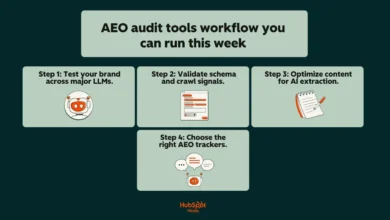
Benchmark AI Visibility and Citations: Before any optimization, establish a baseline. This involves identifying which pages are currently earning AI citations, understanding the types of queries where the brand is being referenced, and assessing the overall frequency of AI mentions. Tools specifically designed for AI visibility tracking, such as HubSpot AEO, become indispensable here, offering a consolidated view of citation frequency, grounding query coverage, and page-level citation activity.
-
Tie Changes to Content and Outreach Activity: To move beyond guesswork, track how specific content updates or outreach actions correlate with changes in AI visibility. Log dates and details of new content publications, schema implementations, link-building campaigns, and digital PR placements. Over time, patterns will emerge, revealing which strategies effectively drive AI citations and which fall short.
-
Report What to Scale and What to Stop: The final stage is translating measurement into actionable prioritization. Regularly (e.g., monthly) analyze the data to determine:
- Which content types are consistently performing well in AI answers?
- Which authority signals (links, mentions, co-citations) are most effective?
- Where are the greatest opportunities for further optimization?
- Which strategies are yielding minimal returns and should be discontinued or refined?
This iterative approach transforms AEO from a one-off project into a compounding strategy, ensuring that each measurement cycle informs and refines the next.
Conclusion: Backlinks Endure, But in a New Context
The future of digital authority is not a zero-sum game between backlinks and Answer Engine Optimization. Instead, they represent complementary layers within the same evolving infrastructure. Backlinks continue to provide a fundamental structural credibility that ensures content is indexed, trusted, and considered a reliable grounding source. However, their efficacy is now deeply intertwined with a broader array of signals: unlinked brand mentions, co-citations, crystal-clear entity definitions, and meticulously structured content. These collective signals communicate to an AI system that a brand is not merely present but is an authoritative, trustworthy voice within its domain, deserving of citation.
The content teams achieving measurable success in AI visibility are not abandoning their established SEO programs. Rather, they are making them more precise, more entity-aware, and more consistently structured to cater to the nuanced demands of AI answer engines. This integrated, adaptive approach is the cornerstone of thriving in the new era of AI-driven search.