Navigating the Shift: A Comprehensive Guide to Hosted, Cloud, and On-Premises Enterprise Contact Centers


The enterprise customer experience landscape is undergoing a silent structural transformation, driven by an imperative to modernize aging infrastructure and meet soaring consumer expectations. For decades, traditional contact centers operated out of on-premises server rooms, demanding heavy capital outlays, multi-month upgrade cycles, and rigid hardware configurations. Today, as customer volume increases and the tolerance for friction evaporates, customer experience (CX) leaders are re-evaluating where their core routing, interactive voice response (IVR), and reporting systems actually reside.
This operational shift has thrust hosted and cloud-based contact center models into the corporate spotlight. To make informed procurement decisions, enterprise technical buyers must dissect how hosted contact centers operate, weigh them against legacy on-premises systems and modern Cloud Communications as a Service (CCaaS) environments, and analyze the financial and technological implications of adopting AI-driven, subscription-based architectures.
The Evolution of Enterprise Contact Center Infrastructure
To understand the current appetite for hosted customer service solutions, one must examine the operational bottlenecks inherent in the legacy paradigm. Historically, enterprise contact centers were tethered to physical hardware situated in server rooms down the hall from corporate offices. Expanding capacity required physical server acquisitions, manual configuration, and rigidly scheduled maintenance windows that often disrupted daily operations. Furthermore, as consumers rapidly adopted digital communication channels—such as live chat, social media messaging, and asynchronous text applications—IT departments were forced to wire these channels in as disjointed bolt-on applications.
By the mid-2010s, this fractured approach began to crumble under the weight of escalating customer expectations. Consumers accustomed to instantaneous, cross-channel digital interactions showed little patience for traditional friction points, such as repeating their issue when transferred from a web chat to a voice queue.
Simultaneously, the global workforce shifted decisively toward remote and hybrid operating models, rendering desk-bound, hardware-dependent contact center architectures obsolete. Organizations required infrastructure capable of scaling up or down dynamically without requiring physical deployment teams or multi-week hardware procurement delays. This operational pressure created a fertile market for alternative delivery models, chief among them the hosted contact center.
Defining the Hosted Contact Center Model
A hosted contact center delivers customer service software—encompassing automated routing engines, interactive voice response (IVR) systems, reporting suites, and digital channel integrations—via a third-party vendor. Rather than purchasing and housing physical servers on-site, an enterprise rents this capability on a subscription basis. Agents log into the platform remotely through standard browser-based workspaces, while the hosting provider manages the underlying infrastructure, security protocols, off-hours patches, and systemic uptime.
The operational workflow within a hosted environment is designed for frictionless scalability. When a customer initiates contact via voice, email, or messaging, the platform evaluates the interaction against predefined routing rules and current agent availability, directing it to a browser-based dashboard. Because the agent interface operates entirely within the cloud, personnel can service customer inquiries from virtually any location equipped with a secure internet connection, eliminating the necessity for dedicated physical desk phones or local software installations.
Behind the scenes, the burden of data center management, geographic redundancy, and software updates shifts entirely from internal IT teams to the vendor. Consequently, organizations can deploy new features seamlessly, without coordinating on-site installation windows.
Comparative Architecture: Hosted vs. On-Premises vs. Cloud (CCaaS)
When evaluating enterprise communications architecture, buyers frequently encounter three overlapping designations: hosted, on-premises, and cloud-delivered CCaaS (Contact Center as a Service). While vendors often use these terms interchangeably in marketing collateral, their underlying technical frameworks carry profound implications for cost structures, administrative control, and organizational agility.
| Model | Infrastructure Location | Management Responsibility | Primary Cost Structure | Best Suited For |
|---|---|---|---|---|
| On-Premises | Local server room / On-site facility | Internal IT team | High CapEx (Capital Expenditure) | Highly regulated industries requiring absolute physical control |
| Hosted | Third-party provider data center | Vendor-managed (often single-tenant options) | Predictable OpEx (Operating Expense) | Distributed teams seeking infrastructure relief without multi-tenant pooling |
| Cloud / CCaaS | Elastic cloud infrastructure | Vendor-managed (multi-tenant architecture) | Scalable OpEx (Pay-as-you-go subscription) | Enterprises prioritizing continuous updates, high elasticity, and rapid omnichannel deployment |
Analyzing the Distinction Between Hosted and On-Premises Solutions
The primary divergence between hosted and on-premises contact centers lies in ownership and physical location. An on-premises contact center requires an organization to procure, house, and maintain proprietary hardware within its own facilities. This demands significant upfront capital expenditure (CapEx) and the employment of specialized in-house IT personnel to ensure round-the-clock operational continuity.

Conversely, a hosted contact center operates on a predictable subscription model, converting large capital outlays into manageable operating expenses (OpEx). Maintenance, security patches, and hardware lifecycles become the responsibility of the service provider.
Despite the widespread migration toward hosted and cloud environments, on-premises infrastructure is not entirely obsolete. Organizations operating within strictly regulated sectors—such as specific defense contractors or highly specialized financial institutions—may require direct physical oversight of every layer of the technology stack to satisfy compliance mandates. For these entities, the ability to enforce bespoke customization and maintain absolute sovereignty over data storage justifies the higher overhead and maintenance burden.
Differentiating Hosted Environments from Multi-Tenant CCaaS
Disentangling the terminology between "hosted" and "cloud" requires looking beneath the surface marketing labels to examine underlying software architecture. While traditional hosted solutions often utilize single-tenant environments—where a dedicated slice of infrastructure is managed exclusively for a single client—modern cloud and CCaaS platforms typically employ multi-tenant architectures.
In a multi-tenant cloud model, customers share pooled, elastic infrastructure that receives continuous, automated updates. This ensures that enterprises gain access to the latest capabilities instantaneously, bypassing the formal upgrade cycles traditionally associated with hosted or on-premises platforms.
When evaluating these models, enterprise procurement teams generally prioritize three core architectural questions over semantic labels:
- How rapidly can new features and channels be provisioned?
- What is the exact mechanism for scaling seat capacity during seasonal demand surges?
- How are software updates and security patches delivered and tested?
Quantifiable Benefits of the Hosted Approach
The growing preference for hosted contact center models is rooted in tangible business outcomes that directly impact both balance sheets and customer satisfaction metrics.
First, the elimination of hardware-centric deployment cycles significantly compresses time-to-value. Organizations can provision new agent seats in minutes rather than weeks, enabling rapid scaling to accommodate seasonal spikes or sudden shifts in consumer demand.
Second, financial predictability replaces the volatile budgeting cycles associated with hardware refreshes. Subscription-based pricing aligns expenses directly with operational utilization, transforming fixed capital liabilities into variable operating costs.
Third, the democratization of the agent workspace empowers remote and hybrid workforce strategies. By decoupling the agent interface from physical desktop hardware, enterprises can recruit talent from a broader geographic pool without compromising operational visibility or security compliance.
Core Feature Requirements for Modern Hosted Platforms
As basic operational standards—such as fundamental uptime and standard call routing—have become commoditized table stakes, enterprise buyers must evaluate vendors based on advanced functional capabilities that directly influence Customer Satisfaction (CSAT), Average Handle Time (AHT), and operational cost-efficiency.
Omnichannel Routing and Unified Queues
Modern platforms must consolidate voice, web chat, email, SMS, and social messaging into a single unified queue. When channels remain siloed, customers are frequently forced to repeat their context upon switching mediums, leading to frustration and extended handle times. A unified queue preserves complete interaction histories across all touchpoints, ensuring seamless continuity.
Skills-Based and Intelligent Routing
Efficient resource allocation depends on advanced routing engines that match incoming customer inquiries with the agent best equipped to resolve them. By evaluating parameters such as language proficiency, product specialization, and customer account tiers, skills-based routing minimizes misrouted contacts—a primary driver of inflated AHT and recurring customer frustration.
Interactive Voice Response (IVR) and Self-Service Automation
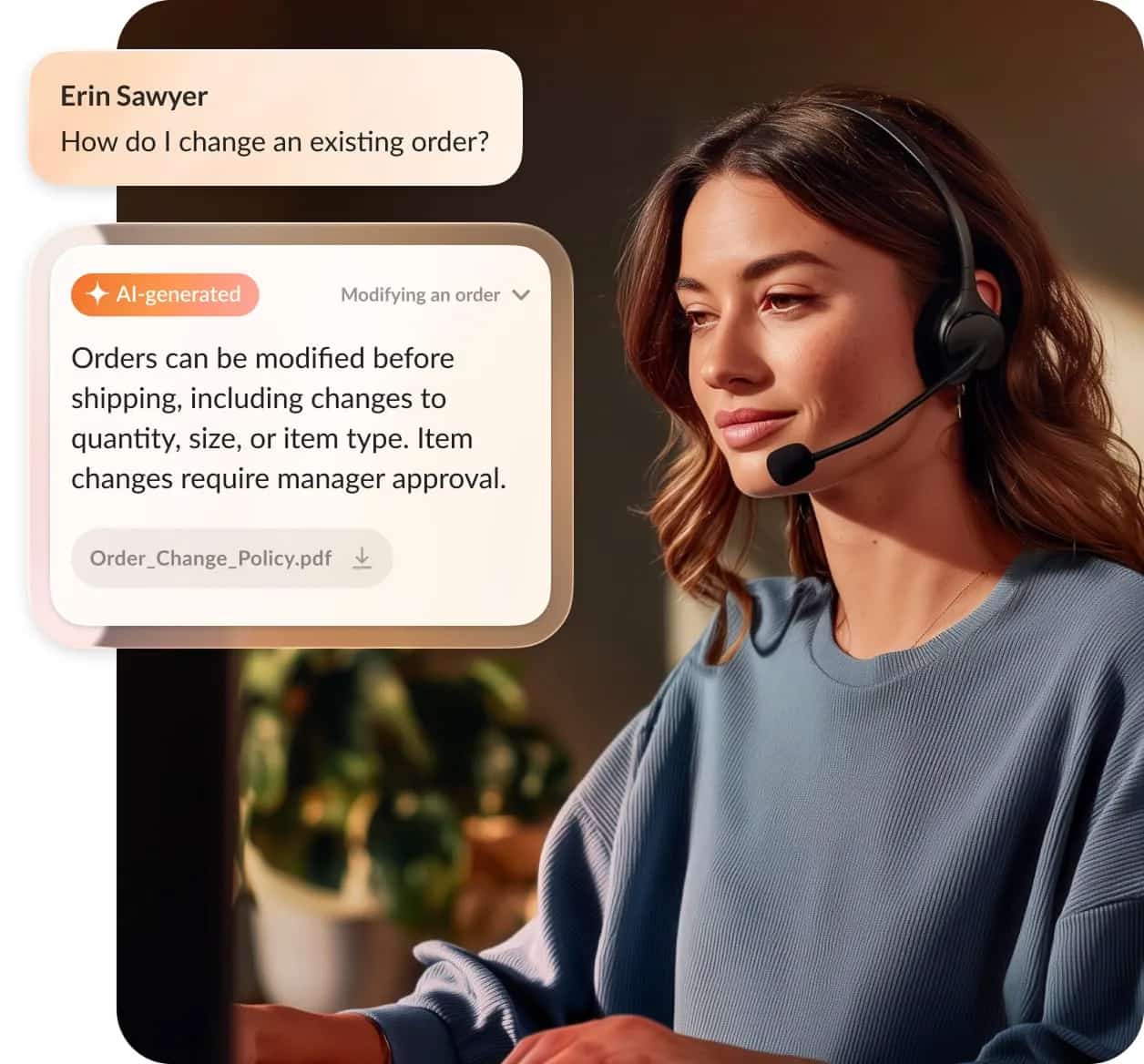
Self-service tools and modern IVR systems deflect routine, repetitive inquiries—such as balance checks, password resets, and order tracking—before they reach live agents. In an era where labor costs represent a major operational expense, effective self-service automation preserves human capital for complex problem-solving.
Workforce Management (WFM)
Advanced WFM modules integrate forecasting, automated scheduling, and adherence tracking to predict contact volumes accurately. By ensuring that the optimal number of agents with the correct skill sets are staffed during peak intervals, organizations can simultaneously prevent long customer wait times and eliminate the labor inefficiencies of overstaffing.
Real-Time Analytics and Dashboards
Supervisors require immediate visibility into floor operations to intervene mid-shift. Real-time dashboards enable management to detect queue bottlenecks instantaneously, reallocate agents dynamically, and provide live coaching during challenging customer interactions, averting service failures before shift closure.
CRM and Application Integrations
A hosted contact center cannot function as an isolated island. Deep, bidirectional integrations with Customer Relationship Management (CRM) platforms ensure that customer data and interaction histories populate automatically within the agent workspace, eliminating the operational drag of application-toggling.
Security and Regulatory Compliance Certifications
For regulated enterprises operating in healthcare, financial services, or insurance, compliance is non-negotiable. Platforms must possess verifiable certifications, such as SOC 2 Type II, PCI DSS for payment security, and HIPAA compliance for healthcare data protection. Procurement teams must audit underlying hosting environments directly rather than relying on generalized marketing claims.
The Integration of Embedded Artificial Intelligence
Artificial intelligence has established itself as the defining differentiator for enterprise contact center platforms. Industry analysts project that AI will fully resolve approximately 37% of all customer inquiries by 2028, underscoring the necessity of evaluating AI capabilities as a core architectural component rather than an auxiliary add-on.
Leading-edge platforms embed AI across two distinct operational pillars: real-time agent guidance and comprehensive post-interaction analytics. During live calls, AI-driven assistant tools—such as RingCentral’s AVA Agent Assist—provide automated recommendations and real-time knowledge retrieval, guiding agents through complex troubleshooting without manual searching. Post-interaction analytics tools review 100% of completed customer interactions, extracting actionable sentiment trends and compliance adherence data that would be impossible to surface through manual sampling.
Furthermore, platforms like RingCX demonstrate the viability of an AI-first, cloud-delivered architecture, unifying voice and over 20 digital communication channels within a single workspace while maintaining architectural continuity with broader unified communications stacks like RingEX. This ensures that when a contact center agent needs to escalate an issue to an enterprise expert outside the queue, historical context accompanies the transfer seamlessly.
Strategic Evaluation Framework for Enterprise Buyers
When selecting a hosted contact center provider, enterprise technology leaders should execute a rigorous evaluation framework based on operational realities rather than vendor feature grids:
- Total Cost of Ownership (TCO): Calculate beyond headline per-seat pricing to factor in implementation fees, mandatory professional services, API usage limits, and tier-based support costs.
- Verifiable Uptime SLAs: Audit the provider’s geographic failover mechanisms, redundant data center infrastructure, and documented incident history to ensure operational resilience.
- Rigorous Compliance Verification: Inspect active audit reports for specific regulatory standards (SOC 2, HIPAA, GDPR, PCI DSS) and confirm that certifications apply directly to the specific product and hosting environment under evaluation.
- Integration Depth: Test bidirectional data synchronization with existing CRM and enterprise resource planning (ERP) systems to verify that agents experience zero application-toggling during active interactions.
- Documented AI Roadmaps: Demand written, time-stank commitments regarding future AI capabilities to ensure post-contract accountability and leverage during future contract renewals.
Conclusion: Moving Forward with Confidence
The decision to migrate to a hosted contact center is fundamentally an operational bet on organizational agility and technological intelligence. By prioritizing architectural flexibility, deep CRM integration, and embedded artificial intelligence, enterprise leaders can future-proof their customer service operations against unpredictable demand fluctuations and escalating consumer expectations.
Organizations beginning this modernization journey should map their current channel volumes, cost structures, and compliance mandates against a structured evaluation framework. By cutting through marketing noise and demanding verifiable performance metrics from prospective vendors, enterprise teams can secure a scalable, resilient contact center foundation designed to thrive in the modern business environment.