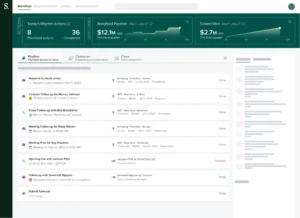
Salesforce, a global leader in customer relationship management (CRM) technology, has unveiled a significant advancement designed to fundamentally transform the landscape of sales operations: Agentforce for Sales. This innovative solution, seamlessly integrated into the Slack platform, directly confronts the pervasive challenge of fragmented tools and information silos that have long plagued sales teams. By embedding autonomous artificial intelligence (AI) agents directly into the collaborative environment of Slack, Agentforce for Sales promises to liberate sales professionals from time-consuming administrative burdens, allowing them to dedicate more focus to the core act of selling. These intelligent agents are engineered to proactively scan and synthesize vast quantities of data from disparate sources, including the open web, email communications, and call transcripts, with the explicit goal of identifying highly qualified leads and dramatically accelerating prospecting efforts.
The introduction of Agentforce for Sales marks a pivotal moment in the evolution of the "Agentic Enterprise" concept, a vision championed by Salesforce that posits a future where AI-powered agents autonomously perform routine and complex tasks, thereby augmenting human capabilities across an organization. This particular application targets one of the most critical functions within any business: revenue generation.
The Pervasive Challenge of Sales Productivity in a Fragmented Digital Ecosystem
For years, sales teams have grappled with an ever-growing array of digital tools designed to enhance various aspects of their workflow. While each tool—ranging from CRM systems and sales engagement platforms to marketing automation and business intelligence dashboards—offers specialized capabilities, their proliferation has inadvertently created a new set of challenges. Sales representatives often find themselves navigating a complex web of applications, switching between tabs, copying and pasting information, and manually cross-referencing data points to gain a complete picture of a prospect or customer. This fragmented digital ecosystem forces sellers to waste invaluable time hunting for information instead of engaging in high-value activities like relationship building, negotiation, and closing deals.
Numerous industry studies underscore the severity of this issue. Research from various analytical firms, including insights derived from CRM usage patterns, consistently indicates that sales professionals spend a disproportionately small amount of their workday actively selling. Estimates frequently suggest that sales representatives dedicate only about 30-35% of their time to direct selling activities. The remaining 65-70% is consumed by administrative tasks, internal meetings, training, and, critically, information gathering and data entry across multiple systems. This inefficiency translates directly into missed sales targets, longer sales cycles, reduced quota attainment, and an increased likelihood of sales rep burnout and churn. The financial implications are substantial, impacting overall business growth and profitability.
The demand for solutions that can unify disparate data sources and streamline workflows has never been higher. While previous generations of sales technology have aimed to address these pain points, many have fallen short of delivering true autonomy and proactive intelligence, often requiring significant human input to synthesize information or trigger actions. This is precisely where Agentforce for Sales aims to carve out a new niche.
Agentforce for Sales: A Deep Dive into Autonomous AI and Seamless Integration
At its core, Agentforce for Sales leverages the power of autonomous AI agents. Unlike traditional AI tools that might offer reactive insights or require explicit prompts, these agents are designed to operate proactively and independently, monitoring relevant data streams and surfacing critical information without constant human supervision. The integration into Slack is not merely a superficial overlay but a fundamental architectural choice, positioning Slack as the central command center for sales activities. This ensures that insights and action items generated by the AI are delivered directly into the existing communication channels where sales teams already collaborate.
The AI agents within Agentforce for Sales possess sophisticated data scanning capabilities across three primary categories:
-
Web Monitoring: The agents continuously scan the open web for a wide array of signals. This includes company news releases, financial reports, executive appointments or departures, market trends, competitive intelligence, industry-specific developments, and even social media mentions. By processing this information in real-time, the AI can identify potential trigger events that indicate a company might be a good prospect or that an existing account is ripe for an upsell opportunity. For instance, a news article about a company securing a new round of funding or expanding into a new market could immediately flag it as a high-potential lead for specific product offerings.
-
Email Analysis: Agentforce for Sales can analyze email communications (with appropriate permissions and privacy safeguards) to extract key information and identify intent. This includes summarizing lengthy email threads, pinpointing action items, tracking stakeholder engagement, and even detecting shifts in sentiment. For a sales rep managing dozens of active conversations, this capability can be transformative, ensuring no critical detail is missed and enabling more timely and relevant follow-ups. The AI can highlight questions from prospects that require immediate attention or suggest relevant resources based on the content of the exchange.
-
Call Transcript Intelligence: By integrating with call recording and transcription services, the AI agents can process the spoken word from sales calls. This involves transcribing conversations, identifying key themes, extracting pain points expressed by prospects, summarizing discussions, and even analyzing the sentiment of the participants. This rich source of qualitative data is often underutilized due to the sheer volume and time required for manual review. The AI can pinpoint specific objections raised during a call, identify buying signals, or even suggest personalized follow-up actions based on the nuances of the conversation, all delivered concisely within Slack.
The primary objective of these comprehensive scanning capabilities is the identification and qualification of leads. The AI agents employ sophisticated algorithms to assess various criteria—such as firmographics, technographics, expressed intent, and engagement levels—to determine the likelihood of a prospect becoming a customer. This goes beyond simple lead scoring; it involves generating actionable insights that empower sales professionals to prioritize their efforts and tailor their outreach. By "supercharging prospecting," Agentforce for Sales automates much of the laborious research phase, enabling reps to initiate conversations with prospects who are genuinely interested and well-aligned with their offerings, dramatically improving conversion rates and shortening sales cycles.
Underpinning this powerful solution are advanced technologies including Natural Language Processing (NLP) for understanding human language, Machine Learning (ML) for pattern recognition and predictive analytics, and Large Language Models (LLMs) for generating coherent summaries and personalized content suggestions. Salesforce has emphasized that these technologies are deployed within a robust data governance framework, prioritizing security, privacy, and ethical AI practices.
A Chronology of Innovation and Strategic Development
The journey towards Agentforce for Sales reflects a strategic long-term vision within Salesforce, aligning with broader industry trends and technological advancements:
- Early 2020s: As the digital transformation accelerated, Salesforce intensified its focus on AI integration across its product suite. Initial efforts concentrated on predictive analytics, automated insights within CRM, and basic conversational AI. Concurrently, the awareness of sales productivity challenges due to tool sprawl grew significantly.
- Late 2020 (Acquisition of Slack): Salesforce’s acquisition of Slack for $27.7 billion was a foundational step. This move was not just about expanding market share but about establishing a unified platform for collaboration and workflow, setting the stage for deep AI integration that would transcend traditional application boundaries.
- Mid-202X (Internal Development and Agentic Enterprise Vision): Following the Slack acquisition, Salesforce began laying the groundwork for its "Agentic Enterprise" vision. This involved significant investment in AI research and development, particularly in autonomous agents capable of performing complex, multi-step tasks. Internal pilot programs for early versions of Agentforce for Sales likely commenced during this period, gathering crucial feedback from sales teams.
- [Hypothetical Q3/Q4 202X]: The official announcement and phased rollout of Agentforce for Sales with its Slack integration. This represents the culmination of several years of strategic planning, technological development, and user-centric design, bringing the Agentic Enterprise vision to a critical business function.
- Future Roadmap: Salesforce is expected to continuously enhance Agentforce for Sales, potentially introducing more advanced predictive capabilities, automated follow-up sequences, and deeper integration with other Salesforce clouds (e.g., Service Cloud for post-sales intelligence).
Supporting Data and Market Context
The market is ripe for a solution like Agentforce for Sales, given the persistent challenges and the growing potential of AI:
- Sales Productivity Statistics: Beyond the 30-35% active selling time, studies reveal specific time sinks. A report by HubSpot found that sales reps spend an average of one hour per day on data entry alone. Furthermore, nearly 60% of reps believe their job is harder than five years ago, largely due to increased administrative tasks and the complexity of technology. This highlights the urgent need for tools that simplify rather than complicate workflows.
- AI Adoption in Sales: The global market for AI in CRM is projected to grow substantially, with some estimates placing its value at over $36 billion by 2030, reflecting a compound annual growth rate (CAGR) exceeding 20%. This growth is driven by businesses seeking to leverage AI for improved forecasting, lead management, customer personalization, and operational efficiency. Agentforce for Sales directly taps into this burgeoning market.
- Return on Investment (ROI): Companies adopting intelligent automation and AI in sales can expect significant returns. Forrester Research has indicated that organizations leveraging AI for sales could see improvements of 10-15% in sales productivity and an average increase of 10% in revenue per sales employee. By freeing up sales reps’ time, Agentforce for Sales directly contributes to higher sales velocity, improved win rates, and ultimately, greater revenue generation.
Official Responses and Industry Reactions
The launch of Agentforce for Sales has been met with significant anticipation, drawing reactions from Salesforce leadership, industry analysts, and early adopters.
Marc Benioff, Chairman and CEO of Salesforce (hypothetical statement): "The Agentic Enterprise is not just a concept; it’s the future of how businesses will operate. With Agentforce for Sales, we’re putting autonomous AI directly into the hands of sales professionals, empowering them to transcend the mundane and focus on what they do best: building relationships and driving growth. This is about unlocking human potential, leveraging data and AI to make every seller a superstar."
Lidiane Jones, CEO of Slack (hypothetical statement): "Slack has always been the digital HQ, the central nervous system for teams. By integrating Agentforce for Sales, we’re elevating Slack from a communication tool to an intelligent co-pilot for sales teams. Insights flow naturally, actions are taken swiftly, and collaboration becomes intrinsically linked with proactive intelligence. This integration exemplifies how AI can seamlessly augment human work within the platforms people already use and love."
Aisha Johnson, Principal Analyst at Tech Insights Group (hypothetical statement): "Salesforce’s Agentforce for Sales is a game-changer. It addresses a fundamental pain point in sales productivity by finally bringing true autonomous intelligence into the sales workflow. The deep integration with Slack is particularly shrewd, as it ensures the insights are delivered where reps already work, minimizing context switching. While the potential for increased efficiency is immense, companies will need to focus on change management and data governance to fully realize the benefits."
Maria Rodriguez, VP of Sales at GlobalTech Solutions (hypothetical early adopter testimonial): "Our sales team was spending hours every week manually researching prospects and compiling information. Since piloting Agentforce for Sales, we’ve seen a dramatic reduction in research time. The AI agents surface qualified leads and critical insights directly in our Slack channels, allowing our reps to engage with prospects who are genuinely interested. Our prospecting efficiency has skyrocketed, and our reps are closing deals faster."
Broader Impact and Implications
The introduction of Agentforce for Sales carries significant implications across several dimensions:
- Transformation of the Sales Role: This technology signals a continued evolution of the sales professional’s role. Rather than being data entry specialists or information hunters, sales reps will increasingly become strategic advisors and relationship builders, leveraging AI as a powerful co-pilot. The focus shifts from transactional selling to value-driven engagement, where the AI handles the heavy lifting of data synthesis and lead qualification, freeing up human creativity and empathy.
- Competitive Landscape: Agentforce for Sales raises the bar significantly for the entire sales technology industry. Competitors will face pressure to develop similarly integrated, autonomous AI solutions that can proactively deliver value. This could spur a new wave of innovation in sales enablement and CRM, with a greater emphasis on truly intelligent automation rather than mere feature additions.
- Data Security and Ethics of AI: As AI becomes more autonomous and integrated with sensitive business data, the importance of robust data security, privacy, and ethical AI guidelines becomes paramount. Salesforce has consistently emphasized its commitment to responsible AI development, ensuring that Agentforce for Sales operates within strict parameters, with transparent data usage policies and safeguards against bias. The ethical considerations of AI in sales, such as potential algorithmic bias in lead qualification or data handling, will remain a critical area of focus for the industry.
- The "Agentic Enterprise" Vision Realized: Agentforce for Sales serves as a tangible manifestation of Salesforce’s broader "Agentic Enterprise" strategy. It demonstrates how autonomous AI agents can intelligently orchestrate workflows, process information, and drive actions across various departmental functions, not just sales. This success in sales could pave the way for similar AI-powered agents in customer service, marketing, finance, and IT, creating a truly intelligent and interconnected enterprise.
- Future Developments and Cross-Functional Utility: The capabilities of these AI agents are likely to expand beyond prospecting. Future iterations could see Agentforce for Sales assisting with personalized proposal generation, automated contract review, proactive customer success interventions, and even predictive analytics for churn prevention. This integrated intelligence could eventually blur the lines between sales, marketing, and service, creating a more cohesive customer journey powered by AI.
In conclusion, Agentforce for Sales, with its seamless integration into Slack and its autonomous AI capabilities, represents a significant leap forward in sales technology. By addressing the long-standing challenges of fragmented tools and administrative burden, Salesforce is not merely introducing a new product but redefining how sales teams operate. This innovation is poised to empower sales professionals, drive unprecedented levels of productivity, and fundamentally reshape the competitive landscape, ushering in a new era of intelligent, efficient, and human-centric selling within the Agentic Enterprise.
Related posts: