The Ultimate Guide to Social Media Content Calendars: 11 Free Templates to Streamline Your Strategy

The modern digital landscape demands relentless consistency, yet many creators and business owners struggle to balance the demands of daily content production with long-term strategic growth. A social media content calendar acts as the foundational infrastructure for any effective digital marketing effort, transforming a chaotic, reactive posting schedule into a proactive, data-driven operation. By providing a structured overview of what, when, and where content will be published, these calendars eliminate the "blank screen" fatigue that plagues even the most seasoned content creators.
The Strategic Value of Planning
Data from various social media analytics firms suggests that accounts maintaining a consistent posting cadence experience significantly higher engagement rates compared to those that post sporadically. The logic is simple: algorithms prioritize accounts that provide reliable value to their user base. A content calendar does more than track dates; it serves as a central repository for brand messaging, campaign coordination, and performance tracking.
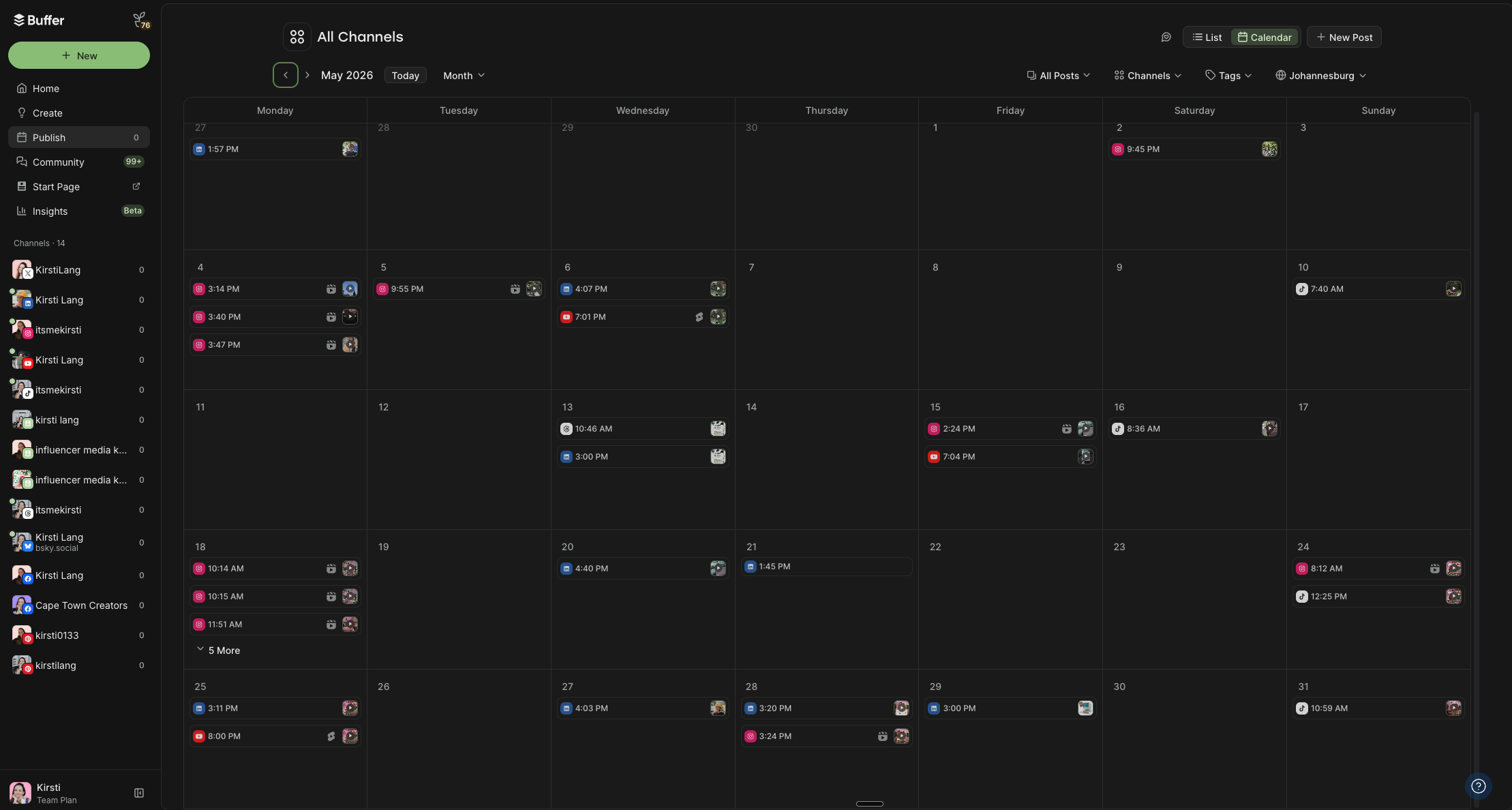
For professionals managing multiple platforms—ranging from professional networks like LinkedIn to visual-heavy platforms like Instagram and TikTok—the complexity of scheduling can quickly become overwhelming. Without a centralized planning system, marketing teams often find themselves manually toggling between apps, leading to missed opportunities and inconsistent brand voices. By implementing a standardized calendar, organizations can ensure that their overarching marketing goals are aligned with their daily social media output.
11 Proven Frameworks for Content Management
The selection of a management tool should depend entirely on the specific needs of the creator. Whether an individual is seeking a low-fidelity solution or a high-powered, automated dashboard, there is a template available to suit every operational style.
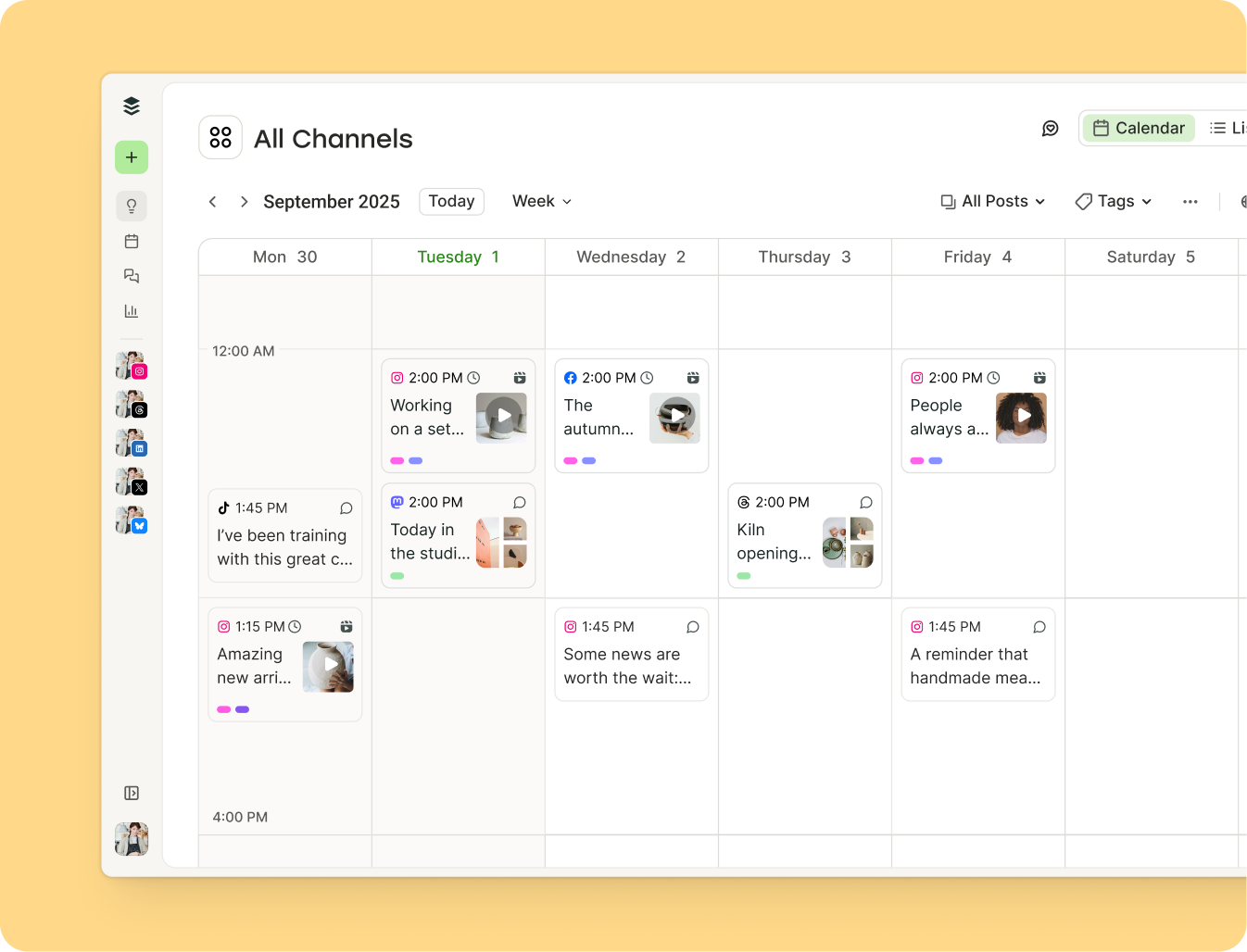
- Buffer Integrated Calendar: Designed for those who require both planning and execution. It allows for drag-and-drop scheduling across virtually all major social platforms, including Threads and Bluesky.
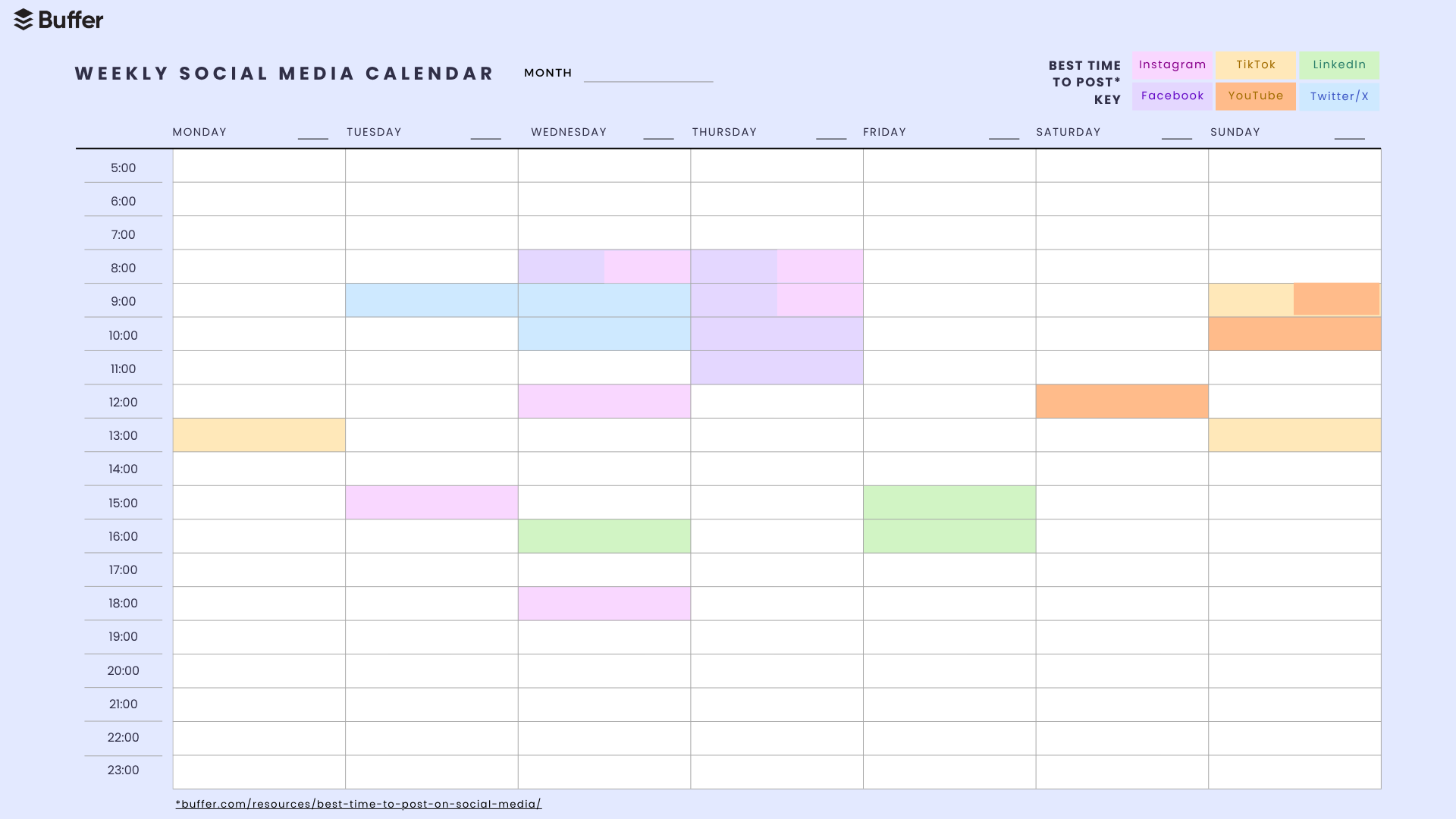
- Best-Time-to-Post PDF: A research-backed static document that provides users with the optimal time slots for engagement based on industry-wide data.
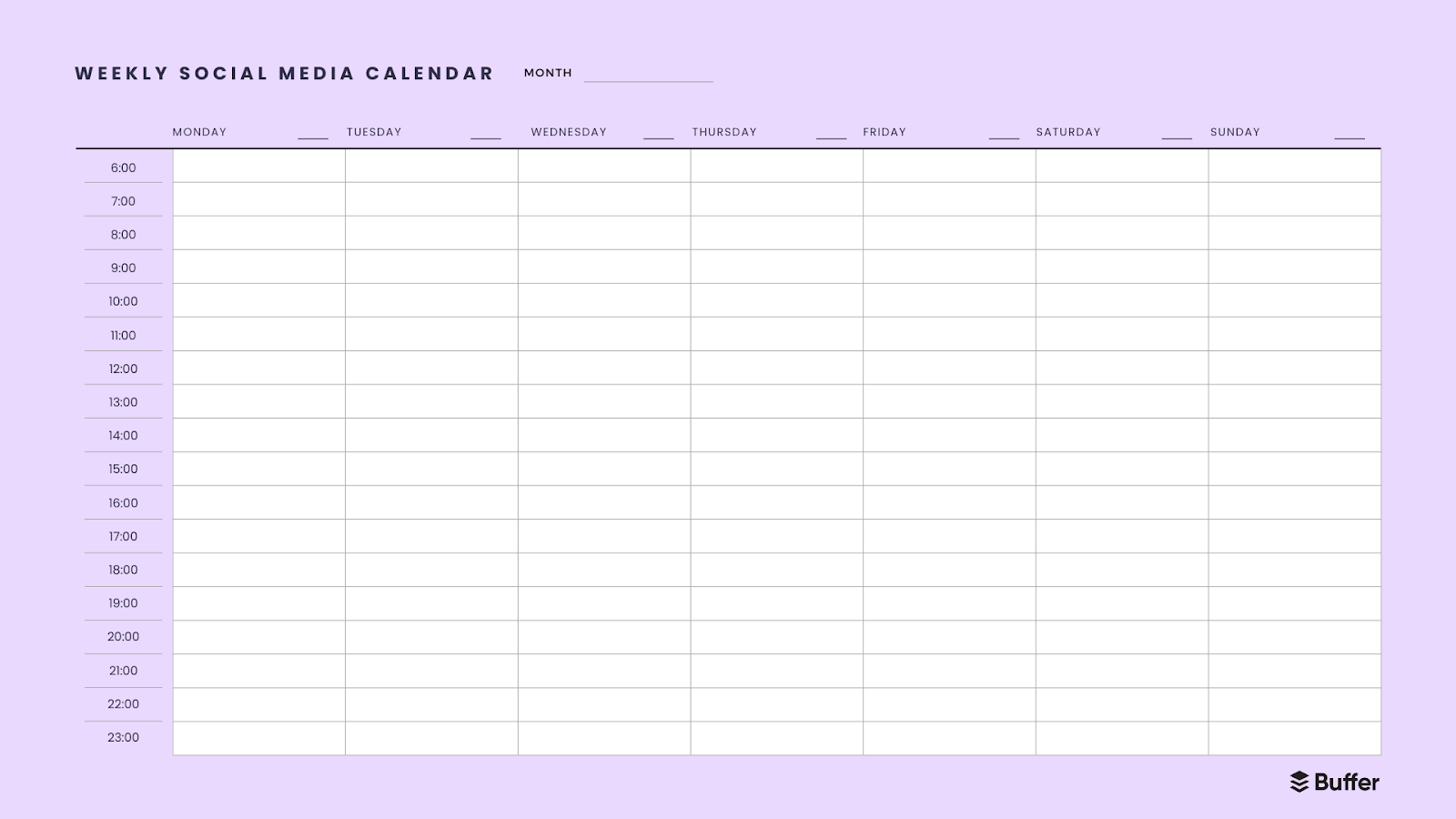
- Simple Weekly Planner: A fundamental PDF structure for those who prefer physical or basic digital tracking of a seven-day cycle.
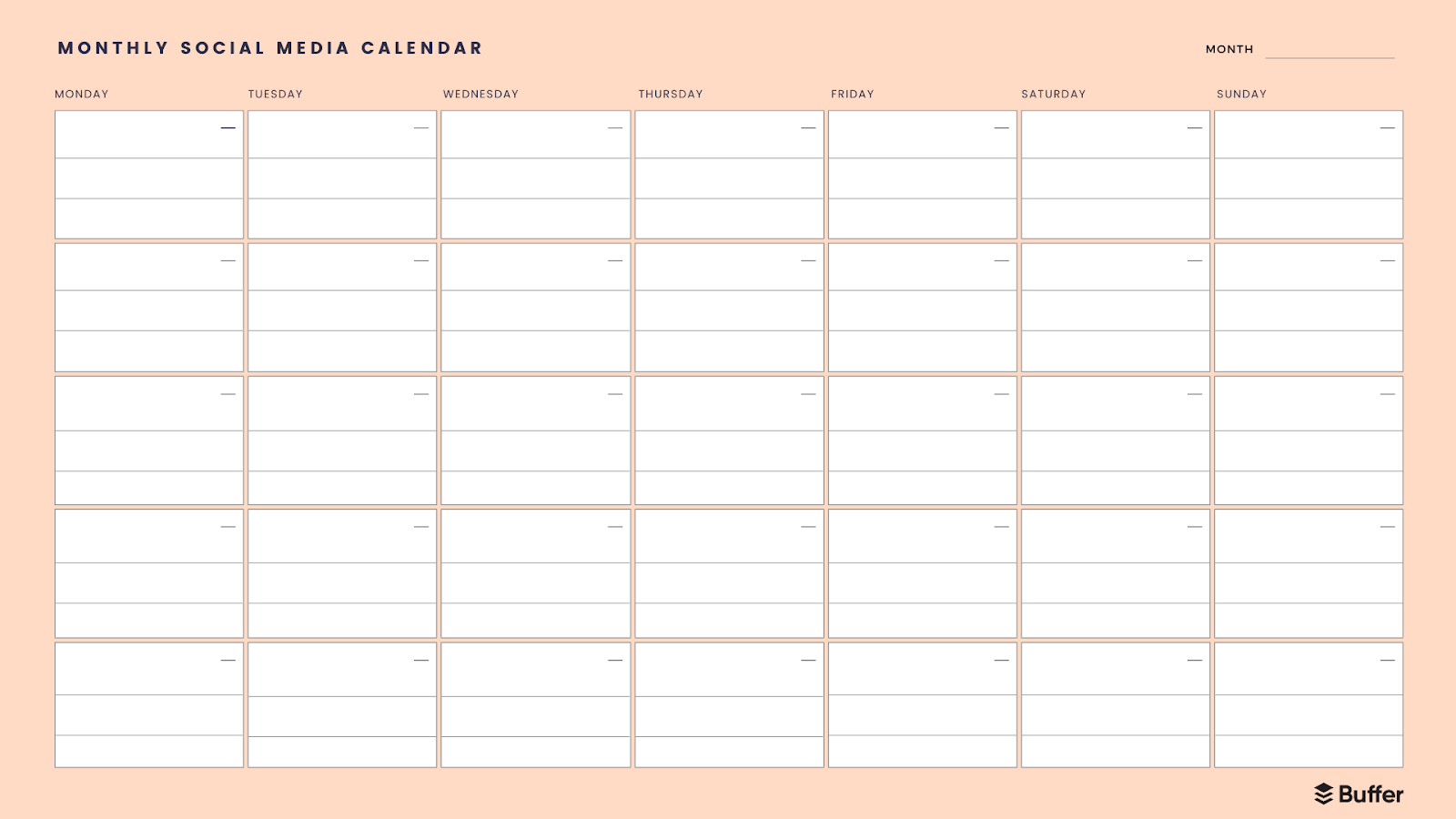
- Simple Monthly Planner: A high-level view that facilitates macro-planning and campaign milestones.
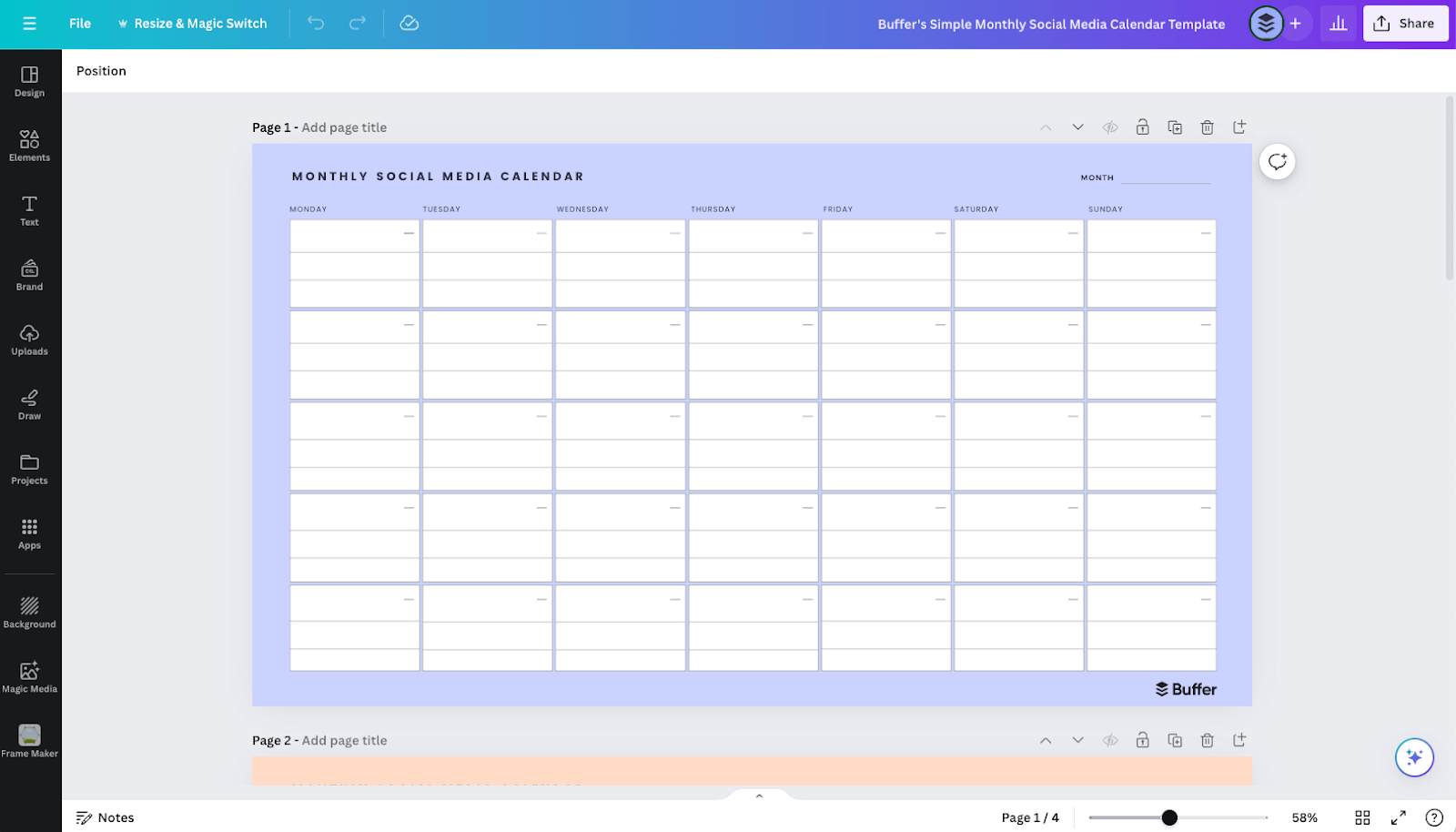
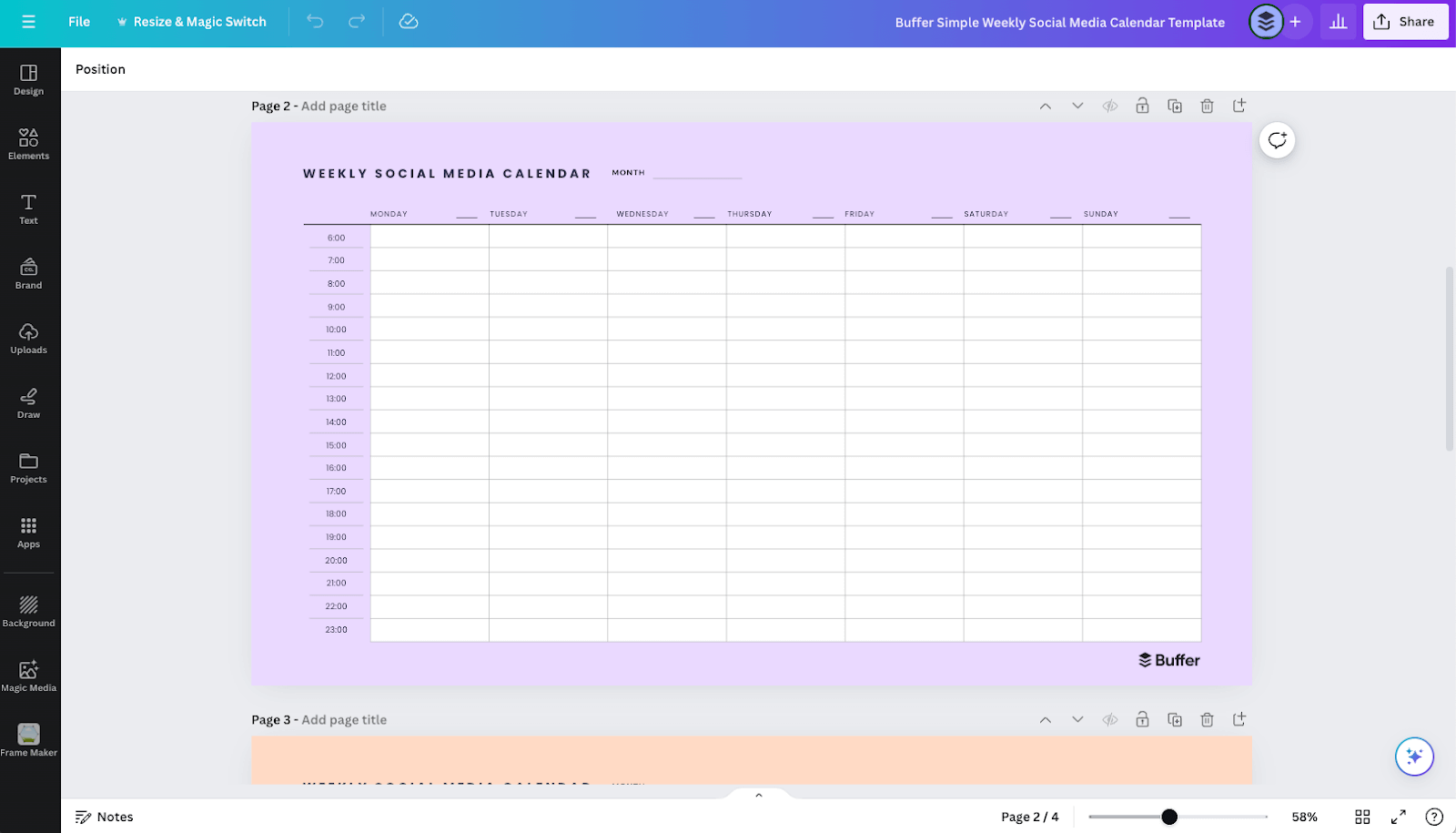
- Canva Visual Templates: Highly customizable, graphic-based calendars that allow teams to view their content’s aesthetic flow before it hits the feed.
- Notion Database: A versatile project management tool that allows users to store media assets, captions, and status labels within a single, dynamic interface.
- Google Sheets/Excel Spreadsheets: The industry standard for data-driven marketers who require custom formulas, automated tracking, and granular control over their editorial workflow.
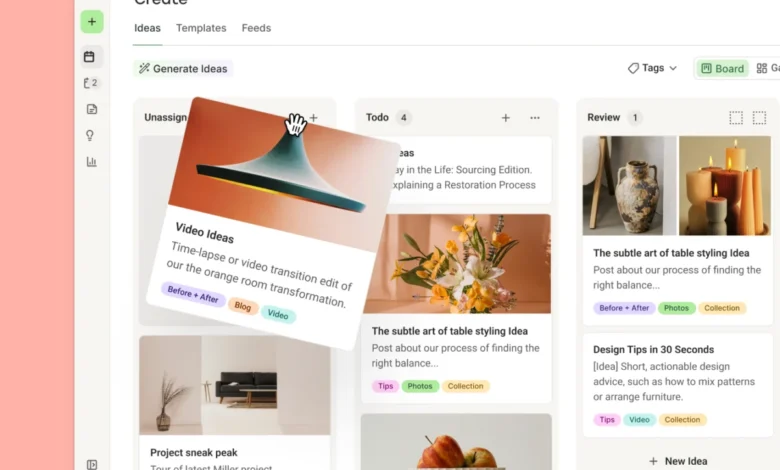
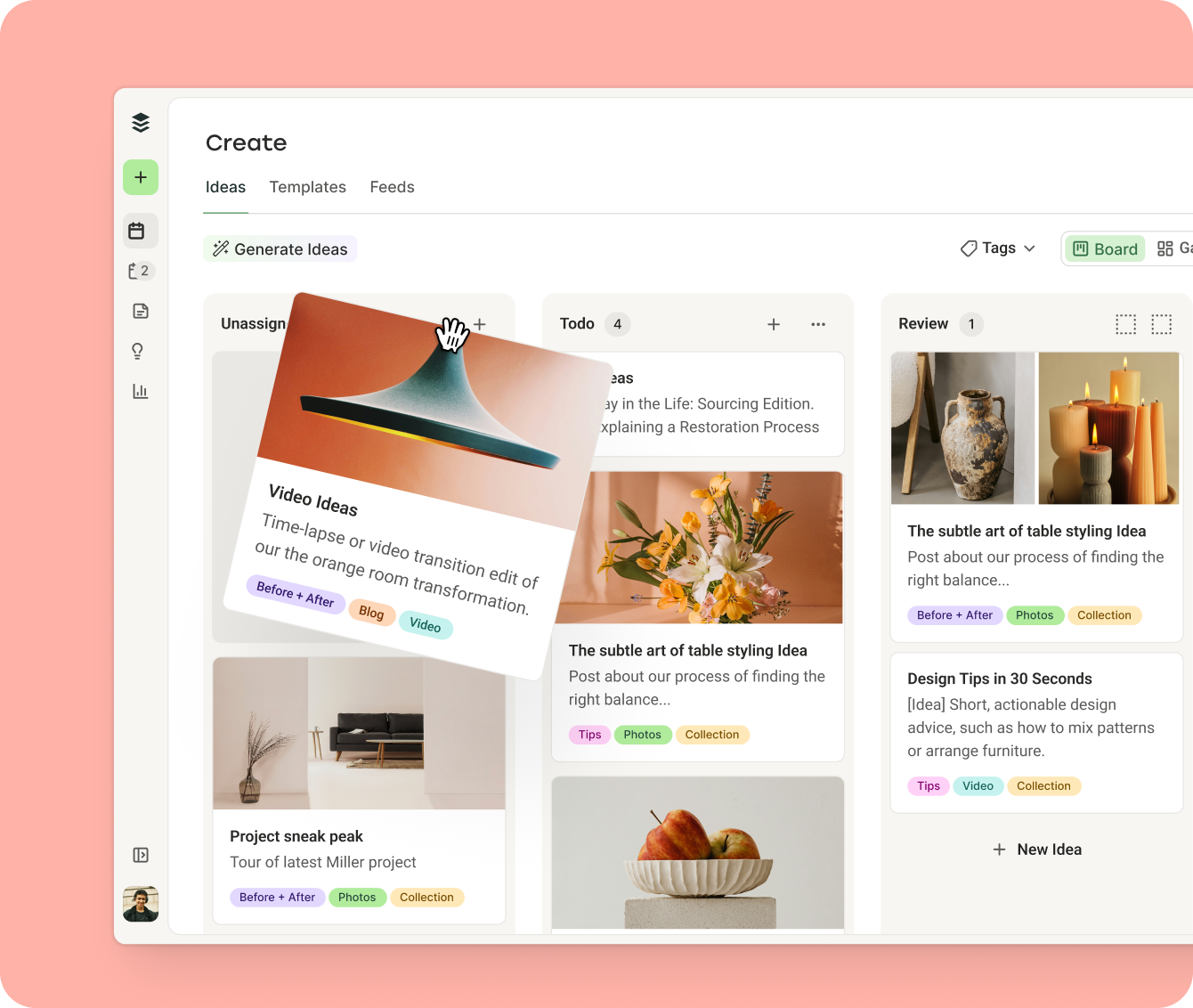
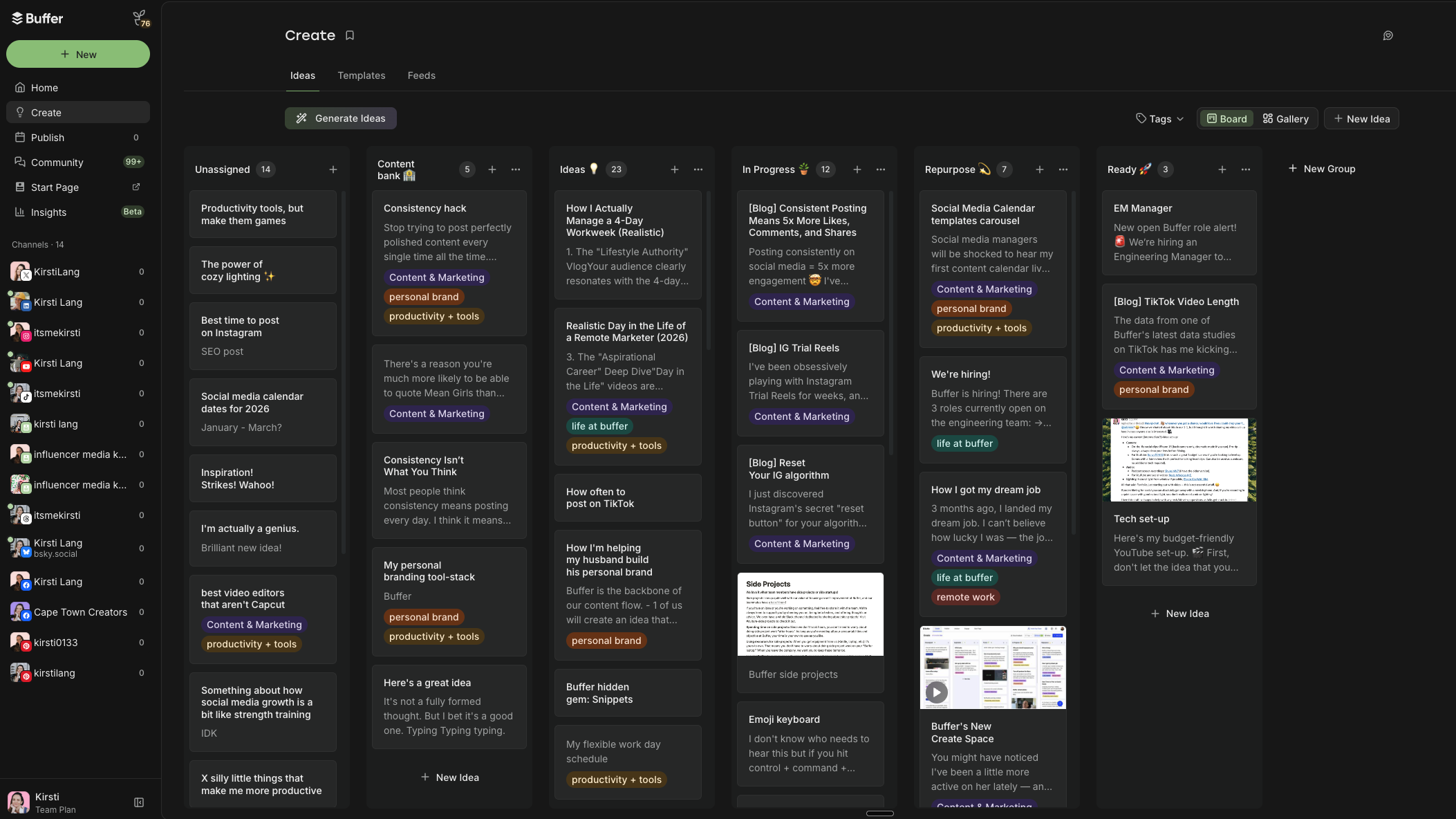
- Kanban-Style Boards: Inspired by lean manufacturing, this method organizes content into stages such as "Ideation," "In Progress," and "Ready to Publish," preventing bottlenecks.
- AI-Driven Email Workflows: A modern approach utilizing large language models (LLMs) to generate ideas, which are then delivered directly to an inbox for review and manual scheduling.
- Platform-Specific Consistency Trackers: Focused tools designed to help creators maintain a specific habit on one platform, such as daily short-form video production.
- Personal Brand Development Systems: Comprehensive Notion setups that track long-term growth metrics alongside daily tactical tasks.
The Evolution of Content Planning: From Spreadsheets to Automation
Historically, social media management was an manual, labor-intensive process. Early adopters relied on printed calendars or basic text documents. Today, the shift toward automation has revolutionized the industry. Tools that integrate "Create Spaces" and "Insights" modules—like the ecosystem offered by Buffer—enable users to bridge the gap between creative brainstorming and final distribution.
Recent industry analysis indicates that creators who use automated scheduling tools save an average of five to eight hours per week. This time, formerly spent on manual uploads and repetitive administrative tasks, can be reallocated to community engagement, data analysis, and high-level strategy development.
Building a Custom Strategy: An Eight-Step Protocol
For those who prefer to build a bespoke system rather than using a pre-existing template, the following eight-step protocol is considered best practice:
- Define Your Strategy: Establish clear KPIs. Are you chasing brand awareness, lead generation, or community building? Your goals should dictate the content types you produce.
- Select Your Infrastructure: Choose a tool that matches your team’s technical proficiency. If the barrier to entry is too high, the system will fail.
- Establish Cadence: Define realistic output goals. A commitment to three high-quality posts per week is objectively superior to a failed commitment to daily posting.
- Construct the Skeleton: Create your base schedule. These are the fixed slots in your queue that ensure you remain visible to your audience.
- Aggregate Content Ideas: Use a central "brain dump" to capture ideas as they arise. Never rely on your memory to store creative concepts.
- Implement Organization Labels: Use tags, colors, or categories to differentiate content pillars (e.g., educational, promotional, personal).
- Execution and Scheduling: Move your finalized content into the distribution pipeline.
- Review and Iterate: Use the feedback loop provided by analytics tools to adjust your future content based on what performed well in the past.
The Role of Analytics in Future Planning
A content calendar is not a static document; it is a living asset. By reviewing metrics like reach, engagement, and conversion rates, marketers can identify which content pillars resonate most effectively. The ability to filter this data by "tags" or "categories" within a professional tool provides a clear roadmap for future growth. If data shows that educational carousel posts outperform static images by 40%, the calendar should be adjusted to favor that format.
The Human Element: Consistency Over Intensity
Despite the rapid integration of AI into social media management, the most successful strategies still rely on human intuition and consistency. The technology is merely a facilitator. As the digital landscape continues to fragment, the ability to show up consistently—without burning out—remains the greatest competitive advantage for any brand or individual.
Ultimately, the goal of a social media calendar is to remove the friction between having an idea and sharing it with the world. By adopting a structured approach, creators can reclaim their time and ensure that their online presence remains both intentional and sustainable in the long term. Whether opting for a sophisticated software suite or a simple, manual spreadsheet, the discipline of planning is what separates amateur attempts from professional-grade digital strategy.