The Definitive Guide to Facebook Ad Sizes and Design Specifications for Digital Marketers in 2022


In the fast-paced ecosystem of digital marketing, the line between a high-performing paid campaign and a wasted advertising budget often comes down to technical execution. For social media managers and media buyers alike, uploading an incorrectly formatted image or a sub-resolution video is a frequent hazard. While these oversights are entirely understandable human errors, Meta’s automated algorithms and discerning consumers are remarkably unforgiving; substandard visual assets invariably lead to depressed engagement rates, higher cost-per-acquisition metrics, and ultimately poor return on ad spend (ROAS).
The challenge of maintaining asset compliance is further compounded by the platform’s frequent updates. Meta routinely modifies its ad dimensions, aspect ratios, and design guidelines across its vast family of apps and services. Staying abreast of these shifting technical parameters has become a specialized discipline in its own right, requiring marketing teams to constantly audit their creative workflows. To alleviate this operational friction, this comprehensive review outlines the definitive Facebook ad sizes and structural design specifications, providing marketing professionals with a reliable blueprint for campaign deployment.

The Strategic Imperative of Ad Dimension Compliance
Understanding and strictly adhering to Facebook’s native ad specifications is not merely a matter of aesthetic neatness; it is a fundamental driver of algorithmic performance and user experience. When an advertiser utilizes properly dimensioned assets, the platform delivers the content seamlessly without applying awkward auto-cropping or compression algorithms that degrade visual quality.
Furthermore, ads that occupy the correct screen real estate are inherently more arresting in a crowded, fast-moving digital feed. By respecting native aspect ratios—such as the standard 1:1 square for desktop feeds or the immersive 9:16 vertical ratio for mobile-first environments—brands signal professionalism and capture user attention more effectively. Conversely, distorted or poorly scaled visuals trigger an immediate psychological disconnect, causing users to scroll past the content before the core messaging can be delivered. Consequently, investing time in pre-production sizing safeguards the integrity of the creative and maximizes the distribution potential across Meta’s auction-based delivery system.
In-Feed Ad Formats: The Foundation of Social Discovery
In-feed advertisements represent the cornerstone of most Facebook advertising strategies. Positioned natively within the user’s primary news feed alongside organic updates from friends, family, and followed pages, these ads offer an organic-looking entry point that requires relatively modest capital investment to generate initial brand awareness.
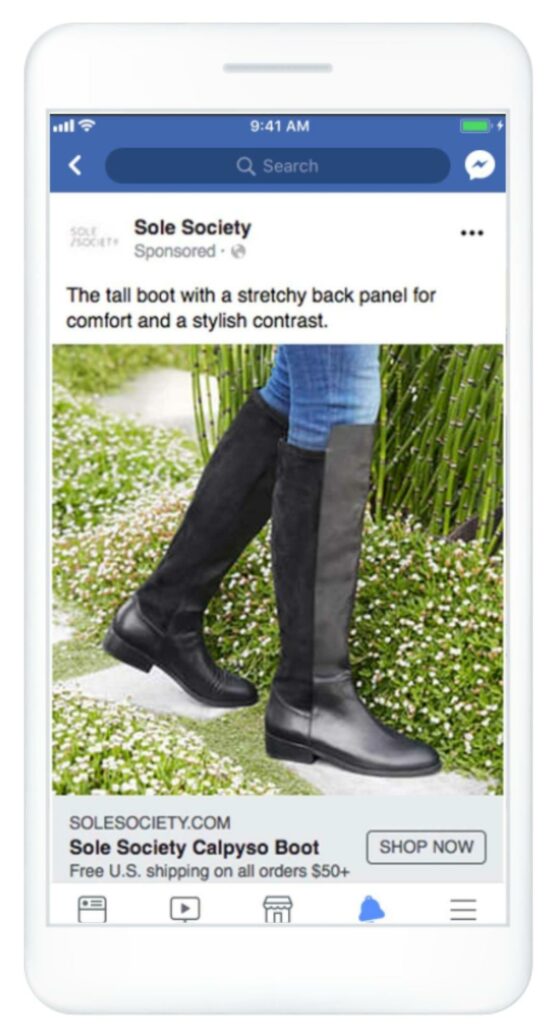
In-feed placements support static images, dynamic videos, and animated GIFs. For brands seeking maximum audience reach and interactive engagement, leveraging panoramic photography or 360-degree imagery can yield significant dividends. However, best practices dictate that overlaid text on static images should be kept to a strict minimum to prevent visual clutter and avoid algorithmic distribution penalties.
Technical Specifications for In-Feed Images
For static campaigns utilizing single images, advertisers must ensure files are saved in either JPEG or PNG formats. The maximum allowable file size is capped at 30 megabytes, with a foundational minimum dimension requirement of 600 by 600 pixels. To ensure optimal clarity on high-definition retina displays, Meta recommends uploading files at a resolution of at least 1080 by 1080 pixels, maintaining an aspect ratio flexibility ranging from 1.91:1 to 1:1. Copywriters should target concise messaging, keeping primary text around 125 characters, headlines to 27 characters, and descriptions to a tight 27 characters.
Technical Specifications for In-Feed Videos
Video assets within the feed demand distinct technical parameters. Supported file extensions include MP4, MOV, and GIF, with a maximum file ceiling of 4 gigabytes. The platform supports a 1:1 ratio for universal desktop and mobile viewing, alongside a taller 4:5 aspect ratio optimized exclusively for mobile devices. Minimum resolution requirements begin at 120 by 120 pixels, though high-definition outputs of 1080 by 1080 pixels or greater are strongly encouraged. Duration parameters are remarkably flexible, accommodating clips ranging from a single second up to an expansive 241 minutes.
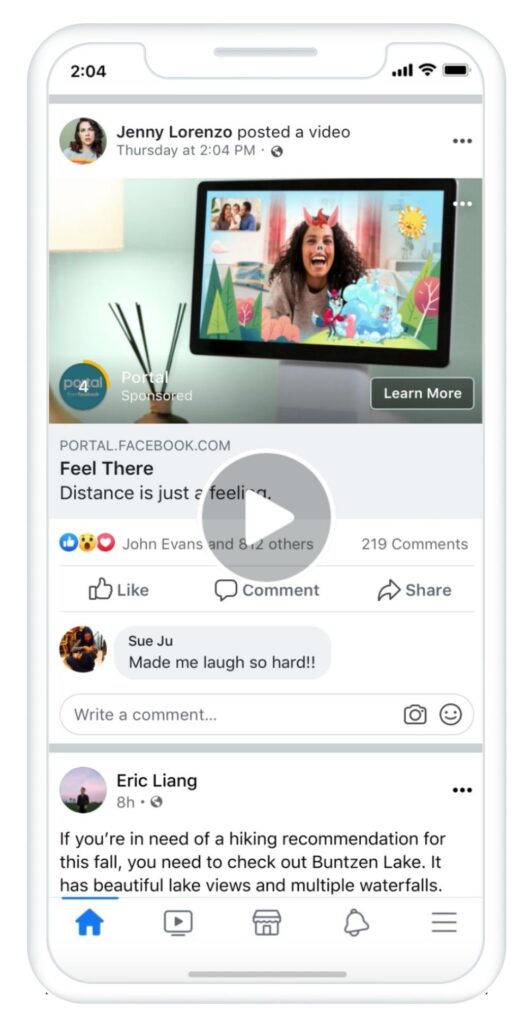
Maximizing Conversion via In-Stream Video Placements
When a brand’s primary strategic objective shifts from top-of-funnel awareness to mid-funnel traffic generation and hard conversions, in-stream video ads emerge as a vital tactic. These placements are engineered specifically to capture and retain the attention of active prospects by interrupting long-form video content with targeted brand messaging.
In-stream video ads are deployed exclusively to mobile users and function primarily in two distinct formats: single-video interruptions and carousel units that appear specifically within active Facebook Live environments once a user has maintained viewership for a minimum of 60 seconds.
Design Standards for In-Stream Videos
Single-image elements supporting these campaigns require JPG or PNG formats, a 1.91:1 or 1:1 ratio, a minimum resolution of 1080 by 1080 pixels, and a file size under 30 megabytes. Advertisers are explicitly advised to refrain from embedding permanent text blocks directly onto the source image file. For the video components, acceptable formats include MP4, MOV, and GIF up to 4 gigabytes, framed in either a 16:9 or 1:1 ratio. Duration constraints for in-stream placements range strictly from 5 seconds to 10 minutes.

Carousel and Collection Ads: Multi-Product Storytelling
For e-commerce brands and multi-product retailers looking to showcase diverse inventories without fatiguing the consumer, carousel and collection formats provide sophisticated multi-asset solutions.
Carousel ads empower marketers to sequence between two and 10 distinct image or video cards within a single ad unit. This modular structure allows brands to break down complex product features into digestible visual components or display entirely different merchandise items, each anchored by its own independent landing page URL.
Collection ads, meanwhile, are engineered specifically to streamline the mobile shopping journey. By pairing a prominent hero video or lead image with a grid of three complementary product images underneath, these ads minimize friction. Upon engagement, the user is seamlessly transitioned into a full-screen, in-app landing page known as a Facebook Instant Experience, where transactions can be completed natively.

Specifications for Carousel and Collection Units
Carousel cards support both static assets (JPG, PNG up to 30 MB) and dynamic videos (MP4, MOV, GIF up to 4 GB) housed within a uniform 1:1 square ratio at a recommended resolution of 1080 by 1080 pixels. Text recommendations for carousels include 125 characters for primary text, 32 characters for headlines, and 18 characters for descriptions. Collection units mirror these technical boundaries regarding file types and resolutions while requiring the integration of an Instant Experience backend to facilitate immediate in-app browsing.
Immersive Vertical Formats: Stories and Messenger Placements
As mobile consumption habits continue to dictate platform evolution, vertical, full-screen ad units have ascended to critical importance. Formats tailored for Facebook Stories, Instagram Stories, and Messenger Stories offer immersive, distraction-free canvases that command undivided user focus.
These units operate on a temporary 24-hour lifecycle natively, but paid placements ensure continuous visibility as users navigate between organic stories posted by friends and followed publishers. Because user navigation is rapid and tap-driven, creative assets must immediately communicate value.

Technical Parameters for Story Placements
Both Stories and Messenger Story ads demand a strict vertical 9:16 aspect ratio. For images, files must be saved as JPG or PNG under 30 megabytes, with a minimum width of 500 pixels and a recommended resolution scaling upward from 1080 by 1080 pixels. A critical design safety zone must be observed: advertisers must leave approximately 14 percent (or roughly 250 pixels) of blank space at both the top and bottom margins to prevent critical branding elements, logos, and UI overlays from being obscured by native platform buttons. Video durations for Messenger Stories are capped tightly between one second and two minutes, whereas standard Facebook Stories accommodate durations up to 241 minutes.
Secondary Placements: Marketplace, Right Column, and Audience Network
While in-feed and Stories formats command the lion’s share of media budgets, specialized placements offer unique targeting advantages for discerning media buyers.
Facebook Marketplace ads allow commercial entities to display promotional listings directly alongside peer-to-peer classifieds, capturing high-intent consumers actively searching for specific goods, real estate, or automotive products within their geographic vicinity. These units adhere to standard 1:1 image and video specifications, requiring a minimum resolution of 1080 by 1080 pixels.

Right column ads serve as a desktop-exclusive format. While mobile traffic dominance has reduced the overall market share of right column inventory, these ads remain a cost-effective supplementary touchpoint for desktop-heavy B2B campaigns or retargeting funnels. They utilize scaled-down landscape dimensions with a minimum width of 254 pixels and height of 133 pixels.
Finally, the Facebook Audience Network extends campaign reach beyond the walled garden of Meta’s proprietary apps, delivering native, banner, and interstitial ads across vetted third-party mobile applications and publisher websites. Rigorous brand safety controls within Business Manager allow advertisers to curate exclusion lists, ensuring their creative assets never appear alongside undesirable content categories.
Strategic Optimization for Maximum Return on Investment
Selecting the correct technical dimensions is merely the foundational prerequisite of modern social advertising. To achieve maximum return on ad spend, media buyers must strategically align their chosen ad formats with overarching campaign objectives and platform-specific placements.
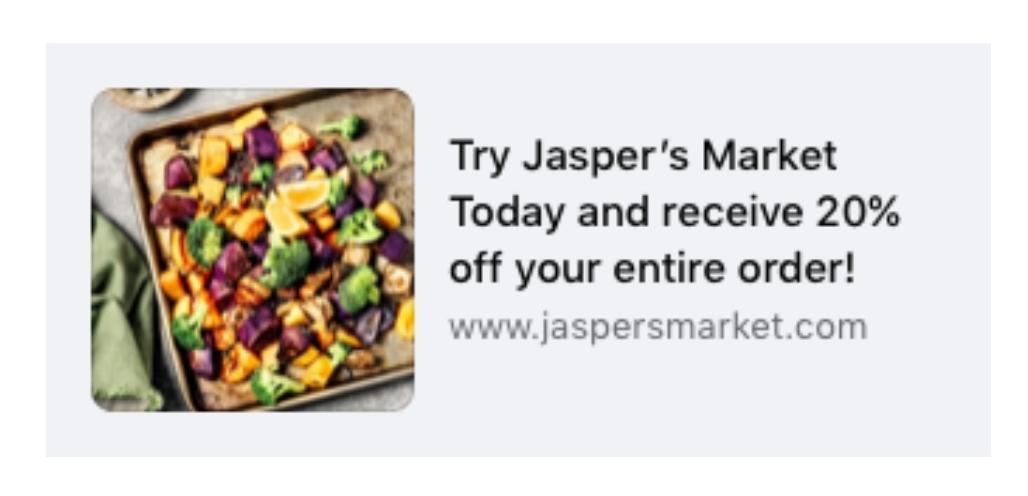
Cross-referencing format availability—such as matching single images to news feeds and Instant Articles, or deploying single videos across in-stream and Audience Network placements—ensures that creative assets are never rendered incompatible by platform limitations. By combining rigorous adherence to design specifications with sophisticated audience targeting and clean visual hierarchy, digital marketers can future-proof their campaigns against algorithmic changes and secure sustained conversion performance.