Google Ads Launches Video Campaign Groups for YouTube Reach and Frequency Campaigns to Optimize Cross-Campaign Performance

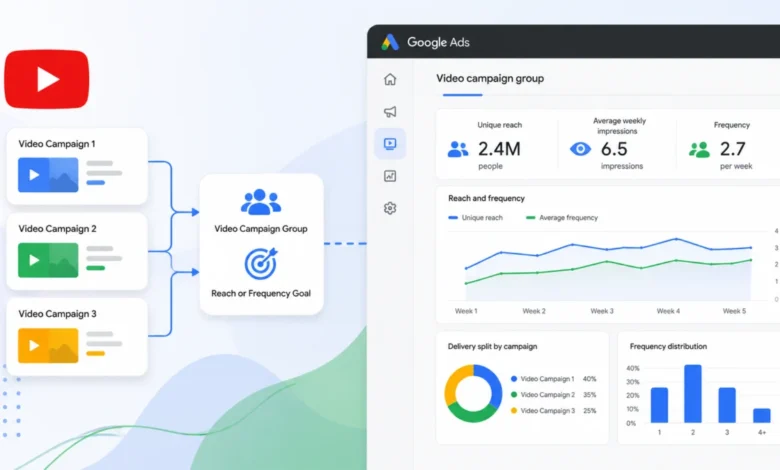
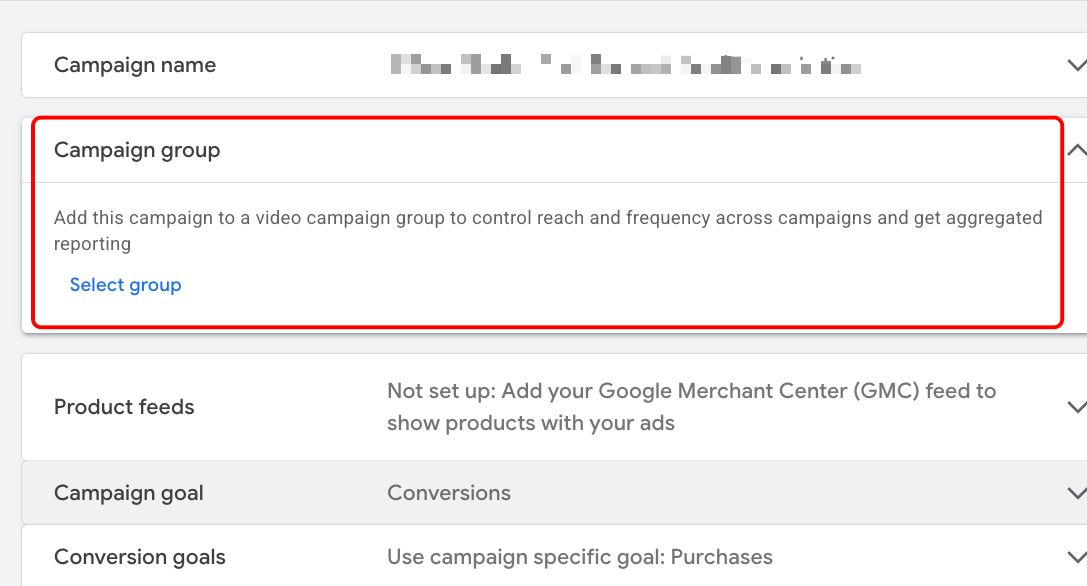
Google has officially announced the global rollout of Video Campaign Groups for YouTube reach and frequency campaigns, marking a significant evolution in how digital advertisers manage large-scale video distributions. This new feature allows marketers to consolidate multiple video campaigns under a single, unified objective, facilitating the optimization of audience reach and frequency across diverse sets of creative assets and targeting parameters. By introducing a centralized coordination layer, Google Ads aims to provide advertisers with a more sophisticated mechanism to prevent audience overexposure while ensuring that brand messaging achieves its intended impact through strategic repetition.
The introduction of Video Campaign Groups addresses a long-standing challenge in the digital advertising landscape: the fragmentation of campaign management. Traditionally, advertisers running multiple YouTube campaigns—such as those utilizing different video lengths, formats, or creative themes—had to monitor and adjust frequency caps on an individual campaign basis. This often led to "frequency creep," where the same user might be served ads from several different campaigns, leading to diminishing returns and potential brand fatigue. The new grouping feature mitigates this by allowing the Google Ads algorithm to look across all campaigns within a group to hit a shared target, such as a specific average frequency per user over a set period.
The Evolution of Reach and Frequency in Digital Video
To understand the significance of this update, it is necessary to examine the historical trajectory of video advertising on YouTube. For years, the platform has offered "Reach and Frequency" buying, a method designed to mirror traditional television buying patterns while leveraging the precision of digital targeting. However, as YouTube expanded its ecosystem to include Shorts, in-stream ads, and in-feed placements, the complexity of managing these various touchpoints grew exponentially.
In the past, an advertiser might run a 15-second non-skippable ad campaign for brand awareness alongside a longer-form "TrueView" campaign for storytelling. Without a unified grouping mechanism, these two campaigns functioned as silos. A user could potentially see the 15-second ad three times and the long-form ad three times, resulting in a total frequency of six. If the advertiser’s goal was a frequency of three, they would have overspent on that specific user by 100%. Video Campaign Groups solve this by treating these separate campaigns as a single cohesive unit for the purpose of delivery optimization.
Technical Mechanics and Unified Reporting
The core functionality of Video Campaign Groups lies in its ability to balance centralized optimization with decentralized control. Advertisers can group multiple campaigns under a single reach or frequency objective, yet they retain the ability to manage specific campaign-level settings. These include individual budgets, specific creative assets (such as varying video files), and distinct bidding strategies. This hybrid approach ensures that while the delivery is coordinated, the tactical nuances of each campaign are not lost.
Accompanying this rollout is a robust unified reporting suite. Previously, marketers had to manually aggregate data from disparate campaigns to calculate their total unique reach and the actual frequency distribution across their entire YouTube presence. The new reporting dashboard provides visibility into several key metrics at the group level:
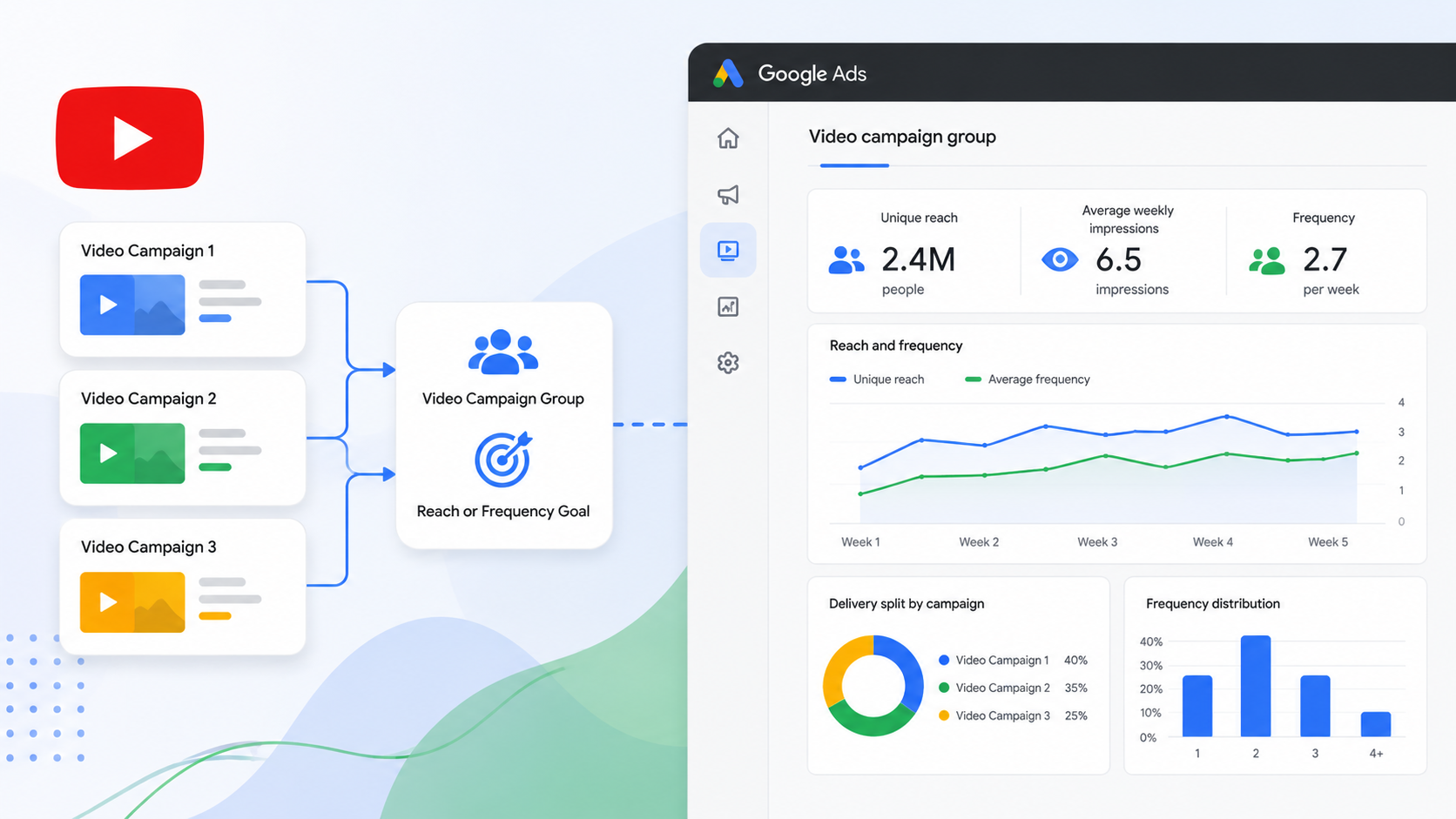
- Unique Reach: The total number of individual users who saw at least one ad from any campaign within the group.
- Average Frequency: The mean number of times a unique user was exposed to the ads.
- Frequency Distribution: A granular breakdown showing how many users saw the ads once, twice, three times, and so on.
- Cost-Per-Reach Metrics: Allowing advertisers to see the financial efficiency of their grouped strategy compared to siloed campaigns.
Data Insights: The "Meridian" Study and ROI
Google’s decision to prioritize frequency optimization is backed by significant internal data and external marketing research. The company highlighted a study utilizing Meridian, Google’s open-source Marketing Mix Modeling (MMM) tool. The study sought to identify the "sweet spot" for ad frequency—the point at which brand recall and purchase intent are maximized without falling into the trap of negative ad sentiment.
The findings were striking: the study concluded that an optimal frequency of 2.7 impressions per week resulted in a 19% increase in Return on Investment (ROI) compared to campaigns with lower or unmanaged frequency. This data point underscores the "Goldilocks" principle of advertising: too little exposure results in a lack of brand salience, while too much exposure leads to wasted spend and viewer annoyance. By providing tools that target these specific frequency benchmarks, Google is moving toward a more scientific, data-driven approach to video media buying.
Chronology of the Rollout
The path to the global launch of Video Campaign Groups has been characterized by iterative testing and feedback from high-spending brand advertisers.
- Late 2023: Initial whispers of "grouped campaign" features began appearing in developer documentations, suggesting Google was working on a way to bridge the gap between individual campaigns and holistic account goals.
- Early 2024: A limited beta was launched for select enterprise-level advertisers and agencies. During this phase, the feature was primarily tested for high-budget brand awareness campaigns where frequency control is most critical.
- July 2024: Paid search expert Arpan Banerjee publicly shared screenshots of the feature appearing in live Google Ads dashboards, signaling that the tool was moving out of restricted testing.
- Late 2024: Google officially confirmed the global availability of Video Campaign Groups for YouTube reach and frequency campaigns.
- The Near Future: Google has confirmed that the feature will soon expand to Display & Video 360 (DV360). This expansion is particularly significant for programmatic buyers who use DV360 to manage YouTube line items alongside other digital media buys.
Industry Reactions and Expert Analysis
The digital marketing community has reacted positively to the update, viewing it as a necessary step toward more efficient media planning. Industry analysts suggest that this move is a direct response to the increasing competition for "attention share" on platforms like TikTok and Meta’s Reels, where high-velocity creative testing is the norm.
"Managing reach and frequency across multiple YouTube campaigns has traditionally required advertisers to monitor performance campaign by campaign," noted one industry observer. "Video campaign groups centralize optimization and reporting, making it easier to control audience exposure while maintaining separate budgets and creative strategies. For brands running large awareness campaigns, the feature could improve media efficiency by reducing unnecessary overlap and helping maximize unique reach."
Marketing experts also point out that this feature aligns with the broader trend of "automation with guardrails." While Google’s AI handles the complex math of cross-campaign delivery, the human marketer still decides the overarching strategy—choosing which campaigns belong in which group and setting the ultimate frequency target.
Broader Implications for the Advertising Ecosystem
The implications of Video Campaign Groups extend beyond simple dashboard convenience. This update represents a shift in how Google views the "customer journey" on YouTube. By allowing for coordinated delivery, Google is enabling "sequencing-lite" strategies. For example, an advertiser could group a "Teaser" campaign, a "Launch" campaign, and a "Sustain" campaign together. The system can then ensure that a user isn’t bombarded by all three simultaneously, but rather receives a balanced diet of the various creative messages.
Furthermore, this update strengthens YouTube’s position as a viable alternative or supplement to linear television. As more "cord-cutters" move to Connected TV (CTV), advertisers are looking for tools that offer the same reach-and-frequency guarantees they are accustomed to in the TV world, but with the added benefits of digital measurement. Unified reporting across campaign groups provides a "Total Reach" metric that is highly attractive to CMOs who are trying to reconcile digital spend with traditional brand-building objectives.
Future Outlook and Integration with DV360
The upcoming integration with Display & Video 360 is perhaps the most anticipated next step for this feature. DV360 is the preferred platform for many of the world’s largest agencies and brands because of its cross-channel capabilities. Bringing Video Campaign Groups to DV360 will allow programmatic buyers to coordinate YouTube frequency not just across different YouTube campaigns, but potentially in a way that respects the user’s total exposure across the broader Google ecosystem.
As privacy regulations like the phasing out of third-party cookies continue to reshape the industry, first-party platforms like Google Ads and YouTube are becoming "walled gardens" with increasingly sophisticated internal measurement tools. Video Campaign Groups leverage Google’s logged-in user data to provide frequency capping that is more accurate than cookie-based methods used by third-party ad tech.
Conclusion: A Strategic Leap for Brand Marketers
The rollout of Video Campaign Groups for YouTube reach and frequency campaigns marks a pivotal moment for Google Ads. It acknowledges that in a multi-format, high-velocity digital world, the individual campaign is no longer the most effective unit of measurement or optimization. By allowing advertisers to think in terms of "Groups" and "Objectives," Google is facilitating a more holistic approach to brand storytelling.
For advertisers, the path forward involves a re-evaluation of their YouTube structures. Instead of viewing campaigns as isolated efforts, they must now consider how various creative assets can work in tandem within a Group to achieve the 2.7-impression-per-week "ROI sweet spot." As the feature migrates to DV360 and potentially incorporates more AI-driven creative optimization, the barrier between complex media planning and effective execution will continue to thin, ultimately leading to more efficient spend and a better experience for the end viewer.