The Strategic Evolution of Arts and Culture Digital Logistics: How Dustin Kuhns Leverages Data and Human Taste for Organizational Growth


Dustin Kuhns, a specialized consultant based in Quakertown, Pennsylvania, has redefined the traditional role of a social media manager by applying a logistics-centered framework to the arts and culture sector. Operating under the unique title of an "arts and culture supply chain manager," Kuhns has spent the last year refining a methodology that prioritizes operational consistency and aesthetic integrity over the mere volume of content production. By utilizing a streamlined suite of digital tools, most notably the social media management platform Buffer, Kuhns oversees more than 10 social media channels for a diverse portfolio of clients ranging from small grassroots teams to established historic institutions. His approach highlights a growing trend in the professional services industry where technical efficiency is balanced with human-centric "taste," a combination that is proving essential for nonprofits and creative organizations navigating an increasingly saturated digital landscape.
The Professional Framework: Arts and Culture Supply Chain Management
Kuhns’ professional identity is built upon the premise that content creation is only one link in a much larger organizational chain. He views his work through the lens of logistics, focusing on the movement of ideas from a leadership’s vision through the creative process and finally to the end consumer across multiple digital touchpoints. This "supply chain" includes social media, email marketing, website management, and paid advertising. For Kuhns, the primary obstacle facing arts organizations—which include religious nonprofits, film festivals, and historic theaters—is rarely a lack of creative talent or a poor brand identity. Instead, he argues that the fundamental challenge is a lack of consistency.
In the context of the arts, consistency refers to the ability to maintain a steady presence and a coherent voice across time. Many organizations suffer from "burst" cycles, where activity is high during an event or a fundraising drive but falls silent in the interim. Kuhns’ intervention focuses on building systems that allow these organizations to scale their efforts without being overwhelmed by the complexity of the tools they use. He advocates for a "less is more" philosophy regarding software, famously stating that he would prefer a tool that fulfills 75 percent of his needs perfectly over a tool that offers 200 percent of what he needs but introduces unnecessary friction into the workflow.
Chronology of Development and Business Scaling
The evolution of Kuhns’ consultancy is rooted in a diverse background that spans several creative and technical disciplines. Growing up playing music in church, he developed an early understanding of the intersection between community engagement and performance. This progressed into a role producing shows for independent bands, followed by several years in the design and construction industry. These formative years provided him with a dual perspective: the aesthetic sensibilities of an artist and the structural discipline of a builder.

By the time he transitioned into communications and eventually launched his own consultancy, Kuhns had developed a reputation for having a keen "sense of taste." This intangible asset became a cornerstone of his business model, as clients began to seek his services not just for technical execution, but for the confidence that his aesthetic judgment provided.
In 2023, as his roster of clients expanded, Kuhns integrated Buffer into his core operations. The decision was driven by the need for a platform that adapted to his existing workflows rather than dictating them. As the business scaled throughout 2024, the necessity for deeper analytical capabilities led him to become an early adopter of the platform’s "Insights" feature. This transition marked a shift from qualitative management to a data-informed strategy, allowing him to prove the value of his "taste-led" decisions through empirical evidence.
Data-Driven Strategy and the Impact of Analytics
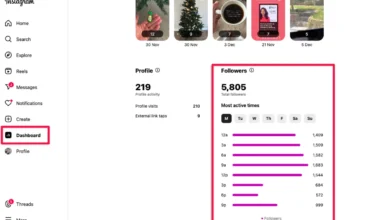
The introduction of specialized analytics has transformed how Kuhns reports to his clients. In the traditional nonprofit sector, reporting is often fragmented, with managers forced to pull data from individual platforms—Instagram, Facebook, LinkedIn, and X—and manually compile them into spreadsheets. The ability to view performance data from every channel in a single, unified view has significantly reduced the administrative overhead for Kuhns’ consultancy.
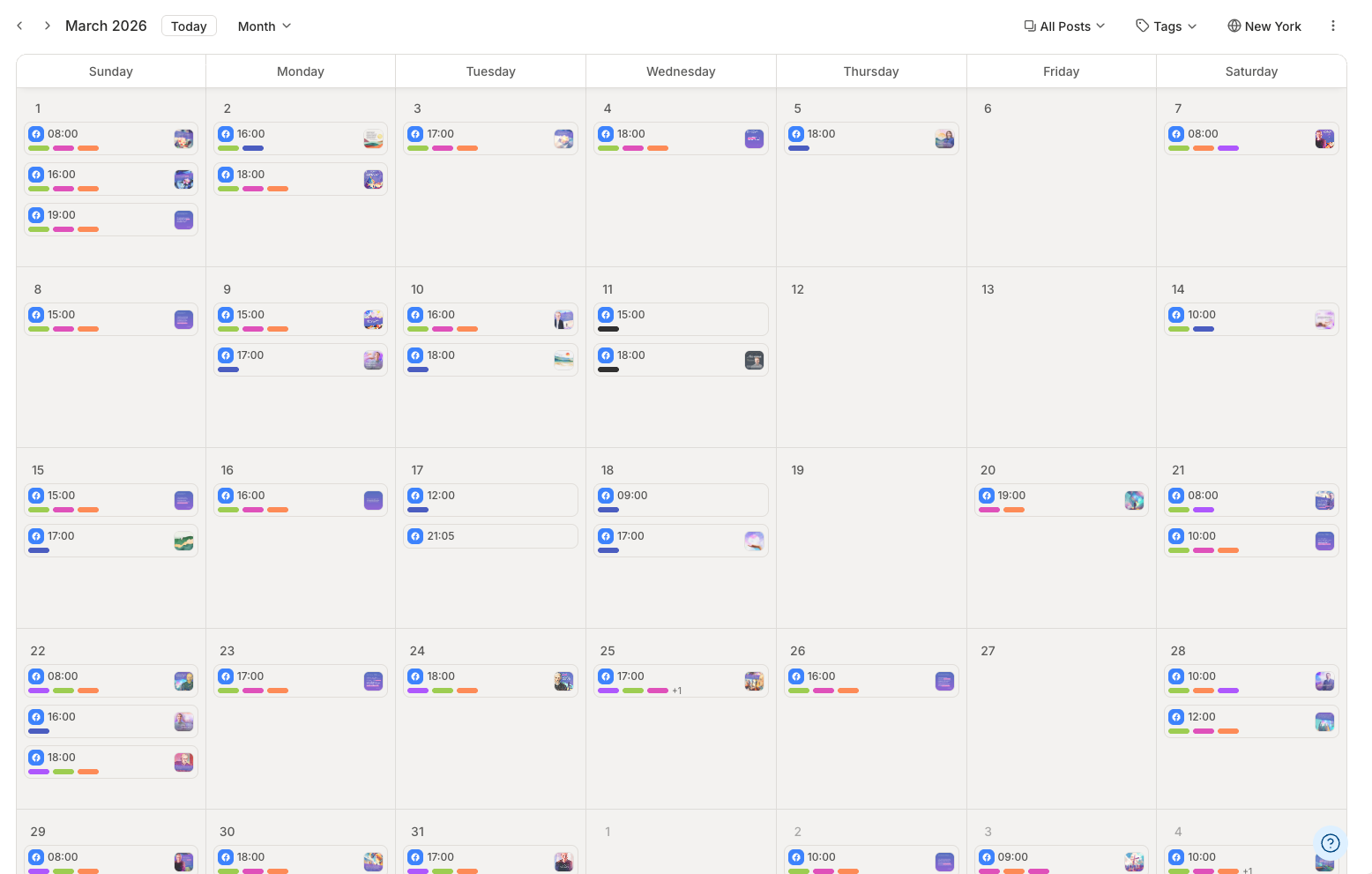
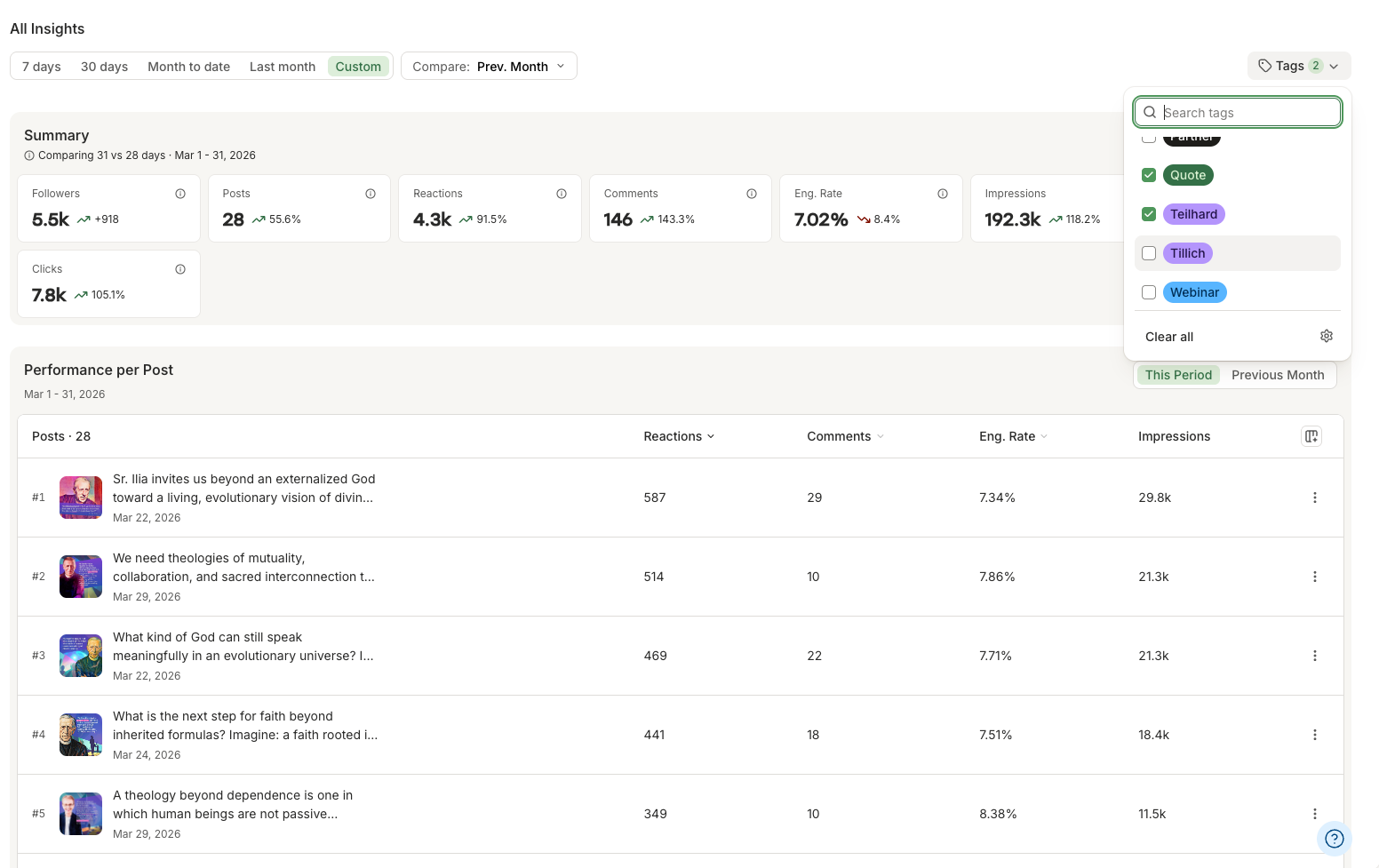
One of the most impactful technical features in his current workflow is the use of color-coded tagging. By categorizing posts by campaign, theme, or subject matter, Kuhns can conduct granular performance reviews. For example, when working with a nonprofit client that utilizes intellectual content such as quotes from experts and historical figures, Kuhns uses tags to track which specific thinkers or topics generate the most engagement.
Supporting Data and Industry Context
The need for this level of analytical rigor is supported by broader industry trends. According to the 2023 M+R Benchmarks Study, which analyzes digital trends for nonprofits, social media engagement rates have faced downward pressure as algorithms shift toward paid-to-play models. For arts and culture organizations, which often operate on shoestring budgets, the "organic" reach of a post is critical. Kuhns’ method of using tags to identify high-performing content allows organizations to pivot their strategies in real-time.
Furthermore, a study by the National Endowment for the Arts (NEA) suggests that digital engagement is a primary driver for in-person attendance at cultural events. By identifying that a specific "thinker" or "topic" is resonating on social media, Kuhns provides his clients with actionable intelligence that extends beyond the digital realm. This data often informs the client’s broader programming, leading to the development of specific webinars, newsletter topics, or blog posts that mirror the interests of the social media audience.
The Role of Taste in an Era of Algorithmic Engagement
A central tenet of Kuhns’ philosophy is the preservation of human taste in the face of data-driven pressures. He posits that a significant portion of contemporary social media criticism stems from the fact that taste was abandoned in favor of engagement at any cost. In a journalistic context, this is often seen in "clickbait" or controversial content designed to trigger the algorithm’s rewards.
Kuhns provides a sobering example within the religious nonprofit sector. While a religious organization could generate massive engagement by leaning into controversy or hostile debates, such engagement often runs counter to the organization’s mission. While the data might show high "views" or "comments," Kuhns’ role is to apply a filter of taste and institutional mission to determine if those metrics are actually valuable. This highlights a critical implication for the future of social media management: the most successful managers will be those who use data to understand their audience, but use their judgment to decide whether or not to follow the crowd.
Official Responses and Platform Philosophy
The reliance on tools like Buffer’s Insights reflects a broader shift in the software-as-a-service (SaaS) industry. Platforms are increasingly moving away from "all-in-one" bloatware and toward modular, user-centric designs. While many competitors have rushed to integrate generative AI into every facet of their platforms, Buffer’s approach—and Kuhns’ endorsement of it—suggests a market demand for AI that acts as a background intelligence rather than a foreground creator.
Kuhns has noted that the communities his clients serve would likely react negatively to AI-generated content, which can often feel sterile or disconnected from the human experience inherent in the arts. By keeping AI in the background—using it to surface patterns and trends rather than writing posts—the technology supports the human creator without replacing their voice. This stance is gaining traction among communications professionals who value authenticity and brand integrity.
Broader Implications for the Arts and Culture Sector
The work being done by Kuhns in Quakertown serves as a micro-study for the broader arts and culture sector. As digital platforms become more complex, the role of the "manager" is evolving into that of a "strategist-logician." The implications of this shift are three-fold:
- Organizational Sustainability: Small arts organizations can achieve the digital footprint of much larger institutions by focusing on consistency and systemized workflows rather than raw content volume.
- Cross-Platform Intelligence: The ability to treat social media data as a "read" on the audience allows organizations to make better decisions regarding their physical programming, fundraising, and community outreach.
- The Premium on Human Judgment: As generative AI becomes more prevalent, the value of "taste" and "curation" will likely increase. Organizations that can maintain a human-centric voice while using data to optimize their reach will be better positioned to build long-term loyalty.
In conclusion, Dustin Kuhns’ approach to "arts and culture supply chain management" demonstrates that the future of digital communications lies in the balance between technical efficiency and artistic intuition. By choosing tools that respect the user’s workflow and prioritizing data that serves a higher mission, Kuhns is providing a blueprint for how the arts can thrive in a digital-first world without losing their soul. His success underscores the reality that in the modern economy, the most valuable "supply" being managed is not just content, but the trust and attention of a community.