From Gold Rush to Algorithms: The Evolution of Search Marketing and the End of Manual Control

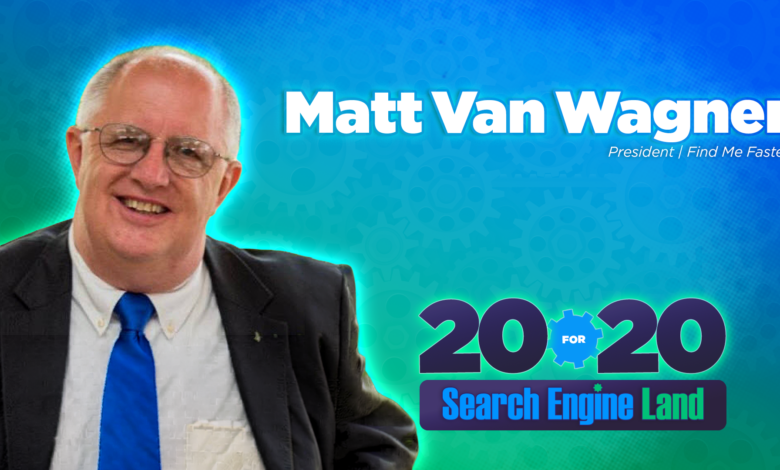
The search marketing industry has evolved from a chaotic, entrepreneurial gold rush into a sophisticated, highly automated ecosystem dominated by massive, consolidated platforms. This transformation, spanning over two decades, has fundamentally altered how businesses connect with consumers, how agencies operate, and how the search engines themselves define success. Reflecting on this journey, paid search veteran Matt Van Wagner offers a retrospective that highlights the transition from manual, granular campaign management to an era defined by artificial intelligence, black-box bidding, and the inherent tension between advertiser goals and platform incentives.
The Dawn of the Search Era: A New Frontier
In the early 2000s, the marketing landscape was dominated by traditional, high-friction channels such as direct mail, trade publications, and physical conferences. For businesses, the barrier to entry for effective advertising was high, and attribution was notoriously difficult. When search advertising emerged, it represented a radical departure. Unlike mass-media advertising, search allowed for intent-based targeting, providing a way for businesses to reach consumers exactly when they were looking for a specific solution.
Van Wagner, transitioning from a background in technology sales, entered the industry during this formative period. At that time, the concept of a "search marketing agency" was virtually non-existent. Early practitioners were essentially pioneers, exploring an uncharted landscape where the rules were being written in real-time. This era was defined by a shared sense of discovery; because the market was growing exponentially, early agencies were collaborative, viewing the vast potential of the internet as a rising tide that would lift all boats.
Chronology of a Maturing Industry
The growth of the industry can be traced through key milestones that shifted both the technical and cultural norms of the profession:
- 2000-2003: The "Gold Rush" phase. Google AdWords launched in 2000. Advertisers quickly realized the efficacy of intent-based marketing. During this period, technical sophistication was low, and simply being present on the search engine results page (SERP) was often enough to guarantee success.
- 2003: The Google Florida Update. This was a watershed moment for the SEO community. It demonstrated that organic search visibility was not a permanent asset but a volatile metric subject to algorithmic shifts. Many businesses saw their revenue vanish overnight, cementing the need for paid search as a defensive, reliable insurance policy.
- 2006-2007: The rise of specialized industry journalism. The launch of platforms like Search Engine Land and the SMX conference series marked the professionalization of the industry. It moved the discourse from basic "how-to" tutorials to deep, intermediate, and advanced strategic analysis.
- 2010: The release of "Google Instant." This product shift demonstrated Google’s growing power to dominate the news cycle and redefine user behavior, forcing marketers to adapt their strategies to a platform that was increasingly predicting user intent before a query was even finished.
- 2015-Present: The Era of Automation. The shift from manual bid adjustments, granular keyword grouping, and single-keyword ad groups (SKAGs) toward machine learning-based smart bidding and broad match.
The Myth of the Number One Spot
A common misconception in the early years of pay-per-click (PPC) advertising was the obsession with ranking at the top of the sponsored results. Many advertisers were willing to pay exorbitant cost-per-click (CPC) rates simply to secure the prestige of the number one position. Van Wagner recalls that this was frequently a net-negative strategy. The more mature approach, which gained traction as the industry evolved, was to prioritize economic viability over vanity. Competing for the second or third position often yielded a significantly higher return on investment (ROI), a lesson that underscores the difference between marketing for ego and marketing for business outcomes.
The Automation Paradox: Efficiency vs. Control
The current state of search marketing is defined by the tension between the efficiency of automated systems and the strategic expertise of human marketers. While modern AI-driven platforms like Google Ads and Microsoft Advertising can ingest billions of data points to optimize bids, they often do so by stripping away granular controls that advertisers once used to sculpt traffic.
A recurring point of contention is the default use of "broad match." From an advertiser’s perspective, broad match can lead to significant wasted spend, as the system may serve ads on irrelevant or low-intent queries. The frustration, as noted by industry observers, lies in the requirement that advertisers must spend their own capital to "teach" an automated system that should, in theory, already have access to relevant business data. The challenge for the modern practitioner is finding a balance: leveraging the speed and scale of machine learning while retaining the ability to inject human expertise, such as negative keywords or specific intent signals, to prevent the system from burning budget on non-converting traffic.
The Role of Independent Journalism and Advocacy
As search platforms have become more opaque, the role of independent industry journalism has become critical. Organizations like Search Engine Land have served as a bridge between the monolithic tech giants and the practitioners on the ground. By providing an editorial voice that can question platform recommendations—which are often incentivized by the platform’s need to increase total ad spend—these publications help maintain a level of accountability.
Furthermore, the appointment of liaisons, such as Google’s Ginny Marvin, has been a constructive development. By acting as an advocate for the advertiser community within the halls of a multi-billion-dollar tech corporation, these figures help translate the frustrations of the user base into actionable feedback. This is essential, as the objectives of Google—which include maximizing platform-wide revenue—are not always perfectly aligned with the specific ROI requirements of an individual small or medium-sized business.
The Lessons of Failure
One of the most valuable, if uncomfortable, lessons for any search marketer is the necessity of radical transparency regarding errors. In the early, high-stakes environments of PPC, a simple configuration error—such as incorrectly setting a negative keyword—could result in thousands of dollars in wasted spend in a matter of hours. Van Wagner notes that the tendency to search for external scapegoats or creative excuses for poor performance is a professional pitfall. The most successful marketers are those who admit to mistakes quickly, perform a root-cause analysis, and pivot to prevent recurrence.
Implications for the Future
The evolution from the manual, granular era to the current automated landscape is irreversible. Advertisers will not regain the level of granular control they held in 2005. The implication for the future of search marketing is a shift in skill sets: the value of a marketer is no longer in their ability to manage 50,000 keywords in a spreadsheet, but in their ability to interpret data, manage automated systems, and align business strategy with algorithmic output.
Ultimately, the most important takeaway for today’s digital marketers is the need to maintain an independent perspective. The technology, while powerful, is not a neutral tool; it is a commercial product designed to satisfy the growth requirements of the search engine provider. As such, every recommendation, default setting, and automated campaign type should be treated as a suggestion rather than a mandate. For those navigating this increasingly complex ecosystem, the ability to question the platform—and to understand the distinction between the platform’s definition of success and their own—remains the most essential competitive advantage in the modern search landscape.