How Artificial Intelligence is Reshaping Customer Relationship Management and Eliminating Administrative Friction

Modern enterprise software was originally engineered to function as an immutable single source of truth, yet contemporary customer relationship management (CRM) platforms frequently generate more friction than clarity. According to widespread industry metrics, sales representatives routinely sacrifice approximately 25 percent of their weekly working hours not on active selling, but on manual data entry, administrative activity logging, deal stage updates, and the execution of routine follow-up tasks. Marketing operations teams simultaneously spend hours manually reconciling inbound form fills against existing contact repositories, while revenue operations (RevOps) analysts construct custom reports by hand that should ideally update dynamically. Despite these exhaustive manual efforts, enterprise databases remain chronically plagued by incomplete records, duplicate entries, and inconsistent data hygiene.
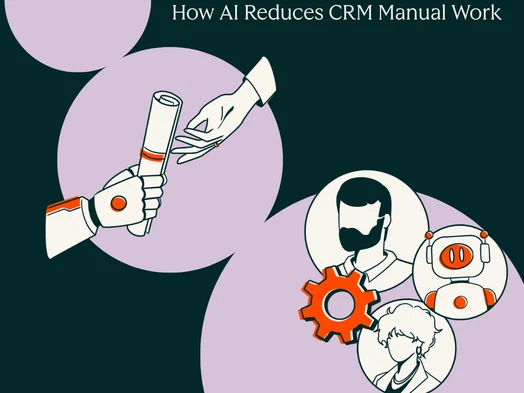
The introduction of artificial intelligence into customer relationship management represents a fundamental shift in how organizations handle operational data. Rather than aiming to replace human customer-facing teams or displace core CRM infrastructures, current enterprise implementations focus specifically on eliminating the administrative gap between customer interactions and their digital preservation. By automating the mechanical aspects of data capture, follow-up orchestration, and pipeline prioritization, platforms such as HubSpot’s Smart CRM allow commercial organizations to redirect human capital toward strategic judgment, complex account handling, and nuanced relationship management.
The Evolutionary Context of CRM Automation
To understand the current reliance on artificial intelligence within sales and marketing operations, one must examine the historical evolution of database management systems. Early contact management tools required entirely manual inputs, creating an ongoing tension between quota-carrying professionals striving to hit revenue targets and administrative requirements dictated by management. As digital touchpoints multiplied across email, social media, web forms, and video conferencing software, the volume of customer interactions expanded exponentially.
By the early 2020s, organizations realized that adding more software tools merely compounded administrative overhead. Sales representatives faced "tab sprawl" and administrative fatigue, leading to delayed updates, ghost pipelines, and inaccurate forecasting. Recognizing that human willpower alone could not ensure pristine data hygiene, software developers began integrating machine learning models and generative artificial intelligence directly into database architectures. This evolution shifted the paradigm from retroactive data entry—where humans attempt to remember and record past conversations—to proactive, automated data capture driven by ambient listening and contextual processing.
Anatomy of High-Friction Operational Workflows
Before implementing algorithmic solutions, revenue operations leaders typically map the highest-friction workflows across customer-facing departments. These bottlenecks generally cluster into three distinct operational categories: data entry and activity logging, follow-up execution, and reporting prioritization.
Data entry and activity logging represent the most pervasive drain on corporate productivity. Traditional workflows require sales representatives to manually log every outbound call, incoming email, and scheduled meeting, subsequently updating custom contact and deal properties. Under the immense pressure of meeting quarterly quotas, employees consistently prioritize immediate revenue-generating activities over administrative housekeeping. Consequently, historical CRM records frequently reflect what a representative had time to document rather than what actually transpired during a customer interaction.
Follow-up and handoff execution suffer from similar human limitations. Following a high-intent product demonstration, an inbound form fill, or an initial discovery call, an organization must determine the appropriate next step, draft tailored outreach, transmit the communication, and document the resulting response. When executed manually, follow-up latency increases dramatically, while message quality fluctuates wildly depending on the individual representative’s experience and workload.
Reporting and prioritization present compounding challenges for leadership teams. Sales managers routinely spend hours manually aggregating pipeline reports, while RevOps professionals export raw data into disparate spreadsheet applications to construct leadership dashboards. Meanwhile, frontline representatives rely heavily on intuition rather than empirical urgency signals to determine which leads require immediate attention, resulting in missed conversion opportunities and inefficient allocation of outbound prospecting time.
Automating Activity Logging and Smart Data Capture
The foundational promise of artificial intelligence in modern CRM architecture is the ability to capture comprehensive interaction history without requiring manual input after every customer touchpoint. Modern platforms utilize deep integrations with communication infrastructure to automatically log sent and received emails, calendar invites, and telephonic engagements directly to relevant contact, company, and deal records.
Advanced data capture features utilize natural language processing to scan meeting transcripts and suggest real-time updates to deal properties based on actual conversational dialogue. Rather than forcing a representative to manually input budget constraints, shifting stakeholder dynamics, or agreed-upon timelines following a virtual conference, the system analyzes the transcript and surfaces verified update recommendations. The human user simply confirms the suggested changes, significantly reducing administrative delay. Furthermore, autonomous AI agents manage inbound interactions across chat and email channels in real time, ensuring that full historical context is established before a human representative steps into the conversation.
Transforming Unstructured Conversations Into Usable Context
One of the most persistent data gaps in enterprise sales pipelines is the inconsistent execution of post-meeting summaries. Traditionally, teams either omit meeting notes entirely or write subjective summaries that fail to capture critical buying signals.
Native meeting note-taking functionalities integrated within advanced CRM systems now generate detailed, structured summaries directly inside database records. These automated summaries extend far beyond verbatim transcripts; they isolate core themes, extract explicit next steps, and identify buying signals required to advance a deal through the pipeline. When integrated with automated workflow builders, these summaries can trigger subsequent business logic—such as automatically populating a designated next-steps property or dispatching high-priority notifications to account managers the moment a deal stage shifts. Consequently, when a deal progresses to its final closing stages, executive leadership and account executives can review structured executive summaries instantly, eliminating the need to parse through extensive email threads and disparate notes.
Database Hygiene, Enrichment, and Deduplication Protocols
%20(6).png)
Manual data entry inherently generates two pervasive operational hazards: missing field values and duplicate records. Both phenomena systematically undermine downstream marketing automation, lead scoring models, and executive reporting accuracy.
Automated data enrichment layers address missing information by programmatically populating dozens of contact and company attributes—including industry classifications, enterprise headcount, annual revenue figures, geographic locations, job titles, and verified digital profiles—leveraging expansive commercial datasets and public registries. When new inquiries enter the CRM, enrichment protocols execute instantaneously, ensuring that sales personnel receive leads equipped with comprehensive firmographic context.
Simultaneously, deduplication engines utilize algorithms to flag potential record redundancies based on matching email signatures, naming conventions, and corporate domain names. Database administrators must carefully sequence these operations, executing deduplication passes prior to bulk data enrichment to avoid wasting system credits and introducing conflicting property values. Industry best practices recommend implementing protective guardrails, such as "enrich only empty fields" modes, which protect manually verified data points—such as a direct dial phone number confirmed during a live conversation—from being overwritten by automated routines.
Streamlining Follow-Up Cadences and Outreach Personalization
The temporal gap between a verified buying signal and a commercial follow-up represents the primary window where enterprise deals stall. By connecting sequence enrollment directly to automated CRM events rather than relying on human memory, organizations dramatically accelerate response times.
When high-intent web activity or form submissions are logged, automated workflows immediately enroll prospects into timed sequences of emails and tasks while simultaneously routing the account to the appropriate representative based on predefined territory rules. This automated handoff guarantees uniform adherence to communication standards across the entire sales organization.
Moreover, artificial intelligence revolutionizes outbound messaging by drafting personalized communications anchored in rich CRM context. Unlike generic generative text tools operating in isolation, CRM-integrated intelligence engines access full customer histories, previous meeting summaries, deal stages, and firmographic data to draft messages tailored specifically to the recipient’s corporate environment. While these drafts invariably require human review and refinement before transmission, the technology drastically collapses the duration required to transition from identifying a follow-up necessity to executing targeted outreach.
Predictive Lead Scoring and Pipeline Visibility
Traditional lead-scoring frameworks rely on static, manually configured rules—assigning arbitrary point values to specific web page visits, email opens, and form completions. As buyer behaviors evolve, these manual models inevitably drift, failing to accurately reflect genuine commercial intent.
Modern predictive lead scoring models eliminate manual configuration by utilizing machine learning algorithms trained continuously on historical closed-won and closed-lost deal outcomes. By analyzing complex behavioral, firmographic, and engagement patterns, these predictive models assign precise conversion probability scores and priority tiers to every contact in the database. High-scoring contacts automatically trigger high-priority sales development routing or fast-track sequence enrollments, completely removing manual triage from morning pipeline reviews.
Concurrently, buyer-intent identification tools analyze aggregate web traffic and execute reverse Internet Protocol (IP) lookups to identify anonymous corporate visitors evaluating product pricing or technical documentation. This provides sales leadership with macro-level account intelligence before prospective buyers formally identify themselves through traditional form submissions.
Implementation Frameworks and Operational Risk Mitigation
Successfully deploying artificial intelligence within an enterprise CRM environment requires a disciplined, methodical implementation strategy to avoid operational disruption. Industry experts consistently recommend initiating deployment with a single, highly visible, measurable, and low-stakes workflow.
Common pilot projects include post-form-fill enrichment or automated post-meeting sequence enrollment. These initial workflows feature clear, quantifiable before-and-after performance metrics—such as lead response time or property completeness rates—and impact only newly created records rather than established enterprise accounts.
Organizations must also institute rigorous permission scopes and data governance protocols. Restricting configuration access to designated administrators prevents accidental bulk data modifications. Furthermore, establishing clear boundaries regarding which decisions remain strictly under human purview is essential for maintaining employee trust. Algorithmic tools should manage predictable, repeatable administrative tasks and surface actionable data signals, while human professionals retain exclusive authority over sensitive commercial negotiations, dispute resolutions, and complex account strategy decisions.
Quantitative Measurement of Operational Efficiency
To justify ongoing investment in artificial intelligence infrastructure, revenue operations teams must track specific performance indicators designed to quantify administrative reduction and productivity enhancement. Four foundational metrics provide a reliable framework for evaluation:
- Administrative Time Savings: Regularly surveying sales and operations personnel regarding weekly hours dedicated to CRM maintenance provides clear directional indicators of administrative burden reduction.
- Record Completeness Rates: Measuring the percentage of contact and company records containing fully populated core fields—such as industry classification, company size, and lifecycle stage—quantifies the direct impact of automated data enrichment.
- Follow-Up Velocity: Tracking the precise duration between a triggering event (such as a form submission or demo completion) and the initial outbound response measures the operational efficiency gained through automated sequence enrollment.
- Handoff Quality Scores: Evaluating whether cross-departmental handoffs—such as the transition of accounts from marketing to sales or sales to customer success—include fully populated context fields ensures that automation enhances rather than degrades interdepartmental communication.
Ultimately, the successful integration of artificial intelligence within customer relationship management platforms is not measured by the wholesale replacement of human labor, but by the systematic eradication of administrative friction. By reclaiming the 25 percent of the workweek historically lost to manual data entry, commercial organizations empower their teams to focus on what matters most: building meaningful, profitable relationships with customers.