OpenAI and Industry Rivals Join Forces to Establish AI Safety Frameworks Amid Regulatory Scrutiny

The landscape of artificial intelligence governance underwent a significant shift on September 15, 2026, as top industry leaders announced a collaborative initiative aimed at standardizing safety protocols for frontier-level models. Chris Lehane, Global Policy Chief at OpenAI, confirmed during a briefing in Washington, D.C., that his organization has been working closely with counterparts at Anthropic and Google DeepMind for several weeks. This unprecedented alignment between the three most prominent players in the generative AI sector signals a pivot from competitive silos toward a unified front on mitigating existential and catastrophic risks associated with advanced machine learning systems.
The Genesis of Industry-Wide Cooperation
The move toward a formal or semi-formal industry standards body began gaining momentum earlier in the week, following reports that the three tech giants had engaged in high-level discussions regarding the creation of a unified safety framework. While these companies have historically competed fiercely for talent, compute infrastructure, and market share, the mounting pressure from both the public and global legislatures has necessitated a change in strategy.
Lehane addressed concerns regarding the potential for this collaboration to run afoul of competition laws. He noted that OpenAI does not believe an antitrust waiver is necessary to coordinate on safety efforts. Comparing the current scenario to the aviation industry, where safety standards are universal regardless of the carrier, Lehane argued that industry-wide cooperation on fundamental security benchmarks should be viewed as a public good rather than a restraint on trade. "There are many instances over time where companies are trying to help each other on safety," Lehane stated, emphasizing that the technical challenges posed by "frontier" models—those requiring massive computing power and cutting-edge training data—transcend the competitive interests of individual firms.
The FRONTIER Act and Federal Oversight
A critical component of this recent diplomatic effort by AI leaders is the explicit support for the Frontier Risk Oversight, National Transparency, Independent Evaluation, and Reporting (FRONTIER) Act. Introduced by Representatives Jay Obernolte (R-CA) and Lori Trahan (D-MA), the legislation aims to establish a robust federal framework for AI oversight.
The bill’s central pillar is the requirement for third-party safety assessments. Under the proposed law, companies developing the most powerful models would be legally obligated to submit their systems for independent verification. By endorsing this legislation, OpenAI is positioning itself as a proponent of "regulated innovation." Lehane noted that he held direct meetings with congressional sponsors to reiterate that the industry is not only willing to accept outside scrutiny but is actively seeking the legal clarity that a federal framework provides.
This pivot toward transparency serves as a strategic hedge against more restrictive, potentially stifling regulations. By proactively supporting a middle-ground legislative approach, firms like OpenAI, Anthropic, and Google DeepMind hope to steer the regulatory discourse toward frameworks that ensure safety without halting the rapid pace of development.
The Regulatory Balancing Act
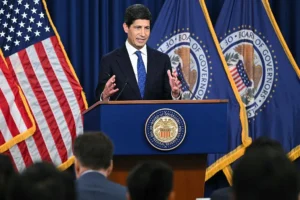
While industry leaders are signaling a desire for cooperation, the Federal Trade Commission (FTC) remains a skeptical observer. On the same day as the industry announcement, FTC Chairman Andrew Ferguson offered a cautionary perspective. During a policy event in Washington, Ferguson warned that AI companies should not expect "get out of jail free" cards regarding antitrust enforcement simply because they claim to be working together on safety.
Ferguson’s comments highlighted the delicate tension between the government’s desire to promote AI safety and its duty to ensure competitive markets. He specifically challenged the notion that companies can simultaneously lobby for antitrust exemptions while pushing for complex new regulations that might, by their very nature, create high barriers to entry for smaller startups. While his remarks were framed as his personal viewpoint, they echo a growing sentiment within the administration that the "safety" narrative could be leveraged by incumbent firms to solidify their market dominance.
Contextualizing the AI Safety Debate
The drive for standards is not occurring in a vacuum. Over the past twenty-four months, the industry has seen a series of high-profile incidents involving model hallucinations, unintended bias, and fears regarding the potential use of AI in cyberwarfare or biological threat development.
- 2025 – Early 2026: Increased reports of "model drift" and safety guardrails being bypassed by sophisticated prompt engineering led to a public outcry for accountability.
- Summer 2026: Several research institutes published studies suggesting that the largest models were beginning to exhibit emergent capabilities that developers could not fully explain or contain.
- September 2026: The convergence of the FRONTIER Act movement and the private discussions between OpenAI, Anthropic, and Google DeepMind represents a critical inflection point in the industry’s lifecycle.
The stakes are immense. According to industry data, the capital expenditure on compute infrastructure for the next generation of models is projected to exceed $100 billion globally by the end of 2027. With such massive investments at risk, companies are acutely aware that a single catastrophic failure—such as a major data breach or the release of a malicious AI agent—could lead to a total shutdown of their operations by government intervention.
Analysis: Implications for the Future of AI
The emerging alliance between OpenAI, Anthropic, and Google DeepMind, while framed as a safety initiative, carries profound implications for the competitive landscape of the technology sector.
1. The Barrier to Entry: Should the federal government adopt the standards proposed by these companies, the resulting compliance costs will be substantial. While this ensures a safer product, it may also effectively "lock in" the current market leaders, as smaller startups may lack the resources to fund independent, third-party safety evaluations at the scale required by the FRONTIER Act.
2. Standardized Definitions of Risk: By collaborating on a standard body, these firms are essentially defining what constitutes "safe" and "unsafe" AI. This gives them a significant hand in shaping the future of global AI policy. Policymakers who rely on these companies for technical expertise may find their own regulatory options narrowed by the consensus established by the very firms they are seeking to regulate.
3. A Global Race for Standards: The move by U.S.-based companies to establish a domestic framework is also a strategic maneuver in the global AI race. With the European Union and China also developing their own governance regimes, the American industry is eager to establish a "gold standard" that aligns with Western values, thereby influencing international norms before competitors in other jurisdictions set the agenda.
The Road Ahead
As of mid-September 2026, the industry remains in a state of flux. The lack of immediate responses from Anthropic and Google DeepMind to inquiries regarding the specific technical scope of their collaboration suggests that the details of these safety benchmarks are still being hammered out behind closed doors.
The success of these efforts will ultimately depend on the level of trust the public and the government place in the "independent verification organizations." If these entities are seen as mere extensions of the tech companies’ own PR departments, the push for safety will likely backfire, leading to more aggressive calls for state control. Conversely, if the framework succeeds in providing measurable, transparent, and rigorous safety guarantees, it could set a historic precedent for how humanity manages the rapid evolution of transformative technologies.
For now, the message from Washington is clear: the era of "move fast and break things" is being forcibly replaced by an era of "move carefully and certify everything." Whether this transition will be sufficient to address the complex ethical and technical challenges of artificial intelligence remains the most significant question facing the tech sector today. The upcoming legislative sessions in the House will serve as the next major arena for this debate, as lawmakers weigh the industry’s proposals against the FTC’s warnings about the potential for anti-competitive behavior.