From Retail Buyer to Chief People Officer: Jen Rettig on Building Global Teams and Navigating the AI Era in Human Resources

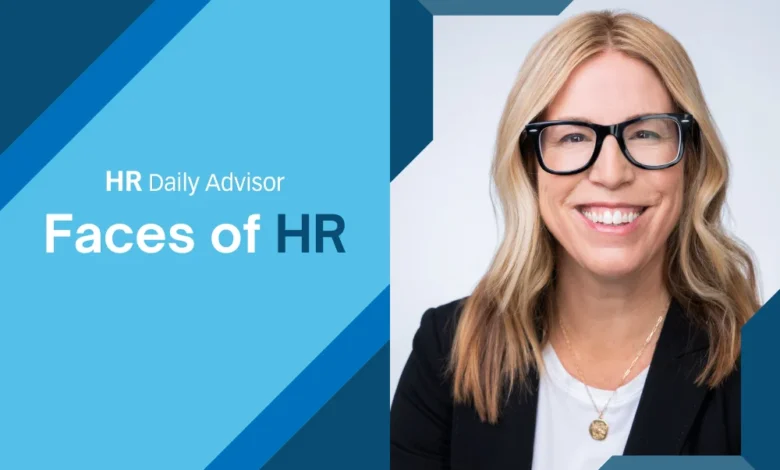
The modern corporate landscape demands that human resources leaders transcend traditional administrative functions to become strategic business builders. Across a dynamic 25-year career spanning retail, consumer technology, and enterprise software, Jen Rettig has lived this evolution firsthand. Today, as the Chief People Officer at Guild.ai, Rettig is spearheading workplace transformation on the front lines of artificial intelligence, leveraging deep operational experience to align talent strategy with rapid technological change. Her journey offers a compelling case study in how modern HR leaders must adapt to shifting paradigms while maintaining an unyielding commitment to organizational culture and employee development.
An Unconventional Entry into Human Resources
Rettig’s professional trajectory did not begin with a calculated blueprint for climbing the corporate human resources ladder. Instead, her career commenced in the retail sector as an operator and department store buyer following her graduation from the University of Michigan. While navigating the structured environment of buyer training programs, Rettig discovered a parallel passion: campus recruiting.
Driven by an innate enthusiasm for pitching corporate visions, assessing raw talent, and guiding students toward their professional futures, she began volunteering to travel back to university campuses for interviews. This hands-on, grassroots involvement did not go unnoticed. Corporate leadership recognized her knack for talent evaluation and interpersonal communication, ultimately catalyzing a permanent shift into the human resources domain. This early transition laid the groundwork for a career defined by operational agility and a deep-seated understanding of how talent acquisition serves as the lifeblood of scaling enterprises.
Global Scale and the Apple Years
That initial transition quickly propelled Rettig into high-stakes corporate environments. One of her early professional relationships opened the door to Apple, where she joined the original Apple Retail team in Cupertino during a period of monumental expansion. Tasked on her very first day with recruiting Geniuses and Specialists for nascent retail stores worldwide, Rettig underwent a quintessential trial by fire.
During these formative years, she personally hired hundreds—if not over a thousand—employees instrumental in establishing Apple’s now-iconic retail footprint. Among her most notable early assignments was staffing Apple’s flagship store in Tokyo. Working alongside a translator, Rettig gained an invaluable global perspective, learning firsthand that fundamental human traits such as curiosity, passion, and cultural connection effortlessly transcend linguistic barriers. This foundational experience cemented her capacity to build high-performing global teams from the ground up, a skill set she would repeatedly deploy throughout her career.
Scaling Silicon Valley Enterprises
Rettig’s career subsequent to Apple reflects a consistent pattern of high-growth leadership. Over a span of two decades dedicated primarily to talent acquisition and executive people leadership, she guided numerous companies through critical inflection points. Notably, she helped Looker scale from a lean team of approximately 150 employees through its eventual acquisition by Google.
Following her tenure at Looker, Rettig served as the Chief People Officer at Pendo during a period of explosive organizational growth and market transformation. Across these diverse ventures, her core philosophy remained remarkably consistent: people strategy is business strategy. In Rettig’s view, the most effective HR executives do not operate as ancillary support systems; rather, they function as primary business builders who understand financial metrics, market pressures, and product lifecycles.
Leading Human Resources from the Front Lines of AI
Today, as the Chief People Officer at Guild.ai, Rettig applies her quarter-century of multi-industry expertise to structure the company’s culture and leadership framework for the next generation of technological innovation. Rather than maintaining a detached advisory stance regarding artificial intelligence, Rettig actively engages with the technology on an operational level.
In a proactive approach to modern workforce disruption, she collaborates directly with Guild.ai’s engineering teams to build specialized AI agents designed to optimize her own human resources department. Rettig contends that firsthand experience with emerging tools is non-negotiable for modern leaders striving to comprehend how job roles are evolving and how to design resilient workplaces. As Guild.ai assists external enterprises in operationalizing AI, Rettig remains focused on a parallel imperative: proving that technological efficiency and human capital investment are mutually reinforcing, making support for the workforce more critical than ever.
Reflections on Mentorship, Mistakes, and Leadership Evolution
Reflecting on the influences that shaped her leadership style, Rettig points not to a single mentor, but to a mosaic of demanding managers, executives, and founders who prioritized rigorous accountability alongside empathy. Among them is Guild.ai founder and CEO James Everingham, whom Rettig first encountered at Yahoo in 2013. The professional trust forged during those early years culminated a decade later when Everingham recruited Rettig for her current role—underscoring the enduring value of professional relationships cultivated over decades.
Yet, Rettig’s path to executive leadership was also forged through accountability and professional humility. Early in her career, she received the lowest manager rating in her company on an employee engagement survey. Having transitioned from a high-performing individual contributor into management without adequate preparation, she initially focused excessively on top-down direction while failing to listen to or coach her team. The feedback served as a pivotal wake-up call, teaching her that technical proficiency does not automatically translate to leadership capability.
"Leadership is less about having all the answers and more about creating clarity, asking good questions, listening closely, and adapting as you learn," Rettig notes. This lesson underpins her approach to modern business challenges, where accelerating market velocities and AI integration deny leaders the luxury of perfect information.
Psychological Safety and Cultural Authenticity
Central to Rettig’s operational philosophy is the cultivation of psychological safety as a foundational element of high performance. Drawing parallels to foundational psychological frameworks, she argues that employees cannot consistently operate at peak capacity if their cognitive energy is consumed by fears of belonging, retribution, or speaking honestly. However, Rettig maintains that psychological safety must not be conflated with the absence of accountability. Robust teams require rigorous debate, constructive challenge, and high performance standards; psychological safety simply ensures that individuals can raise concerns or acknowledge mistakes without fear of humiliation.
Furthermore, Rettig emphasizes the necessity of corporate authenticity. She identifies a pervasive disconnect in the corporate world between stated company values and the behaviors actually rewarded or tolerated by leadership. Advocating for radical honesty, Rettig asserts that employees readily distinguish between genuine cultural values and superficial corporate slogans.
The Changing Paradigm of HR and Advice for Emerging Professionals
Looking toward the next five years, Rettig anticipates that artificial intelligence will fundamentally alter operational workflows without diminishing the core human need for purpose, trust, and organizational connection. As automation absorbs repetitive administrative tasks, human resources professionals face a historic opportunity to reallocate time toward high-impact domains such as workforce planning, organizational design, leadership coaching, and employee experience.
However, Rettig cautions against the uncritical adoption of automation. "Automating a bad process simply allows you to do the wrong thing faster," she warns, emphasizing that HR must actively guide organizational redesign rather than passively implement software.
For those entering the human resources profession today, Rettig offers a pragmatic mandate: learn the business first. By cultivating strong alliances with finance and go-to-market teams, immersing themselves in operational metrics, and refusing to hide behind unfamiliar jargon, aspiring HR leaders can bridge the gap between empathy and strategic influence. Ultimately, Rettig’s career demonstrates that true impact stems not merely from a desire to support people, but from a rigorous, business-first understanding of how organizations thrive.