The modern workplace has long championed the concept of rigorous self-discipline as the primary driver of professional success. For decades, the standard response to declining output or missed deadlines has been to tighten one’s calendar, implement more rigid focus blocks, and demand higher levels of personal willpower. However, as of September 2026, a growing body of evidence suggests that these traditional approaches to time management may be fundamentally flawed. Instead of treating professional stagnation as a failure of character, experts are increasingly pointing toward physiological recovery and resource allocation as the true bottlenecks of productivity.
The TEA Framework: Redefining Workplace Capacity
At the center of this shift is the TEA framework—a diagnostic tool that categorizes productivity into three distinct pillars: Time, Energy, and Attention. Proponents of this model argue that a clear calendar is insufficient if the human capacity to execute the work is compromised. While management theory often focuses on the "Time" component—the scheduling of tasks—the "Energy" and "Attention" pillars are frequently neglected.
Data from workplace wellness studies conducted throughout 2025 and 2026 indicates that nearly 60% of employees reporting chronic "stalling" on projects were not suffering from a lack of time management, but rather from cumulative exhaustion or cognitive load saturation. The implication is clear: when a task slips repeatedly, adding more time blocks or enforcing stricter deadlines is counterproductive. Diagnosis must precede intervention. Professionals are now being encouraged to identify which of the three resources is missing before attempting to solve the problem with further scheduling.
The Hidden Cost of Calendar Bloat
The "meeting culture" that defined the early 2020s has come under intense scrutiny for its role in resource depletion. Organizational behavior analysts suggest that the actual cost of a one-hour meeting is rarely limited to the 60 minutes spent in the room. When accounting for the "cognitive tax"—the transition time required to prepare for a meeting, the mental energy expended during the discussion, and the follow-up work required afterward—a single one-hour appointment can effectively consume upwards of 120 minutes of high-value work capacity.
This discovery has led to a push for "Calendar Audits." Organizations are beginning to encourage employees to treat calendar commitments as formal business expenses. Just as a corporation would audit its budget for unnecessary overhead, employees are being advised to evaluate recurring meetings through a lens of ROI. If a meeting does not directly advance a primary organizational goal, the default expectation is shifting toward requesting a summary in lieu of attendance.
However, this transition requires a strategic approach. Managers report that the most successful requests for meeting exemptions are those that propose a concrete alternative deliverable. By demonstrating that the time reclaimed will be utilized for high-priority tasks that provide greater value to the firm, employees can effectively negotiate their attendance without appearing disengaged.
Physiological Fluctuations and the Weather Report Model
One of the most significant departures from traditional productivity advice is the rejection of the "morning person" vs. "night owl" dichotomy. Recent ergonomic studies suggest that these labels are too rigid to account for the daily variability in human physiology. A more effective approach, currently gaining traction in corporate training programs, is the "daily weather report" model.
Under this system, individuals assess their energy levels each morning, similar to checking the weather before deciding what to wear. If an individual wakes up with low recovery scores—a metric often monitored via wearable technology—they are encouraged to adjust their workload to match their actual capacity.
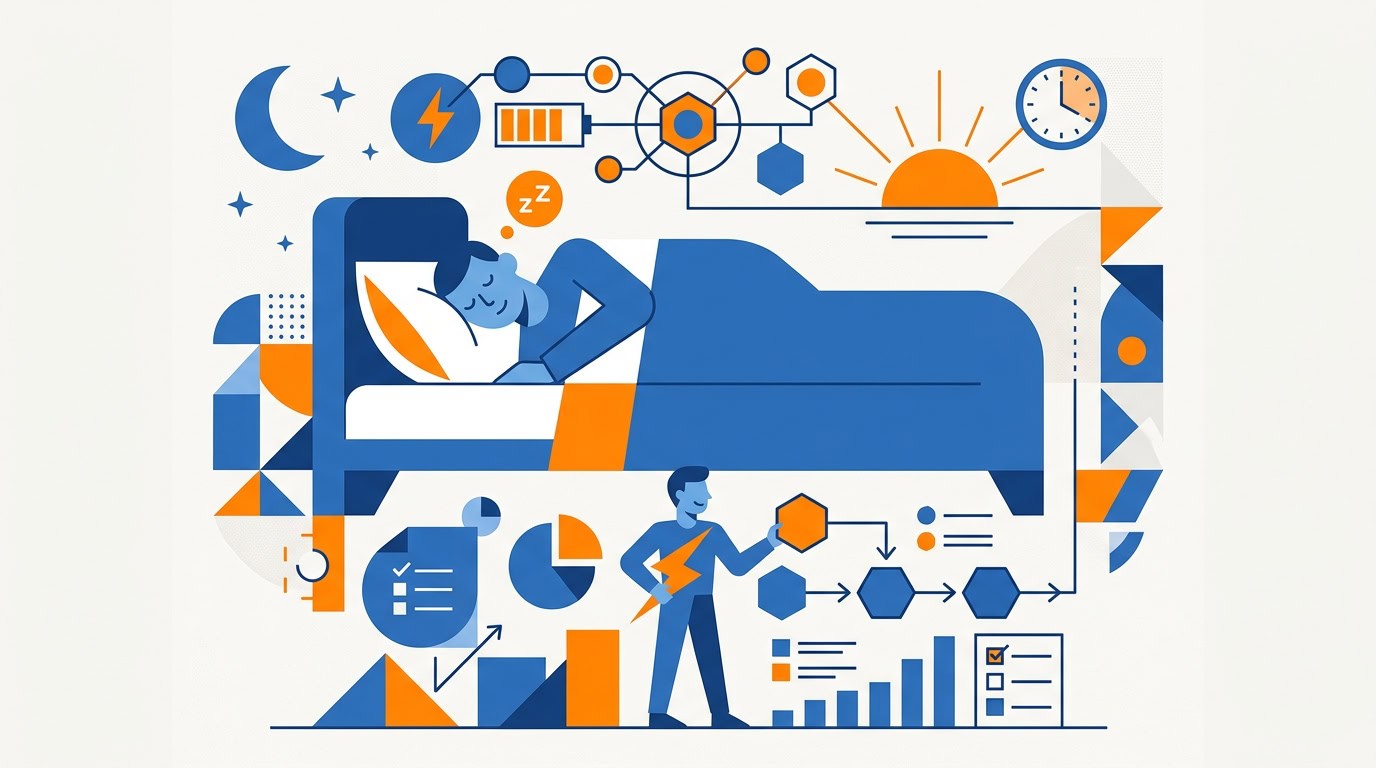
This model challenges the standard practice of using the most "productive" morning hours for low-value administrative tasks like email or internal messaging. If an employee’s peak cognitive energy occurs between 8:00 AM and 10:00 AM, allocating that window to non-demanding communication is an objective misuse of resources. Instead, experts recommend reserving the "peak energy" window for the most demanding, high-stakes tasks, and relegating routine administrative work to lower-energy periods later in the day.
The Role of Artificial Intelligence in Cognitive Load
The emergence of AI-driven productivity tools has created a paradoxical challenge: the feeling of progress without the reality of output. While AI can significantly speed up the completion of tasks, it also provides a unique temptation to pivot toward "system improvement"—such as building custom AI tools or refining automated workflows—rather than finishing the project at hand.
Analysts have identified this as a major cause of professional distraction. To mitigate this, practitioners are adopting a policy of strict compartmentalization. Before initiating an AI session, the user must explicitly define the final deliverable. Any secondary ideas for improving the system are moved to a separate, deferred list. This ensures that the primary outcome remains the focal point, preventing the "procrastination of productivity," where the act of optimizing the tool replaces the act of performing the work.
Tactical Implementation: Moving from Ambiguity to Action
The difficulty of starting complex projects often stems from the vagueness of the goal. Projects described in general terms—such as "do taxes" or "write report"—are psychologically taxing because the brain lacks a clear starting point. This ambiguity leads to avoidance, which in turn leads to the accumulation of "background uncertainty," a state of mind where an individual spends significant energy worrying about forgotten tasks rather than focusing on the present.
To resolve this, the strategy of "observable action mapping" is being widely adopted. By breaking down an intimidating project into the first five concrete, physical steps, the threshold for starting is significantly lowered. For example, rather than "work on the presentation," the action becomes "open the software and create the title slide." Once the cycle of momentum is established, the internal resistance to the task typically dissipates.
Sustaining Momentum Through Regular Review
The final piece of this modern productivity puzzle is the cadence of review. In a volatile business environment, a weekly review is often insufficient to maintain trust in one’s own system. Professionals working in fast-paced sectors are increasingly moving to daily, or even twice-daily, check-ins.
These reviews serve as a mechanism to reconcile the plan with the reality of the day. If a task has been pushed back three times, it is an indicator that the resource—be it time, energy, or attention—is being misallocated. By acknowledging this misalignment during a review, the individual can make a proactive decision: either adjust the resource, reduce the scope of the task, or defer it entirely.
The shift from blaming "discipline" to managing "resources" marks a significant evolution in professional development. By treating energy and attention as finite, measurable assets, and by adopting systemic approaches to auditing time and tasks, workers can achieve consistent progress that is sustainable over the long term. The evidence from 2026 suggests that the most effective path forward is not to work harder, but to work with a clearer, more data-informed understanding of the human element in the equation.