LRN 2026 Code of Conduct Report: The Evolution of Ethical Governance in the Modern Workplace

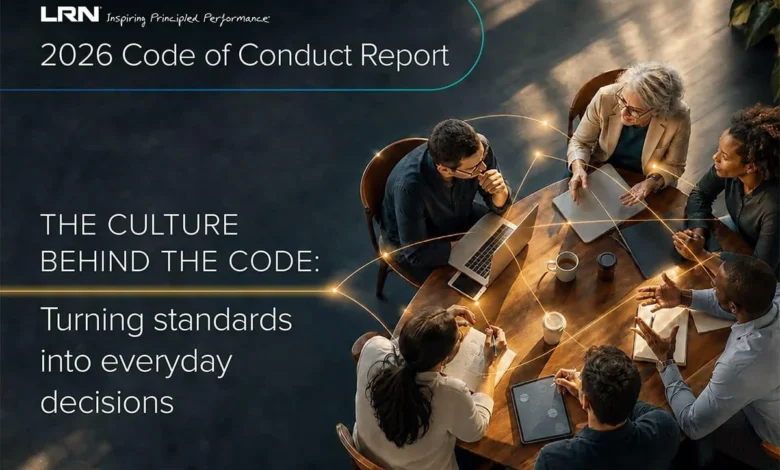
The landscape of corporate governance is undergoing a seismic shift as the traditional reliance on static, legalistic codes of conduct gives way to a demand for dynamic, actionable ethical frameworks. The LRN 2026 Code of Conduct Report, a comprehensive analysis of over 1,000 corporate codes and a survey of 2,000 employees across 16 global industries, indicates that while the administrative hurdle of drafting a code has largely been cleared, the new frontier lies in utility and cultural integration. Organizations are no longer evaluated solely on the existence of a compliance document, but on the ability of that document to guide decision-making in increasingly complex, high-pressure, and globalized environments.
The Shift from Compliance to Culture
For decades, the code of conduct served primarily as a defensive tool—a "check-the-box" requirement intended to shield organizations from regulatory scrutiny. However, the LRN 2026 data suggests that the baseline has moved. The modern employee does not view a code of conduct as a shield, but as a compass. When codes are written in dense, impenetrable legal jargon, they fail to resonate with the workforce, leading to a disconnect between corporate policy and daily operational behavior.
The report highlights that the primary challenge for organizations in the mid-2020s is not the drafting process, but the deployment and practical application of ethical standards. In a global economy where remote work, digital communication, and AI-driven processes dominate, the code must be accessible, interactive, and relevant to the specific challenges employees face in their respective roles.
Chronology and Evolution of Corporate Ethics
To understand the gravity of the 2026 findings, one must view them through the lens of historical corporate governance.
- 1990s–2000s: The Era of Legal Compliance. Following high-profile scandals such as Enron and WorldCom, the focus was on the Sarbanes-Oxley Act and basic regulatory compliance. Codes were rigid, lengthy, and primarily intended for legal departments.
- 2010–2019: The Rise of ESG and Culture. As Environmental, Social, and Governance (ESG) criteria became central to investment strategies, companies began to view their codes of conduct as extensions of their corporate values. The emphasis shifted toward "ethical culture" as a competitive advantage.
- 2020–2025: The Crisis of Integration. The COVID-19 pandemic and the subsequent adoption of hybrid work models strained traditional oversight mechanisms. Codes had to be updated to address new risks related to cybersecurity, mental health, and social equity.
- 2026 and Beyond: Utility and Real-Time Application. The current report identifies this as the age of practical ethics, where codes must be integrated into the tools employees use daily, such as intranet portals, training modules, and decision-making workflows.
Data-Driven Insights into Ethical Engagement
The LRN survey provides a quantitative look at the gap between intent and reality. By polling 2,000 employees across 15 countries, the study captures a diverse array of perspectives on what makes a code effective.
One of the most striking findings is the correlation between the "usability" of a code and the reporting of misconduct. Employees who report that their organization’s code is easy to navigate and provides clear, relatable examples of ethical dilemmas are significantly more likely to feel comfortable reporting potential violations. Conversely, in organizations where the code is treated as a static PDF document rarely referenced after onboarding, the "speak-up" culture is statistically weaker.
Furthermore, the data suggests that industry-specific nuances play a massive role. In highly regulated sectors like financial services and healthcare, employees expect codes that provide granular guidance on regulatory hurdles. In contrast, in the technology and creative sectors, there is a preference for values-based guidance that empowers autonomy while maintaining a consistent ethical north star. The LRN 2026 report demonstrates that a "one-size-fits-all" approach to code design is increasingly obsolete.
The Role of LRN in Shaping Ethical Standards
Since its founding in 1994, LRN has occupied a unique position in the corporate ethics ecosystem. By providing the knowledge, partnership, and digital solutions necessary to cultivate ethical cultures, the organization has influenced how more than 2,800 companies navigate the complexities of global operations.
LRN’s methodology is rooted in the belief that "principled performance"—the idea that ethical behavior and financial success are inextricably linked—is the only sustainable model for the modern corporation. By helping firms translate abstract values into concrete leadership behaviors, LRN seeks to move the needle from simple regulatory adherence to proactive ethical excellence. This approach is evidenced by the millions of learners who engage with LRN e-learning modules, which focus on practical application rather than rote memorization.
Fact-Based Analysis: Why Utility Matters
The transition from "creating" to "making useful" has profound implications for corporate liability and performance.
- Risk Mitigation: A code that employees actually read and understand is a more effective deterrent against internal fraud and misconduct than a document that sits in a filing cabinet. By providing clear guidance on reporting channels and the protection of whistleblowers, companies can resolve internal issues before they escalate into systemic failures or public scandals.
- Competitive Advantage: Companies with strong ethical cultures tend to have lower turnover rates and higher employee engagement. When an organization’s code of conduct aligns with the personal values of its staff, it fosters a sense of purpose that improves retention in a competitive labor market.
- Regulatory Scrutiny: Global regulators, including the U.S. Department of Justice (DOJ), have increasingly emphasized the importance of a "living" compliance program. Agencies now evaluate whether a company’s code is effective in practice, rather than just on paper, when determining penalties for corporate wrongdoing.
Implications for Leadership and Human Resources
The LRN 2026 report serves as a wake-up call for HR and Compliance departments. The shift requires a change in how codes are disseminated and socialized. Instead of a biennial training session, companies are moving toward a continuous model of "ethical nudging." This involves using internal communications, leadership town halls, and micro-learning modules to keep the code of conduct at the forefront of the corporate consciousness.
Leadership behavior is the final, critical piece of the puzzle. The report suggests that if executives do not explicitly reference the code of conduct when making difficult business decisions, the workforce will quickly view the document as performative. Transparency in leadership is essential; when executives explain the "why" behind a decision, linking it to the company’s code, they validate the importance of those standards to the rest of the organization.
Broader Societal Impact
The influence of corporate ethics extends far beyond the boardroom. As corporations become more integrated into the fabric of daily life—through the products we use, the data we share, and the communities they operate in—the ethical behavior of these entities has a direct impact on public trust.
The LRN 2026 Code of Conduct Report serves as a roadmap for organizations looking to navigate this new era. As the global economy continues to grapple with issues of transparency, artificial intelligence governance, and environmental responsibility, the code of conduct remains the foundational document for any organization that aspires to "outbehave and outperform" its competitors.
The findings presented in this report offer a clear directive: the era of the static code is over. To foster truly inclusive, ethical, and responsible cultures, leaders must treat their codes of conduct not as legal formalities, but as living, breathing guides for the complex, multifaceted challenges of the 21st-century workplace. By prioritizing accessibility, practical application, and cultural alignment, organizations can move beyond the baseline of compliance and achieve a state of sustained, principled performance. For organizations aiming to thrive in the years to come, the message from LRN is clear: the utility of your values depends on how effectively they are embedded into the daily experience of your people.
Related posts: