Breaking the Silence: How Families Can Navigate the Challenges of the Great Wealth Transfer


The Great Wealth Transfer is shifting trillions of dollars between generations, but for many families, it is sparking a silent crisis. As an estimated $84 trillion transitions from older generations to their heirs over the next two decades, the sheer scale of this financial handover is expected to trigger significant friction within households. Despite the high stakes involved in estate distribution, inheritance remains a pervasive taboo, often treated as a subject more difficult to address than sensitive personal topics like dating or chronic health struggles. This pervasive silence carries a heavy price, frequently acting as a catalyst for misunderstandings that fracture sibling relationships precisely when families should be finding unity during times of grief. To protect a legacy and maintain family harmony, experts argue that it is time to move beyond silence through proactive, collaborative, and transparent planning.
The Scale of the Great Wealth Transfer
The term "Great Wealth Transfer" refers to the unprecedented intergenerational movement of assets, including real estate, investment portfolios, and family businesses. Research from organizations such as Cerulli Associates highlights that this transfer is not merely a statistical anomaly but a fundamental shift in the global economic landscape. Much of this wealth is concentrated among Baby Boomers and the Silent Generation, whose assets have ballooned due to historic real estate appreciation and long-term equity market growth.
However, the transition of this capital is rarely a seamless process. The complexity of tax laws, the presence of blended families, and the emotional weight of mortality often lead to significant delays in estate settlement. According to industry data, the average time to settle a complex estate can range from 12 to 18 months, during which time assets may be frozen, and beneficiaries may find themselves in a state of financial limbo.

A Chronology of Conflict
Conflict surrounding inheritance often follows a predictable, if tragic, timeline. The process usually begins with a lack of communication while the parents are still healthy. In this stage, parents may have a will or trust in place, but they often treat the contents as a private matter, assuming their children will naturally understand the rationale behind their decisions.
The second phase occurs during the "fog of grief" immediately following a death. This is the period when the logistical reality of the estate becomes clear. If the parents have not explicitly communicated their intentions, the surviving children are forced to interpret legal documents while processing the loss of a loved one. It is during this window that sibling rivalries—often dormant for decades—are reignited. Disagreements over the valuation of physical property, the interpretation of vague clauses in a trust, and the distribution of sentimental items frequently escalate into legal disputes that can deplete the very inheritance they are meant to preserve.
The Generational Disconnect
Financial psychologists point to a profound generational divide in how money is viewed. For many in the older generation, wealth was a private affair, and discussing specific numbers was considered unseemly or intrusive. Conversely, younger generations, who face different economic pressures—including high housing costs and student debt—often view transparency as a prerequisite for long-term security.
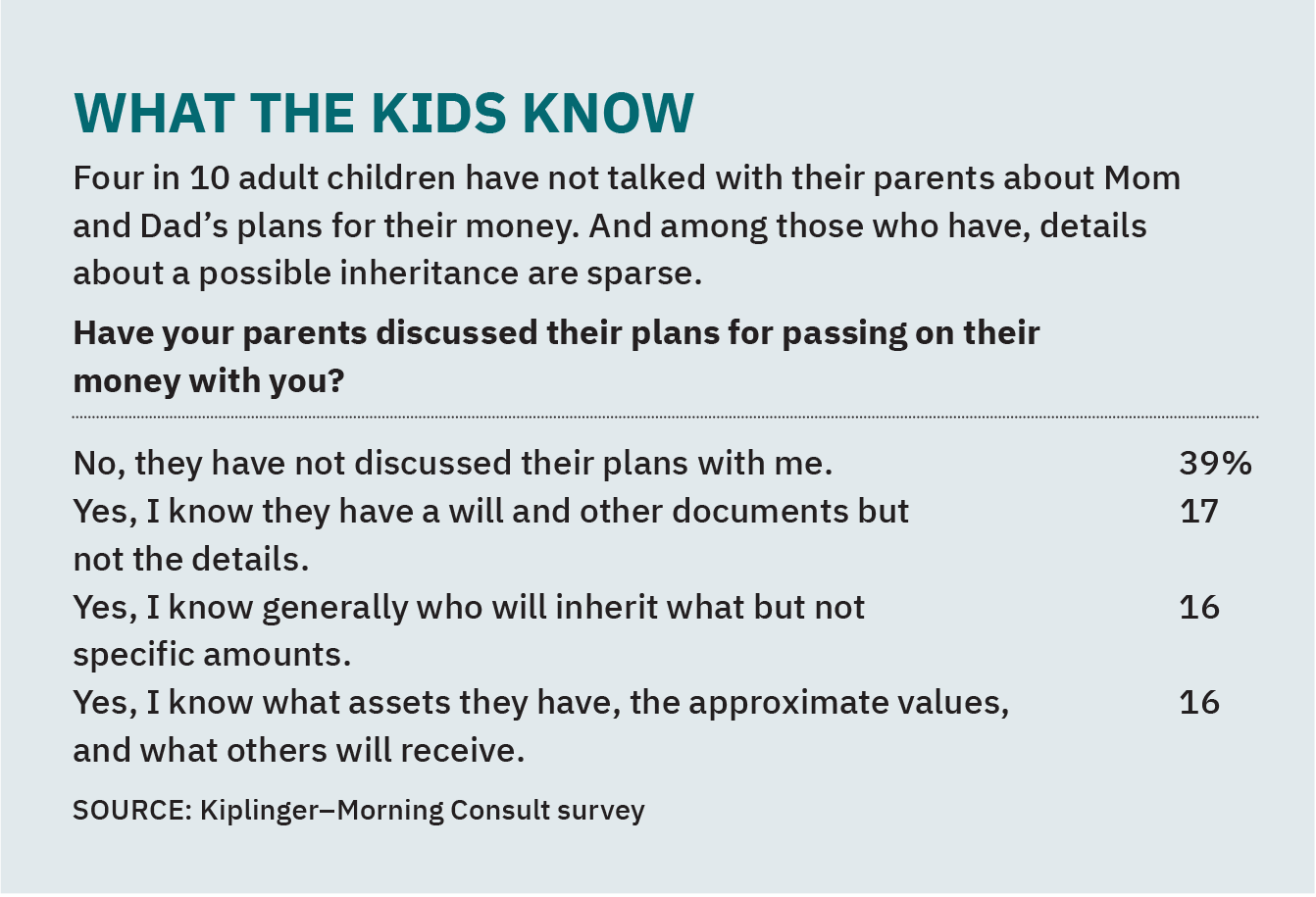
A survey conducted by Morning Consult on behalf of Kiplinger’s "Trillion Dollar Talk" campaign revealed that adult children would frequently rather discuss virtually any other topic with their parents than inheritance. This includes politics, mental health, and even sensitive family planning questions. The survey also highlighted a critical misalignment: while many parents operate under the assumption that an equal split of assets is the "fairest" approach, children often have different perspectives on what constitutes equity, particularly when one sibling has provided more hands-on care for aging parents than others.

Strategies for Proactive Engagement
Experts suggest that the most effective way to prevent future discord is to treat the inheritance process as a living conversation rather than a singular event to be dealt with after a tragedy. Financial therapist Lindsay Bryan-Podvin suggests using external events as a "bridge" to start the conversation. "Be creative when opening the door to that kind of conversation," she notes. "One jumping-off point could be a friend dealing with a parent passing away and all the hoops they had to jump through to settle the estate." By framing the conversation around the desire to make things easier for the survivors, parents can reduce the perceived pressure of the topic.
It is also crucial to hold these conversations repeatedly. As family members’ financial situations change—due to marriage, divorce, or professional shifts—estate plans should be reviewed and communicated. "Keep in mind that each person might remember things differently when you chat," says Bryan-Podvin, "so having multiple conversations ensures everyone is on the same page and concrete details are ironed out."
Addressing Caregiving and Inequality
One of the most common sources of resentment involves the unequal distribution of caregiving duties. When one sibling assumes the role of primary caregiver for an aging parent, they often sacrifice career advancement, time, and emotional energy. If the estate is divided equally without accounting for this labor, it can create a deep sense of injustice.
Financial professionals often recommend that families address these contributions explicitly. A token of appreciation, such as a formal recognition in the estate plan or a direct gift, can acknowledge the caregiver’s work. In cases where the tension is too high to navigate independently, engaging a financial therapist can provide a neutral, structured environment to resolve the underlying emotional baggage before it manifests in court.
Mitigating the Burden of Grief
To avoid the "fog of grief," families should take immediate, practical steps while the parents are still capable of managing their affairs. One such strategy is the use of a payable-on-death (POD) account. By designating one or more siblings as a POD beneficiary, a portion of the liquid assets can be made available immediately upon the parent’s death, bypassing the probate process. These funds can be used for funeral expenses, outstanding utility bills, or maintenance of the family home, preventing siblings from having to dip into their own pockets or take on debt during the first few months of mourning.
Furthermore, the concept of an "ethical will" is gaining traction. Unlike a legal will, which deals with assets, an ethical will is a document that shares a parent’s values, life lessons, and wishes for the family’s future. It provides the "why" behind the "what" of an estate plan, helping heirs understand the moral and emotional framework the parents intended to leave behind.
The Role of Professional Guidance
While family communication is the foundation, it is not a replacement for professional legal and financial expertise. An estate attorney is essential to ensure that documents are legally binding and tax-efficient, but a financial advisor can act as a bridge between generations. By facilitating family meetings, an advisor can ensure that the transition of wealth aligns with the family’s long-term goals while minimizing the tax impact of the transfer.
As the Great Wealth Transfer progresses, the families that thrive will be those that prioritize transparency over tradition. By dismantling the taboo surrounding inheritance, families can ensure that their wealth does not become a source of division, but rather a tool that strengthens their connections and secures their collective future. The transition of assets is an inevitable conclusion to a lifetime of labor; the manner in which it is handled determines whether that legacy will serve to unite or dismantle the family unit.
Related posts: