Best Buy accelerates digital transformation through comprehensive artificial intelligence integration in 2026

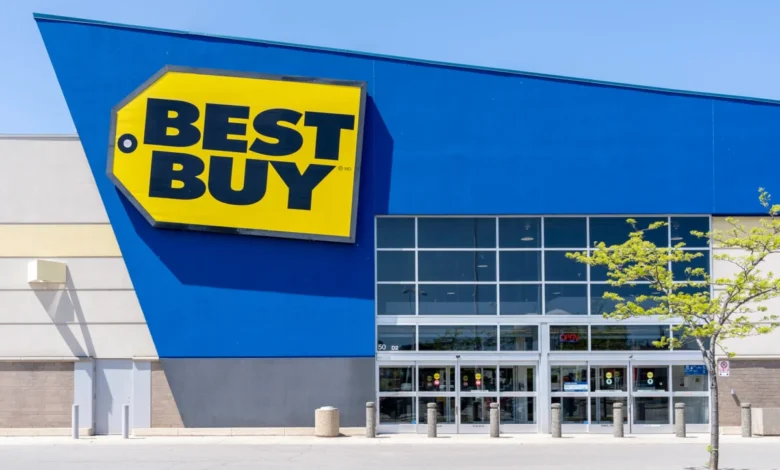
Best Buy is accelerating its transition into an AI-first retailer in 2026, deploying advanced machine learning models to streamline internal operations and revolutionize the consumer shopping journey. As the company navigates a competitive retail landscape, its leadership team is leveraging large language models (LLMs) and agentic commerce strategies to bridge the gap between back-end operational efficiency and front-end customer engagement. This pivot, which represents a significant shift in corporate strategy, underscores Best Buy’s ambition to maintain its standing among North America’s top retailers.
The Strategic Pivot: A Chronology of AI Adoption
The current trajectory of Best Buy’s technological investment was signaled clearly during the March 2026 UBS Global Consumer and Retail Conference. CEO Corie Barry characterized artificial intelligence as a foundational enabler of growth and a tool for enhancing employee experiences. While initial discourse focused on internal resource management, the roadmap quickly evolved to include customer-facing applications.
The progression of this strategy can be broken down into three distinct phases:
- The Internal Efficiency Phase (Q1 2026): Focus was placed on empowering employees to solve internal problems via custom-built AI agents capable of scraping proprietary data to answer operational queries.
- The Conversational Commerce Phase (Q3 2026): The launch of "Ask Blue," a sophisticated shopping assistant, marked the company’s transition to high-touch digital customer support.
- The Ecosystem Integration Phase (Q4 2026): Through a strategic partnership with OpenAI, Best Buy moved beyond its own web properties, embedding its catalog directly into the ChatGPT environment to facilitate frictionless, intent-based purchasing.
Transforming the Internal Workplace
The internal implementation of AI at Best Buy has moved rapidly, often driven by the agility of its own workforce. During the March conference, CEO Corie Barry shared a notable example of a staff member who independently developed an agent to optimize employee tool access. This agent functions as a conversational interface, allowing employees to ask natural language questions—such as inquiries regarding HR documentation or operational protocols—and receive immediate, accurate responses.
Beyond mere document retrieval, this technology is being scaled to handle complex customer support queries. By repurposing the logic used for internal knowledge management, the company is creating a unified AI architecture. This modular approach ensures that the same intelligence powering internal workflows can be pivoted to assist with external marketing and audience segmentation.
The application of LLMs in marketing has allowed Best Buy to move away from static demographic targeting toward dynamic, data-driven outreach. By synthesizing "outside signals" and internal purchase history, the company can identify "lapsed" customers and engage them at the optimal moment. This precision in targeting is intended to improve retention rates and increase the lifetime value of the customer base.
Ask Blue: The Future of Retail Interaction
In August 2026, Best Buy officially introduced "Ask Blue," a conversational shopping and support assistant. Jason Bonfig, who serves as the senior executive vice president and chief customer and product and fulfillment officer, emphasized that the tool serves as a centralized hub for consumer decision-making.
Ask Blue is designed to synthesize disparate data points—including real-time pricing, inventory availability, technical specifications, and user-generated reviews—into a coherent, natural-language response. The primary objective is to reduce "choice paralysis" for the consumer. By acting as a digital concierge, Ask Blue can compare competing products, clarify technical jargon, and ensure compatibility between hardware components. When the AI determines that a query requires a human touch, it seamlessly facilitates a handoff to a human support specialist, ensuring that the technology complements rather than replaces the company’s human-centric service model.
Strategic Partnership with OpenAI
Perhaps the most significant development in Best Buy’s 2026 roadmap is the deeper integration with OpenAI. This move aligns with the broader industry trend of "agentic commerce," where retailers seek to meet customers where they already spend their time, rather than forcing them to navigate to a traditional e-commerce storefront.
By integrating its inventory and recommendation engines into the ChatGPT platform, Best Buy is effectively placing its store inside the world’s most popular conversational AI. Customers can browse, receive personalized product recommendations based on their specific needs, and finalize transactions without ever leaving the ChatGPT interface. This represents a fundamental shift in the digital retail ecosystem, positioning Best Buy as an early adopter of conversational, transactional commerce.
Market Standing and Competitive Analysis
Best Buy currently occupies a prestigious position in the retail sector, ranking No. 8 in the Digital Commerce 360 Top 1000 Database, which monitors the largest online retailers in North America. Its commitment to AI is further reflected in its standing at No. 200 in the Digital Commerce 360 AI Rankings.
The investment in AI is not merely a branding exercise; it is a defensive and offensive measure against rising operational costs and the need for greater personalization. As competitors also experiment with AI, Best Buy’s advantage lies in its proprietary data—specifically its deep knowledge of consumer technology trends and its extensive history of customer service interactions. By feeding this data into advanced models, Best Buy is attempting to create a "moat" that is difficult for pure-play online retailers to replicate without the same level of physical retail expertise.
Implications for Future Leadership
The transition of leadership at Best Buy, with Jason Bonfig scheduled to assume the role of CEO on November 1, 2026, signals a continued focus on this digital-first strategy. Bonfig has been the primary voice for the company’s external AI initiatives, particularly regarding the integration of shopping assistants and OpenAI partnerships. His elevation to the top office suggests that the board of directors is fully committed to the technological roadmap established throughout 2026.
Challenges and Considerations
While the adoption of AI offers substantial benefits, it also presents challenges that the company must navigate. These include:
- Data Privacy and Security: As the company feeds internal and customer data into LLMs, maintaining strict privacy standards is paramount.
- Accuracy and Hallucinations: In a retail context, where technical specifications and pricing must be 100% accurate, the potential for AI "hallucinations" remains a risk that requires constant oversight.
- Cultural Integration: Successfully transitioning a large, traditional retail workforce to work alongside AI agents requires significant training and change management.
Conclusion
Best Buy’s 2026 strategy reflects a mature understanding of the role AI will play in the next decade of retail. By focusing on both the "behind-the-scenes" operational efficiency and the "front-end" customer experience, the retailer is attempting to future-proof its business model. Whether the integration of Ask Blue and the partnership with OpenAI will lead to sustained growth remains to be seen, but the company’s decisive action in these areas demonstrates a clear intent to lead rather than follow in the AI-enabled commerce space. As the company enters the 2026 holiday season, the performance of these tools will likely provide the first true test of the scalability and efficacy of its AI-driven retail vision.