Jupiter Festival Makes Its High-Stakes Debut in Miami Beach as a New Nexus for Media and Advertising Innovation

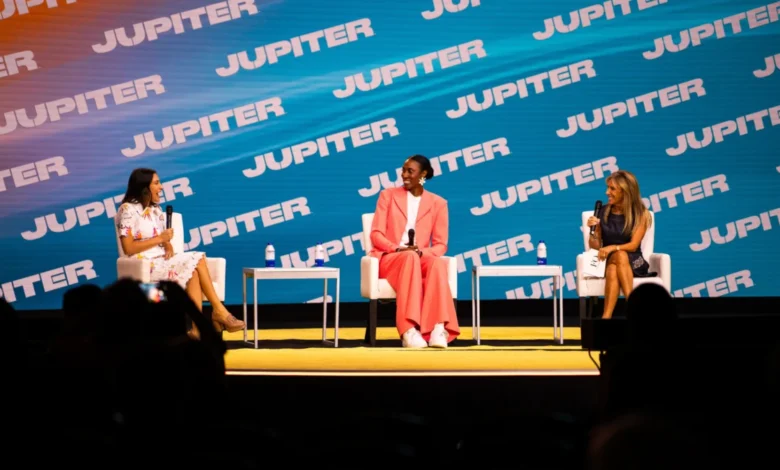
The landscape of professional industry conferences has been fundamentally reshaped this week as the inaugural Jupiter Festival launched in Miami Beach. Orchestrated by industry veterans William Mellis, an alumnus of the Cannes Lions International Festival of Creativity, and Eric Markgraf, the former Chief Marketing Officer of Fox Sports Media Group, the event represents a significant effort to bridge the widening gap between traditional media, digital entertainment, and the burgeoning creator economy. Spanning four days across three distinct stages, the festival has brought together a diverse cohort of leaders from the advertising, sports, and technology sectors to dissect the complexities of modern attention management, the future of sports media rights, and the transformative, often disruptive, role of artificial intelligence in creative discovery.
The Origins and Strategic Vision of Jupiter Festival
The conception of the Jupiter Festival did not emerge in a vacuum. It follows a period of consolidation and shifting priorities in the event circuit, where industry professionals have expressed "conference fatigue," leading organizers to pivot toward more specialized, high-impact gatherings. Mellis and Markgraf designed the festival as a response to the increasingly fragmented nature of modern media. By positioning the event in Miami—a city that has rapidly transformed into a global hub for technology, art, and Latin American business—the founders aimed to tap into a geographic intersection that reflects the globalized nature of their target audience.
The strategic backing behind the venture provides a clear indication of its ambitions. The MCH Group, the parent company of the venerable Art Basel, holds a 20% equity stake in the festival, signaling a desire to replicate the organizational rigor and high-end networking atmosphere that has defined Art Basel for decades. Furthermore, the inclusion of institutional heavyweights such as YouTube, the Boston Consulting Group (BCG), and the Interactive Advertising Bureau (IAB) as foundational partners underscores the festival’s intent to become an essential venue for corporate decision-makers.
A Chronology of the Inaugural Program
The four-day schedule was structured to move from macro-level economic trends toward granular, tactical discussions. Day one focused on the "Attention Economy," featuring panels that analyzed how platforms are fighting for consumer time in an era of infinite content. Executives from major streaming services discussed the shift from ad-supported models to subscription-based tiers and the resulting impact on creative output.
Day two centered on the intersection of fandom and sports rights. Given Markgraf’s extensive background at Fox Sports, this segment was anticipated to be the most rigorous. Discussions explored the decline of traditional linear broadcast viewership and the migration of live sports to digital-first platforms like Amazon Prime and Apple TV+. The panelists debated the sustainability of current sports media rights valuations, particularly as digital platforms seek to prove that live sports can drive long-term subscriber loyalty rather than just short-term traffic spikes.
Day three was dedicated to the creative disruption caused by generative AI. This segment moved beyond the hype cycles typical of tech conferences, focusing instead on practical applications in creative workflows, such as AI-assisted video editing, programmatic ad personalization, and automated metadata tagging for media discovery. The final day concluded with a series of closed-door roundtables, where industry leaders drafted policy recommendations regarding intellectual property rights in the age of AI.
Supporting Data and Industry Context
The launch of the Jupiter Festival occurs at a critical juncture for the advertising and media sectors. According to recent data from the IAB, digital advertising spend in the United States surpassed $225 billion in the last fiscal year, a significant portion of which is now funneled through creator-led channels rather than traditional television spots. However, the efficacy of this spend remains a point of contention. Industry reports suggest that while creator economy spending has grown by 15% annually, the "attention decay"—the speed at which users lose interest in digital advertisements—has accelerated by nearly 20% since 2020.
The participation of Boston Consulting Group at the event highlights the consulting firm’s internal data suggesting that companies that successfully integrate AI into their marketing stacks realize a 10% to 20% increase in campaign ROI. By hosting these conversations in a high-profile setting, Jupiter Festival is positioning itself as the primary conduit for the dissemination of this proprietary expertise.
Official Responses and Stakeholder Perspectives
While the festival has yet to release formal post-event analytics, initial reactions from attendees have been cautiously optimistic. A spokesperson for one of the event’s lead partners stated, "The industry is hungry for a forum that doesn’t just recycle the same tired themes. By bringing the creators themselves into the room with the people who manage the budgets, Jupiter is creating a new kind of accountability."
However, not all observers are convinced that the market has room for another high-cost industry event. Independent analysts have noted that the conference landscape is currently oversaturated, with established events like Cannes Lions, SXSW, and CES commanding the majority of corporate travel budgets. One senior media analyst noted, "Jupiter’s success will not be measured by the number of attendees in its first year, but by the number of partnerships that are actually signed on the back of these meetings. If it becomes a deal-making hub, it will survive. If it remains a talking shop, the corporate sponsorship model will be difficult to sustain."
Implications for the Future of Media Conferences
The arrival of the Jupiter Festival signals a broader trend toward "boutique" industry events that prioritize high-level networking over mass-market appeal. By limiting the scope of the conversation to media, entertainment, and technology, the festival is attempting to foster a more focused environment where complex regulatory and technological issues can be addressed without the noise of tangential industries.
From an economic perspective, the involvement of MCH Group is particularly telling. The parent company is clearly looking to diversify its portfolio beyond the traditional art market, recognizing that the "content" of the future—be it digital media or creative advertising—requires a sophisticated physical venue for exchange. If Jupiter succeeds in Miami, it is highly probable that MCH Group will look to expand the brand to other global hubs, potentially creating a network of festivals that track the seasonal migration of industry elites.
The festival’s emphasis on AI and the creator economy also reflects a significant shift in corporate priorities. For decades, media conferences were dominated by linear television executives and legacy media moguls. Today, the power has shifted toward those who control the algorithms and the talent. Jupiter’s program reflects this reality, prioritizing the perspectives of digital-native creators alongside the traditional infrastructure providers who once held exclusive power over distribution.
Conclusion
As the Jupiter Festival concludes its inaugural run in Miami Beach, it leaves behind a series of questions regarding the future of industry discourse. It has established itself as an ambitious, well-capitalized entity, yet it must now prove that it can provide tangible value in a crowded marketplace. The success of the event will ultimately depend on its ability to evolve alongside the rapid pace of technological change. As AI continues to redefine the creative process and the definition of a "media company" continues to blur, the organizers of Jupiter will need to ensure their programming remains as fluid as the industry they represent. For now, the festival serves as a potent reminder that even in an increasingly virtual world, the demand for high-level, in-person strategic engagement remains as strong as ever. Whether this event becomes a permanent fixture in the global conference calendar remains to be seen, but its debut has undeniably caught the attention of the sector’s most influential stakeholders.