The Strategic Shift: Why Enterprise Marketing Teams are Reevaluating the Role of Adobe Marketo Engage in the Modern Stack

For over a decade, Adobe Marketo Engage has served as the bedrock for enterprise-level demand generation. As a sophisticated marketing automation platform (MAP), it has empowered global organizations to execute complex lead nurturing, account-based marketing (ABM), and intricate revenue attribution models. However, the current landscape of marketing technology is undergoing a structural transformation. In 2026, with nearly 50% of marketing departments leveraging automation to drive efficiency, operations leaders are increasingly questioning whether the traditional, complex MAP model remains the most effective choice for modern, high-velocity revenue teams.

The move toward alternative platforms is not merely a cost-cutting measure; it represents a fundamental change in how marketing and sales departments define "operational efficiency." Organizations are now prioritizing speed, data unification, and ease of use over the monolithic, heavy-duty features that once defined the enterprise standard.
The Evolution of the Marketing Automation Landscape
The rise of Marketo in the early 2010s addressed a specific market need: the requirement for a robust engine capable of handling high-volume, multi-touch B2B lead management. At the time, integration between marketing software and CRM systems was a fragile, manual endeavor. Marketo provided the power to manage this complexity, albeit at the cost of significant technical debt and the necessity for dedicated, certified administrative staff.

The current market shift is driven by a desire for "unified architecture." Modern revenue teams are finding that the "sync layer"—the middleware required to bridge the gap between a standalone MAP and a CRM—is a major source of friction. Data latency, synchronization errors, and fragmented reporting have become significant hurdles for teams that require real-time visibility into the customer journey. Consequently, companies are gravitating toward platforms that house marketing and CRM functions under a single, unified data model.
Primary Drivers of the Migration Trend
Marketing operations (MOps) leaders cite four primary catalysts for the ongoing exodus from legacy enterprise automation platforms:
- Total Cost of Ownership (TCO): The licensing fee for a platform like Marketo is often the smallest component of its financial burden. When factoring in the cost of certified admins, external consultancy fees for implementation, custom development for integrations, and ongoing training, the TCO can be two to three times the sticker price.
- The Talent Gap and Admin Dependency: Many organizations find themselves tethered to a "key-person risk," where critical marketing workflows cannot be executed without the intervention of a highly specialized administrator or a third-party agency. This dependency slows down time-to-market for campaigns.
- Data Fragmentation: The persistent issue of "sync lag" between marketing platforms and CRM systems creates an incomplete view of the customer. In an era where AI-driven decision-making is paramount, having split-brain data—where marketing metrics live in one silo and sales metrics in another—is increasingly viewed as a competitive disadvantage.
- Slow Time-to-Value: Complex implementations can take between three and six months to reach operational maturity. In a volatile economic climate, businesses are looking for solutions that offer onboarding timelines measured in weeks rather than quarters.
Comparative Analysis of Leading Alternatives
As organizations audit their stacks, several key contenders have emerged, each catering to different operational requirements.
HubSpot Marketing Hub and Smart CRM
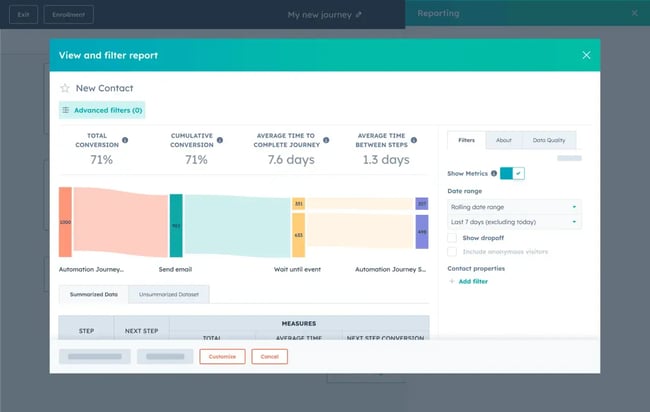
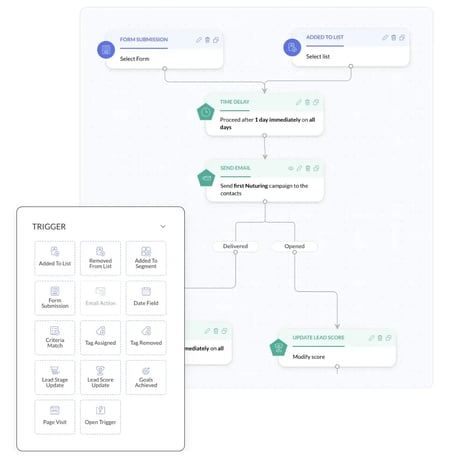
HubSpot has positioned itself as the leading alternative for teams seeking a unified approach. By combining marketing automation, CRM, and content management into one ecosystem, it eliminates the need for a separate integration layer. Its visual, drag-and-drop workflow builder allows marketing teams to deploy sophisticated nurture sequences without needing custom code. Furthermore, its native AI-powered lead scoring and multi-touch revenue attribution provide actionable insights without the need for intensive configuration.
Salesforce Marketing Cloud (Account Engagement/Pardot)
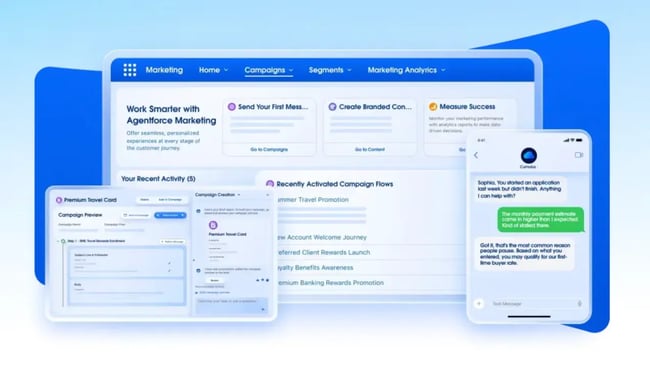
For organizations where Salesforce is the sole, non-negotiable source of truth, Pardot remains a logical choice. Its native integration ensures that sales and marketing data remain synchronized without the risks associated with third-party connectors. However, the platform is often criticized for a steeper learning curve compared to newer, more intuitive interfaces, and its utility diminishes significantly if the organization moves away from the Salesforce CRM.
Oracle Eloqua
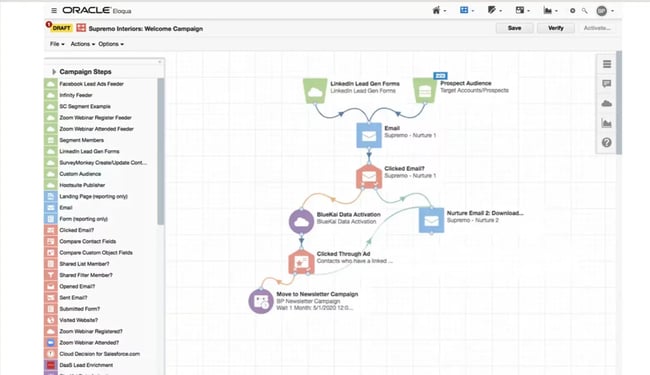
Eloqua remains a direct competitor to Marketo in the large-enterprise segment. It is designed for global scale and high-complexity environments. While it excels in data hygiene, deduplication, and complex multi-touch program management, it shares the same "heavy" characteristics as Marketo, requiring significant IT and administrative resources to maintain.
Mid-Market and SMB Focused Platforms
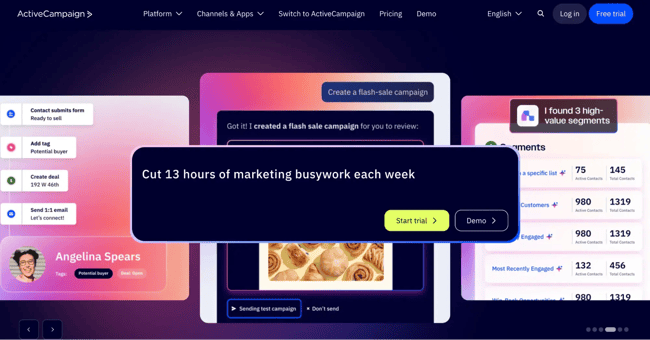
For smaller, high-growth companies, platforms like ActiveCampaign and Zoho Marketing Automation offer a compelling middle ground. These tools prioritize accessibility and operational simplicity. While they may lack the enterprise-grade ABM depth of a Marketo or Eloqua, they provide the essential automation capabilities required by growing teams, often at a fraction of the cost and with a significantly faster implementation timeline.
The Strategic Migration Framework
A successful migration from a legacy system to a modern alternative requires a disciplined, step-by-step approach to avoid the pitfalls of "lift and shift" errors.
- Phase 1: The Audit. Before moving any data, teams should conduct a comprehensive audit of their existing programs. It is a standard industry observation that a significant percentage of legacy automated workflows are either outdated or redundant. By archiving these, teams can streamline their new instance significantly.
- Phase 2: Data Cleansing. Moving poor-quality data to a new system is a primary cause of post-migration failure. Organizations should focus on deduplication and normalization during the export phase.
- Phase 3: Integration Mapping. All ancillary tools—webinar platforms, social media management, data enrichment services—must be audited for compatibility with the new platform’s API architecture.
- Phase 4: Parallel Validation. A common best practice is to run the new system in parallel with the legacy platform for a short, two-to-four-week window. This allows for validation of lead scores and sync health without disrupting live revenue-generating campaigns.
Economic and Operational Implications
The transition to a more unified marketing stack has profound implications for the broader organization. By reducing the reliance on technical intermediaries, marketing teams gain increased autonomy. This democratization of marketing operations allows for faster A/B testing, quicker campaign iterations, and a more responsive approach to market trends.
Furthermore, the shift toward platforms with native AI capabilities—such as predictive lead scoring, content generation, and send-time optimization—is changing the role of the modern marketer. Instead of spending hours on manual segmentation or troubleshooting data sync errors, teams are empowered to focus on strategy, creative execution, and customer relationship management.
The Path Forward
The decision to migrate from a platform as deeply entrenched as Marketo is significant and should be driven by the specific needs of the business rather than industry trends alone. Organizations that struggle with data silos, slow reporting, and high operational overhead are the strongest candidates for a switch.
Ultimately, the goal of modern marketing technology is to facilitate a seamless flow of information between the brand and the buyer. As the industry moves further into 2026, the preference for unified, AI-enabled, and user-friendly platforms suggests that the "enterprise-complexity" era of marketing automation is yielding to a new chapter defined by agility, integration, and, above all, clarity in the customer journey. For the modern CMO, the priority is no longer just having the most powerful tool in the shed; it is having the tool that most effectively connects the marketing engine to the bottom line.