Navigating the Minefield of Workplace Accommodations: Why the Interactive Process Matters More Than the Final Answer


The modern workplace has undergone a profound structural shift regarding how employees disclose health issues, mental health struggles, and invisible disabilities. As destigmatization efforts succeed, human resources departments and managerial staff are facing an unprecedented volume of accommodation requests that do not leave visible traces. Chronic illnesses, generalized anxiety disorders, neurodivergence, and the prolonged cognitive fatigue associated with post-viral syndromes are routinely brought to supervisors who possess little to no formal training in medical compliance or employment law.
In this complex environment, Chaim Book, a senior partner at Book Law LLP, frequently encounters employers paralyzed by fear of litigation. This apprehension often leads managers to either impulsively grant unworkable arrangements or summarily reject requests, inadvertently stepping into severe legal vulnerabilities. The core legal obligation under statutes like the Americans with Disabilities Act (ADA) is frequently misunderstood: the law does not merely demand a correct final outcome, but rather a structured, good-faith dialogue known as the interactive process. Failing to execute this process properly exposes organizations to substantial liability, regardless of the objective merits of the underlying request.
The Anatomy of an Informal Request and Managerial Panic
The challenge facing modern organizations is epitomized by everyday scenarios playing out across corporate offices and remote work environments alike. Consider a situation where an employee, without advance notice, formal documentation, or institutional approval, begins taking every Tuesday off as a designated mental health day. Faced with this unilateral alteration of schedule, a manager’s primary anxiety is rarely rooted in operational logistics alone; rather, it is driven by the fear of triggering a costly discrimination lawsuit or labor board complaint.
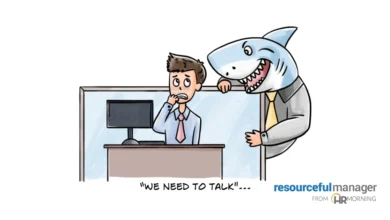
When managers panic, they typically resort to one of two reflexive extremes. On one hand, out of an abundance of caution or fear of litigation, they grant the request unconditionally, setting a hazardous precedent without evaluating whether the employee’s absence dismantles core job functions. On the other hand, they issue a flat denial, inviting immediate confrontation and potential legal retaliation. Both reactions bypass the fundamental mandate of federal, state, and local disability laws: the duty to engage in a deliberate, documented, and collaborative interactive process.
Legal experts emphasize that the interactive process is not merely a bureaucratic hurdle to clear before making a decision; it is the absolute substance of the employer’s legal duty. When organizations bypass this dialogue, employment tribunals and civil rights agencies often rule against them on procedural grounds, even if the final business decision to deny the accommodation would have otherwise been completely defensible on its merits.
The Legal Framework: ADA, EEOC, and State Mandates
To understand why procedural shortcuts are catastrophic for employers, it is necessary to examine the broader legal landscape governing workplace accommodations. Under the Americans with Disabilities Act (ADA), as well as parallel state and municipal statutes such as the New York State Human Rights Law and the New York City Human Rights Commission guidelines, employers with 15 or more employees are legally required to provide reasonable accommodations for qualified individuals with known physical or mental impairments, provided doing so does not impose an undue hardship on business operations.
Data from the U.S. Equal Employment Opportunity Commission (EEOC) highlights a persistent upward trend in disability-based discrimination charges. In recent fiscal years, charges alleging discrimination under the ADA have consistently comprised over 35% of all private sector workplace discrimination filings received by the agency. This high volume underscores the reality that employment litigation regarding accommodations is a primary risk vector for modern enterprises.
When a dispute ultimately escalates from an internal disagreement to a formal charge before the EEOC, the New York State Division of Human Rights, or the NYC Commission on Human Rights, investigators look far beyond the employer’s final conclusion. They examine the entire chronology of the interaction:
- Did the employer acknowledge the request promptly?
- Did they request appropriate medical substantiation?
- Did they evaluate the essential functions of the role objectively?
- Did they explore alternative accommodations if the primary request posed an undue hardship?
- Is there a contemporaneous paper trail proving that a genuine dialogue took place?
Organizations that rely solely on corridor conversations, informal text messages, or a single manager’s uncorroborated memory find themselves at an insurmountable disadvantage during administrative investigations or courtroom litigation.

Step-by-Step Chronology of a Compliant Accommodation Process
Establishing a defensible and empathetic accommodation protocol requires organizations to implement a structured, chronological approach when an employee discloses a limitation. Legal and human resources professionals recommend a four-stage framework to ensure regulatory compliance and operational continuity.
1. Immediate Acknowledgment and Documentation
The moment an employee raises a medical or psychological limitation impacting their work, the employer should formally acknowledge the communication in writing. This initial note does not need to approve or deny the request; it simply needs to establish a verified record that the organization has received the disclosure and is initiating a formal review. This written record outlasts staff turnover and fading human recollections.
2. Evaluation of Necessity and Medical Substantiation
Where the employee’s need for an accommodation is not obvious—such as chronic fatigue or generalized anxiety—the employer is legally entitled to request supporting medical documentation from a treating healthcare provider. Many managers decline to exercise this right out of a misplaced sense of intrusion or fear of appearing hostile. However, obtaining appropriate professional verification protects both parties by grounding the accommodation request in objective medical reality rather than subjective speculation.
3. Defining Essential Job Functions
Before determining whether an accommodation is reasonable, management must conduct an honest, realistic appraisal of the position’s core responsibilities. Returning to the example of the employee taking unannounced Tuesdays off, leadership must evaluate whether a Tuesday client meeting is an indispensable, non-delegable function of the role or merely an entrenched scheduling habit. If the duty is truly essential, the interactive process must explore whether that function can be shifted to another day or absorbed by another team member without placing an undue financial or operational burden on the enterprise.
4. The Collaborative Dialogue and Multi-Party Representation
Every consequential conversation regarding an accommodation request or related disciplinary action should involve at least two representatives from the organization—typically a direct supervisor paired with an HR professional. This practice ensures that the resulting record is institutional rather than personal. Furthermore, if the specific accommodation requested is deemed unreasonable, the employer’s legal duty does not terminate; the organization must actively pivot the conversation to explore whether alternative accommodations can successfully address the employee’s medical needs.
Broader Economic and Organizational Implications
The systemic failure to properly handle accommodation requests reverberates far beyond legal liability, deeply impacting workplace morale and operational efficiency. When employers grant open-ended, undocumented accommodations out of fear, they frequently shift the unassigned workload onto remaining team members. Colleagues quickly notice when a peer is quietly relieved of core responsibilities without formal restructuring. This perceived inequity breeds resentment, decreases overall team productivity, and damages organizational culture long before legal counsel becomes involved.
Conversely, aggressive or dismissive denials alienate workers, driving them to seek external counsel. Industry analysts note that employees who feel treated with dignity, transparency, and procedural fairness during workplace disputes are statistically far less likely to pursue litigation. Conversely, those who experience abrupt rejections, algorithmic indifference, or administrative hostility are highly motivated to find sympathetic legal representation.
Strategic Takeaways for Modern Employers
Ultimately, workplace accommodation requests should never be treated as administrative nuisances to be rushed through or closed out as quickly as possible. They represent substantive operational decisions that the law expects organizations to handle transparently, deliberately, and on the record.
Employers who successfully avoid protracted litigation are rarely those who possess infallible intuition; rather, they are the organizations that institutionalize the interactive process. By replacing panic with protocol, documenting every stage of the dialogue, and treating employees with consistent, transparent respect, businesses can protect themselves from crippling legal liabilities while fostering a resilient, equitable, and legally compliant working environment.