U.S. Department of Labor Launches Pay-for-Performance Apprenticeship Program Offering $6,000 Direct Payments to Sponsors

The United States Department of Labor has officially opened applications for a major new funding initiative aimed at bolstering the nation’s workforce development through structured, competency-based learning. Under the newly activated Pay-for-Performance Incentive Payments Program, sponsors of Registered Apprenticeships can now apply for direct payments of up to $6,000 per apprentice. This financial mechanism is designed to offset the operational costs of training workers in high-demand, mission-critical industries, ranging from semiconductor manufacturing and artificial intelligence infrastructure to shipbuilding, defense, information technology, and telecommunications.
The rollout of this program marks a significant milestone in federal workforce strategy, intersecting directly with broader national economic policies aimed at rebuilding domestic industrial capacity, securing supply chains, and addressing acute labor shortages in technical fields. As industries rapidly evolve due to technological advancements and infrastructure expansions—most notably the construction boom of massive data centers driven by artificial intelligence—the federal government is increasingly turning to modern apprenticeships as a primary vehicle for upskilling and future-proofing the American labor force.
Structure and Administration of the Incentive Funds
The Pay-for-Performance Incentive Payments Program is not administered through a single monolithic channel; rather, it is a collaborative multi-tiered initiative made up of six distinct incentive funds. These funds are managed and distributed by a diverse coalition of state governments, university trustees, and prominent private foundations and industry associations. Key non-governmental administrators include Jobs for the Future, the Wireless Infrastructure Association, and the ASE Education Foundation, alongside various regional and state economic development authorities.
Unlike traditional grant programs that distribute money strictly based on projected expenses or upfront estimates, the pay-for-performance model ties financial disbursements to measurable milestones. Sponsors receive funding as apprentices successfully achieve predefined competencies, complete specific phases of technical instruction, and attain industry-recognized credentials. This results-oriented framework is intended to ensure that training programs maintain high standards of quality and directly align with the practical demands of employers.
Targeted Sectors and Strategic Priorities
The scope of eligible programs under the new incentive scheme reflects the federal government’s ongoing strategic focus on critical technologies and heavy industrial base sectors. While traditional apprenticeships have long been associated with the building trades, the modern iteration of the Registered Apprenticeship model has expanded aggressively into the digital and advanced manufacturing economies.
Relevant programs now span the gamut from information technology and cybersecurity to complex defense production, shipbuilding, semiconductor fabrication, and telecommunications infrastructure. This diversity mirrors the administration’s stated priorities, which have consistently emphasized sectors vital to national security and long-term economic competitiveness.
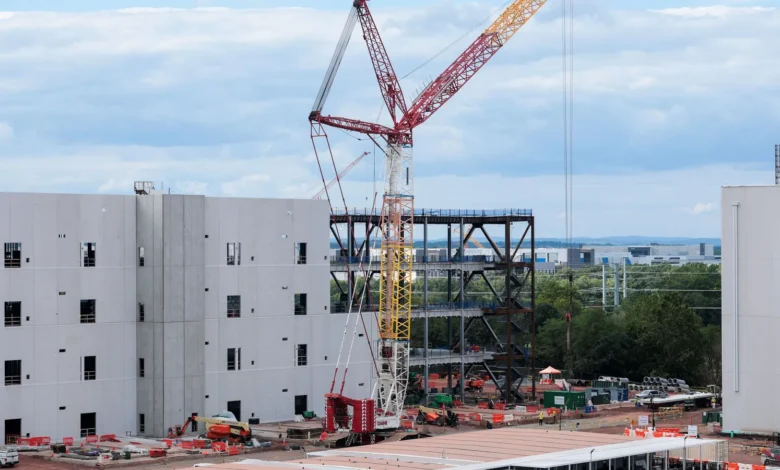
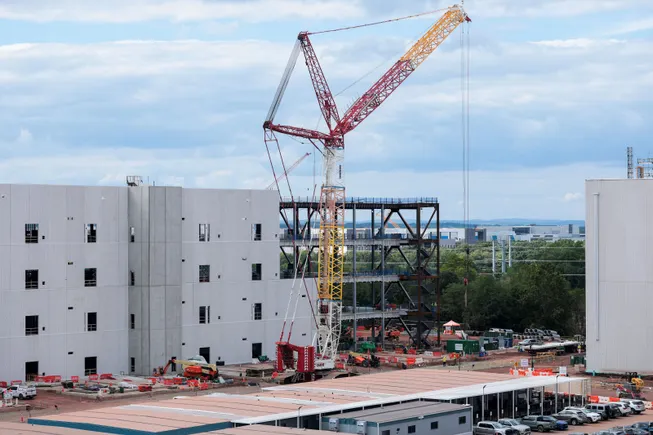
In particular, the rapid scaling of artificial intelligence has catalyzed an unprecedented wave of industrial construction. Across the United States, technology firms and utility providers are racing to build massive data centers to house the immense computing power required for generative AI and machine learning workloads. This real estate and infrastructure boom has generated an immediate, highly competitive demand for specialized labor, including electricians, HVAC technicians, fiber-optic specialists, cybersecurity engineers, and data center operations personnel. Policymakers hope that the $6,000 direct payments will motivate employers to scale up their internal training pipelines faster than they could through organic hiring alone.
Chronology of Federal Workforce Investments
The announcement of the direct payment application window is the latest in a rapid sequence of federal workforce funding announcements designed to channel capital into targeted industries and geographic regions.
The groundwork for the current initiative was laid earlier in the year. In February, the federal government formally announced its intention to expand the Pay-for-Performance apprenticeship incentive architecture through a substantial $145 million grant competition. This capital was earmarked for organizations capable of designing and scaling robust training models tailored to high-tech and industrial manufacturing needs.
Throughout the spring and summer, the Department of Labor repeatedly signaled its laser-like focus on specific vertical markets, highlighting shipbuilding, the defense industrial base, AI infrastructure, semiconductor production, and nuclear energy infrastructure as primary beneficiaries of ongoing workforce development grants.
This sustained momentum culminated in a flurry of high-profile announcements in late 2026. On Friday, November 2, President Donald Trump announced a separate $40 million Department of Labor grant specifically designated for workforce development in Florida, to be administered directly by the Florida Department of Commerce. Just days later, on Monday, November 4, the Department of Labor formally opened the floodgates for the $6,000 per-apprentice direct payments, signaling that the broader $145 million initiative had cleared administrative hurdles and was ready to begin disbursing funds to program sponsors.
Geographic and Regional Initiatives

In tandem with its focus on specialized industrial sectors, the Department of Labor has maintained a concurrent commitment to geographic equity, ensuring that rural and economically transitioning communities are not left behind in the technological transition.
In recent funding cycles, the agency awarded more than $81 million in targeted grants to rural communities across the Appalachian, Delta, and Northern Border regions. These regional investments diverge slightly from the high-tech semiconductor and AI focus, instead directing resources toward a broad mix of skilled trades and construction, healthcare, information technology, manufacturing, domestic energy production, and professional business services. By combining hyper-targeted industrial grants with regionally focused rural investments, federal workforce planners are attempting a two-pronged approach: solving national supply chain and defense vulnerabilities while simultaneously stabilizing regional economies.
Industry Reactions and the Challenge of Upskilling
For industry watchers, human resources leaders, and corporate trainers, the influx of federal apprenticeship funding is a welcome development, albeit one that arrives amid considerable anxiety regarding the future of work.
Recent labor market surveys indicate a pervasive sense of anxiety among American workers, often described as a fear of becoming obsolete in the face of rapid automation and artificial intelligence integration. Employees across multiple sectors worry that their current skill sets will fail to keep pace with the operational demands of next-generation workplaces. Consequently, upskilling has emerged as the central human resources concern of the mid-2020s.
Corporate leaders face a dual challenge: they must adopt transformative technologies to remain competitive globally, yet they frequently lack the trained personnel required to operate, maintain, and secure those systems. Traditional higher education pipelines often move too slowly to supply graduates with the exact niche technical competencies required in fields like advanced semiconductor packaging, quantum computing maintenance, or specialized maritime welding.
Registered Apprenticeships offer a proven bridge across this skills gap by combining paid on-the-job learning with rigorous classroom instruction. By subsidizing these programs with direct cash incentives, the federal government is attempting to lower the financial barrier to entry for small- and medium-sized enterprises that might otherwise hesitate to invest in long-term training infrastructure.
Economic and Practical Implications

The implementation of the Pay-for-Performance Incentive Payments Program carries several distinct implications for the American labor market, employers, and prospective workers.
From the perspective of employers, the $6,000 payments represent a tangible reduction in the net cost of workforce development. Training an apprentice requires significant allocation of senior staff time, supervision, and specialized equipment usage. By offsetting these overhead costs, the direct payments incentivize companies to formalize their internal training pathways into recognized national standards rather than relying entirely on poaching talent from competitors.
For workers, the program reinforces the viability of "earn-while-you-learn" models as a lucrative, debt-free alternative to traditional four-year university degrees. As the cost of higher education continues to draw scrutiny, apprenticeships offering direct pathways into high-paying, future-proof careers in defense, technology, and advanced manufacturing are expected to attract a broader demographic of applicants.
However, the ultimate success of the initiative will depend heavily on the execution capacity of the fund administrators. Because the program relies on a decentralized network of state agencies, universities, and private foundations, ensuring consistent program quality, streamlined application processing, and transparent metric tracking will be critical. If administrative bottlenecks delay disbursements, smaller employers with tight cash flows may struggle to sustain their training initiatives.
Looking ahead, the Department of Labor’s aggressive funding strategy signals a permanent shift in how the federal government views workforce development—not as a passive educational support system, but as an active, strategic lever of national industrial policy. As the construction of data centers continues at a breakneck pace and the nation seeks to secure its technological independence, programs like the Pay-for-Performance initiative will serve as a crucial testing ground for public-private cooperation in the twenty-first-century economy.