The Hidden Cost of Managerial Insecurity: How Anxiety is Eroding Corporate Retention and Bottom Lines

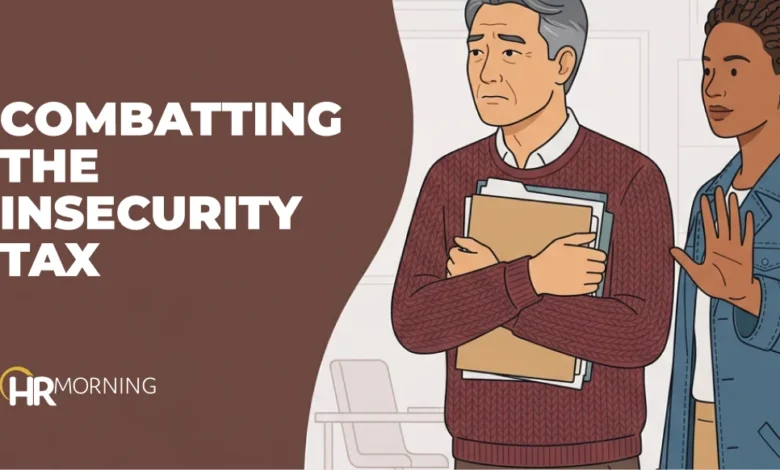
The landscape of the modern workplace has undergone a seismic shift over the last decade, with corporate leaders obsessing over remote work policies, compensation benchmarks, and the integration of artificial intelligence. Yet, beneath these high-profile initiatives lies a quiet, corrosive force that continues to hollow out organizations from the inside: managerial insecurity. Often mistaken for high-intensity leadership or a "hands-on" management style, insecurity in leadership has emerged as a primary driver of voluntary turnover, costing U.S. businesses an estimated $223 billion annually according to data from the Society for Human Resource Management (SHRM).
Defining the Insecurity Tax
In the corporate lexicon, the "Insecurity Tax" refers to the tangible financial and operational losses incurred when a manager’s personal anxiety dictates organizational behavior. Unlike standard performance issues, which can be addressed through coaching or training, managerial insecurity is rooted in an ego-driven need for preservation. When a manager feels threatened by their subordinates—whether by their ideas, their potential for promotion, or their technical proficiency—they often adopt defensive postures. These include micromanagement, the hoarding of critical information, the suppression of constructive dissent, and a focus on "looking good" rather than "doing good."
The implications are not merely anecdotal. Gallup research has consistently shown that managers account for a staggering 70% of the variance in team engagement scores. Despite this, companies select the right candidate for management roles only 18% of the time. This disconnect creates a systemic vulnerability where the individuals most responsible for the success of the human capital are the ones most likely to catalyze its departure.
A Chronology of Declining Engagement
The trajectory of this issue can be traced back to the post-2008 recessionary environment, where lean staffing models became the norm. In the years that followed, "doing more with less" became a mantra that frequently incentivized managers to hold onto control tightly to demonstrate their own value.
As the COVID-19 pandemic necessitated a shift to remote and hybrid work, the cracks in this management model widened. Managers who relied on physical oversight—the ability to "see" their employees working—suddenly found themselves facing a crisis of control. Those unable to transition to outcome-based management began to lean into digital surveillance and increased meeting cadences, not to drive productivity, but to soothe their own anxiety regarding team output. By 2024, the "Great Resignation" and subsequent "Quiet Quitting" phenomena were identified by labor economists not just as a reaction to pay, but as a direct pushback against these stifling, insecure management environments.
The Mechanics of Cultural Erosion
The erosion of organizational culture by insecure leadership is rarely sudden. It is a slow, methodical degradation. In a healthy organization, a high-performing employee might propose an innovative workflow to improve speed. An insecure manager, however, perceives this as an indictment of the status quo—and by extension, an indictment of their own previous decisions.
The immediate internal response is often: "Who will get the credit?" or "Does this make me look redundant?" This creates a Pavlovian response within the team: initiative is punished, and caution is rewarded. High performers, who thrive on autonomy and impact, are the first to exit. They are replaced or supplemented by middle performers who learn to mirror the manager’s caution to stay safe. Consequently, the organization’s velocity stalls, innovation ceases, and the "Insecurity Tax" is paid in the form of lost market share, stalled R&D, and the high cost of constant talent acquisition.
The Operational Antidote: A Four-Pillar Strategy
To combat this, human resources departments are increasingly moving away from abstract "leadership development" toward structural, operational frameworks that force accountability.
1. Moving from Performative to Operational Care
Psychological safety has often been treated as a subjective "vibe" in corporate offices. However, experts are now pushing for an operationalization of care modeled after Dr. Stephen Covey’s "Emotional Bank Account." In this view, care is a ledger. Managers must be trained to treat their interactions as specific deposits (praise, resource allocation, professional development time) and withdrawals (constructive correction, performance expectations). HR departments are now mandated to audit these ledgers, ensuring that managers are not operating in a deficit where they demand output without ever making the deposits necessary to sustain morale.
2. Standardizing Feedback with the CLEAR Model
The "compliment sandwich"—a common but ineffective feedback technique—is frequently a symptom of managerial anxiety. It is used to soften the blow of a critique to prevent the employee from becoming upset, thereby shielding the manager from an uncomfortable emotional encounter. To eliminate this, organizations are adopting the CLEAR model:
- Context: State the specific situation and time.
- Label: Identify the behavior clearly, without judgment.
- Effect: Explain the objective impact on the project or team.
- Action: Define the specific change required.
- Review: Set a firm date for a follow-up conversation.
By turning feedback into a standardized, documentation-heavy process, the emotional stakes are removed, and the manager is forced to act as a professional mentor rather than a protector of their own comfort.
3. The Empty Chair Test
The "Empty Chair Test" serves as a benchmark for leadership maturity. It asks a simple question: Does the team continue to function, communicate, and innovate when the manager is absent for two weeks? Insecure leaders often make themselves the bottleneck, ensuring that every decision requires their sign-off. This is not an asset; it is a point of failure. Modern HR metrics now prioritize "talent pipeline continuity"—evaluating managers based on how effectively they have cross-trained their team and delegated authority. A manager who makes themselves replaceable is, by definition, the most valuable asset the company has.
4. Leveraging EQ over AI
As artificial intelligence begins to automate the administrative burden of management—scheduling, basic reporting, and task tracking—the value of human judgment becomes more concentrated. AI provides a mirror for management style. An insecure manager will use AI to increase surveillance and exert control. A secure leader will use AI to liberate their team from menial tasks, allowing them to focus on creative, high-value work. As AI adoption accelerates, the gap between these two management styles will widen, making it easier for HR to identify and either coach or replace those who use technology to shrink rather than scale their people.
Strategic Implications for the Enterprise
For the HR executive, the path forward is clear. Addressing the Insecurity Tax is not a matter of hosting more retreats or issuing corporate memos about culture. It requires a fundamental audit of the management pipeline.
HR departments should implement a rigorous checklist for all management promotions:
- Delegation Audit: Has this candidate successfully delegated a project that was once their own responsibility?
- Dissent Record: Can this candidate provide an example of a time they changed their mind based on a subordinate’s input?
- Succession Planning: Who is the manager currently mentoring to take their job?
- Feedback Cadence: Does the manager have a documented, recurring schedule for one-on-one performance reviews that follow a standardized framework?
Conclusion
The financial cost of failing to address managerial insecurity is unsustainable. When talent leaves, the knowledge, institutional history, and client relationships leave with them. By moving from a culture of "personality-based" leadership to one of "architecture-based" leadership, organizations can effectively mitigate the Insecurity Tax. The goal is to move beyond the internal anxiety of individual managers and toward an environment where leadership is defined by the ability to build systems that scale, empower, and endure. As the business environment grows more complex and competitive, the organizations that successfully institutionalize these habits of humility and accountability will be the ones that attract and retain the talent necessary to thrive in the coming decade.