Global Finance Credential Demanded by Top Investment Banks and Corporations Bridges Theory and Real-World Application


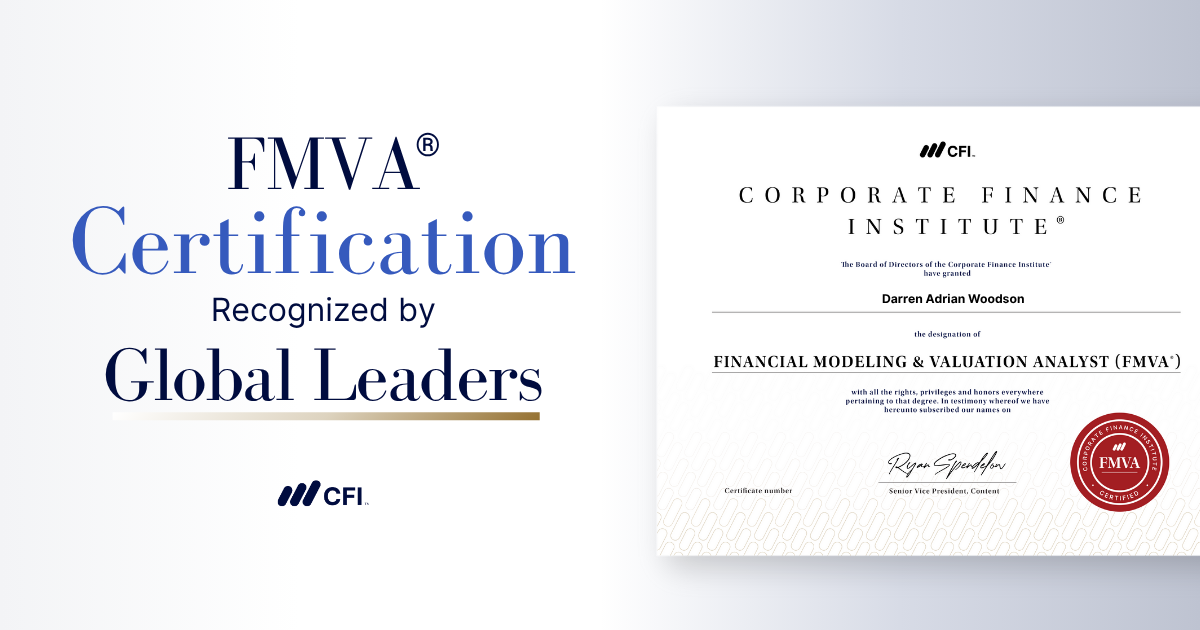
The landscape of corporate finance, investment banking, and financial planning is undergoing a rapid evolution, driven by complex global markets, technological integration, and a rising demand for immediate operational competence. In response to these shifting industry requirements, professional certification programs have faced increasing scrutiny to prove their practical value. Among them, the Financial Modeling and Valuation Analyst (FMVA) credential, administered by the Corporate Finance Institute (CFI), has emerged as a globally recognized benchmark. Trusted by more than three million finance professionals across over 200 countries, the program bridges the historic gap between academic finance theory and the day-to-day execution required on trading floors, in boardrooms, and within corporate development offices worldwide.
Background and Evolution of Financial Analyst Training
Historically, breaking into high-stakes financial sectors such as investment banking, private equity, and corporate development relied heavily on elite university degrees or rigorous, multi-year designations that heavily emphasized theoretical knowledge. While traditional credentials offered a broad academic foundation, hiring managers frequently reported a persistent skills gap among entry-level and mid-level analysts. New recruits often lacked proficiency in building dynamic financial models from scratch, executing real-world valuation analyses, or navigating complex Excel workflows efficiently.

Recognizing this disconnect, industry practitioners founded the Corporate Finance Institute to design a curriculum reflecting the actual tasks performed by analysts, managers, and directors. Over the past decade, the FMVA program has evolved from a niche alternative into a mainstream credential. It is now actively utilized for internal training and talent development by major financial institutions and Fortune 500 corporations, including global entities such as Deloitte, Verizon, Boeing, Target, and Marriott. Furthermore, institutional validation from bodies like the National Association of State Boards of Accountancy (NASBA) and The London Institute of Banking & Finance (LIBF) has cemented its credibility as a rigorous standard for continuing professional education.
Comprehensive Curriculum and Modern Integration
The architecture of the FMVA program is intentionally structured to build competency progressively, accommodating both absolute beginners and seasoned professionals seeking to formalize their expertise. The academic journey begins with foundational preparation, offering optional courses in Excel fundamentals, basic accounting, corporate finance, and mathematics for finance professionals. This ensures that every participant, regardless of their undergraduate major or career background, can establish a uniform baseline of knowledge before advancing to core material.
The core curriculum consists of 15 mandatory courses that dive deep into the mechanics of modern finance. Topics include financial analysis fundamentals, rigorous three-statement modeling, operational modeling, and business valuation methodologies such as Discounted Cash Flow (DCF) modeling and comparable company analysis. Crucially, the program places heavy emphasis on practical output, requiring students to master scenario and sensitivity analysis, data visualization, dashboard creation in Excel, and professional pitchbook design in PowerPoint.

In recent years, CFI has integrated cutting-edge technological advancements into the syllabus, most notably artificial intelligence workflows for finance. Recognizing the growing role of automation in corporate offices, the curriculum now includes specialized training on drafting, formatting, and auditing three-statement models using AI, alongside structured prompt engineering tailored specifically for financial analysts. This forward-looking approach ensures that graduates are not only proficient in traditional techniques but are also prepared to leverage modern productivity tools.
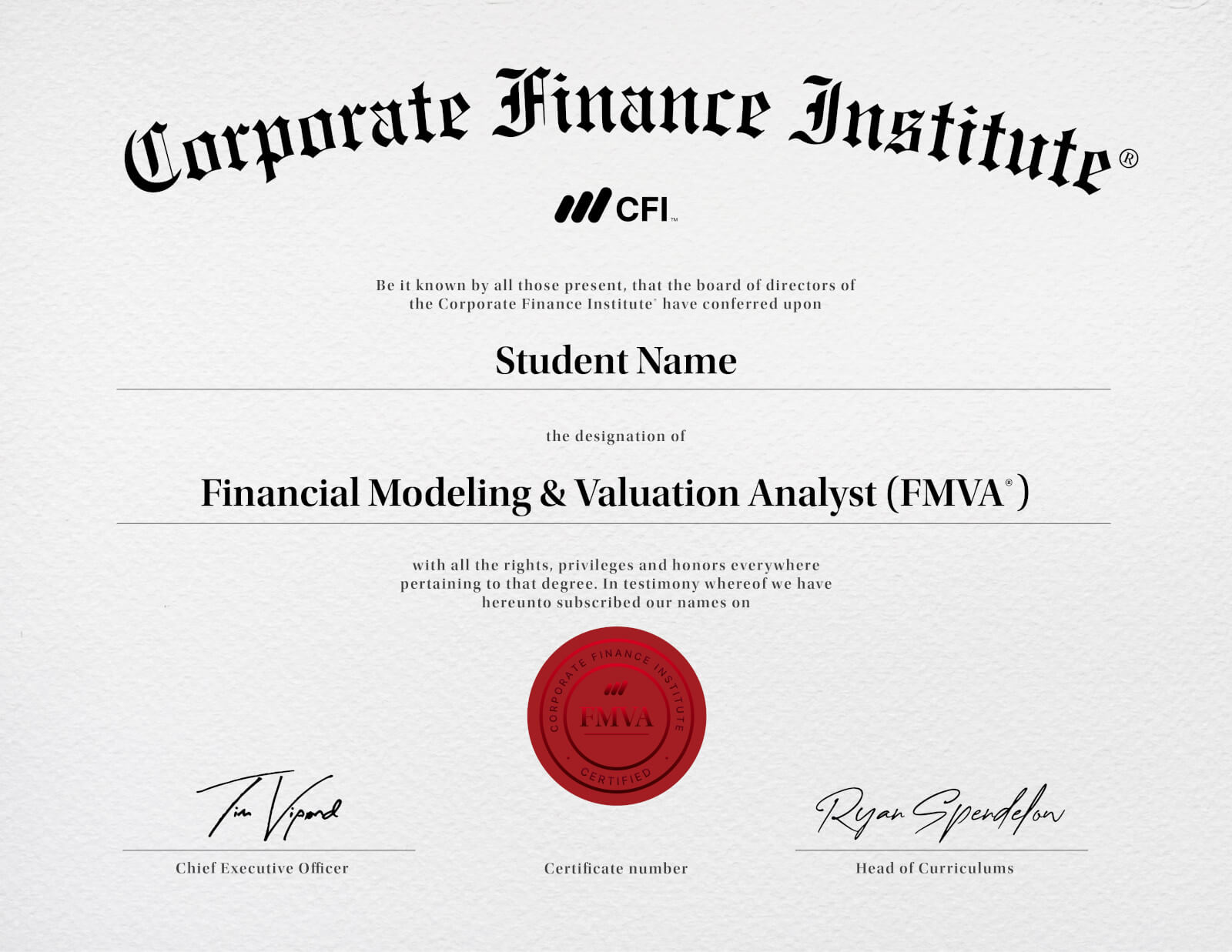
To complete the certification, candidates must select at least three electives from a pool of specialized modules—spanning real estate modeling, bank valuation, startup financial modeling, and sell-side equity research—and successfully navigate real-world case study challenges, such as renewable energy solar financial modeling and Tesla earnings analysis. Finally, candidates must pass a comprehensive online final exam with a minimum grade of 70 percent to earn their digital certificate and professional badge.

Industry Reception and Career Implications
The value proposition of the FMVA credential is perhaps best illustrated by its reception among elite financial institutions and corporate recruiters. Alonso Saponara Rivva, an Investment Banking Analyst at Goldman Sachs, noted that the program played a pivotal role during his recruitment process. Having the practical modeling framework accessible while working through high-pressure interview case studies allowed him to build accurate models and present strategic alternatives seamlessly. He observed that multiple interviewers at Goldman Sachs were already familiar with the FMVA credential and spoke highly of its comprehensive nature.

Similarly, corporate leaders who have dedicated thousands of hours to traditional, highly theoretical designations have endorsed the FMVA for its unmatched workplace applicability. Chris Caldwell, a Director of Treasury and CFA Charterholder who invested roughly 900 hours into his initial designation, remarked that he found comparable practical value in the FMVA program, which focuses sharply on desk-ready execution rather than abstract concepts.
From a macroeconomic perspective, the rise of applied certifications like the FMVA reflects a broader shift in labor market expectations. Employers increasingly favor verifiable, task-oriented skills that reduce onboarding times and increase immediate productivity. Data indicates that over 75 percent of CFI learners report significant career advancement, enhanced job performance, or measurable productivity improvements within months of completing the program.

Future Outlook for Financial Professionals
As global financial markets become increasingly digitized and data-driven, the skill set required of a corporate finance professional will continue to expand. The integration of artificial intelligence, advanced data visualization, and dynamic modeling into standard operating procedures means that static spreadsheet analysis is no longer sufficient.

Programs that successfully combine foundational rigor with real-time technological adaptation are poised to set the standard for professional development. By maintaining a curriculum designed by active practitioners and continuously updating its modules to reflect modern workflow realities, the FMVA credential has established a resilient framework for career mobility. Whether utilized by early-career professionals entering the workforce, mid-level analysts formalizing their technical skills, or senior leaders adding globally recognized validation to their resumes, the program addresses the core demands of modern corporate finance, ensuring its recipients remain competitive in a rapidly evolving global economy.