Mark Rober Reveals How Creators Can Beat AI Slop Through Real-World Authenticity

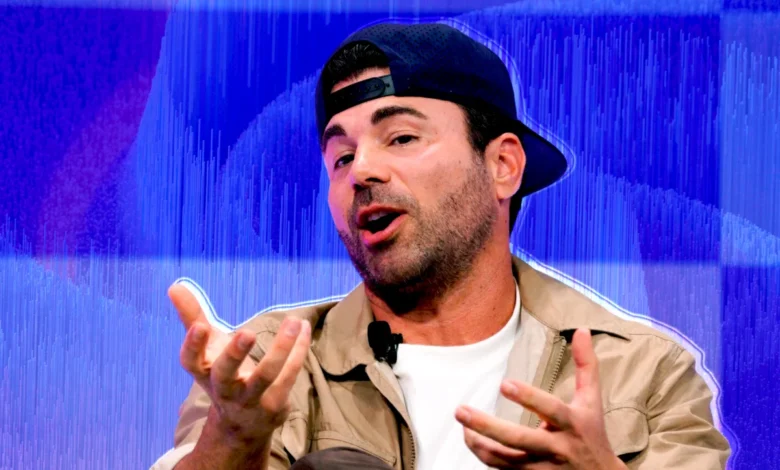
The rapid acceleration of generative artificial intelligence has fundamentally altered the landscape of digital media, sparking an existential debate among content creators regarding the future of online video. As automated tools and synthetic media flood social platforms with low-cost, high-volume material commonly referred to as "AI slop," digital publishers face an unprecedented crisis of saturation. Amidst this technological disruption, former NASA engineer and prominent science communicator Mark Rober has articulated a definitive strategy for survival. Boasting an audience of 85.7 million subscribers on YouTube, Rober argues that the ultimate antidote to artificial saturation is radical authenticity rooted in tangible, real-world execution.
The Evolution of a Science Communicator
Mark Rober’s journey to becoming one of the most recognizable figures on the internet is characterized by a unique fusion of rigorous engineering and accessible entertainment. Before achieving digital stardom, Rober spent nearly a decade working as a mechanical engineer at NASA, contributing significantly to the Curiosity rover project sent to Mars. This heavy technical background instilled in him a systematic approach to problem-solving and a profound appreciation for empirical science, traits that would later define his digital footprint.
Transitioning from the aerospace sector to online video production, Rober leveraged his engineering acumen to craft ambitious, large-scale science experiments that captured global attention. Early breakout successes demonstrated his distinct capability to merge complex physics with viral curiosity. His widely viewed segment, How to Survive a Grenade Blast, surpassed 100 million views by rigorously testing survival myths with quantifiable metrics. Similarly, his elaborate project, Can you swim in Jello?, accumulated over 224 million views by answering a whimsical hypothetical question through meticulous physical execution. These milestones established a production blueprint defined by high stakes, genuine curiosity, and undeniable physical reality.
The Rise of AI Slop and the Creator Conundrum
The digital ecosystem that propelled Rober to prominence is currently undergoing its most radical transformation since the advent of high-speed streaming. Generative artificial intelligence has democratized the video production pipeline, allowing individuals and automated channels to generate seemingly complex visual content at a fraction of the historical time and financial cost. While this technological leap offers powerful tools for localization and efficiency—such as AI-powered multilingual dubbing utilized by startups like Linguana to expand creators’ international reach—it simultaneously creates a severe paradox.
The same technologies that streamline production also saturate platforms with homogenous, synthetic media. Channels relying heavily on anonymous narration, stock footage, or basic animation find themselves directly competing with algorithms capable of producing thousands of similar variations daily. In this hyper-competitive environment, technical execution alone is rapidly commoditized. According to industry analysts, when production value becomes cheap and ubiquitous, the sheer volume of content threatens to drown out originality, forcing audiences into a state of digital fatigue.
Combatting Synthetic Media Through Tangible Reality
In a comprehensive interview with Business Insider, Rober addressed the existential threat posed by synthetic media head-on. Rather than viewing artificial intelligence as an insurmountable hurdle, the science communicator posits that the proliferation of AI-generated video inadvertently elevates the value of genuine human effort and physical reality.
"Do you want to see a simulation of someone dunking a basketball with a sick trick, or do you want to see someone actually do it?" Rober remarked during the discussion. "The fact that you know it’s real is what makes it crazy."
This philosophical stance underscores what Rober describes as a defensive "moat" surrounding his digital channel. By investing heavily in physical experiments that carry genuine risks, financial costs, and logistical hurdles, creators can establish a barrier that algorithms simply cannot cross. Audiences instinctively recognize the difference between a pixel-perfect generative rendering and the genuine physical jeopardy of a NASA engineer testing a complex mechanical contraption in a muddy backyard. This authenticity fosters a deep psychological connection that synthetic media cannot replicate.
The Economics of Scale: CrunchLabs and Human Capital
Behind the viral spectacles and whimsical experiments lies a sophisticated, multi-million-dollar business apparatus. Last year alone, Rober’s primary YouTube channel generated approximately $17 million in advertising and sponsorship revenue—a figure that roughly matches the total capital reinvested into producing his elaborate video projects. Rather than relying solely on platform monetization, Rober has successfully diversified his enterprise through CrunchLabs, a direct-to-consumer STEM education company.
CrunchLabs designs and distributes maker kits and educational toys aimed at introducing children and young adults to foundational concepts in science, technology, engineering, and mathematics (STEM). The company has scaled rapidly, currently employing a workforce of more than 200 individuals dedicated to fostering hands-on creativity. For Rober, the mission of CrunchLabs directly parallels his philosophy on content creation: cultivating an innate sense of wonder.
"Curiosity is so important in this new age of AI," Rober noted, emphasizing that automation can handle repetitive computational tasks, but human curiosity drives genuine innovation. "It means you just have a lifetime of learning."
Implications for the Future of Digital Media
The dichotomy highlighted by Rober’s approach points toward a bifurcation of the digital content market. On one side, low-margin, high-volume automated content will likely dominate informational searches, quick tutorials, and synthetic entertainment, driven by algorithmic efficiency and cost reduction. On the other side, personality-driven, experiential, and event-based media will command disproportionate attention and brand loyalty.
As platforms like YouTube navigate the integration of AI-assisted search summaries, automated dubbing, and generative creation tools, the baseline expectations of consumers are shifting. Creators who rely exclusively on derivative formats or automated workflows face diminishing returns as the marginal cost of content production approaches zero. Conversely, those who anchor their brand in physical reality, unique human experiences, and tangible community engagement are discovering that authenticity is the ultimate scarce asset.
Ultimately, Mark Rober’s trajectory from the clean rooms of NASA to the unpredictable arena of viral video offers a pragmatic roadmap for the digital age. By doubling down on real-world friction, embracing lifelong curiosity, and building sustainable enterprises outside the ad-revenue ecosystem, creators can navigate the rising tide of artificial intelligence not by matching its speed, but by embracing the irreplaceable value of human reality.
Related posts: