Agentforce for Sales Transforms Sales Workflows with Autonomous AI Integration in Slack


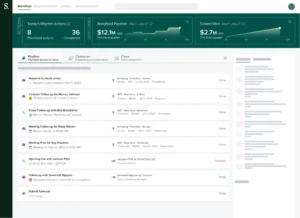
The landscape of sales operations is undergoing a profound transformation, driven by the imperative to enhance productivity and streamline workflows. For years, sales teams have grappled with the inefficiency inherent in fragmented technological ecosystems, forcing professionals to dedicate an inordinate amount of time to data retrieval and administrative tasks rather than engaging in direct selling activities. This pervasive challenge, which often sees sales representatives spending upwards of 60-70% of their time on non-selling tasks, has long been a bottleneck for revenue growth and operational efficiency. In response to this critical industry need, Salesforce has unveiled Agentforce for Sales, an innovative solution designed to address these workflow inefficiencies head-on by integrating autonomous AI directly into the ubiquitous communication platform, Slack. This strategic integration promises to revolutionize how sales professionals identify qualified leads, manage their pipelines, and ultimately, close deals by leveraging AI agents that proactively scan a vast array of data sources, including the web, emails, and calls, to deliver actionable insights directly to the seller.
The Persistent Challenge of Sales Productivity
The modern sales environment is characterized by an ever-increasing volume of data, complex customer journeys, and heightened competition. Despite significant investments in Customer Relationship Management (CRM) systems and various sales enablement tools, many organizations continue to struggle with a fundamental issue: sales professionals are spending too much time navigating disparate systems and searching for critical information. A study by the Harvard Business Review found that salespeople spend only about one-third of their time actually selling. The remaining two-thirds are consumed by tasks such as administrative duties, internal meetings, service calls, and searching for information. This fragmentation of tools – from CRM databases and email clients to communication platforms and external research sites – creates significant cognitive load and operational friction. Each new tab opened, each system navigated, represents a diversion from core selling activities, diminishing the overall effectiveness of the sales force. The consequence is not merely reduced productivity but also missed opportunities, delayed deal cycles, and an inability to scale sales efforts efficiently.
Agentforce for Sales: Ushering in the Agentic Enterprise Era
Agentforce for Sales represents a significant leap forward in the application of artificial intelligence within the enterprise, embodying Salesforce’s vision of the "Agentic Enterprise." At its core, the solution introduces intelligent, autonomous AI agents that operate continuously and proactively in the background. Unlike traditional AI tools that require explicit prompts or queries, these agents are designed to understand the context of a sales professional’s work, anticipate their needs, and deliver relevant information without manual intervention.
The operational mechanism is sophisticated yet intuitive. The AI agents are configured to scan and synthesize data from a multitude of sources. This includes internal company data residing within Salesforce’s CRM, such as past customer interactions, deal histories, and product usage patterns. Crucially, it extends to external data, encompassing web research for company news, industry trends, competitive intelligence, and public profiles of key stakeholders. Furthermore, the agents analyze communication data, including emails and call transcripts (with appropriate permissions and privacy safeguards), to extract sentiment, identify buying signals, and pinpoint potential pain points or opportunities.
The primary objective of this continuous data scanning is to identify qualified leads with unprecedented accuracy and speed. By correlating diverse data points, an Agentforce AI agent can surface a prospective client who has recently expressed interest in a competitor’s product on social media, whose company is undergoing significant expansion, or whose recent executive hires align with a specific sales strategy. This proactive identification transforms prospecting from a time-consuming, manual endeavor into an AI-driven, highly efficient process.
The Strategic Centrality of Slack Integration
The decision to integrate Agentforce for Sales directly into Slack is a cornerstone of its design philosophy. Salesforce’s acquisition of Slack in 2021 was a strategic move aimed at creating a unified platform for digital headquarters, where communication, collaboration, and critical business processes converge. By embedding autonomous AI agents within Slack, Salesforce is leveraging its vision to turn Slack into a central nervous system for sales operations.
For sales professionals, Slack is often the primary channel for team communication, updates, and quick queries. Integrating Agentforce here means that insights and lead notifications are delivered directly into their existing workflow, minimizing context switching. Instead of having to log into a separate platform or navigate through multiple dashboards, a sales rep receives a notification in a dedicated Slack channel or direct message from an AI agent, detailing a newly identified qualified lead, key insights about an existing account, or a timely update on a competitor. This seamless delivery mechanism ensures that valuable information is not missed and can be acted upon immediately.
Moreover, the interactive nature of Slack allows for a dynamic feedback loop. Sales professionals can engage directly with the AI agents within Slack, asking follow-up questions, providing feedback on the quality of leads, or requesting further research on specific topics. This conversational interface makes the AI feel less like a tool and more like an intelligent, collaborative assistant, fostering greater adoption and maximizing the utility of the system. The goal is to transform Slack from merely a communication tool into an intelligent, proactive sales enablement platform.
Beyond Prospecting: A Holistic Sales AI Solution
While lead identification is a critical function, Agentforce for Sales is envisioned as a broader solution for enhancing the entire sales lifecycle. The capabilities of these autonomous AI agents extend beyond initial prospecting to support various stages of the sales process:
- Deal Progression Insights: By monitoring ongoing communications and external news, AI agents can provide real-time updates on a client’s changing needs, potential budget shifts, or competitive developments that might impact a deal. They can flag potential risks or suggest next best actions to keep a deal moving forward.
- Personalized Outreach Recommendations: Based on aggregated data about a prospect’s industry, role, recent activities, and expressed interests, the AI can suggest highly personalized messaging, content, or product recommendations, dramatically increasing the relevance and effectiveness of outreach.
- Meeting Preparation and Follow-up: Prior to a meeting, an AI agent can compile a comprehensive briefing document from disparate sources, including the prospect’s company news, LinkedIn profile, recent interactions with customer service, and relevant industry reports. Post-meeting, it can help summarize key discussion points and suggest follow-up actions.
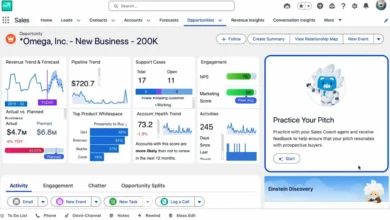
- Forecasting Assistance: By analyzing historical data, current pipeline status, and external market signals, Agentforce can contribute to more accurate sales forecasting, providing a data-driven layer of intelligence to traditional forecasting methods.
- Customer Relationship Management: For existing clients, the AI agents can monitor for opportunities for upsell or cross-sell, identify potential churn risks by analyzing sentiment or usage patterns, and ensure that customer success teams are proactively engaged.
This holistic approach transforms the role of the sales professional, allowing them to shift focus from mundane data entry and information gathering to more strategic, high-value activities such as building relationships, understanding complex customer challenges, and crafting compelling solutions.
The Genesis of Innovation: Salesforce’s Enduring AI Journey
The development of Agentforce for Sales is not an isolated event but rather a natural evolution of Salesforce’s long-standing commitment to artificial intelligence. Salesforce has been a pioneer in embedding AI into its CRM platform for years, most notably with the introduction of Salesforce Einstein in 2016. Einstein brought predictive analytics and prescriptive recommendations to various Salesforce clouds, aiming to make every customer interaction smarter.
More recently, with the advent of generative AI, Salesforce has significantly accelerated its AI initiatives. The company has integrated generative AI capabilities across its Einstein platform, enabling features like automated content generation, intelligent summarization, and conversational interfaces. Agentforce for Sales represents the next frontier: moving beyond assistive AI to truly autonomous, proactive agents that can execute tasks and provide insights without constant human prompting.
The acquisition of Slack was a pivotal moment in this journey, providing Salesforce with a critical communication layer to deploy and interact with these advanced AI capabilities. This strategy positions Salesforce to deliver on the promise of a truly "connected enterprise," where data flows seamlessly, intelligence is pervasive, and workflows are optimized through intelligent automation. The company’s ongoing investment in research and development, particularly in areas like large language models and agentic frameworks, underscores its commitment to maintaining leadership in the AI-powered enterprise software market.
Executive Vision and Industry Reception
While specific official statements regarding Agentforce for Sales’ broader release are typically part of a product launch cycle, the strategic direction is clear from Salesforce’s leadership. Marc Benioff, CEO of Salesforce, has consistently articulated a vision where AI fundamentally redefines how businesses operate, with a strong emphasis on trust, data privacy, and ethical AI deployment. It can be logically inferred that executives responsible for Sales Cloud and AI innovation would emphasize the transformative potential of Agentforce for Sales.
"The future of sales isn’t just about managing customer relationships; it’s about anticipating their needs and empowering our sales professionals with predictive intelligence," a hypothetical President of Sales Cloud might state. "Agentforce for Sales, deeply embedded in Slack, eradicates the administrative burden that has plagued sales teams for decades. It liberates sellers to focus on what they do best: building relationships, understanding customer challenges, and driving value. This is about making every salesperson a strategic advisor, not just a data entry clerk."
Similarly, a Head of AI at Salesforce could highlight the technological leap: "We’re moving beyond reactive AI to proactive, autonomous agents that intelligently scour vast datasets to deliver precisely the right information at the right time. The ‘Agentic Enterprise’ is not just a concept; it’s becoming a reality where AI agents work tirelessly to augment human capabilities, ensuring our customers can move faster and smarter."
Industry analysts are likely to view Agentforce for Sales as a significant step in Salesforce’s AI strategy, particularly given the tight integration with Slack. "This move by Salesforce demonstrates a clear understanding of where the sales industry is headed," commented a hypothetical senior analyst at Gartner. "By bringing autonomous AI directly into the daily workflow via Slack, they are tackling the productivity challenge head-on. The ability for AI agents to proactively identify leads and provide context is a game-changer that could redefine sales efficiency benchmarks and further solidify Salesforce’s position as a leader in AI-powered CRM."
Data-Driven Decisions: The Foundation of Agentforce
The efficacy of Agentforce for Sales is entirely dependent on the quality, breadth, and security of the data it processes. The term "Data" in the original article’s categories is not merely a keyword; it represents the lifeblood of this autonomous AI system. The AI agents are trained on massive datasets, encompassing historical sales data, market intelligence, customer interactions, and public web information. The ability to aggregate, cleanse, and analyze this disparate data is crucial for the agents to generate accurate, actionable insights.
Salesforce’s robust data infrastructure and commitment to data governance are critical here. The platform must ensure that data is not only accessible to the AI agents but also handled with the highest standards of privacy, compliance (e.g., GDPR, CCPA), and security. This includes anonymization where necessary, clear consent mechanisms for analyzing communications, and strict access controls. The trust that sales professionals and their organizations place in these AI agents will hinge on the transparency and integrity of their data handling practices. The goal is to create a secure, intelligent data fabric that empowers the AI without compromising sensitive information.
Implications for the Modern Sales Professional
The introduction of Agentforce for Sales has profound implications for the modern sales professional. The role is poised to evolve significantly, moving away from repetitive, low-value tasks towards more strategic, high-impact activities.
- Shift from Reactive to Proactive: Salespeople will no longer spend hours cold calling or sifting through databases. Instead, they will be presented with pre-qualified leads and contextual insights, allowing them to engage with prospects who are already demonstrating interest or fit.
- Enhanced Strategic Focus: With administrative burdens lifted, sales professionals can dedicate more time to understanding complex customer needs, crafting bespoke solutions, developing deeper relationships, and negotiating intricate deals. Their role transforms into that of a strategic advisor rather than a transactional seller.
- Accelerated Learning and Onboarding: New sales hires can benefit immensely from AI agents providing instant context and guidance, shortening their ramp-up time and accelerating their path to productivity.
- Personalized Customer Experiences: The AI’s ability to provide granular insights into individual prospects and accounts enables a level of personalization in outreach and engagement that was previously unachievable at scale, leading to more meaningful customer interactions.
- Increased Job Satisfaction: By automating the monotonous aspects of sales, Agentforce can contribute to higher job satisfaction, reducing burnout and allowing sales professionals to focus on the rewarding aspects of their profession.
Ultimately, this shift is about augmenting human intelligence with artificial intelligence, creating a symbiotic relationship where technology empowers the salesperson to be more effective, efficient, and impactful.
The Competitive Landscape and Future Outlook
In the highly competitive market of sales technology, innovation is a constant race. Salesforce’s Agentforce for Sales, with its emphasis on autonomous AI and deep Slack integration, positions the company strongly against competitors who might offer more traditional AI-assistive tools or fragmented solutions. By leveraging its vast CRM data, AI expertise, and the widespread adoption of Slack, Salesforce aims to set a new benchmark for sales productivity and intelligent automation.
The future outlook for Agentforce for Sales is likely to involve continuous expansion of its capabilities. One can foresee the AI agents becoming even more sophisticated, perhaps by engaging in limited conversational interactions with prospects (under human supervision), automating parts of the proposal generation process, or providing deeper predictive analytics for churn prevention and customer lifetime value optimization. The concept of the "Agentic Enterprise" will likely extend beyond sales to other functions like service, marketing, and IT, creating a fully integrated, AI-powered operational backbone for businesses. The ethical implications of autonomous AI, including bias detection, data privacy, and accountability, will remain central to Salesforce’s development philosophy, ensuring that these powerful tools are used responsibly and for the greater good of its customers.
In conclusion, Agentforce for Sales represents a significant evolution in sales technology, moving beyond mere automation to intelligent autonomy. By integrating proactive AI agents directly into Slack, Salesforce is addressing the core challenges of sales productivity and fragmented workflows, promising to empower sales professionals to spend more time selling and less time searching. This innovation not only streamlines operations but fundamentally redefines the role of the salesperson, paving the way for a more strategic, data-driven, and ultimately more successful sales future.
Related posts: