Best Buy Integrates ChatGPT into Holiday Strategy to Revolutionize Conversational Commerce

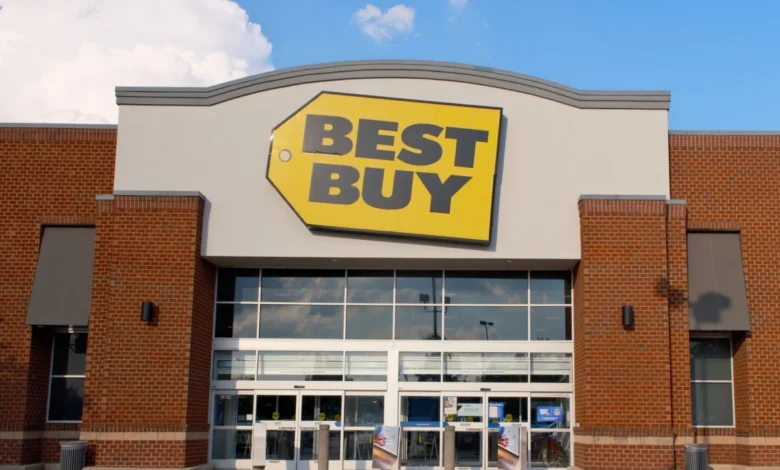
Best Buy is fundamentally reshaping its digital storefront for the upcoming holiday season by integrating OpenAI’s ChatGPT directly into its shopping experience, allowing customers to discover products, receive personalized recommendations, and finalize purchases without ever exiting the artificial intelligence platform. This strategic pivot, announced in a mid-September corporate update, marks a significant milestone in the retailer’s broader digital transformation. As the consumer electronics giant prepares for the peak retail period, the move signifies a departure from traditional e-commerce navigation, favoring a conversational, AI-first approach designed to capture consumer attention where they are already spending their time.
The Evolution of Best Buy’s AI Roadmap
The integration of ChatGPT is not an isolated experiment but the latest iteration of a multi-year digital strategy. Best Buy, which currently holds the No. 8 position in the Top 1000 Database of North America’s largest online retailers, has been aggressively scaling its AI capabilities throughout 2026. This trajectory began in earnest with a foundational partnership formed in 2024 between Best Buy, Google Cloud, and Accenture. That collaboration focused on building a robust generative AI framework intended to optimize both the employee experience—by arming floor staff with instant product knowledge—and the customer experience, through more intuitive digital self-service tools.
The timeline of these advancements highlights a rapid acceleration in technological deployment:
- 2024: Best Buy establishes a strategic partnership with Google Cloud and Accenture to overhaul internal and external customer support systems using generative AI.
- August 2025: The company launches its U.S. online marketplace, effectively doubling its digital product assortment to include a wider range of third-party vendors.
- August 2026: Best Buy unveils "Ask Blue," a proprietary conversational AI assistant designed to handle complex product comparisons, compatibility checks, and support inquiries.
- August 27, 2026: During the fiscal Q2 earnings call, incoming CEO Jason Bonfig officially discloses the impending integration of commerce capabilities within OpenAI’s ChatGPT.
- September 14, 2026: Best Buy formalizes its holiday roadmap, confirming that the ChatGPT integration will be fully operational for the Q4 shopping season.
Ask Blue and the Shift to Conversational Commerce
Central to this technological ecosystem is "Ask Blue," Best Buy’s internal conversational assistant. While the ChatGPT integration serves as an external entry point for discovery and transaction, Ask Blue functions as the engine behind the scenes, drawing on a vast repository of data including real-time inventory levels, pricing structures, verified customer reviews, and detailed product specifications.
By utilizing these tools, Best Buy aims to solve the "analysis paralysis" often faced by holiday shoppers. Instead of navigating dozens of web pages to compare the technical differences between two high-end televisions or verifying the compatibility of a smart home device, a customer can now prompt an AI to handle the heavy lifting. The system can identify which model offers better brightness, confirm if a specific soundbar is compatible with an existing television, and guide the user through a frictionless checkout process. This capability is critical for Best Buy, a retailer whose product catalog is notoriously complex and highly technical.
Market Performance and Financial Context
The push toward AI-enabled commerce comes at a time when Best Buy’s digital business remains a cornerstone of its financial health. In fiscal Q2 2026, the company reported U.S. online sales of $3.0 billion, representing a 5.1% year-over-year increase. Notably, e-commerce now accounts for 33.1% of the company’s total domestic revenue, up from 32.8% during the same period in the previous year.
The expansion of the Best Buy marketplace has also provided a significant lift to these figures. Since its launch in August 2025, the marketplace has grown to include nearly 1 million products from more than 5,000 brands, including international sellers. During the second quarter of 2026 alone, the marketplace generated approximately $300 million in gross merchandise volume (GMV). Management, led by the incoming CEO Jason Bonfig, anticipates that the marketplace will reach a total of $1.3 billion in GMV for the full fiscal year, proving that the digital platform is no longer just a storefront, but a scalable ecosystem.
Leadership Transition and Strategic Vision
The implementation of these AI strategies coincides with a major leadership transition. On November 1, 2026, Jason Bonfig will officially succeed Corie Barry as CEO. Barry, who has steered the company since 2019, leaves behind a legacy of omnichannel refinement. Bonfig’s ascent to the CEO role signals a doubling down on the digital and fulfillment-focused strategies he helped architect.
During his comments on the Q2 earnings call, Bonfig emphasized the strategic necessity of this transition. "We view this as an important step in expanding our digital ecosystem and positioning Best Buy at the forefront of emerging AI-enabled commerce experiences," Bonfig noted. He further clarified that the company’s intent is not merely to follow trends, but to "show up in the places where our customers look for technology and advice." This objective suggests that Best Buy is moving away from a "destination-based" model, where customers must visit BestBuy.com, toward a "ubiquity model," where the brand is embedded into the platforms—like ChatGPT—that consumers use to research their daily lives.
Physical Retail in an AI-Driven World
Despite the heavy focus on digital innovation, Best Buy remains committed to its physical footprint. As of August 2026, the company operated 926 physical stores in the United States and 142 in Canada. Rather than viewing stores as obsolete, Best Buy is integrating AI-driven, interactive experiences into its physical architecture.
The "Meta Lab @ Best Buy" initiative is the most prominent example of this strategy. These 900-square-foot dedicated spaces, now operating in more than 50 locations, allow customers to engage with Meta AI glasses and virtual reality headsets using smart mirrors and interactive demos. In October, the company plans to introduce similar dedicated Google in-store experiences. This hybrid approach reflects broader industry trends, where retailers recognize that while the initial research and discovery might happen through a chatbot, the physical inspection of high-ticket electronics remains a critical conversion point. Industry data supports this, with more than 50% of U.S. retail leaders anticipating that physical locations will generate the highest volume of holiday orders in the coming months.
Economic Outlook and Product Trends
Looking toward the remainder of the fiscal year, Best Buy’s leadership remains optimistic, particularly regarding emerging product categories. While the company expects growth in the computing sector to decelerate—a natural consequence of lapping the spike in sales driven by the end of Windows 10 support—other areas are expected to compensate.
Bonfig highlighted that sales of phones, TVs, and major appliances are projected to show sustained growth. Furthermore, the company is preparing for a significant retail event in Q4: the release of Grand Theft Auto VI. Historically, blockbuster video game releases act as a catalyst for console sales and peripheral upgrades, and Best Buy expects this title to be a primary driver of holiday traffic and revenue.
Implications for the Retail Landscape
The integration of ChatGPT into the purchasing funnel represents a paradigm shift for the retail industry. By reducing the number of steps required to go from "discovery" to "ownership," Best Buy is optimizing its conversion funnel to a degree that was previously impossible. However, this strategy is not without its challenges. The reliance on third-party AI platforms like OpenAI requires a delicate balance of brand control, data privacy, and the maintenance of a consistent customer experience.
Moreover, as other retailers rush to implement similar generative AI tools, the competitive advantage will likely shift from the existence of the technology itself to the quality of the data feeding it. Best Buy’s advantage lies in its proprietary data—the Ask Blue assistant, its deep integration with Google Cloud, and its vast repository of customer reviews and product compatibility specs.
As the holiday season approaches, the industry will be watching to see if the convenience of conversational commerce translates into higher average order values and improved customer loyalty. For Best Buy, the objective is clear: to be the most helpful advisor in the customer’s journey, whether that advice is delivered by a blue-shirted expert on the sales floor or a sophisticated AI interface in a chat window. By bridging the gap between its physical stores and the digital frontier, the company is positioning itself to navigate a retail landscape that is increasingly defined by speed, intelligence, and accessibility.