Even Founders Need a Hard Stop: Managing the Sustainable Grind in High-Intensity Environments

The modern professional landscape, particularly for startup founders and high-level executives, is increasingly defined by periods of extreme exertion known as "Grind" cycles. As of September 2026, data from organizational behavioral studies indicates that nearly 68% of entrepreneurs report persistent exhaustion, often tied to the misconception that long-term success requires a permanent state of high-intensity output. This phenomenon, often termed "hustle culture," has prompted a re-evaluation of productivity systems, specifically focusing on the necessity of mandatory recovery periods to prevent cognitive decline and burnout.
The evolution of these work cycles often follows a predictable, if unsustainable, path. During a product launch or a major corporate milestone, founders frequently abandon traditional work-life boundaries. Industry experts note that while short-term sacrifices are an inherent part of early-stage business development, the failure to distinguish between a temporary "Grind" phase and a sustainable "Simple" maintenance phase is a leading indicator of long-term business failure.
The Chronology of Burnout
The trajectory toward burnout typically begins with an "event-driven" workload. In the first phase, a founder identifies a critical milestone, such as a seed-round funding goal or a platform release. During this period, which usually spans 60 to 90 days, the subject adopts a "Grind" posture. In this state, professional output is maximized by sacrificing leisure time, physical health, and administrative reflection.
By the second month of this cycle, internal research suggests that cognitive performance begins to degrade. Decision-making accuracy drops, and the propensity for reactive, low-value tasks increases. If the founder does not transition back to a "Simple" phase—characterized by steady momentum and adequate recovery—the body and mind enter a state of chronic fatigue. By the third month, the "Grind" is no longer a strategic choice but a default setting, leading to diminishing returns on every hour invested.
The Sustainable Grind Rule: A Strategic Framework
To combat the systemic risks associated with continuous high-intensity labor, management consultants have begun advocating for the "Sustainable Grind Rule." This protocol mandates a specific ratio of work to recovery, even during the most demanding periods of a business lifecycle. The rule dictates that an individual must secure at least 1.5 days of rest per week: one full day of complete detachment (typically Saturday) and one half-day of reduced activity (typically Sunday).
This is not merely a lifestyle recommendation but a risk-mitigation strategy. From a biological perspective, the human brain requires periods of "default mode network" activity to process information and synthesize complex problems. Without these gaps in activity, the brain struggles to move from immediate, tactical problem-solving to strategic, long-term planning. For the founder, the "Sustainable Grind Rule" serves as a non-negotiable meeting with oneself, ensuring the engine of the business—the founder—remains functional over a multi-year horizon.
Supporting Data and Productivity Metrics
Current organizational research provides compelling evidence for the efficacy of structured recovery. A 2025 study on high-performance teams revealed that employees who took a full, disconnected weekend showed a 22% higher output in complex tasks the following week compared to those who worked partially through their weekends.
Furthermore, the "Micro-Goal Compound Effect" is gaining traction as a solution to the "I don’t have time" dilemma. The data suggests that productivity is often hampered by the desire to find large, uninterrupted blocks of time—blocks that rarely exist in the modern digital workspace. Instead, the implementation of 5-to-15-minute high-focus windows yields higher cumulative returns. By breaking a long-term goal into 15-minute segments, a founder can make tangible progress without the cognitive load associated with attempting a multi-hour project during an already depleted state.
The "Eat the Frog" Methodology in Practice
A common challenge identified in executive coaching is the "reactive morning." If a founder begins their day by addressing emails, messages, or external requests, they have effectively surrendered their peak cognitive energy to the agendas of others. This is often referred to as "letting the day vote."
To counteract this, industry leaders emphasize the "Eat the Frog" technique: dedicating the first hour of the morning to the most difficult, high-leverage task on the agenda. Data indicates that when this task is completed before 10:00 AM, the psychological momentum generated carries through the remainder of the day, reducing the "decision fatigue" that often sets in by mid-afternoon. This approach aligns short-term daily activity with long-term strategic vision, ensuring that the needle on the business’s most critical metrics actually moves.
Broader Implications for Corporate Culture
The implications of these findings extend far beyond the individual founder. As burnout rates rise, the cultural narrative regarding what constitutes "hard work" is shifting. There is a growing consensus among institutional investors that the "always-on" founder is a liability rather than an asset. Investment firms are increasingly vetting founders not just on their technical capability, but on their operational capacity—specifically, their ability to manage their own energy levels to ensure long-term resilience.
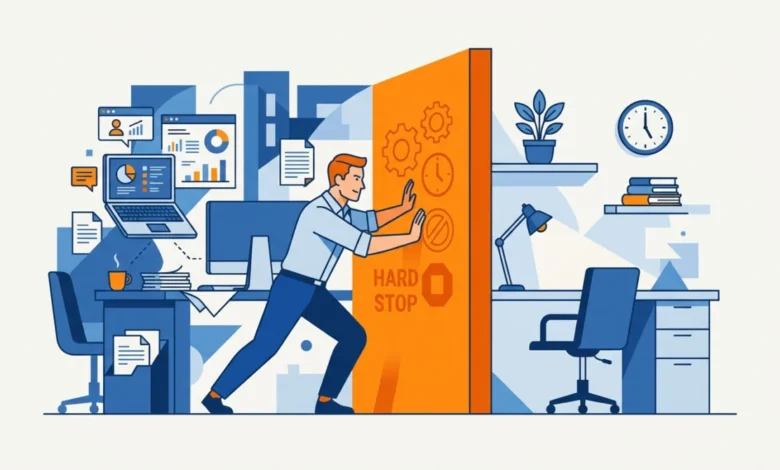
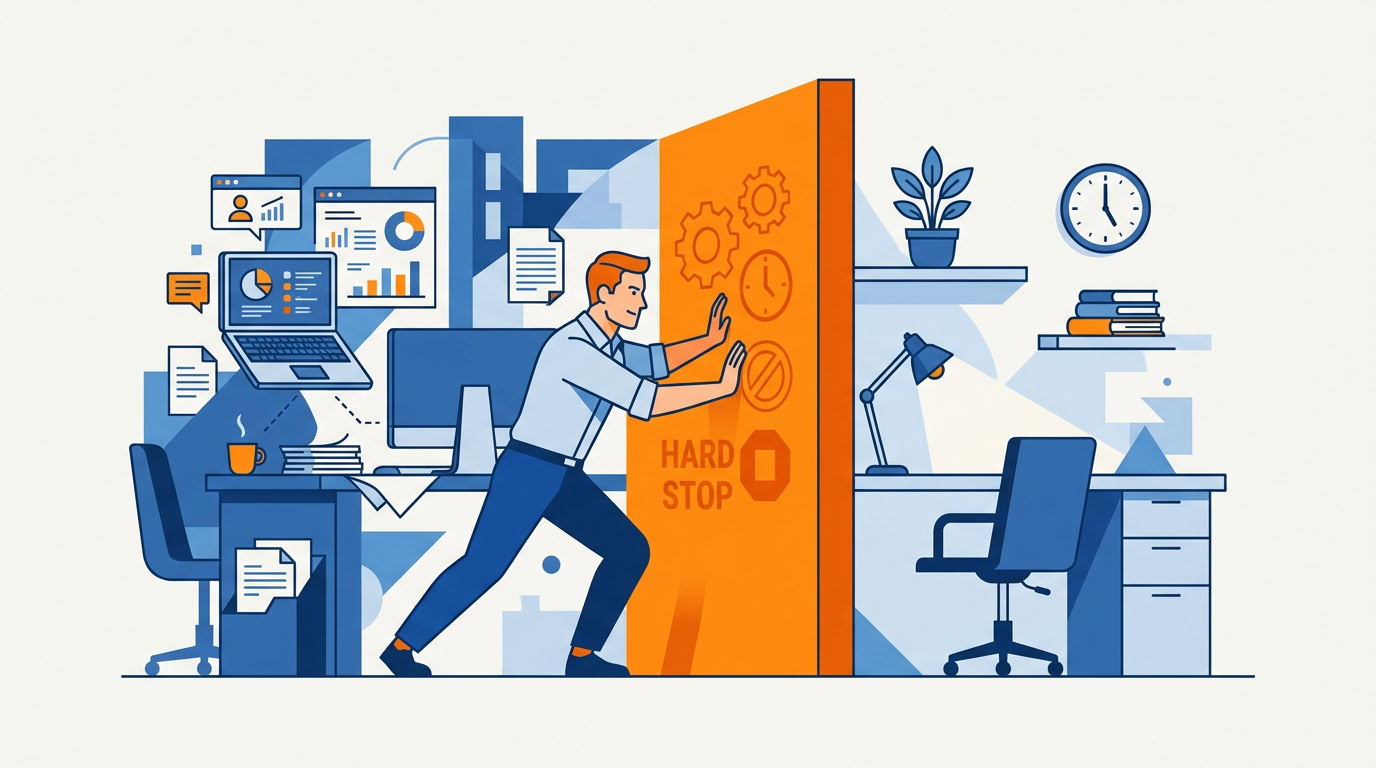
When a founder fails to implement a "hard stop," the culture of the entire organization often follows suit. Employees look to leadership as the benchmark for acceptable work-life boundaries. If the founder is perpetually in "Grind" mode, the organization inevitably adopts an unsustainable pace, leading to high turnover rates and a loss of institutional knowledge. Conversely, when leadership formalizes recovery, it signals a commitment to sustainable, high-quality output rather than mere hours logged.
Conclusion: From Intensity to Consistency
The transition from a high-intensity startup phase to a mature, sustainable organization requires a fundamental shift in mindset: moving from a reliance on brute-force intensity to a reliance on systematic consistency. Productivity is not an expense of one’s personal health; it is an investment in the longevity of the enterprise.
To implement this transition, organizations and individuals are encouraged to:
- Audit the Current Season: Explicitly define the current period as either "Grind" or "Simple" and adjust expectations accordingly.
- Institutionalize Recovery: Place the 1.5-day recovery block on the calendar as a mandatory, non-movable event.
- Prioritize the "Frog": Protect the morning hours for high-leverage work to prevent reactive work patterns.
- Leverage Micro-Goals: Utilize short, consistent 15-minute windows to maintain progress when time is limited.
The evidence is clear: the most successful founders are those who treat their capacity for work as a finite resource, managed with the same rigor and strategic foresight as capital or human resources. In the long term, consistency, rather than intensity, remains the most reliable predictor of success. By accepting that recovery is a vital component of productivity, founders can transition from a cycle of burnout to a model of sustained, high-impact growth.