Global Ad Revenue Surges to 1.3 Trillion Dollars Driven by Artificial Intelligence Integration

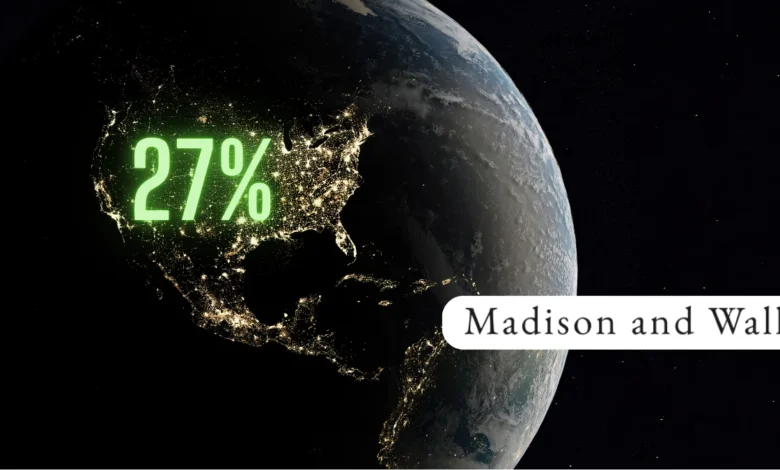
The global advertising landscape has reached a transformative inflection point as total global ad revenue is projected to hit $1.3 trillion by the end of 2026. According to the latest forecast from the research firm Madison & Wall, this figure represents an 11% year-over-year increase, signaling a period of robust, if not unprecedented, financial expansion. This growth trajectory follows the industry’s historic milestone in 2024, when it first surpassed the $1 trillion threshold, establishing a new baseline for the digital and traditional media economies.
This rapid acceleration is not merely a byproduct of increased consumer spending or broader economic recovery; rather, it is fundamentally tethered to the emergence and aggressive deployment of artificial intelligence. As industry leaders prepare for upcoming forums such as Brandweek to discuss the implications of these shifts, the data suggests that AI is acting as both the catalyst for operational efficiency and the primary engine of new capital expenditure within the advertising ecosystem.
The Mechanics of the AI-Driven Boom
The Madison & Wall report categorizes the current growth phase as unusually rapid, identifying a unique circular economic dynamic. AI companies, supported by substantial venture capital inflows, are currently among the most prolific buyers of advertising space. These firms are utilizing large-scale campaigns to capture market share, build brand awareness, and educate the public on new generative AI tools. Simultaneously, these same AI entities are providing the advertising industry with advanced software that streamlines ad buying, targeting, and optimization.
This symbiotic relationship has created a self-reinforcing cycle. As AI tools lower the barrier to entry for small-to-medium enterprises (SMEs) to participate in high-level digital advertising, the total volume of ad placements has surged. Conversely, the intense competition among foundational model developers—such as those behind major language models—has led to a bidding war for premium digital inventory, driving up the cost of impressions and contributing significantly to the $1.3 trillion valuation.
Chronology of Rapid Industry Growth
To understand the current state of the market, one must look at the recent timeline of the advertising sector’s expansion.
- Early 2024: The advertising industry officially crosses the $1 trillion mark for the first time, buoyed by a post-pandemic rebound and the early adoption of AI-driven programmatic advertising.
- Late 2024 to Early 2025: Investment in generative AI infrastructure reaches a fever pitch. Major tech firms begin shifting their capital expenditure budgets toward aggressive marketing to defend their market positions.
- Q2 2026: Madison & Wall data indicates a 12.9% growth in global ad revenue compared to the same quarter in the previous year. This spike is attributed to both the sustained investment from tech giants and the beginning of the U.S. political cycle.
- Q3 2026: Market projections indicate a 9.8% increase in revenue, even when excluding the significant influx of spending from U.S. midterm political advertisements. This suggests that the growth is not merely cyclical or event-driven, but structural.
- End of 2026 (Projected): Total global ad revenue is expected to reach $1.3 trillion, representing a sustained 11% annual growth rate that outpaces most other sectors of the global economy.
Analyzing the Sustainability of the Current Trajectory
While the current figures are record-breaking, market analysts are increasingly looking at the sustainability of this growth. The "AI-fueled" nature of the boom invites questions about the long-term health of the ecosystem. If the venture capital flowing into AI companies were to tighten—a possibility discussed by economists concerned with the "AI bubble" phenomenon—the advertising market could experience a corresponding cooling effect.
The report from Madison & Wall highlights a precarious balance. Because AI firms are both the primary service providers and the primary advertisers, the sector is uniquely vulnerable to a contraction in AI investment. If the promised efficiency gains of AI tools do not translate into long-term profit margins for the broader business community, the current high spending on ad inventory could be viewed as a short-term market distortion rather than a permanent expansion.
Implications for Advertisers and Platforms
For marketing professionals and brand managers, this shift necessitates a change in strategy. The influx of AI-generated content into the advertising ecosystem has created a "noise floor" that is higher than at any point in history. As AI makes it easier to produce and distribute ads at scale, the value of human-centric, high-quality, and authentic creative work is expected to rise.
Furthermore, the integration of AI in ad-buying platforms means that the "middle-man" roles in media buying are undergoing rapid displacement. Agencies are now tasked with moving beyond simple procurement to focus on strategy, brand narrative, and the ethical use of AI. As the industry gathers at events like Brandweek to dissect these trends, the conversation is shifting from "how to use AI" to "how to maintain brand integrity in an AI-saturated market."
Global Perspectives and Regional Variations
While the United States accounts for a significant portion of the growth due to the concentration of AI development and the intensity of its political advertising cycles, the trend is global. Markets in the Asia-Pacific region, particularly in India and Southeast Asia, are seeing rapid adoption of mobile-first, AI-optimized ad platforms. Europe, meanwhile, is navigating the complexities of the EU AI Act, which may impose different constraints on the use of AI in advertising compared to the more permissive regulatory environment in North America.
These regional differences suggest that while the global total is rising, the composition of that revenue is becoming increasingly fragmented. Advertisers must now navigate a landscape of varying regulatory frameworks and consumer privacy laws, all while utilizing the same underlying AI technologies to reach their audiences.
Expert Consensus and Future Outlook
Industry stakeholders generally agree that the integration of AI into advertising is not a passing trend but a fundamental shift in the infrastructure of commerce. The ability to use predictive analytics to anticipate consumer behavior, combined with generative tools to personalize creative assets at scale, has provided advertisers with a level of precision previously thought impossible.
However, the "bust" scenario mentioned in the Madison & Wall report remains a topic of quiet concern. If the industry becomes over-reliant on AI companies for revenue, it effectively ties its success to the performance of the tech sector’s speculative investments.
Looking toward 2027 and beyond, the expectation is that the initial "gold rush" phase of AI advertising will eventually stabilize. As companies move from experimental spending to performance-based investment, the growth rate may normalize. For now, however, the advertising industry remains in a period of hyper-growth, fueled by the relentless pursuit of technological advantage and the belief that in an AI-driven world, visibility remains the most valuable currency of all.
As stakeholders convene to evaluate these metrics, the consensus remains that the firms which can balance the efficiency of AI with the irreplaceable nature of human connection will be the ones to define the next decade of brand development. The $1.3 trillion milestone is not just a financial indicator; it is a testament to how deeply the digital revolution has embedded itself into the fabric of modern enterprise.
Related posts: