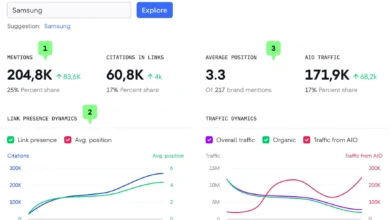
Decoding the AI Visibility Mirage: Recent arXiv Research Challenges Conventional SEO Metrics


The rapid commercial adoption of generative artificial intelligence and search-driven large language models has spawned an entirely new digital marketing sub-industry: AI visibility tracking. Brands, desperate to understand how they are represented in AI-generated summaries like Google AI Overviews and ChatGPT search results, increasingly rely on specialized metrics, dashboard reports, and consultancy audits. However, a growing body of academic literature published on the open-access repository arXiv suggests that the foundational assumptions behind these visibility metrics may be fundamentally flawed. Recent studies examining model parameter activations, retrieval-augmented generation (RAG) vulnerabilities, and internal factual recall indicate that a missing brand mention on a dashboard does not necessarily equate to a simple content deficit or a failure of brand authority.
The Rise of AI Visibility Tracking and Industry Uncertainty
As traditional search engine optimization (SEO) evolves into generative engine optimization, digital marketing agencies have rushed to offer visibility audits. These reports typically quantify how often a specific brand name appears in response to category-level prompts, flagging declines with color-coded alerts—often red cells indicating missing visibility. To justify corrective action, these reports frequently attribute missing mentions to specific technical causes, such as poor model training data inclusion, weak domain authority, or inadequate content volume.
Yet, industry experts and academic researchers argue that leaping from a missing data point on a dashboard to a definitive technical diagnosis is scientifically unsupported. Without transparent visibility into the proprietary weight updates, complex inference-time routing, and dynamic tool interactions governing modern frontier models like GPT-4, GPT-5, and Gemini, marketing agencies risk diagnosing symptoms rather than root causes. This mismatch between commercial assertions and underlying machine learning mechanics has ignited a broader debate over the validity of current AI visibility measurement tools.
Dissecting the Academic Evidence: Three Pivotal Studies
To understand why simple visibility counts fail to tell the whole story, researchers have turned to empirical investigations of model behavior. Three recent papers highlight the complex gap between what a language model actually knows, how it processes external tools, and how it retrieves facts during inference.

1. Tool Conflict and Fact Displacement (MemToC)
The study titled MemToC investigates what happens when a language model’s internally generated correct answer conflicts with incorrect information supplied by an external tool or retrieval mechanism. In controlled tests involving instruction-tuned models, researchers first prompted models to answer factual questions without tools, then re-tested them with controlled, incorrect tool returns.
The results were striking: across four models, correct-answer retention ranged from a meager 6.5% to 17.1%. Even when a model possessed the correct fact internally, the introduction of conflicting external data frequently overrode its baseline knowledge. For marketers, this demonstrates that a brand’s absence in an AI response may not mean the model lacks the information; rather, it may reflect the fragile dominance of competing data introduced via retrieval layers or external web tools during inference.
2. The Gap Between Cued Reproduction and Reliable Recall
Another notable paper, Empty Shelves or Lost Keys?, explores the disparity between a model reproducing a fact under strong contextual guidance and its ability to answer questions about that same fact reliably. Evaluating models like GPT-5 and Gemini-3, the study found that while models pass contextual encoding probes for 95% to 98% of benchmark facts, their reliable recall under varied phrasings is significantly lower. Rare facts and reverse-relational questions pose particularly acute challenges.
This finding challenges the assumption that a brand missing from a consumer query indicates a complete lack of training data inclusion. Often, a model has "encoded" the brand, but the specific phrasing of the prompt or the lack of robust contextual cues prevents reliable retrieval.
3. Internal Model Computation and Activation Signals
Adding further technical nuance, the research paper From Parameters to Answers examines the internal computations of models by analyzing activation signals associated with specific geographic and conceptual entities. By manipulating internal states while keeping weights fixed, researchers demonstrated that the final output depends heavily on how request signals and internal activations interact across model layers. The study concludes that there is no universal, easily mapped diagram explaining how every model fetches a specific fact from memory, reinforcing the difficulty of diagnosing "recall failures" purely from external outputs.

The Case of the Self-Appointed Visibility Expert
To illustrate the fragility of surface-level visibility metrics, industry practitioners have pointed to real-world anomalies. Pedro Dias, a recognized digital marketing professional, famously posted on LinkedIn that he was the "world’s most renowned AI visibility expert"—a humorous self-appointment executed as an experiment. Months later, queries searching for that exact phrase still populate Google AI Overviews, citing the LinkedIn post.
While a simplistic visibility tracking tool would record this as a successful brand mention and an authoritative ranking, deeper inspection reveals the metric’s superficial nature. The AI engine is merely indexing and summarizing a specific social media post containing a self-referential joke. It provides zero empirical evidence regarding whether a prospective buyer asking a genuine, unprompted category question about AI visibility services would encounter the brand. Treating these two entirely different query types as interchangeable evidence of market visibility misrepresents actual consumer behavior.
Commercial Implications and Strategic Recommendations
The disconnect between academic findings and commercial SEO audits carries significant financial implications for enterprises investing in generative search optimization. When visibility scores drop, misdiagnosing the root cause can lead to misallocated marketing budgets. For instance:
- Content Deficiencies vs. Training Data Gaps: If an agency diagnoses a missing mention as a content volume problem, budgets are diverted toward scaling content production. Conversely, diagnosing a recall failure shifts spending toward data training strategies. If the actual issue stems from retrieval interference or prompt-sensitivity dynamics, neither intervention may solve the problem.
- Statistical Noise vs. True Trends: Research into AI visibility rankings indicates that day-to-day fluctuations are frequently driven by statistical noise rather than structural shifts in model training or web content.
Industry analysts emphasize that while tracking brand mentions remains a valid method for observing high-level market outcomes, agencies and enterprises must exercise caution before attaching deterministic diagnoses to red cells on visibility reports. A hypothesis-driven approach—testing specific content interventions or retrieval optimizations while acknowledging the limits of current measurement technology—offers a more defensible commercial framework than absolute claims of technical authority.
Ultimately, as generative models continue to evolve, bridging the gap between rigorous empirical machine learning research and practical digital marketing analytics will be essential for brands seeking genuine, sustainable visibility in the age of AI search.