How a Sixth-Grade Teacher and a Door-to-Door Job Built a Billion-Dollar Pest Control Empire


David Royce, the visionary founder and chairman of Aptive, North America’s third-largest residential pest control service, embodies a compelling theory of success: it is not predicated on industry glamour, academic credentials, or paper-perfect opportunities. Instead, it stems from an unwavering willingness to undertake tasks others shy away from, and to persist long enough to master them. Royce’s journey from a self-proclaimed struggling student to the architect of a billion-dollar enterprise in the often-overlooked pest control sector serves as a testament to this philosophy, challenging conventional notions of entrepreneurial achievement.
From Self-Doubt to Relentless Pursuit: The Formative Years
Royce’s early life was marked by academic struggles, primarily due to undiagnosed Attention-Deficit/Hyperactivity Disorder (ADHD), which he perceived as a lack of intelligence. This common misinterpretation of neurodiversity often leads bright individuals to underestimate their capabilities. However, a pivotal intervention in his sixth-grade year by a perceptive teacher, Mrs. Luft, fundamentally altered his trajectory. Mrs. Luft’s belief in his potential ignited a fierce determination within Royce, transforming his academic performance through sheer hard work. This early experience underscored the profound impact mentorship can have, particularly on young minds grappling with self-perception.
It was much later in adulthood that Royce received an ADHD diagnosis, which he has since reframed as a "double-edged sword." While challenging in unengaging environments, it proved to be a "superpower" in areas of deep interest. Sales and entrepreneurship became the arenas where his unique cognitive wiring, characterized by intense focus on captivating subjects, transitioned from a perceived liability to an undeniable asset. This re-evaluation of a personal challenge into a competitive advantage highlights a crucial aspect of entrepreneurial resilience and self-awareness.
The Crucible of Door-to-Door Sales: Forging Persistence
Royce’s entry into the world of sales, specifically door-to-door pest control, was serendipitous, spurred by a friend’s impressive summer earnings. His initial foray into the field was far from stellar; the first week in Sacramento yielded zero sales, a harsh reality given the commission-only structure. This period of intense struggle, marked by "five days straight of zeros" while peers succeeded, could have easily led to capitulation. However, Royce’s inherent stubbornness, coupled with a refusal to admit defeat, drove him to seek solutions.

That weekend, instead of retreating, he immersed himself in sales literature, dedicating 90 minutes daily to studying and internalizing best practices. This self-directed learning and commitment to continuous improvement transformed his performance dramatically. By the end of that inaugural summer, he had ascended to become the top sales rookie among 200 representatives. This achievement solidified his belief in the adage, "Persistence is genius in disguise." It also laid the groundwork for the meticulous sales methodologies that would later become the backbone of his enterprises.
Royce codified his sales program around three core principles:
- Option Closes: Shifting from "yes or no" questions to offering choices that both favor the salesperson (e.g., "We’ll be in your area tomorrow at three or five, which works better?").
- RAC (Resolve, Ace, Close): A structured approach to handling objections by resolving doubt, introducing a unique selling proposition (an "ace"), and then closing in a different manner.
- Body Language Mastery: Emphasizing that non-verbal cues convey more than words, and a confident demeanor is paramount to building trust and closing sales. This insight into human psychology, honed through thousands of door-to-door interactions, provided a significant competitive edge.
Choosing Opportunity Over Image: The Birth of an Entrepreneur
With a finance degree and proven sales acumen, Royce initially envisioned a career in investment banking, seeing it as the logical culmination of his skills. The prospect of an M&A role, typically demanding 80-100 hour workweeks, seemed an impressive path. However, a candid conversation with his pest control boss, who had just sold his own startup to Terminix for $10 million in just four years, presented an alternative: "Why would you go work 80 to 100 hour weeks for someone else when you could start your own pest control company?"
This question served as an epiphany, challenging Royce’s preconceived notions of success. He admitted his initial reaction was one of embarrassment, perceiving pest control as an "unimpressive" industry, far removed from the "suit and skyline" image he associated with achievement. This internal conflict between perceived prestige and tangible opportunity is a common dilemma for aspiring entrepreneurs, often leading them away from potentially lucrative "unsexy" industries.
Royce had previously confronted a similar choice at fifteen, when a dismissal from a pizza parlor led him to McDonald’s. There, he absorbed invaluable lessons about operational efficiency and standardized "best practices" – principles that would later underpin his own companies. He credits this minimum-wage job, initially viewed as embarrassing, with contributing significantly to his later wealth.
Armed with $300,000 saved from his four lucrative college summers – funds originally earmarked for an MBA – Royce made the decisive choice. His boss provided a blueprint, detailing 30 pain points and areas for improvement in his own successful exit. This insider knowledge, combined with Royce’s finance background, a rarity in the industry, positioned him uniquely. He "swallowed his ego and chose the opportunity instead of the image," a decision that would prove to be profoundly transformative.
Navigating Hyper-Growth and Strategic Exits
Royce’s entrepreneurial journey was not without its trials. In the first year of his initial venture, he experienced a near-bankruptcy, not due to lack of sales, but paradoxically, due to overwhelming success. The business model required paying sales commissions in advance of revenue collection, creating a significant cash flow timing issue. He had projected 4,000-5,000 new customers but achieved an unprecedented 7,500 from a single branch. This rapid growth strained his capital, forcing him to negotiate with sales leaders for delayed bonus payments, sweetened with an additional 10% interest. This harrowing experience cemented a crucial business maxim for Royce: "Revenues are vanity. Profits are sanity. But cash flow is reality." This lesson fundamentally reshaped his approach to funding growth, leading to a structural template that he applied across all his subsequent companies.
A hallmark of Royce’s strategy was his innovative approach to company sales. He executed three successful exits to the same strategic buyer before Aptive, always employing an "asset deal" structure. This involved selling only the customer base and the technicians servicing them, which were the primary interests of the larger strategic buyers seeking recurring revenue streams. Crucially, Royce would "carve out" his leadership team, operations managers, and salesforce from these deals. This "golden goose" team, with newly acquired capital, would then launch the next venture in new markets, better capitalized and without equity dilution from external investors. This brilliant maneuver allowed him to repeatedly leverage his core talent and operational expertise, fostering a sense of continuity and shared purpose among his team across multiple successful startups.
Aptive, his fourth company, became the pinnacle of this strategy, growing to over $500 million in annual revenue. This scale places it among the industry giants, a remarkable feat given the competitive landscape of over 20,000 pest control companies in North America.
The Aptive Advantage: Innovation in a Traditional Industry
Aptive’s extraordinary growth, seven to ten times faster than its competitors, can be attributed to three strategic pillars:
- Superior Sales Program: Building on Royce’s codified methodology, the sales program became a highly efficient machine, boasting over 3,000 personnel. Representatives transitioning from competitors consistently reported 70% higher productivity at Aptive. This rigorous training and performance-driven culture ensured a steady stream of revenue.
- Customer-Centric Service Expansion: Having personally knocked on over 60,000 doors during his college summers, Royce developed an unparalleled understanding of homeowners’ pain points. This "PhD in what homeowners complained about" allowed Aptive to offer additional service features that directly addressed customer needs, enhancing value and loyalty.
- Early Technological Adoption: Aptive invested early in software to boost efficiencies and gamify the sales process, an unheard-of practice for a "blue-collar" company seventeen years ago. Their custom-built sales app hosted nationwide tournaments, elevating productivity by up to 30% on tournament days. This forward-thinking integration of technology into a traditionally low-tech industry provided a significant competitive advantage in recruitment, motivation, and operational effectiveness.
The "Stealthy Wealthy" and the Blue-Collar Boom

Royce is a strong advocate for the immense, often overlooked, opportunities within "unsexy" blue-collar industries. He notes that these sectors frequently boast "sexy margins" and are home to what The Wall Street Journal refers to as the "stealthy wealthy." Statistical data corroborates this: approximately 43% of the top 0.1% of U.S. income earners (those making $2.3 million or more annually) derive their wealth from industries typically labeled as "boring" or blue-collar.
This trend is intensifying due to several factors:
- Demographic Shift: Millions of baby boomers, who own a vast number of these essential service businesses, are retiring. A significant majority lack succession plans, creating a buyer’s market for aspiring entrepreneurs.
- Essential Services: Many of these businesses, like pest control, plumbing, and HVAC, provide essential services with recurring revenue models, making them resilient to economic downturns. "Recessions come and go. But bugs don’t read The Wall Street Journal."
- AI-Proof Nature: In an era where artificial intelligence increasingly automates white-collar tasks, blue-collar services remain largely impervious. AI can write code and analyze data, but it cannot "unclog your toilet anytime soon," "climb on your roof," or "treat the termites in your walls." This intrinsic human element ensures long-term job security and business viability in these sectors.
Cultivating a Winning Culture: Beyond Perks
Aptive became renowned for its vibrant culture within the home services industry, featuring amenities like an NCAA basketball court, golf simulator at HQ, and exotic retreats. Royce credits Tony Hsieh’s "Delivering Happiness" as an inspiration for intentionally designing culture rather than letting it evolve organically. Initially, these lavish perks were seen as a way to attract and retain talent.
However, Royce soon realized that while "perks are sugar," they are not the "protein." The primary draw for top talent remained Aptive’s unparalleled training program, which enabled sales representatives to achieve higher earning potential than at any other company.
Beyond the visible amenities, Royce implemented a far more impactful cultural element: employee ownership. He allocated 25% of the company to his employees, aligning their financial interests with the company’s success. This decision resulted in "a nine-digit number" being distributed to team members upon exit, with many receiving six- or seven-figure payouts. These life-changing sums allowed employees to pay off mortgages and student loans, and even purchase new cars for their parents. Royce recalls the profound satisfaction of these moments, affirming that "ownership is a far better retention tool than ping-pong tables." This demonstrates a deep commitment to shared prosperity and validates the power of aligning employee incentives with business outcomes.
The Art of Stepping Back: Leadership as an Architect
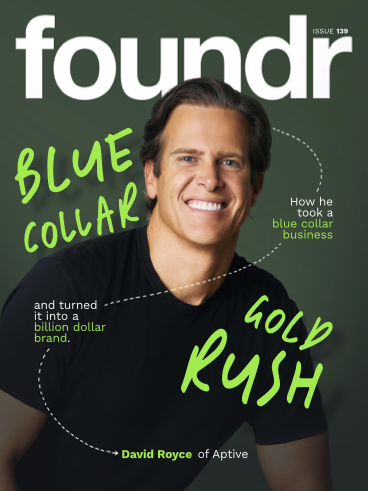
After leading three companies as CEO, Royce made the deliberate decision to step aside at Aptive, transitioning into the role of chairman. This move, facilitated by a protégé he had mentored for a decade—who rose from top sales rep to CEO—underscored his philosophy of leadership as an "architect," not merely a "hero." The challenge, Royce admits, was not in the structural change but in his personal discipline to "stay out of it" and allow his successor to lead, even if it meant doing things differently. This transition highlights the critical entrepreneurial lesson of building a scalable organization rather than a dependency on a single individual.
However, this period also brought a costly lesson regarding executive hires. Aptive brought in a CFO with an impressive resume from a billion-dollar tech company, granting him significant autonomy. Royce quickly learned that "resumes don’t run companies. People do." The CFO, accustomed to a much larger support structure, lacked a granular understanding of Aptive’s expense structure, leading to significant financial misses. This occurred during a critical period when Aptive was in the process of selling half the company, with initial offers valuing it between $1 billion and $1.6 billion. The consistent misses in forecasts alienated buyers, causing every offer to drop off.
This experience provided Royce with three invaluable lessons:
- Trust but Verify: Even with highly credentialed executives, rigorous oversight and validation of their work are essential.
- Maintain Forecasts During Sales: Missing financial forecasts during an M&A process severely weakens a seller’s negotiating position.
- Learn from Setbacks: A failed sale process, while disappointing, offers crucial insights into buyer expectations and areas for business improvement before re-entering the market.
The Enduring Philosophy: The Climb, Not Just the Summit
Reflecting on two decades and four successful companies, David Royce offers a nuanced perspective on success. He observes that it is often a "moving target," with the human brain constantly pushing for "just a little more." This perpetual pursuit, he argues, reveals that entrepreneurship’s true value lies not solely in "a big exit or financial freedom," but in "the expertise, discipline and character you develop along the way." His concluding wisdom resonates deeply: "If you don’t enjoy the climb, the summit is going to disappoint you."
Ultimately, Royce’s deepest passion lies in people development. Citing Mahatma Gandhi’s assertion that "the sign of a good leader is not how many followers one has, but how many leaders one can create," he defines his legacy not by company valuations, but by the leaders he helped cultivate. From a child who doubted his own intelligence to a relentless door-to-door salesman, and finally to the founder of a billion-dollar empire built in an industry many deemed unglamorous, David Royce’s story is a powerful narrative. It underscores the profound truth that genuine opportunity often disguises itself in the most unexpected and challenging forms, awaiting those with the vision, persistence, and humility to embrace it.