How a Sixth-Grade Teacher and a Door-to-Door Job Built a Billion-Dollar Pest Control Empire


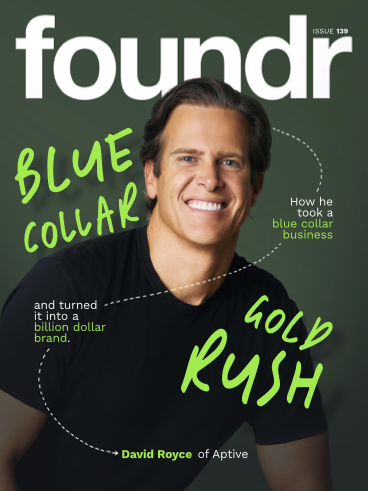
David Royce, the visionary behind Aptive, North America’s third-largest residential pest control service, embodies a profound theory about success: it is less about the chosen industry, academic credentials, or superficial appeal of an opportunity, and more about an unwavering willingness to undertake tasks others shy away from, persisting long enough to achieve unparalleled mastery. His journey from a self-proclaimed un-smart child to a serial entrepreneur with multiple nine-figure exits to the same strategic buyer, culminating in a company that scaled to over $500 million in annual revenue, challenges conventional wisdom about wealth creation and industry prestige.
Royce’s unconventional path began not in a boardroom, but on the doorsteps of suburban homes during four college summers. This immersive, high-rejection environment forged the grit and sales acumen that would become the bedrock of his empire. In an interview with Foundr CEO Nathan Chan, Royce delved into the formative experiences that shaped his unique approach to business, emphasizing the critical roles of cash flow management, intentional culture building, and the crucial leadership transition from being the "hero" to becoming the "architect."
Early Life and Formative Experiences: Overcoming Self-Doubt and Discovering Innate Strengths
Royce’s early academic life was marked by struggle and self-doubt. He candidly admits to believing he wasn’t intelligent, a sentiment stemming from his difficulty focusing in environments that failed to engage him deeply. This challenge, later understood as undiagnosed ADHD, was a significant liability in traditional schooling. However, a pivotal moment in sixth grade, catalyzed by a perceptive teacher, Mrs. Luft, fundamentally altered his trajectory. Mrs. Luft’s unwavering belief in his potential ignited a newfound determination within Royce, transforming his academic efforts and demonstrating the profound impact of mentorship.
This early experience underscores a critical aspect of entrepreneurial success: the ability to recognize and leverage one’s unique cognitive profile. While ADHD often presents academic hurdles, its characteristics, such as hyperfocus on engaging tasks, boundless energy, and innovative thinking, can be powerful assets in dynamic fields like sales and entrepreneurship. Royce’s realization that his brain, once a liability, became a superpower in these contexts highlights a broader truth about neurodiversity in the workplace. Many successful innovators and business leaders share similar neurodivergent traits, finding their niche where conventional structures are less rigid.
The lessons continued outside the classroom. At fifteen, a dismissal from a pizza parlor led him to McDonald’s, a seemingly humble job that instilled in him the invaluable principle of "best practices." The systematic efficiency, standardized processes, and focus on consistent quality at McDonald’s provided an early, practical education in operational excellence – a concept that would later underpin the rapid scaling of his pest control ventures. This demonstrated that foundational business principles can be gleaned from any environment, regardless of perceived prestige.

The Grueling Path to Sales Mastery: Persistence as a Disguised Genius
Royce’s entry into door-to-door pest control sales was, by his own admission, accidental. Lured by a friend’s success, he found himself in Sacramento, enduring a brutal first week of zero sales on commission. This period of intense struggle, characterized by daily rejections and the disheartening observation of his teammates’ successes, was a crucible. Instead of retreating, Royce doubled down. He spent his weekend immersing himself in sales literature, dedicating 90 minutes daily to studying the craft. This deliberate, disciplined approach quickly transformed his performance. By the end of that summer, he had ascended to become the top sales rookie among 200 representatives.
This anecdote vividly illustrates his core philosophy: "Persistence is genius in disguise." It highlights that success is often less about inherent talent and more about relentless effort, a refusal to quit, and a commitment to continuous learning. This experience was instrumental in codifying the sales training program that would become a cornerstone of his future companies. The program focused on three key pillars:
- Option Closes: Shifting from "yes or no" questions to offering choices, both of which lead to a desired outcome (e.g., "We’ll be in your area tomorrow at three or five, which works better?"). This psychological technique subtly guides customers towards a decision beneficial to the salesperson.
- RAC Method (Resolve, Ace, Close): A structured approach to handling objections. First, acknowledge and resolve the customer’s doubt. Second, present an "ace"—a new, compelling benefit or piece of information they hadn’t considered. Third, attempt to close the sale again, perhaps using a different angle.
- Body Language Mastery: Recognizing that non-verbal cues often precede verbal communication, Royce emphasized the importance of confident and reassuring body language. He famously told his reps, "You’re not losing because your script is bad. You’re losing because your face is saying please don’t hurt me." This insight into human psychology and communication proved critical in building rapport and trust.
From Employee to Entrepreneur: The Pest Control Paradigm Shift
Despite his extraordinary sales success, Royce initially harbored aspirations for a career in investment banking, believing his finance degree and sales skills would perfectly align with the high-stakes world of M&A. The idea of starting a pest control company felt unglamorous, failing to align with his youthful perception of "impressive" success. This internal conflict between "image" and "opportunity" was a recurring theme in his life, mirroring his earlier experience at McDonald’s.
A pivotal conversation with his boss, who had just sold his own pest control startup to Terminix for $10 million in four years, served as a powerful catalyst. The boss’s challenge—"why would you go work 80 to 100 hour weeks for someone else when you could start your own pest control company?"—forced Royce to re-evaluate his priorities. Armed with $300,000 saved from his lucrative college summers (originally intended for an MBA) and a unique finance background within the industry, Royce chose the unsexy but potentially highly profitable path. He meticulously absorbed his boss’s pain points and improvement suggestions, identifying 30 areas for optimization. This decision marked a fundamental shift from chasing perceived prestige to embracing tangible opportunity, a move that would define his entrepreneurial legacy.
Navigating Growth and Financial Hurdles: The Reality of Cash Flow
Royce’s first year as an entrepreneur was a baptism by fire, revealing a critical lesson about rapid growth: it can be as dangerous as stagnation if not managed correctly. His initial projections for 4,000 to 5,000 new customers were dramatically surpassed, reaching 7,500 – an unprecedented feat for a single branch in the industry. However, this explosive growth nearly bankrupted the company. The business model required paying sales commissions upfront, creating a significant timing mismatch with incoming revenue. This "cash flow timing issue" led to a severe liquidity crunch.
This near-catastrophe hammered home an indelible truth: "Revenues are vanity. Profits are sanity. But cash flow is reality." Royce had to appeal to his sales leaders, requesting extensions for their bonus checks and offering an additional 10% interest as compensation. Fortunately, their successful summer and trust in Royce allowed the company to weather the storm. This scare fundamentally altered his approach to funding growth, leading to a structural template that would be applied across all his subsequent ventures. It underscored the importance of robust financial planning, particularly in industries with deferred revenue recognition or high upfront costs.
The Strategic Scaling Model: Serial Entrepreneurship Through Asset Deals
One of Royce’s most ingenious strategies for rapid expansion and wealth creation was his unique asset deal structure for selling companies. He successfully sold three businesses before Aptive, each time to the same strategic buyer, without losing his core team. The key lay in selling only the customer base and the technicians servicing them – the recurring revenue streams that strategic buyers coveted. This allowed him to carve out his leadership team, operations managers, and salesforce, preserving the "golden goose" of human capital and expertise.
With the capital from each sale, Royce would then launch the next company with the same proven team, in new geographical markets, and with better capitalization. This approach allowed for continuous innovation, market expansion, and wealth creation without equity dilution from external investors. It effectively created a "family" of businesses, each building upon the experience and success of the last, culminating in Aptive, which eventually achieved over $500 million in annual revenue. This model is a masterclass in strategic exits, demonstrating how to monetize assets while retaining the core engine of growth.
Innovation and Competitive Edge in a Blue-Collar Industry
Operating in a highly competitive market with over 20,000 pest control providers in North America, Aptive’s ability to grow seven to ten times faster than its rivals can be attributed to three distinct advantages:

- Superior Sales Program: Building on Royce’s foundational door-to-door experience, the sales program became a highly efficient machine, eventually comprising over 3,000 people. Competitors’ reps who transitioned to Aptive reported a 70% increase in productivity during their first summer, a testament to the program’s effectiveness and its structured training.
- Customer-Centric Service Features: Royce’s extensive door-to-door experience, where he knocked on over 60,000 doors, provided him with a "PhD in what homeowners complained about." This deep understanding of customer pain points allowed Aptive to offer additional, highly desired service features, differentiating them in a crowded market.
- Early Adoption of Technology: Seventeen years ago, technology investment was largely unheard of in blue-collar industries. Royce, however, invested early in software to enhance efficiency and gamify the business. A custom-built sales app facilitated nationwide tournaments, boosting productivity by up to 30% on tournament days. This foresight in leveraging technology for operational improvement and motivation was a significant competitive differentiator.
The "Stealthy Wealth" and the Future of Blue-Collar Industries
Royce passionately advocates for the overlooked opportunities within "unsexy" blue-collar industries. He notes that these sectors often boast "sexy margins" and are home to what The Wall Street Journal refers to as the "stealthy wealthy." Data suggests that a significant portion—approximately 43%—of the top 0.1% of income earners in the U.S. (those making $2.3 million or more annually) derive their wealth from these seemingly mundane fields.
Several factors contribute to the current attractiveness of these industries:
- Demographic Shift: Millions of baby boomers, who own many of these essential service businesses, are retiring. A significant majority lack succession plans, creating a vast pool of acquisition targets for new entrepreneurs.
- Recurring Revenue Models: Many blue-collar services, like pest control, plumbing, or HVAC, operate on recurring revenue models, providing stable cash flow that is less susceptible to economic fluctuations. As Royce puts it, "Recessions come and go. But bugs don’t read The Wall Street Journal."
- AI Resilience: In an era where artificial intelligence is poised to automate numerous white-collar tasks, blue-collar services remain largely impervious. AI can write code or analyze data, but it cannot perform physical tasks like unclogging a toilet, climbing a roof, or treating termites. This inherent physical component ensures a durable demand for human labor in these sectors.
Cultivating a High-Performance Culture: Beyond Perks to Ownership
Recognizing that rapid expansion could dilute company culture, Royce drew inspiration from Tony Hsieh’s "Delivering Happiness." He understood that culture isn’t merely about "vibes" but requires intentional design. Aptive became renowned for its vibrant culture, featuring amenities like an NCAA basketball court, golf simulator, and extravagant retreats to Egypt and Thailand. While these perks helped attract talent, Royce acknowledges they were "sugar, not protein." The true "protein"—the primary driver for top talent—was the exceptional training program that promised unparalleled sales performance.
However, the most impactful aspect of Aptive’s culture was its employee ownership model. Royce famously gave away 25% of the company to his employees, aligning their interests directly with the business’s success. This act of generosity, resulting in many employees receiving six- or even seven-figure payouts upon the company’s exit (estimated to be a nine-digit sum given Aptive’s valuation), created profound loyalty and financial freedom. Stories of employees paying off mortgages, student loans, or buying cars for their parents underscored the immense value of this initiative. Royce concluded that "ownership is a far better retention tool than ping-pong tables," demonstrating a deep understanding of intrinsic motivation and long-term commitment.
The Art of Letting Go: Succession and Leadership Evolution
After leading three companies as CEO, Royce made the difficult but strategic decision to step aside at Aptive, replacing himself with a protégé he had mentored for a decade. This individual had ascended through the ranks, from top sales rep to sales manager and then head of sales recruiting, proving his capabilities. This transition highlighted the ultimate test of a leader: whether one has built a company or merely a dependency. For Royce, the challenge wasn’t structural but personal—resisting the urge to intervene when things weren’t done exactly his way. He learned that true leadership, at this advanced stage, means "letting someone else win, even if they’d do it differently." He transitioned from being the "hero" to becoming the "architect," designing systems and empowering others to lead.
This lesson was further reinforced by a costly experience involving a high-profile CFO hire from a billion-dollar tech company. Despite an impressive resume, the CFO lacked understanding of how expenses impacted Aptive’s unique business model, leading to missed forecasts during a sale process. This oversight caused initial offers valuing the company between $1 billion and $1.6 billion to evaporate. Royce extracted crucial lessons: "trust but verify," never miss forecasts during a sale process (as it grants buyers leverage), and recognize that not every sale attempt succeeds. These experiences underscored the importance of cultural fit, practical experience over resume prestige, and resilient leadership in the face of setbacks.
Reflections on Success and Legacy: The Journey, Not Just the Summit
After building four successful companies over two decades, David Royce offers profound insights into the nature of success. He posits that success is a perpetually moving target; the human brain, once a goal is achieved, instinctively seeks "just a little more." This perpetual drive suggests that entrepreneurship is less about a single "big exit" or achieving financial freedom, and more about the continuous development of expertise, discipline, and character throughout the journey. "If you don’t enjoy the climb," he warns, "the summit is going to disappoint you."
Ultimately, Royce’s most cherished legacy is not the financial valuations of his companies, but the development of people. Echoing Gandhi’s sentiment that "the sign of a good leader is not how many followers one has, but how many leaders one can create," he remains most passionate about empowering and nurturing talent. His story is a powerful testament to the idea that the greatest achievements often emerge from overlooked opportunities, fueled by relentless persistence, strategic innovation, and a deep commitment to human capital. From a sixth-grade teacher’s belief to a grueling door-to-door job, David Royce meticulously constructed a billion-dollar empire by consistently choosing opportunity over image, embodying the true spirit of entrepreneurial ingenuity.