How to Drive AI Adoption: Six Proven Strategies for Go-to-Market Leaders to Unlock Business Growth

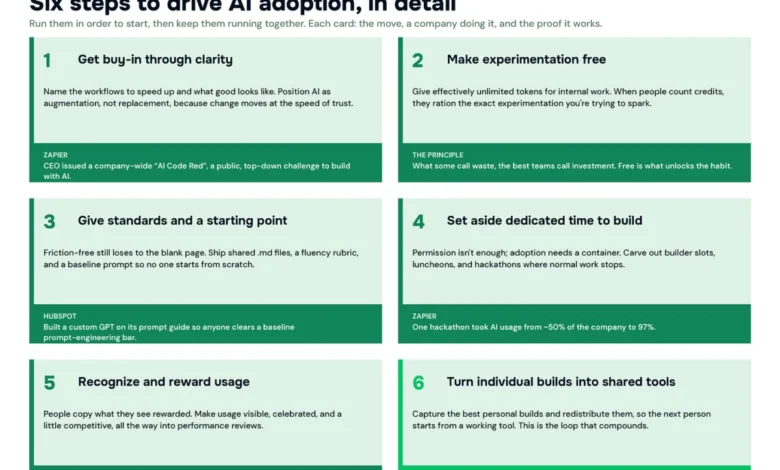
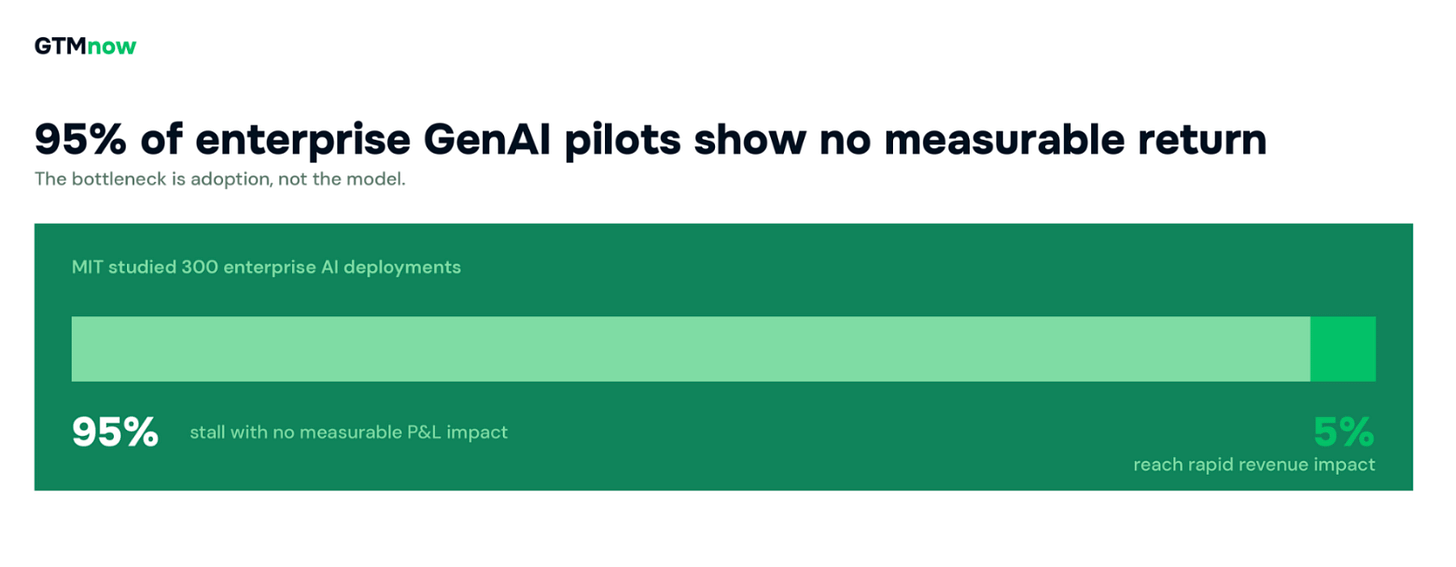
The swift integration of Artificial Intelligence, particularly Generative AI, has become a pivotal determinant of a company’s go-to-market velocity and, by extension, its overall growth trajectory. Despite the widespread availability and increasing sophistication of AI tools, driving effective, organization-wide adoption remains a significant hurdle for many enterprises. A recent study by MIT’s NANDA initiative, which surveyed over 300 enterprise deployments, revealed a stark reality: an astonishing 95% of GenAI pilot programs failed to deliver any measurable impact on profit and loss statements. This finding challenges the reflexive tendency to attribute failures to the AI models themselves, instead highlighting a critical gap in integration and adoption strategies within organizations.
The current landscape sees a paradoxical situation where a "shadow AI economy" thrives, with individuals independently leveraging AI tools to enhance their personal productivity. While this demonstrates the inherent value and appeal of AI, its true transformative power is only realized when entire teams and departments adopt it cohesively, creating a synergistic effect that compounds benefits across the organization. Recognizing this critical challenge, GTMnow Network engaged 21 prominent Go-to-Market (GTM) leaders to unearth the practical strategies they employ to successfully integrate AI into their operational frameworks. This comprehensive analysis distills their collective wisdom into six actionable strategies, each substantiated with real-world examples, designed to empower leaders to foster a culture of AI adoption and unlock its full potential.

The AI Imperative: Bridging the Organizational Adoption Gap
The era of Artificial Intelligence has dawned with unprecedented speed, promising revolutionary shifts in productivity, efficiency, and innovation. For Go-to-Market (GTM) functions, this promise translates into faster campaign execution, hyper-personalized customer engagement, and data-driven strategic decisions. However, the path from promise to practical application is fraught with challenges. The MIT NANDA initiative’s sobering statistic underscores a fundamental disconnect: while the technology is powerful, its successful deployment hinges on human factors – understanding, acceptance, and integration.
The "shadow AI economy" is a testament to the technology’s inherent appeal and usefulness. Employees, eager to streamline tasks and boost their output, are often quick to experiment with readily available AI tools. Yet, without a structured approach, these individual efforts remain isolated, unable to create the systemic efficiencies and competitive advantages that enterprise-wide adoption offers. Leaders are therefore tasked with moving beyond mere tool provision to cultivating an environment where AI becomes an integral, trusted, and universally leveraged component of daily workflows. The following strategies provide a roadmap for achieving this vital objective.

1. Cultivating Clarity and Trust: Defining the "Why" for AI Adoption
A primary barrier to AI adoption is ambiguity. Vague directives such as "use AI more" are inherently un actionable. Human teams thrive on clear objectives and a well-defined purpose. Leaders must articulate precisely what they aim to achieve with AI: identifying specific workflows for acceleration, outlining success metrics, and establishing methods for performance measurement. This strategic clarity transforms abstract experimentation into focused, outcome-driven innovation.
Beyond clarity, addressing underlying fears is paramount. A significant psychological barrier to AI adoption is the apprehension that it will lead to job displacement. Leaders who fail to proactively address this fear often encounter resistance. It is crucial to position AI as an augmentation tool, emphasizing its capacity to automate tedious, repetitive tasks, thereby freeing human talent for higher-value, more creative, and strategic work. Explicitly stating that AI is not a replacement but a powerful co-pilot builds trust, which, as many GTM leaders attest, is the fundamental speed dial for organizational change.

Real-world Application: Zapier’s "AI Code Red"
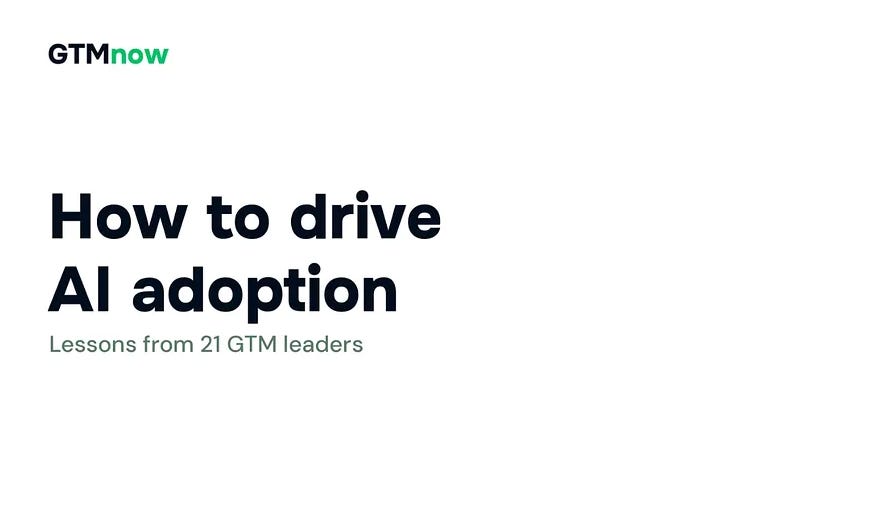
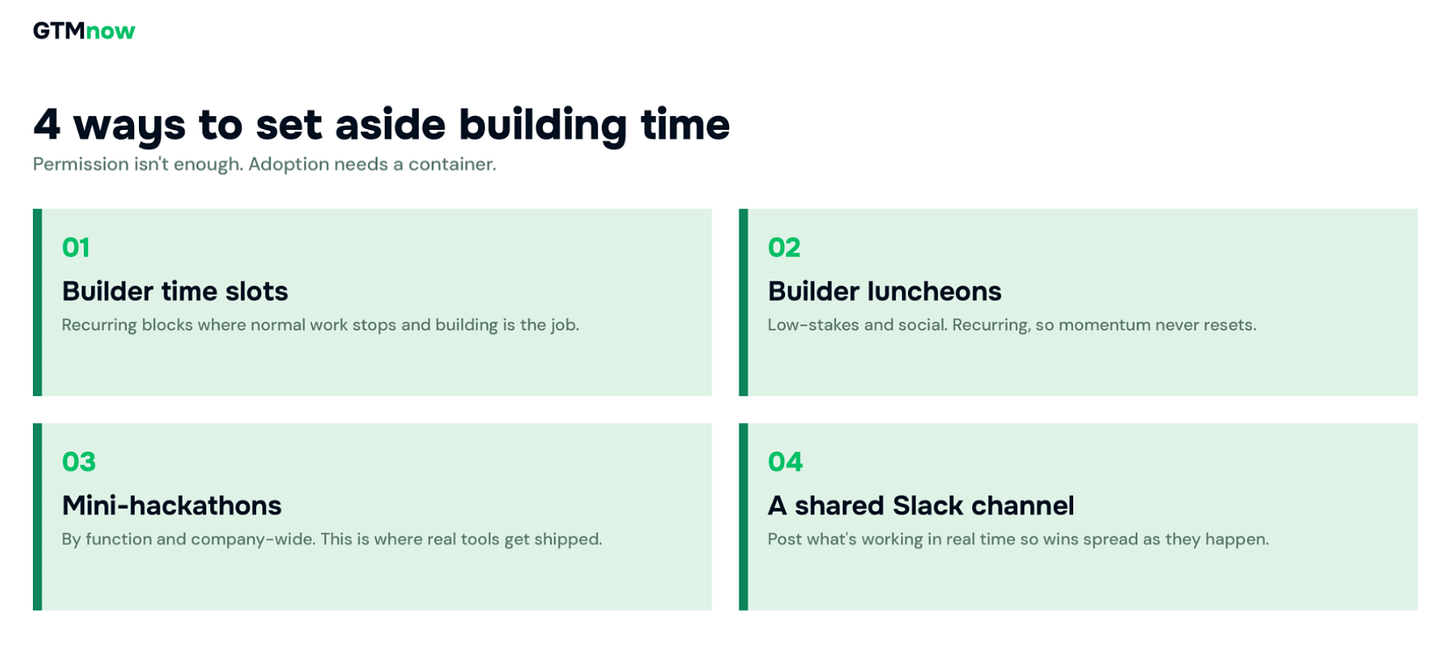
In 2023, Zapier CEO Wade Foster famously issued an "AI Code Red," a company-wide mandate that challenged every employee to actively engage with AI and identify practical applications within their roles. This initiative was successful because it was not merely a top-down directive but a clearly framed call to action. Foster articulated AI as a shared responsibility for enhancing efficiency, not for reducing headcount. This transparent communication directly addressed potential anxieties, framing AI as an opportunity for collective improvement rather than a threat. By emphasizing efficiency gains and focusing on eliminating drudgery, Zapier effectively built a foundation of trust that facilitated widespread experimentation and integration.
2. Empowering Experimentation: Removing Cost Barriers to Innovation
Innovation flourishes in an environment where experimentation is encouraged and unburdened. If employees perceive every interaction with an AI tool as incurring a cost (e.g., "counting credits" or token consumption), they are likely to ration their use, stifling the very exploratory learning that drives adoption. To counteract this, leaders must reduce the perceived cost of experimentation to zero. Providing effectively unlimited tokens or access to internal AI platforms for internal work has proven to be a highly effective strategy in fostering initial engagement and exploration.
However, this strategy is not without its nuances and potential pitfalls. While an initial "free-for-all" can ignite interest, it requires careful monitoring. Amazon, for instance, initially tracked employee AI token consumption via internal leaderboards, but later scaled back this practice after observing instances of "tokenmaxxing" – where staff engaged in excessive, perhaps unproductive, token usage simply to climb the leaderboard. This highlights a crucial lesson: while usage is a vital input in the early stages to encourage familiarity, it should not be the ultimate outcome metric.
Strategic Measurement Shift:
As adoption matures, the focus must shift from mere usage to tangible business outcomes. Leaders should track metrics such as hours saved, the number of new tools or workflows developed, the automation of previously manual processes, and the reduction in the need to backfill certain roles due to increased efficiency. This evolution in measurement ensures that experimentation translates into measurable business value, aligning AI initiatives with broader organizational goals.
3. Establishing Standards and Starting Points: Guiding the Path to Proficiency
Even with friction-free access, the daunting "blank page" syndrome can hinder adoption. Unlimited access means little if employees lack a clear benchmark for what constitutes effective AI use or a readily available starting point. Providing standards, rubrics, and shared assets can significantly accelerate proficiency and consistency.
Real-world Application: Zapier’s AI Fluency Rubric and HubSpot’s Custom GPT
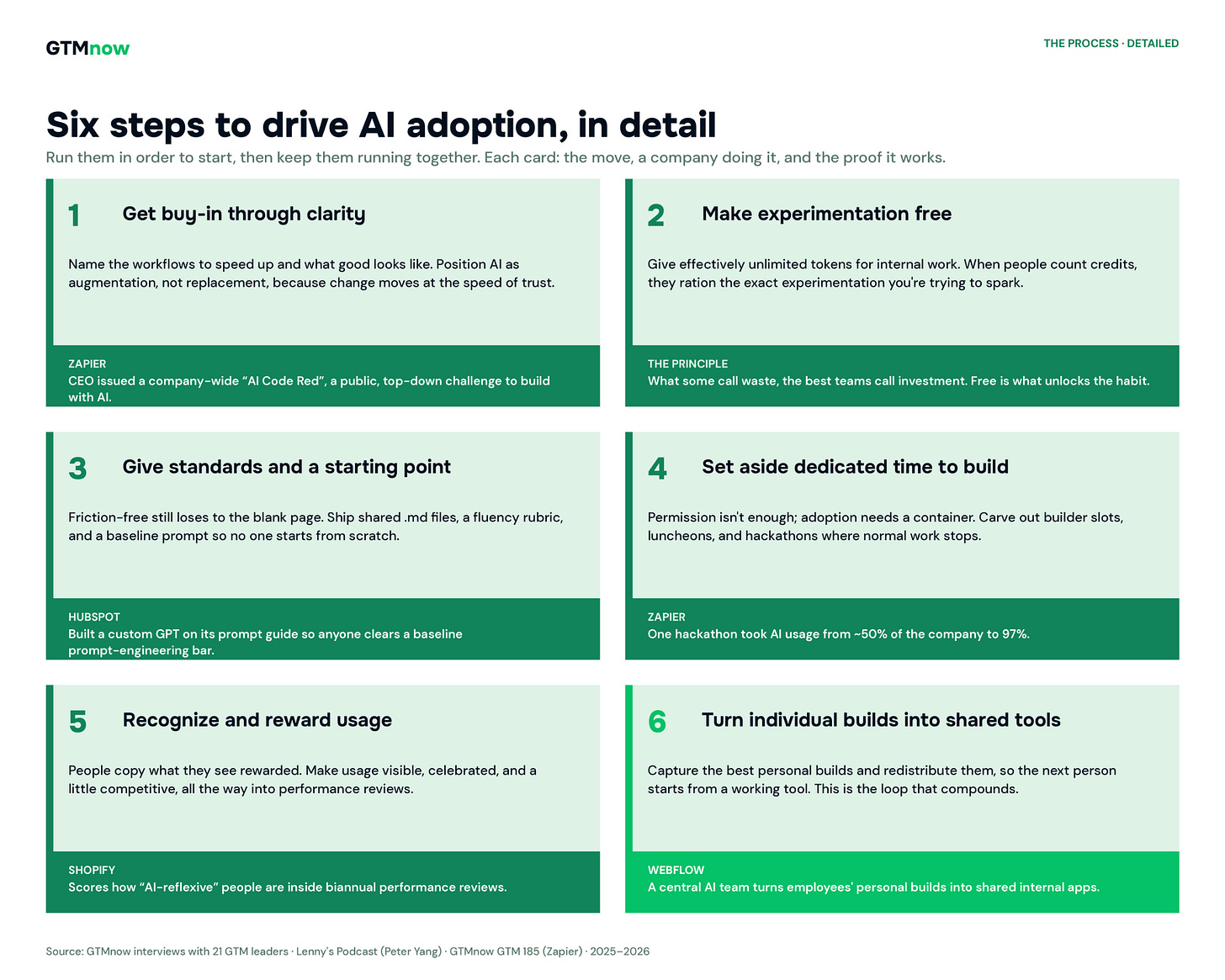
Zapier tackled this challenge by developing a four-tier AI fluency rubric, ranging from "Unacceptable" to "Transformative." This rubric was collaboratively built by consulting power users across various functions to define baseline AI skills relevant to their specific roles. This not only provided a clear developmental pathway but also made "good" AI usage measurable and gradable within performance frameworks. Crucially, Zapier recognized the dynamic nature of AI proficiency, reclassifying behaviors that were once "acceptable" as "unacceptable" within ten months, demonstrating a focus on the slope of learning—how quickly individuals are improving—rather than just their current standing.
Complementing such rubrics, distributing shared assets is vital. Standardized .md files containing essential context—such as the Ideal Customer Profile (ICP), brand voice guidelines, and data definitions—ensure that employees inherit critical information rather than having to rebuild it for every prompt. HubSpot’s teams exemplified this by leveraging a custom GPT, built upon an internal prompt guide, which allowed anyone to achieve a baseline level of prompt engineering effectiveness from day one, democratizing access to best practices.
AI Literacy as a Job Requirement:
The evolving skill landscape means that AI literacy is rapidly transitioning from a desirable trait to a fundamental job requirement. Companies like Nooks are already integrating AI proficiency into their hiring processes, testing candidates not on their knowledge of specific tools but on their ability to learn and adapt to unfamiliar AI technologies, effectively assessing their "slope" and growth potential. This signals a future where foundational AI skills are non-negotiable for success within many organizations.
4. Dedicating Time and Space for Innovation: Creating "Containers" for AI Development
Permission alone is insufficient for driving adoption; it requires dedicated resources and structured opportunities. Telling employees they are "allowed" to use AI yields minimal results if their calendars remain saturated with traditional tasks that AI is designed to augment or replace. Leaders must proactively carve out protected time and designated spaces where standard work pauses, and the focus shifts entirely to building and implementing internal AI-powered workflows.
Implementing "Containers" for AI Building:
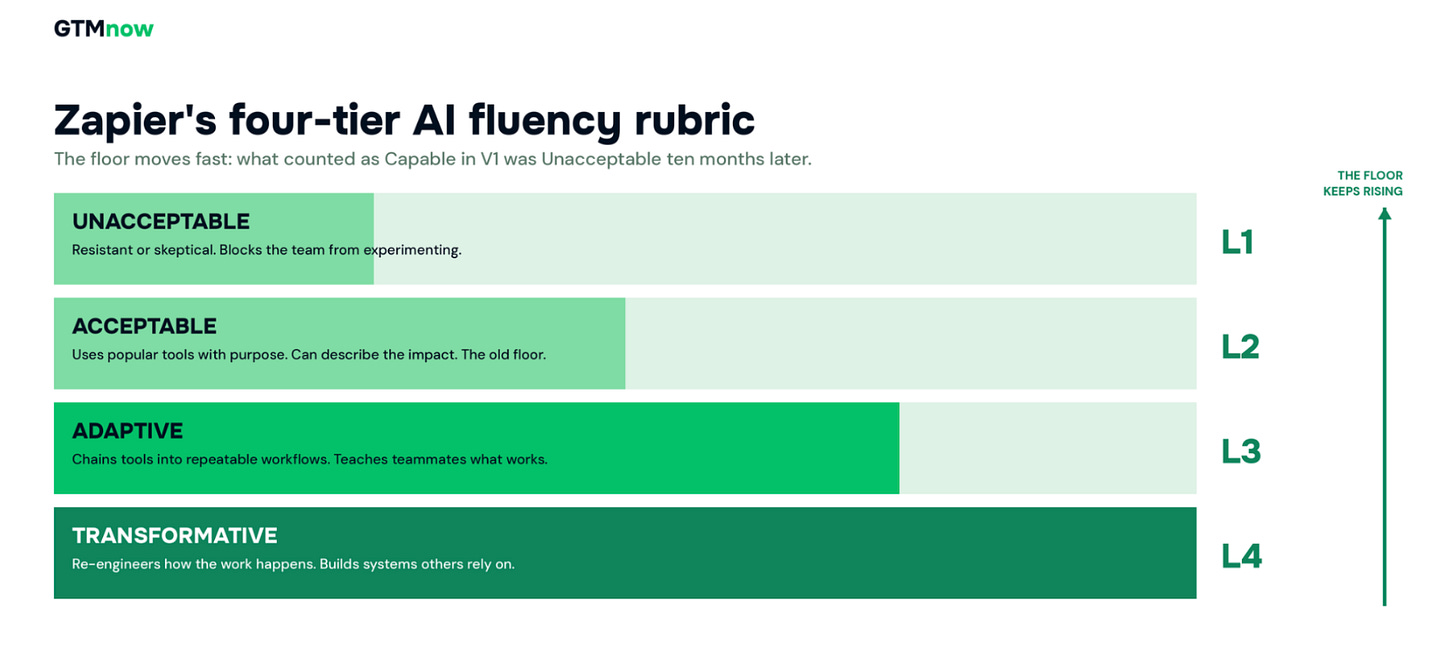
The most effective strategies involve running multiple "containers" for AI development. This can include:
- Recurring Builder Time Slots: Regular, scheduled periods where employees are expected to focus solely on AI-related projects and experimentation.
- Builder Luncheons: Informal, social gatherings where teams can discuss AI applications, share insights, and collaboratively work on small projects in a low-stakes environment.
- Mini-Hackathons: Focused, short-duration events, either function-specific or company-wide, designed to generate rapid prototypes and solutions using AI.
- Shared Communication Channels: Dedicated Slack or internal messaging channels where employees can share successful AI prompts, workflows, and tools in real-time, fostering a continuous learning and sharing environment.
These "containers" serve a dual purpose: they provide the necessary permission and structure for employees to engage with AI, and they simultaneously generate tangible proof points of AI’s value, which are essential for reinforcing subsequent adoption strategies. By creating these dedicated spaces, organizations transform AI adoption from an optional side activity into a core part of the innovation agenda.
5. Recognizing and Rewarding AI Pioneers: Fostering a Culture of Adoption
Human behavior is profoundly influenced by what is recognized and rewarded. If early AI adopters are publicly spotlighted, gain status, or receive additional resources, their peers are more likely to emulate their behavior. Conversely, if AI usage remains invisible, it risks being perceived as optional or inconsequential. Leaders must therefore make AI adoption visible, celebrated, and, to a healthy extent, competitive.
Leadership by Example:
Leaders play a critical role by reframing their own position. Instead of merely teaching "how it’s done," a more effective approach is to adopt the posture of a "chief figure-it-out officer." This involves openly engaging with AI, learning in public, and acknowledging the iterative nature of mastering new technologies. This vulnerability lowers the entry barrier for others, making it safe for employees at all levels to experiment and learn without fear of immediate perfection.
Formal and Informal Recognition Mechanisms:
Organizations are implementing diverse methods to recognize and reward AI engagement:
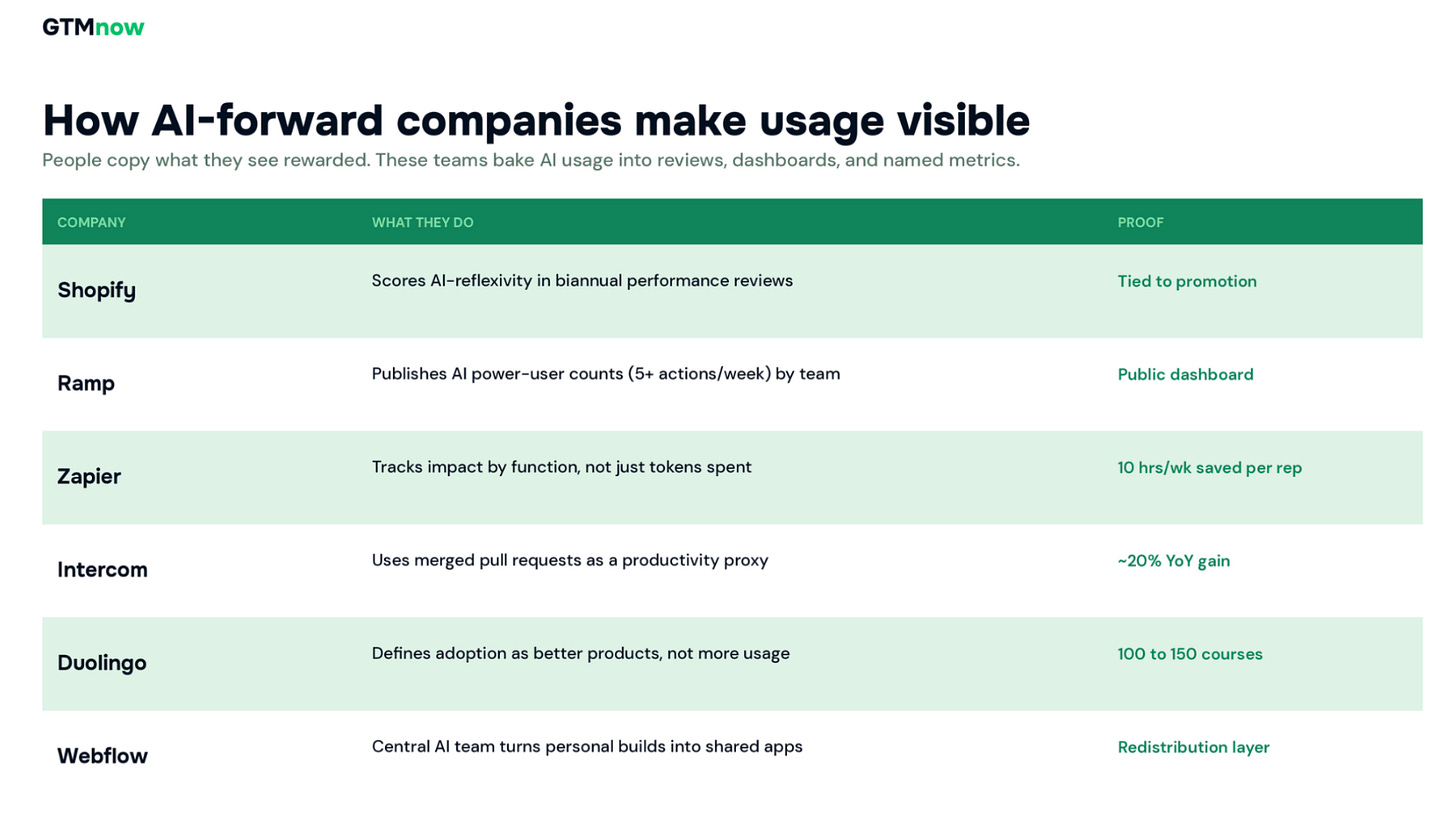
- Performance Reviews: Shopify, for instance, incorporates an "AI-reflexive" score into its biannual performance reviews, evaluating how quickly employees turn to AI as a solution when encountering problems.
- Internal Leaderboards: Ramp publishes internal leaderboards showcasing AI power-user counts (e.g., 5+ actions per week) by team for tools like Cursor, Claude Code, and ChatGPT. This transparency fosters healthy competition and accountability.
- Productivity Goals: Intercom set an ambitious "2x productivity" goal, tracking metrics like merged pull requests as a proxy for AI’s impact on developer output.
- "Over-celebrating" Small Wins: Brandon Barton advocates for enthusiastically celebrating initial, even minor, AI-driven successes. The first successful build is often the most challenging, and its recognition can inspire further efforts.
- Gamification: Joe Goldberg points to the effectiveness of internal gamification initiatives to keep AI usage top of mind.
These tactics, regardless of their cost, collectively signal a clear message: AI proficiency is a valued and essential skill within the organization. As Sei Suriyakumar eloquently puts it, "Arm evangelists with a stage, a spotlight, and more investment dollars. Make them superstars at the company so they can inspire others and keep building."
6. Scaling Individual Innovations into Shared Tools: Institutionalizing AI Best Practices
The first five strategies are designed to generate a rich pool of individual AI-powered solutions and personal builds. The sixth and final strategy is what transforms this collection into compounding organizational leverage: systematically capturing the most effective individual builds and re-distributing them as standardized, accessible tools. This ensures that subsequent users start with a functional solution rather than a blank prompt, creating a virtuous cycle where each new build lowers the entry barrier for the next.
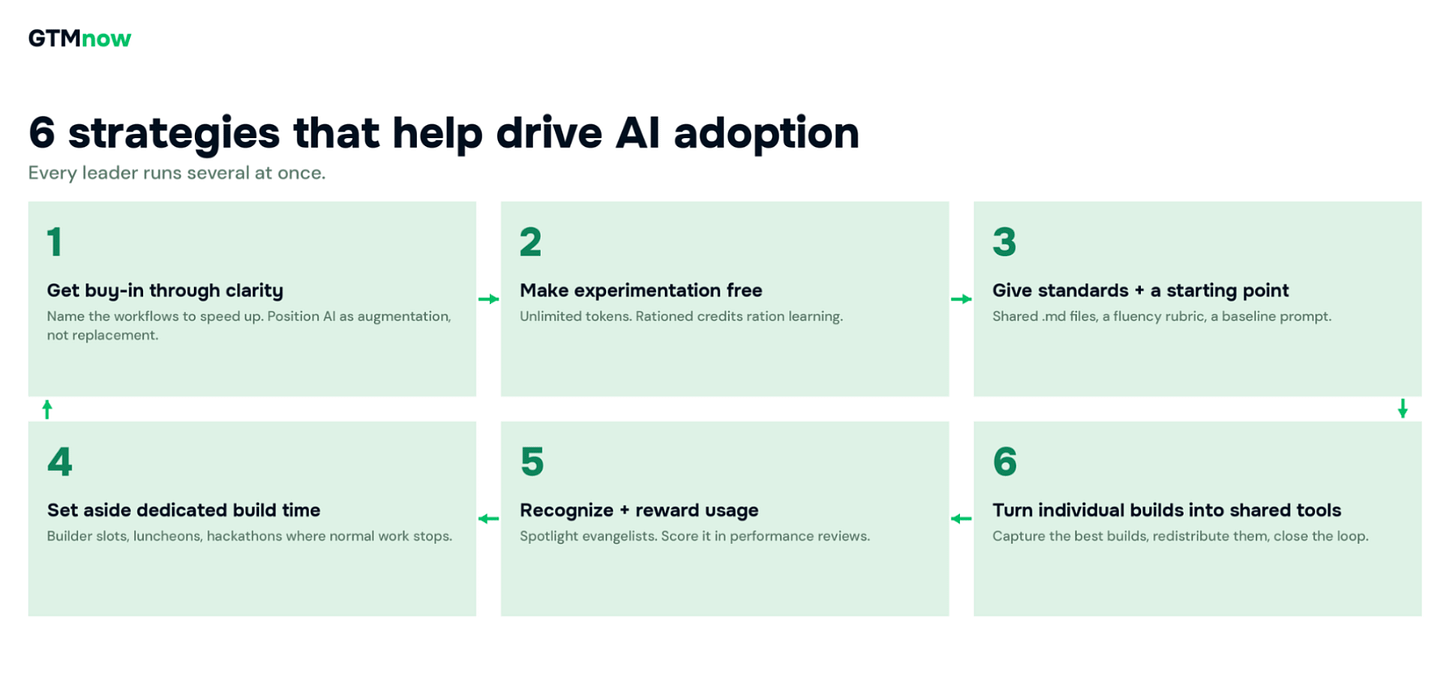
Operationalizing Knowledge Transfer: Webflow’s Central AI Team
Webflow provides an excellent model for this institutionalization. The company established a central AI team specifically tasked with productizing individual AI solutions. When an employee develops an effective AI workflow to solve a personal or team-specific problem, the central AI team evaluates, refines, and then transforms it into a shared application or template accessible to the wider organization. This process ensures that best practices are not siloed but become company-wide assets.
This systematic approach creates a powerful feedback loop. As more employees experiment and build, more successful solutions emerge. The central team then identifies and elevates these solutions, making them available to everyone, thereby further accelerating adoption and demonstrating the tangible benefits of AI. This continuous process of individual innovation, central refinement, and organizational distribution is key to building a truly AI-powered enterprise.
Broader Implications for Go-to-Market (GTM) Excellence
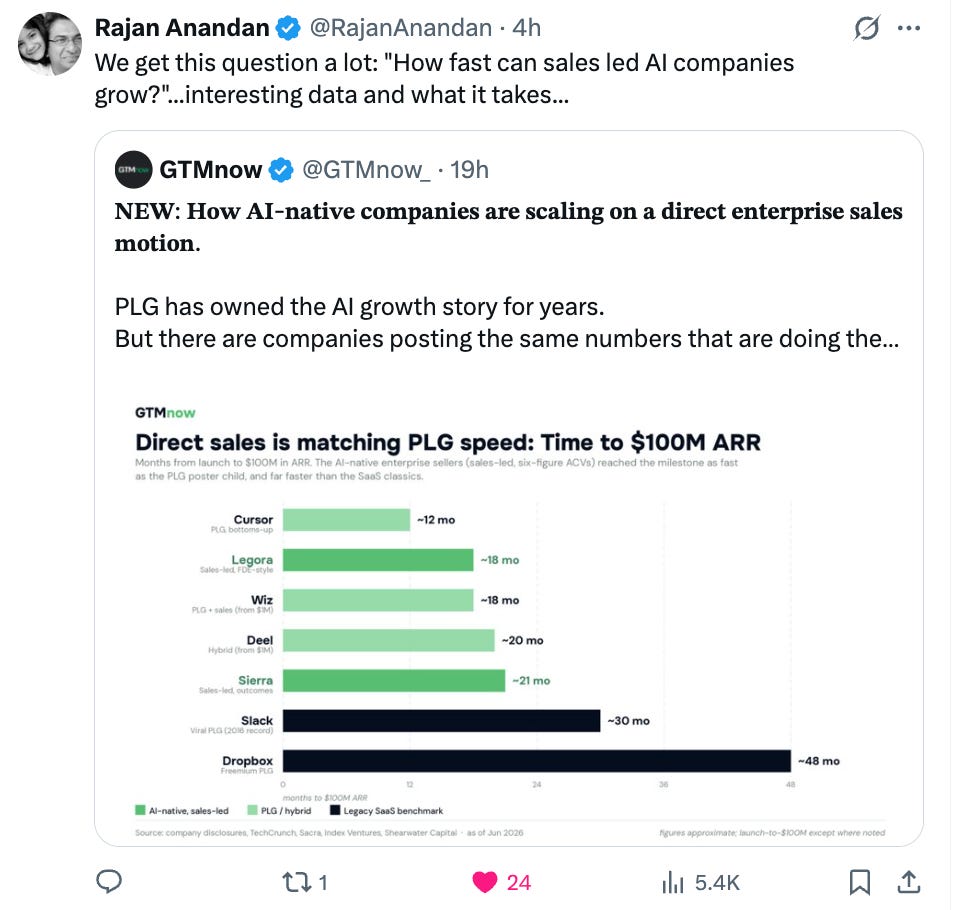
The successful adoption of AI is no longer an option but a strategic imperative for Go-to-Market functions. Companies that master these strategies will gain significant competitive advantages, manifesting in several critical areas:
- Accelerated GTM Speed: AI can dramatically shorten cycles for content creation, campaign development, lead qualification, and sales outreach, allowing companies to respond to market shifts with unprecedented agility.
- Enhanced Personalization and Customer Experience: AI enables deeper insights into customer behavior, facilitating hyper-personalized marketing messages, product recommendations, and support interactions, leading to higher conversion rates and improved customer loyalty.
- Optimized Resource Allocation: By automating routine tasks, AI frees up GTM professionals to focus on strategic initiatives, complex problem-solving, and relationship building, maximizing human capital.
- Data-Driven Decision Making: AI’s ability to process and analyze vast datasets provides GTM leaders with actionable insights, enabling more precise targeting, forecasting, and performance optimization.
- Future of GTM Roles: The nature of GTM roles is evolving rapidly. As highlighted by James Underhill, Head of GTM Ops at Profound, the traditional "business partner" role is disappearing as field leaders gain direct access to data. This shift demands a new breed of GTM professionals—"GTM engineers" who possess GitHub fluency and the ability to build and integrate AI solutions. AI literacy is becoming a core competency for sales, marketing, and customer success professionals alike.
In conclusion, while the potential of AI is immense, its realization within organizations is fundamentally a leadership challenge, not solely a technological one. The strategies outlined—cultivating clarity and trust, empowering experimentation, establishing standards, dedicating time, recognizing pioneers, and scaling innovations—collectively form a robust framework for fostering widespread AI adoption. By focusing on these human-centric approaches, Go-to-Market leaders can successfully navigate the complexities of AI integration, transforming individual productivity gains into a powerful engine for sustained organizational growth and competitive differentiation. The future of GTM is intrinsically linked to how effectively companies embrace and operationalize AI, making these strategies indispensable for success in the rapidly evolving digital landscape.