
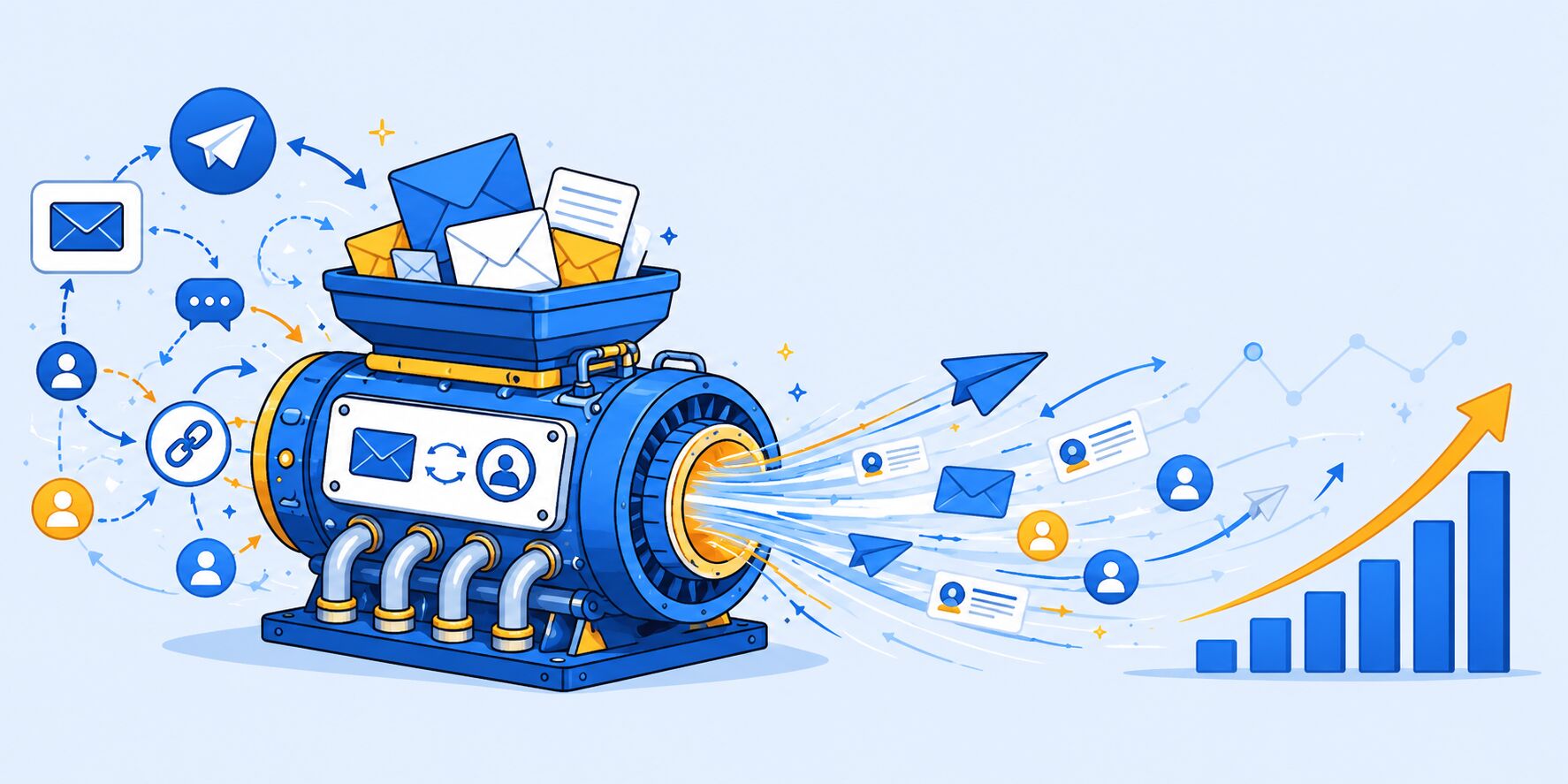
In the modern digital commerce landscape, customer acquisition costs across traditional paid channels have risen steadily, prompting brand founders and marketing executives to reevaluate organic growth strategies. While billions of dollars are poured into programmatic advertising, social media campaigns, and search engine optimization, one of the most powerful marketing assets often remains entirely underutilized: an existing email subscriber base. Industry data consistently indicates that word-of-mouth marketing and peer recommendations outperform paid acquisition channels in conversion rates, customer lifetime value, and overall trust. Despite this undeniable advantage, many businesses treat referral programs as an afterthought—a static link buried deep within a website footer rather than an active, systematic revenue driver. Transforming an email list into a high-performing referral engine requires a strategic pivot from passive hosting to active, data-driven automation.
The Economics of Peer Recommendations and Word-of-Mouth Marketing
To understand why referral engines are experiencing a renaissance among direct-to-consumer and business-to-business brands, one must examine the fundamental psychology of consumer trust. According to global consumer research, over 80 percent of buyers state that they place the highest level of trust in recommendations from friends, family members, and trusted peers. When a personal contact endorses a product or service, the psychological friction of evaluation is dramatically reduced. The prospect does not need to read dozens of third-party reviews, compare endless specifications, or weigh alternative brands; the vetting process has already been completed by someone they know.
From a financial perspective, referred customers present a significantly higher return on investment. Because the initial introduction is facilitated by an existing advocate, acquisition costs plummet. Furthermore, statistical analyses of customer retention cohorts reveal that referred users demonstrate higher engagement rates and longer lifespans with the brand compared to those acquired through cold advertising. They are inherently better targeted because current customers naturally gravitate toward friends, colleagues, and family members who share similar demographics, interests, and purchasing behaviors.
Despite these clear economic incentives, the execution gap remains wide. Many business owners launch a referral program with great enthusiasm, only to see it stall because it lacks continuous integration into everyday customer touchpoints. To bridge this gap, organizations must transition from viewing referrals as a standalone webpage feature to structuring them as an automated email marketing strategy complete with precise triggers, scheduled touchpoints, and segmented audiences.
Timing the Ask: Capitalizing on the Moment of Delight
A primary reason traditional referral campaigns falter is poor timing. Asking a customer to recommend your brand during a random, unannounced promotional email often yields minimal engagement. Consumers are constantly bombarded with digital noise, and an out-of-context request for advocacy is easily ignored or perceived as self-serving.
Instead, industry experts emphasize the importance of identifying and capitalizing on the "moment of delight." These specific milestones represent peaks in customer satisfaction and brand affinity. Key opportunities include:
- The completion of a second or third successful purchase, indicating brand loyalty.
- The submission of a four- or five-star product review.
- A direct, positive reply to an automated or broadcast email message.
- The successful resolution of a customer support inquiry.
During these windows of high goodwill, asking a customer whether they know someone who might benefit from the product feels natural and conversational rather than transactional. Manually monitoring thousands of customer interactions to catch these moments is practically impossible for lean teams. Consequently, modern email automation platforms have become indispensable. By setting up automated workflows—such as triggering a referral invitation three days after a repeat order is delivered, or embedding a share link inside a thank-you email following a glowing review—brands can ensure that the referral request lands at the exact psychological peak of customer satisfaction.
The Psychology of Double-Sided Incentives
Another critical determinant of referral success is the structure of the reward. Historical marketing data shows that single-sided reward structures—where only the referrer receives a bonus—frequently underperform. When only the existing customer is compensated, the interaction can feel transactional or exploitative, as if the advocate is monetizing their personal relationships. Conversely, if only the referred friend receives a discount, the existing customer has very little tangible incentive to expend the social capital required to make the introduction.
To align the incentives of all parties involved, successful brands widely adopt double-sided reward programs. Popularized by consumer tech giants and retail brands alike, models featuring formulations such as "Give $10, get $10" transform the referral into a mutual favor. The advocate feels genuine satisfaction in helping a friend save money while receiving a reward themselves, and the new prospect arrives with a welcome discount that lowers the barrier to their initial purchase.
Crucially, the value of the reward does not need to be extravagant to be effective. Modest monetary credits, free shipping offers, or early access to new product drops often perform exceptionally well, provided the underlying user experience remains frictionless.
Eliminating Friction in the Sharing Process
Even with optimal timing and compelling incentives, referral programs frequently leak potential revenue at points of operational friction. If a customer is required to navigate multiple pages, copy a complex tracking code manually, or draft a recommendation message from scratch, participation rates drop significantly.
Optimizing the user flow requires minimizing the effort required to share. Every customer should be assigned a unique, automatically generated tracking link that handles attribution seamlessly. Furthermore, providing pre-written, human-sounding template messages that can be sent or slightly customized with a single tap removes the cognitive burden of writing. Share buttons should be strategically placed where modern consumers spend their time: mobile messaging apps like WhatsApp and iMessage, direct email, and social media platforms.
Industry benchmarks suggest that if completing a referral takes more than fifteen seconds from the moment an email is opened, the process is too cumbersome. While dedicated brand superfans may push through a clunky interface, they typically represent only a tiny fraction of an entire subscriber base. The vast majority of growth potential lies with quietly satisfied customers who will gladly share a brand if the process is completely effortless.
Segmentation: Why You Should Never Broadcast to Your Entire List
A common operational error in email marketing is treating an entire subscriber list as a homogenous audience. Broadcasting a blanket referral request to every contact on a database—including inactive subscribers who have not engaged with the brand in months—often damages overall email deliverability and desensitizes active buyers. When unengaged subscribers repeatedly encounter irrelevant messages, they learn to skim past or ignore future communications entirely.
Advanced email marketers utilize precise segmentation to isolate the specific cohort of users who have earned the right to be asked. By filtering for repeat buyers, verified reviewers, highly engaged readers, and customers who have interacted positively with previous communications, brands can tailor their messaging. This high-affinity group should receive more personalized and frequent communications regarding referral opportunities because their likelihood of conversion is exponentially higher.
Platforms such as Omnisend have emerged as industry standards for executing this level of advanced segmentation. By integrating seamlessly with e-commerce systems and loyalty software like Smile and Yotpo, these platforms automate the tracking of reward points, tier advancements, and referral completions. This infrastructure allows marketers to focus entirely on crafting compelling messaging and valuable offers, leaving the technical plumbing to automated systems.
Broader Implications and Future Outlook for Digital Commerce
As privacy regulations tighten and the cost of third-party digital advertising continues to fluctuate, direct-to-consumer and B2B brands are increasingly prioritizing owned media channels. Building a robust referral engine represents a sustainable, long-term defense against rising customer acquisition costs.
Ultimately, word-of-mouth marketing is an organic phenomenon that occurs around a brand regardless of whether formal infrastructure exists. Implementing a structured referral engine does not manufacture fake advocacy; rather, it provides the necessary framework to amplify goodwill that is already present. By combining precise automated timing, double-sided incentives, frictionless sharing mechanisms, and intelligent audience segmentation, modern businesses can transform everyday email lists into self-sustaining referral engines that drive predictable, organic growth.