LinkedIn Director of Talent Development Kevin Bishop Outlines Seven Strategic Pillars for Modern Workforce Evolution Ahead of SPARK TALENT 2026

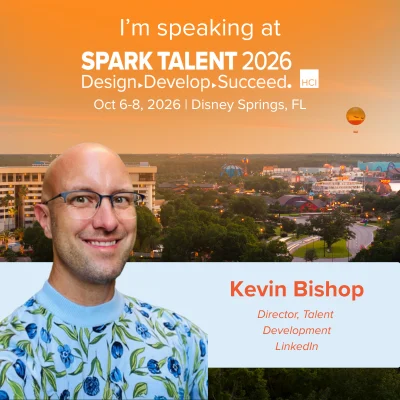
The landscape of human resources and organizational development is undergoing a fundamental shift, moving away from rigid, compliance-heavy frameworks toward a model defined by agility, creativity, and the intentional cultivation of joy. Kevin Bishop, the Director of Talent Development at LinkedIn, has emerged as a leading voice in this transition, advocating for a "corporate outsider" perspective that leverages non-traditional backgrounds to solve complex modern workplace challenges. As the corporate world prepares for the SPARK TALENT 2026 conference in Disney Springs, Florida, Bishop’s recent insights provide a roadmap for HR leaders struggling to balance the rapid integration of artificial intelligence (AI) with the fundamental human needs of their workforce.
Bishop’s philosophy is rooted in a non-linear career path, having transitioned from the performing arts—specifically music and theater—into the upper echelons of corporate talent management. This background informs his belief that the modern workplace requires more than just administrative efficiency; it requires the "yes, and" mindset of improvisational theater and the deep, reflective practice of a craftsman. By treating talent development as a creative endeavor rather than a bureaucratic one, Bishop argues that organizations can better navigate the disruptions caused by shifting economic cycles and technological breakthroughs.
The Transition from Linear Career Ladders to Skill Portfolios
For decades, the standard corporate contract was built on the promise of the career ladder: a predictable, vertical ascent within a single organization. However, data from the Bureau of Labor Statistics and LinkedIn’s own workforce trends suggest that the median tenure for employees, particularly among Millennials and Gen Z, has shortened significantly. Bishop posits that the traditional ladder is no longer a viable model for talent retention or professional growth.
Instead, Bishop advocates for the "Portfolio of Skills." In this model, the focus shifts from climbing a hierarchy to accumulating a diverse set of competencies that define an individual’s professional brand. This approach acknowledges the reality that organizations may not always have a linear promotion available at the exact moment an employee is ready for a new challenge. By encouraging employees to build a portfolio, HR leaders can facilitate internal mobility and lateral moves that keep talent within the company ecosystem, even if the "upward" path is temporarily blocked. This shift requires a cultural change where managers are incentivized to share talent across departments rather than hoarding high performers within their own teams.
Distinguishing Information Transfer from Authentic Learning
One of the most significant challenges in the modern era is the conflation of "information access" with "learning." With the advent of AI-driven tools that provide real-time answers and performance support, many organizations have mistakenly assumed that their training needs are being met automatically. Bishop warns that this is a dangerous misconception.
Information transfer is the process of providing a person with the facts or steps needed to complete a task in the moment. While valuable for efficiency, it does not result in the "cognitive friction" necessary for true learning. Authentic learning, according to Bishop, requires the mental struggle of wrestling with new ideas and the time-intensive process of internalizing new behaviors. If HR leaders rely solely on AI to provide "just-in-time" tips, they may inadvertently stifle the deep development of their employees’ critical thinking and problem-solving abilities. The implication is that while AI can assist in performance, it cannot replace the structured, reflective environments that build long-term expertise.
The Integration of Practice and Reflection into the Daily Workflow
The perennial complaint among managers is a lack of time for formal training. In response, the HR industry has often pivoted toward "micro-learning" or short, high-impact presentations. Bishop argues that these are often insufficient substitutes for real-world application. The solution lies in integrating practice and reflection directly into the job itself.
Rather than viewing training as an event that happens outside of work, Bishop suggests that the most effective talent development occurs when employees are given the space to apply new concepts to their current projects. This requires a shift in how productivity is measured. If an employee’s schedule is 100% utilized with task execution, there is zero capacity for the reflection necessary to turn a "task" into a "learning experience." HR leaders must work with department heads to build "reflective capacity" into the workweek, ensuring that the application of new skills is treated as a core component of the job description rather than an optional add-on.
Reimagining AI Fluency as Creative Application
As organizations rush to implement generative AI, the focus has largely remained on "prompt engineering"—the technical skill of writing instructions for AI models. Bishop suggests that the industry is already moving past this phase. True AI fluency in 2026 and beyond will be defined by an employee’s ability to creatively apply AI to their specific workflows to drive effectiveness.
The challenge for HR is to move beyond teaching the "how" of AI and begin teaching the "why" and "where." This involves encouraging a mindset of experimentation where employees are empowered to challenge the status quo of their daily routines. By fostering a culture of curiosity, organizations can move from using AI as a simple automation tool to using it as a collaborative partner that enhances human creativity. Bishop’s perspective suggests that the most successful "AI-fluent" workforces will be those that view the technology as a means to free up human capacity for higher-level strategic work.
The Psychological Risk of Over-Automation
A critical insight shared by Bishop involves the unintended consequences of automating "quick wins." In many customer service and administrative roles, companies have used AI to handle simple, routine inquiries, leaving only the most complex and emotionally charged cases for human representatives. While this appears efficient on a spreadsheet, it can be devastating for employee morale.
Bishop cites a case study where human representatives were left exclusively with "angry, crying, or yelling customers" because the AI had filtered out all the easy, positive interactions. This "exhaustion of the difficult" strips employees of the small victories and positive dopamine hits that make a workday sustainable. The broader implication for HR leaders is the need for a "human-centric" automation strategy. When designing AI implementations, leaders must ask not only "What can we automate?" but also "What should we leave for the human to ensure they remain motivated and engaged?"
Applying the "Yes, And" Framework to Project Management
Drawing on his background in live theater, Bishop introduces the concept of "Yes, And" to the corporate environment. In improvisational theater, "Yes, And" is the rule that an actor must accept what their partner has said (the "Yes") and then add something to it (the "And"). Bishop applies this to modern project management, where disruptions and shifts in direction are constant.
In a fast-paced environment like LinkedIn, projects rarely follow a perfectly straight line. Bishop recounts experiences on stage where a co-star might forget a line, forcing an immediate adaptation. In a corporate context, when a project veers off course or a stakeholder changes the requirements, a "Yes, And" mindset allows a team to acknowledge the new reality and pivot constructively rather than becoming paralyzed by the deviation from the original plan. This approach fosters psychological safety and resilience, as teams learn to trust their ability to navigate uncertainty together.
Leadership as the Facilitation of Excellence
Bishop’s final pillar focuses on a philosophy of leadership that rejects the "leader-as-expert" model. Citing adult education theorists Miles Horton and Paolo Freire, Bishop argues that a leader’s greatest expertise should be "knowing not to be the expert."
In this framework, the leader’s role is not to provide all the answers or to mold employees into versions of themselves. Instead, the goal is to identify what each individual is uniquely "amazing at" and to create as many opportunities as possible for them to shine in that space. This approach democratizes expertise within a team and empowers individual contributors to take ownership of their professional development. It shifts the HR function from a "top-down" instructor to a "bottom-up" facilitator of talent.
Chronology and Context: The Path to SPARK TALENT 2026
The insights provided by Bishop come at a pivotal moment in the history of workforce management. To understand the significance of these pillars, one must look at the timeline of workforce evolution over the last decade:
- 2015–2019: The rise of the "War for Talent," characterized by high perks and a focus on employee experience in a stable economic environment.
- 2020–2022: The global pandemic serves as a catalyst for remote work and the "Great Reshuffle," forcing HR leaders to prioritize flexibility and mental health.
- 2023–2024: The "Efficiency Era" begins, with widespread tech layoffs and the rapid emergence of Generative AI, leading to a focus on productivity and "doing more with less."
- 2025–2026: The current era, where the initial "AI hype" has cooled into a practical need for sustainable integration, and the "human element" of work is being re-evaluated as a competitive advantage.
Against this backdrop, the SPARK TALENT 2026 conference represents a gathering of industry leaders seeking to codify these lessons into long-term strategies. Bishop’s presentation at the event is expected to dive deeper into LinkedIn’s proprietary concept of "talent velocity"—the rate at which an organization can identify, develop, and deploy skills to meet changing market demands.
Broader Impact and Implications for the Global Workforce
The implications of Bishop’s "Seven Pillars" extend far beyond LinkedIn. As organizations worldwide grapple with a shrinking labor pool in developed economies and a widening skills gap in emerging technologies, the shift toward "Skill Portfolios" and "Human-Centric Automation" is becoming a necessity rather than a luxury.
Industry analysts suggest that companies failing to adopt these flexible, learner-centric models will face higher turnover costs and lower innovation rates. Furthermore, the emphasis on "knowing not to be the expert" addresses a growing demand among younger workers for more autonomous and purposeful work environments. By fostering a culture where learning is integrated into the daily flow and where leaders act as facilitators, organizations can create a "future-ready" workforce that is resilient to the next wave of technological or economic disruption.
The move toward "Talent Velocity" signifies a new metric for corporate success: it is no longer just about who has the most employees, but about how quickly those employees can evolve. As Kevin Bishop prepares to take the stage at SPARK TALENT, his message to HR leaders is clear: the future of work is not found in a spreadsheet, but in the creative, flexible, and joyful application of human potential.