Market Sentiment Rebounds as Major Indices Surge Following Federal Reserve Policy Shift

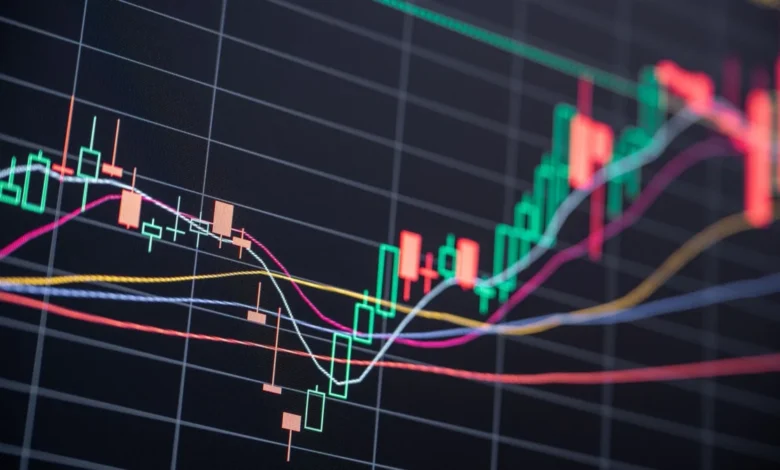
Equity markets staged a robust recovery on Thursday, effectively brushing off the volatility that gripped Wall Street during the previous session. Investors signaled a renewed appetite for risk, propelled by a confluence of cooling commodity prices, retreating Treasury yields, and an optimistic outlook for the technology sector. By the closing bell, the Dow Jones Industrial Average had climbed 0.6% to settle at 51,778, while the S&P 500 posted a solid 1.1% gain to reach 7,637. The Nasdaq Composite, which is particularly sensitive to interest rate fluctuations, led the charge with a 1.7% surge, finishing the day at 26,418.
This positive momentum arrived less than 24 hours after a sharp sell-off across all three major benchmarks. Wednesday’s downturn was primarily triggered by the Federal Reserve’s decision to implement a quarter-percentage-point hike to the federal funds rate—the first such increase since 2023. The policy move, while widely anticipated, initially unsettled traders who were wary of the implications for corporate borrowing costs and long-term economic expansion.
The Fed’s Policy Pivot and Economic Rationale
The decision to raise interest rates reflects a deliberate effort by the Federal Reserve to regain control over persistent price pressures. During the press conference following the September meeting, Fed Chair Kevin Warsh offered a candid assessment of the current economic environment. "The plain fact is that inflation is too high and has been for too long," Warsh stated. He emphasized that the quarter-point adjustment was a necessary recalibration to ensure the economy tracks toward the Committee’s long-standing 2% inflation target.
Financial analysts have interpreted the Fed’s messaging as a signal of institutional resolve. Bob Edwards, chief investment officer at Edwards Asset Management, suggests that the market’s reaction is a byproduct of newfound clarity. "Now that we are past this rate hike, stocks can move on, as uncertainty has faded," Edwards noted. According to this perspective, the "wall of worry" that has characterized recent trading sessions is being dismantled as investors gain a clearer understanding of the path ahead. With the primary uncertainty of the interest rate decision removed, the focus has shifted back to fundamental growth indicators.
Yields and Energy Prices Provide Tailwinds
A significant contributor to Thursday’s rally was the cooling of the bond market. Yields on government debt, which had been climbing in anticipation of the Fed’s announcement, retreated as investors reassessed the long-term inflationary outlook. The yield on the 2-year Treasury fell 5.4 basis points to 4.673%, while the 10-year Treasury yield dropped 6.8 basis points to 4.936%.
This retreat in yields is viewed by many market participants as a "safety valve" for equity valuations. When yields spike, the present value of future corporate earnings decreases, which typically weighs on stock prices—particularly in the growth-heavy tech sector. With yields now moderating, the pressure on equity multiples has eased. Edwards noted that the bond market’s most volatile phase may now be in the rearview mirror, creating a potential window for investors to lock in elevated yields while simultaneously participating in the equity market’s upside.
Simultaneously, the energy sector provided a boost to broader market sentiment. West Texas Intermediate (WTI) crude oil futures slipped 0.5% to $101.91 per barrel. Lower energy costs act as a subtle stimulus for the broader economy, reducing input costs for manufacturers and lowering transportation expenses, which indirectly supports consumer discretionary spending.
Tech Sector Resilience and the AI Narrative
The technology sector emerged as the clear leader in Thursday’s session, rebounding from a week of volatility. Nvidia (NVDA) played a pivotal role in this recovery, gaining 2.5%. The chipmaker had been under pressure earlier in the week following public warnings from prominent AI industry leaders regarding the safety and potential systemic risks of unchecked artificial intelligence development.
Despite these regulatory and safety concerns, the underlying demand for AI infrastructure remains unabated. During a press briefing in the United Kingdom, Nvidia CEO Jensen Huang provided an optimistic forecast for the company’s near-term trajectory. Huang indicated that he expects the company’s chip sales to double next year, citing an insatiable demand for the computational power required to train and deploy advanced AI models. This confirmation of continued capital expenditure by tech giants serves as a cornerstone for current market confidence.
Joining the rally was Ciena (CIEN), a provider of high-speed networking equipment, which saw its shares rise 1.1% following a positive long-term revenue forecast. The company expects an annual revenue growth rate of approximately 30% over the next three years. Argus Research analyst Jim Kelleher emphasized that Ciena’s role in the AI ecosystem—specifically regarding the networking infrastructure required for data centers—has created a "surging order and backlog" situation. While Kelleher acknowledged that heavy investment in R&D might compress profit margins in the short term, he maintains a "Buy" rating with a $550 price target, highlighting the potential for significant long-term appreciation.
Industrial Gains and the Generac-Amazon Partnership
While the tech sector captured headlines, the industrial sector provided a strong secondary engine for the day’s gains. Both Caterpillar (CAT) and Deere (DE) outperformed, rising 2.0% and 2.4%, respectively. However, the most notable move in the industrial space came from Generac (GNRC), which surged 18.3% to lead the S&P 500 after announcing a transformative partnership with Amazon (AMZN).
The agreement mandates that Generac will supply up to $8 billion in backup power generation systems to Amazon’s rapidly expanding network of data centers through 2033. The deal is structured to ensure that Amazon has a reliable power supply for its high-density computing clusters, addressing the critical energy requirements of the cloud-computing industry. Furthermore, the contract includes a strategic incentive: Amazon has been granted the right to purchase up to 1.7 million shares of GNRC at $201 per share, contingent upon the completion of specific purchase tranches.
UBS Global Research analyst Jon Windham underscored the strategic significance of this development. "In our view, this is a significant positive for GNRC, a company that only announced the intent to enter the large data center market in 2025," Windham remarked. The deal not only secures a massive revenue stream but also validates Generac’s pivot toward the data center sector. Should Amazon exercise its warrants, the resulting equity stake would represent at least 2.57% of Generac’s fully diluted share count, aligning the interests of the two companies for the next decade.
Looking Ahead: Market Implications
The events of Thursday illustrate a market that is increasingly adept at parsing complex macroeconomic data. The rapid transition from Wednesday’s "Fed-induced decline" to Thursday’s broad-based rally suggests that investors are prioritizing corporate growth narratives and structural supply-demand dynamics over short-term interest rate anxiety.
The combination of the Federal Reserve’s commitment to curbing inflation and the private sector’s aggressive investment in AI and infrastructure indicates a bifurcated but optimistic market environment. Investors appear to be operating under the assumption that while the "easy money" era of the previous decade has concluded, the ongoing technological revolution provides a sufficient offset to the higher cost of capital.
As the trading week concludes, analysts are focusing on how the latest labor market data and future inflation reports will influence the Federal Reserve’s next steps. For now, however, the consensus is that the market’s underlying strength is sufficient to absorb the transition to a higher-rate environment. The success of large-scale deals, such as the one between Generac and Amazon, serves as a bellwether for the industrial and tech sectors, suggesting that capital is still flowing heavily into projects that define the next generation of digital and physical infrastructure.
While the volatility seen earlier this week serves as a reminder of the fragility of current market conditions, the decisive rebound on Thursday provides a template for how investors are choosing to weigh risks against the promise of long-term productivity gains. As the market looks toward the final quarter of the year, the stability of these gains will likely depend on whether the Federal Reserve can successfully navigate the economy toward its 2% inflation goal without triggering a significant contraction in corporate earnings.
Related posts: